
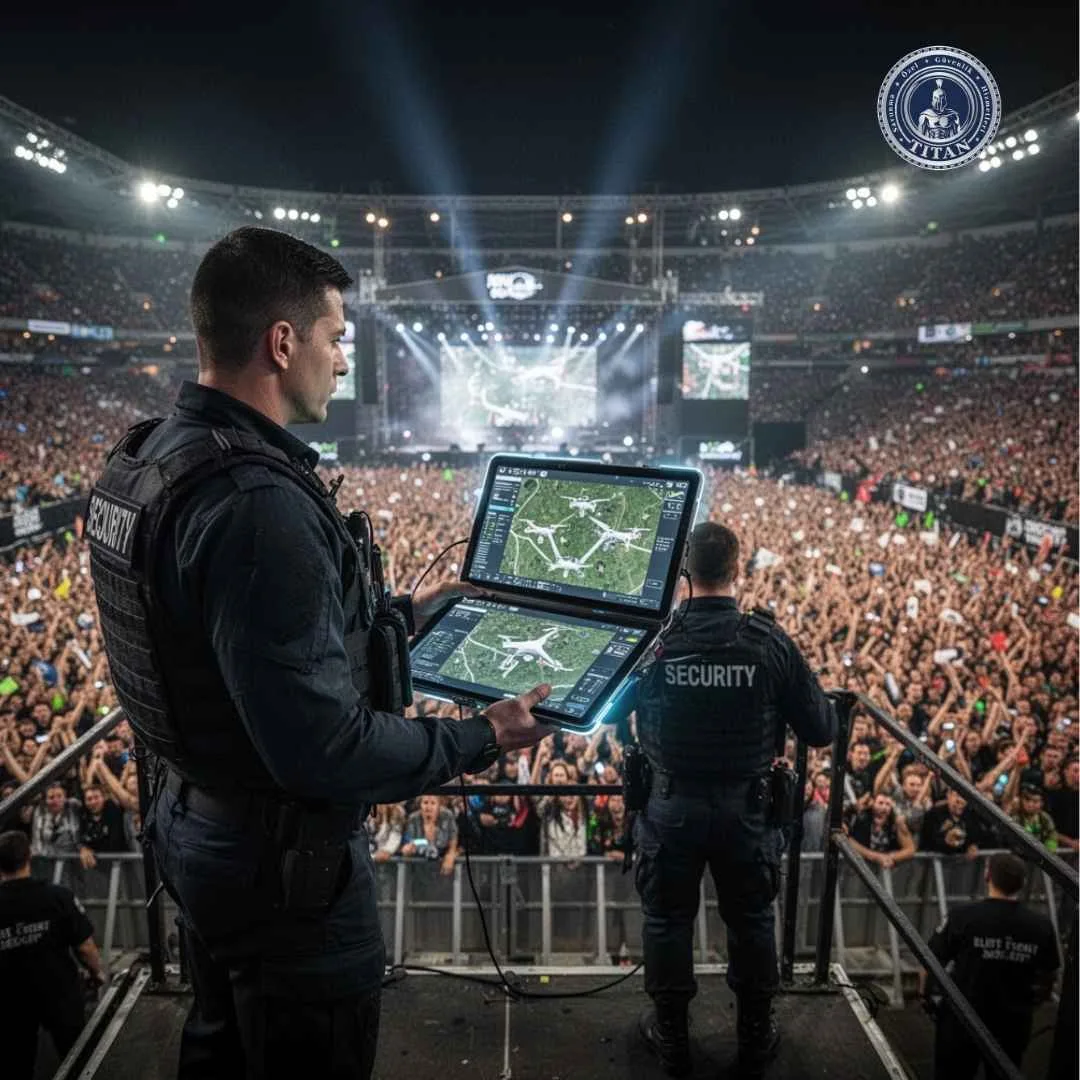
Security workforce management software brings shift rosters, post orders, patrol and incident records and reporting into one system. For the organisation buying a guarding service, its real value is regular, verifiable visibility of how the service actually runs. But software only records: filling an empty post, verifying an incident and responding are still done by trained people.
This article is written for the client's facility or security manager, not for someone buying software. What should you expect from your provider's system, what should you be able to see, who should keep which data, and how are data protection roles split under Turkish law? We describe functions and questions, not products.
This article is general information, not legal advice.
What the software does
Names differ, but these systems usually combine:
- Shift planning: how many officers, with which qualifications, at which post and hours, and who covers leave or absence. See the encyclopedia entry on shift patterns.
- Post order management: the current version of each post's written instructions, change history and officer acknowledgement. When post orders stay on paper, the version on site often goes out of date.
- Start of duty and handover: recording arrival at post, shift handover and handover notes.
- Patrol and incident records: tour points, incident reports, photos and time stamps.
- Training and licence tracking: officer ID card and training expiry dates, site-specific training.
- Reporting: periodic reports and real-time alerts for the client.
Indicators the client should see
You do not need every detail, only the right few indicators. Ask for these in the contract and reporting annex:
- Shift fill rate: planned versus actually covered hours; uncovered posts and how quickly they were filled.
- Late starts and early departures: where, how often and why.
- Incidents: counts by type, time reported and closed, who responded, open actions.
- Patrol completion: tours completed and missed, with reasons.
- Post order currency: when each post's instructions were last updated and whether officers acknowledged the new version.
- Training status: any certificates near or past expiry.
None of these prove quality on their own. A completed tour does not show the officer looked carefully; zero incidents may not mean nothing happened. Ask also for the supervisor's site inspection notes, sample incident reports and a monthly review meeting. Software collects data; people interpret it, verify it and decide what to improve.
What the standards say
ISO 18788:2015, the management system standard for private security operations, provides a framework for establishing, implementing, monitoring, reviewing and improving the management of security operations. Its stated aim is to help organisations conducting or contracting security operations demonstrate professional operations that meet client and stakeholder requirements, accountability to law and respect for human rights. Software can help collect the evidence, but it is not a management system by itself.
Data ownership and exit
The most neglected question is what happens when the contract ends. Your site's incident history, post order versions and reports are valuable when you change provider. Write into the contract:
- What is handed over: incident records, post orders, reports, patrol point lists, attachments.
- In what format: common, readable file formats, with attachments and time stamps.
- When: before the contract ends, within a reasonable transition period.
- What stays with the provider: HR data about the provider's own staff stays with the provider; written confirmation that your operational data has been deleted after handover.
- Before access is closed: when your accounts are closed and how the final copy is delivered.
Data protection roles under KVKK
Article 3 of Law No. 6698 defines the data controller as the person who determines the purposes and means of processing and is responsible for setting up and managing the filing system, and the data processor as the person who processes personal data on the controller's behalf under its authority. In practice, roles follow who decides why and how data is processed, not the title of the contract. Different data in the same software can fall under different roles:
- Shift, HR and training data of the security company's own employees is processed by the security company as employer.
- Data about visitors, vehicles or people involved in incidents at your site may be processed for purposes you set and on your instructions.
Work this out with your legal team and put it in the contract. Under Article 12 of the Law, where data is processed by another person on the controller's behalf, the controller is jointly responsible with that person for taking data security measures. If the software runs on servers abroad, remember that transfers abroad are subject to the specific conditions in Article 9; ask the provider where data is stored.
Access rights should also be clear. The 2026 KVKK public announcement on workplace security cameras is about cameras, but its expectations of an authorisation matrix, prevention of unauthorised access and written procedures on who may access which records are a good benchmark for field software too. Keep the list of people in your organisation who can open the dashboard short.
The people behind the screen
A red "uncovered post" alert does not fill itself. Post orders and the contract should state who watches the alert (the provider's control room or shift supervisor), who verifies it (by phone or site visit), who sends a replacement and when you are informed. Incidents follow the same flow: the officer records, the supervisor verifies and completes, the police are informed where necessary, and root causes are discussed at the monthly meeting.
Checklist
- Is there a client dashboard or regular report, and which indicators does it include?
- Who responds to uncovered-post and late-start alerts, and how fast?
- Can you see the current version and change history of post orders?
- Do incident records keep time stamps, photos and an edit history?
- What data is handed over at exit, in what format and when?
- Are data protection roles, security measures and data location written down?
- If the provider holds an information security certificate (for example ISO/IEC 27001), does its scope cover this software?
- Who in your organisation can access the dashboard?
When comparing providers, score reporting and transparency with the security provider scorecard.
Common mistakes
- Looking at screenshots and never visiting the site.
- Turning report figures into targets and judging officers only by numbers.
- Leaving data handover at exit out of the contract.
- Sharing the dashboard password widely inside the organisation.
How a professional security partner helps
Titan Savunma is an Ankara-based private security company operating under a Ministry of Interior licence under Law 5188, certified to ISO 9001, 14001, 45001, 22301 and 28000. We work with international companies in English and Turkish and plan sites in different provinces with a single point of contact, written scope and regular reporting. We plan guarding together with your technology and put monitoring, verification and response duties in writing. See private security in Turkey.


