This article is general information, not legal advice.
At the point where a solar, wind or storage plant in Turkey connects to the grid, three parties usually meet: the plant owner (often through its operations and maintenance contractor), the transmission system operator TEİAŞ (Türkiye Elektrik İletim A.Ş.) or the regional distribution company, and the security provider. Security responsibility follows ownership and operating responsibility, and those are set in the connection documents, not by whoever happens to hold the gate key.
The practical answer for most plants is this: your guards protect your perimeter and control access on your side; grid company personnel enter and work under their own authorisation and work-permit system; guards never enter live electrical areas; and intrusion or damage at the interface is reported to both your control room and the grid party whose equipment is involved. The rest of this guide shows how to put that on paper.
Who is who at the connection point
In Turkey, TEİAŞ operates the transmission system, and distribution companies operate regional distribution networks. Which one your plant connects to depends on capacity and voltage level. The Electricity Grid Regulation defines two separate documents: the connection agreement (bağlantı anlaşması), which contains the general and specific terms for connecting to the transmission or distribution system, and the system use agreement (sistem kullanım anlaşması), which governs use of the network.
On site, the interface often looks like one fenced compound but contains equipment with different owners and operators: the plant's own switchyard and transformers, bays or metering equipment that belong to or are operated by the network company, and the line leaving the site. We deliberately do not give a single rule for who owns what, because it varies by project, voltage level and the history of the connection. Take the answer from your connection agreement, its annexes and the single-line diagram, and confirm it with your electrical engineer.
| Area | Questions to answer from the documents |
|---|---|
| Plant switchyard and transformers | Owned and operated by the plant? Who holds keys? Who may issue work permits? |
| Network company bays or metering | Owned or operated by TEİAŞ or the distribution company? Separately fenced or locked? |
| Shared fence, gate or access road | Who maintains it, who controls the gate, who is told when it is damaged? |
| Outgoing line and right of way | Whose responsibility outside the plant fence? |
What the grid rules say about access and work safety
For plants connected to the transmission system, the Electricity Grid Regulation (Elektrik Şebeke Yönetmeliği), issued by the Energy Market Regulatory Authority (EPDK) and listed on its legislation page, contains a short section on access and work safety. In the consolidated text published by EPDK (latest version, including the amendment of 29 December 2025):
- Article 76 provides that rules on access to sites owned by or under the responsibility of users or TEİAŞ are set in the connection agreement between TEİAŞ and the user.
- Article 78 applies the work safety principles to TEİAŞ, distribution companies, generators directly connected to the transmission system and directly connected eligible consumers.
- Article 79 requires the parties to confirm each other's isolation and earthing measures before work starts and to keep them in place until both confirm the work is finished.
- Article 80 requires TEİAŞ and the user each to keep a named list of authorised persons who may request work permits, to notify each other of it, and to confirm any change mutually.
- Article 73 requires unplanned events affecting the system to be reported, verbally within thirty minutes where there is no time for a written notice, followed by written confirmation.
Plants connected at distribution level follow the distribution company's connection documents and the distribution-side regulations; the same questions apply, but check the specific procedures with the distribution company.
Two points matter for security. Access to the interface is a contractual matter between the plant and the network company, so a security instruction cannot quietly invent its own rules. And the named authorised-person lists are a ready-made basis for gate control: the guard does not judge who is qualified, but checks a person against a list that the responsible engineers maintain.
Grid personnel access and escort
A workable routine for TEİAŞ or distribution company crews:
- Planned work is announced in advance by the plant's operator or O&M contractor to the security supervisor, with names, vehicles and the area to be accessed.
- At the gate, the guard checks identity against the notified names, records entry and informs the plant control room or the O&M duty person.
- Escort means accompanying visitors to the boundary of the electrical area or the network company's equipment, not into it. Inside, the crew's own work-permit and safety rules govern.
- Unplanned arrivals, for example a fault crew at night, are common. The guard verifies the visit by calling the plant's operator, who confirms with the network company's control centre, before opening the gate. The procedure should give a named phone number for this, valid at all hours.
- Exit is logged, and any change the crew reports, such as a gate left open by design or equipment left isolated, is passed to the plant operator.
Electrical safety: limits on what guards do
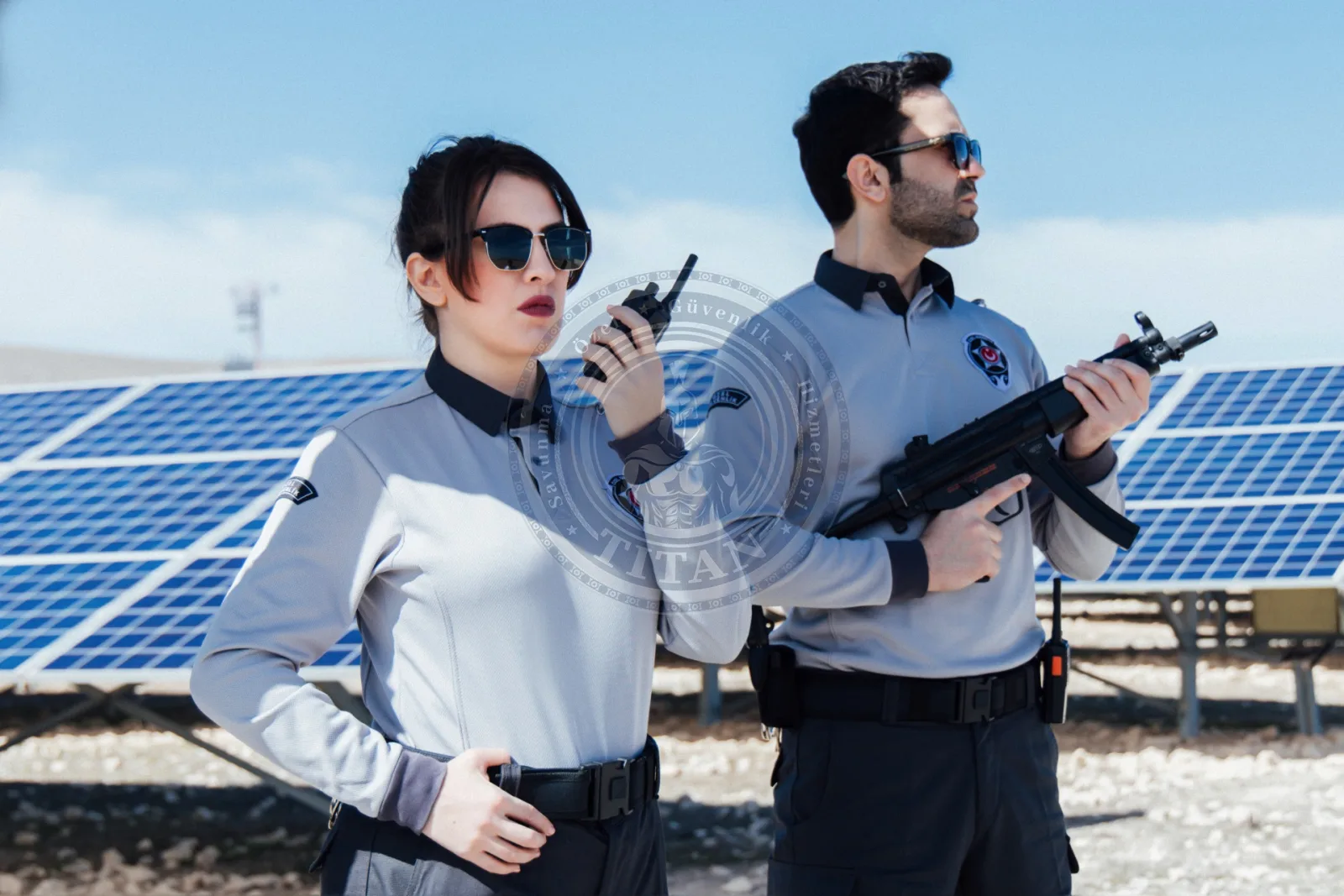
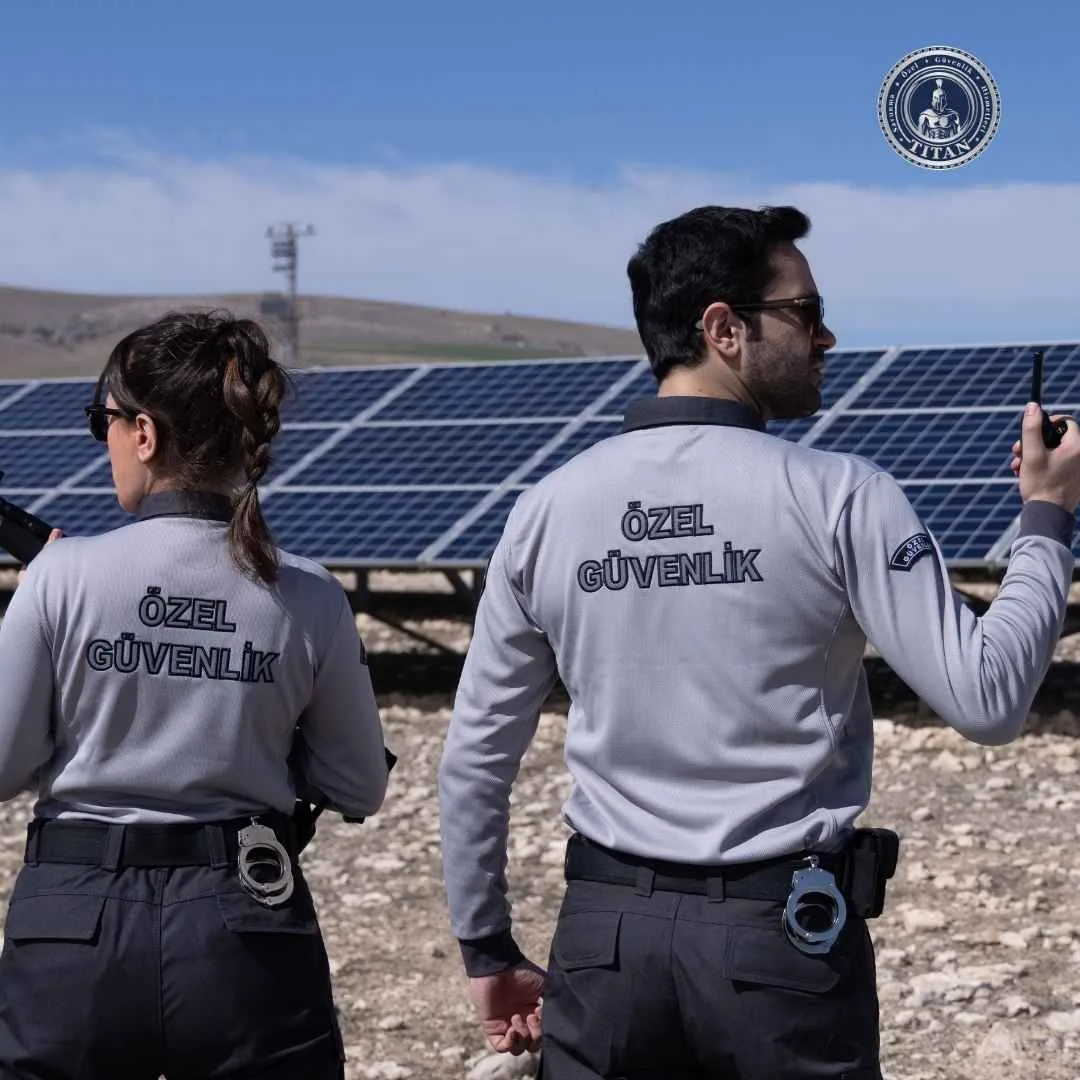
Private security officers have the powers listed in Article 7 of Law No. 5188, none of which is technical. They are not electrical staff and should not be asked to act as such. In practice:
- Guards stay outside switchyard fences and transformer bays, except on marked walkways where the plant's electrical lead has agreed them in writing.
- Guards do not open, close or reset anything electrical, including breakers, isolators, transformer cabinets or protection panels.
- Keys to high-voltage areas sit in a sealed key safe; the guard issues them only to names on the authorised list and records who took them and when.
- During fire, smoke or arcing at the substation, guards keep people away, call emergency services and the plant operator, and do not attempt firefighting near live equipment.
Law No. 6331 on Occupational Health and Safety requires employers sharing the same work area to cooperate, coordinate risk prevention and inform each other (Article 23). At an interface where the plant owner, an O&M contractor, a network company and a security provider all have staff, that coordination should include the security team's induction on electrical hazards and the exclusion zones.
Alarm and incident reporting routes
An intrusion at the substation is not only a theft risk; it can become a grid event. The Congressional Research Service's review of substation physical security in the United States describes the 2013 attack on the Metcalf substation in California and a later break-in at the same site in 2014, in which the utility said fence alarms had not been addressed. The lesson for any plant is plain: an alarm without a clear owner and response is close to no alarm.
Build an alarm routing matrix with at least these lines:
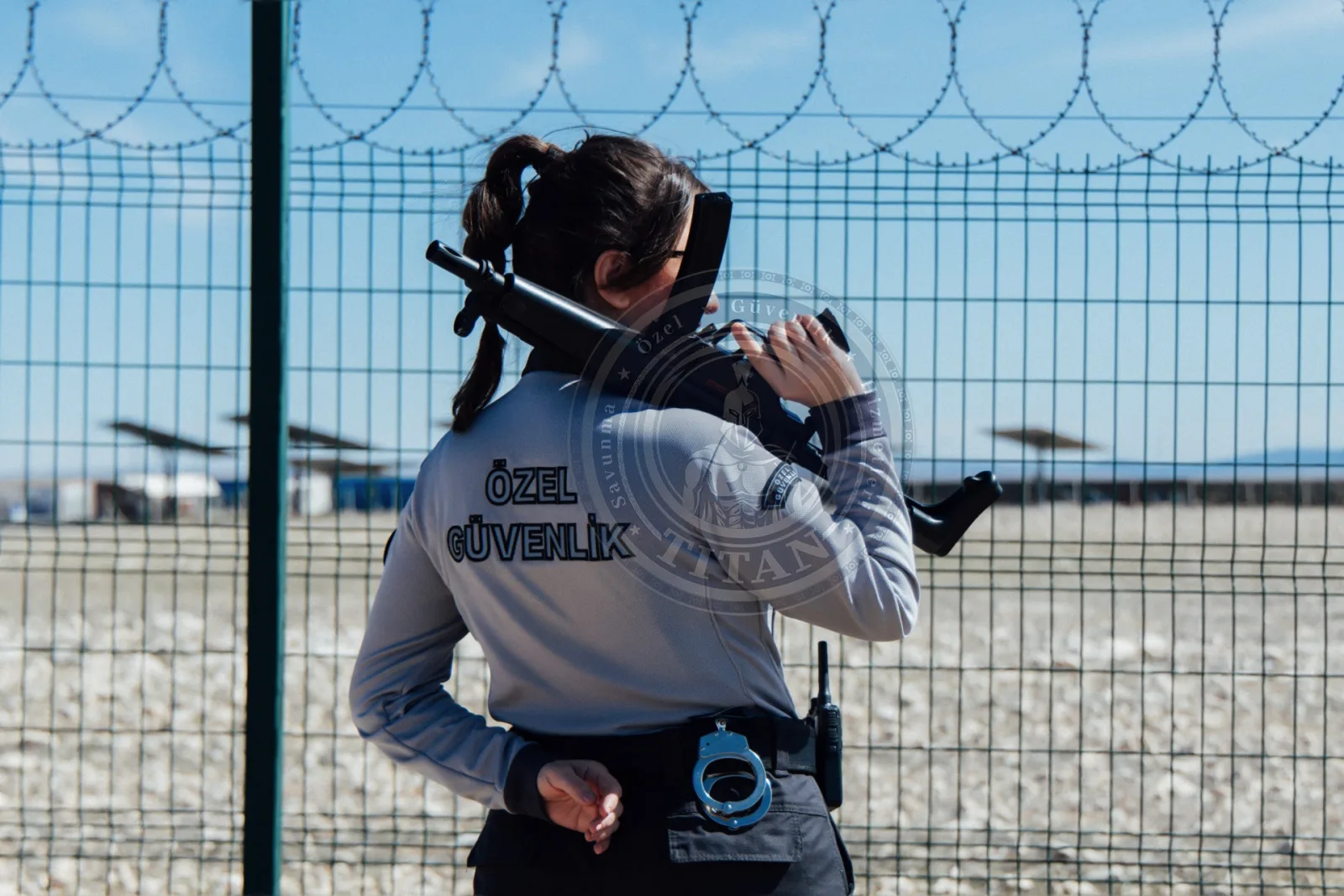
- Perimeter alarm at the plant fence: security responds and verifies, informs the plant control room.
- Alarm or damage at network company equipment: security informs the plant operator, who informs the network company's control centre; security does not enter the compound.
- Theft, sabotage or attack: police or gendarmerie, through 112, plus the plant operator.
- Fire or electrical emergency: emergency services and the plant operator at once.
Formal notifications to TEİAŞ or the distribution company remain the plant operator's duty. Security's job is to give the operator accurate, timed facts quickly enough to meet those deadlines. The IFC good practice handbook on security forces stresses that responses should be proportional to the threat and that public authorities remain responsible for law enforcement; the matrix should reflect that division.
Documenting the interface agreement
Most of the friction we see comes from undocumented assumptions. A short security annex, agreed between the plant owner, the O&M contractor and the security provider and aligned with the connection agreement, should contain:
- A site map marking ownership and operating boundaries, fences, gates and walkways.
- The authorised-person lists, how they are updated and who sends updates to the gate.
- Key and access-card control, including who changes codes after staff changes.
- The alarm routing matrix and a contact tree that works at night and on public holidays.
- Rules for photographs: substation layouts and protection details are sensitive, and the CRS review lists protecting information about critical substations, such as engineering drawings, among the main categories of physical security measures.
- A review date, and a trigger to review after any change in the connection or in contractors.
Checklist
- Connection agreement and single-line diagram reviewed for ownership and access provisions.
- Boundaries marked on a site map available at the gatehouse.
- Named authorised-person lists received and kept current.
- Verification route for unplanned grid crews tested at night.
- Guard instructions state plainly: no entry to live areas, no operation of equipment.
- Key safe and key log in place.
- Alarm routing matrix agreed and tested.
- OHS coordination meeting held with all employers at the interface.
For broader planning, see our pages on energy generation and distribution security and critical infrastructure security.
About Titan Savunma
Titan Savunma is an Ankara-based private security company licensed by the Ministry of Interior under Law No. 5188. We write gate, escort and alarm procedures that fit the plant's electrical safety rules, and work with international owners in English and Turkish with one point of contact and regular reporting. More on our work at solar power plants.
Sources and Further Reading
- EPDK — Elektrik Şebeke Yönetmeliği (Electricity Grid Regulation), consolidated latest version incl. amendment of 29.12.2025 (official EPDK document)
- EPDK — Electricity market legislation list (official)
- Law No. 6331 on Occupational Health and Safety (mevzuat.gov.tr)
- Law No. 5188 on Private Security Services (mevzuat.gov.tr)
- Congressional Research Service — Physical Security of the U.S. Power Grid: High-Voltage Transformer Substations, R43604 (2014, rev. 2015)
- IFC — Good Practice Handbook: Use of Security Forces (2017)