
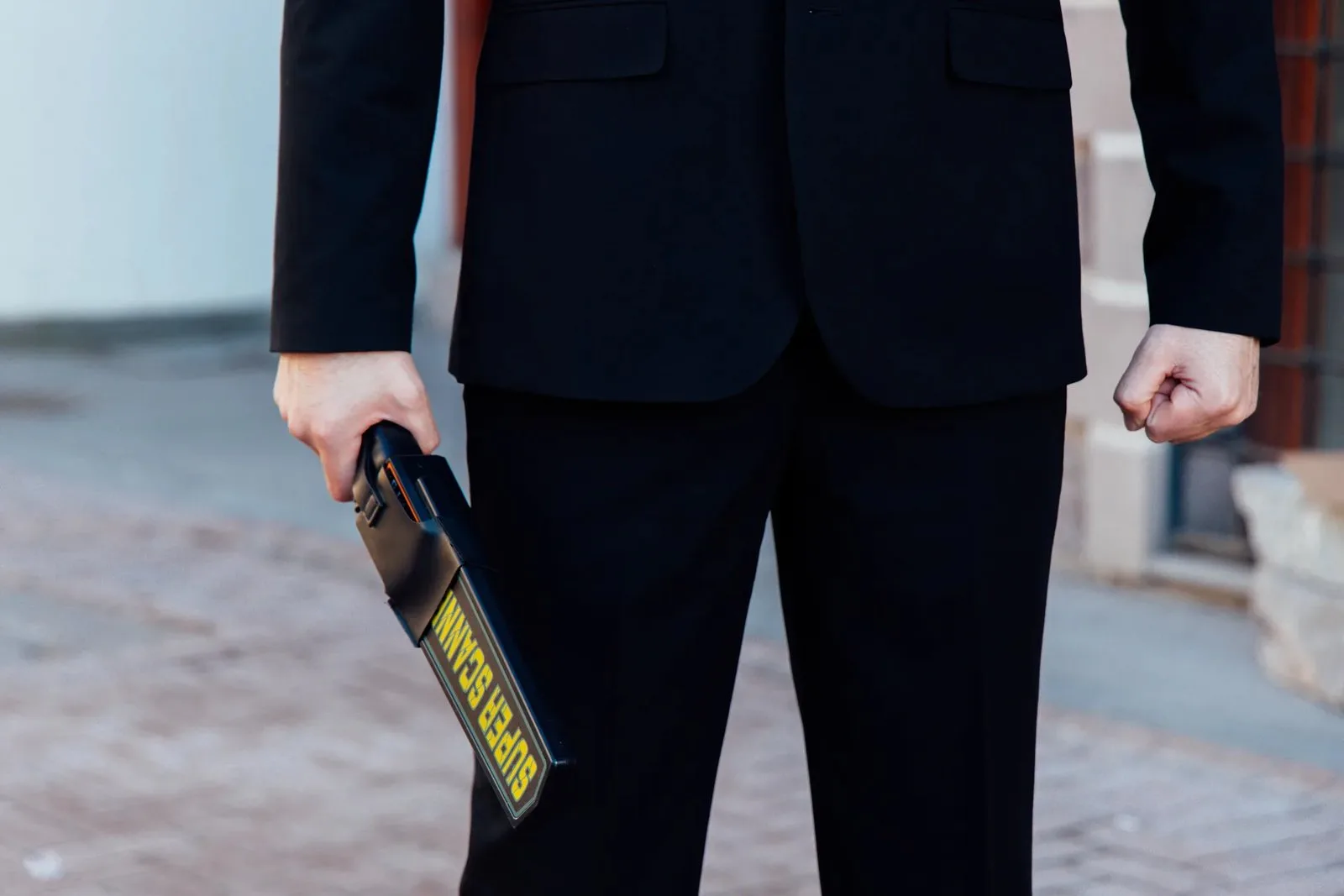
Short answer: For a guesthouse, bungalow or campsite operator in Tunceli, summer security rests on four tasks: registering guests properly on arrival and explaining the site's rules in a few sentences; lighting the night just enough to show the paths without spoiling the darkness of the valley; keeping a written procedure for the riverbank and for a guest who goes missing, so that everyone knows their part; and preparing the empty site for winter when the season closes. The national park itself is managed by the state. A site's private security team works only within the operator's own boundary; beyond it, the team's job is to alert the right public service quickly.
This article is general information, not legal advice.
Summer in the Munzur Valley: crowds and small operators
The Munzur Valley was declared a national park in 1971. A news report based on figures from the provincial governorate says about 2 million visitors entered the park in 2024 between January and 7 August, drawn by upland trips, rafting on the Munzur and wildlife watching (DHA, 2024). The businesses that receive them are small. According to the Social Security Institution (SGK) Statistical Yearbook 2025, the province's accommodation sector employs 236 insured people at 20 workplaces, food and beverage services 742 people at 182 workplaces, and sports and recreation 162 people at 6 workplaces. Overnight guests are spread across small sites, each run by a handful of staff, and whoever is on duty at night is often also covering reception, maintenance or the kitchen.
Climate is part of the plan. Data from the Turkish State Meteorological Service for 1960–2025 give Tunceli an average July maximum of 35.2 °C and an average July minimum of 18.9 °C; in August the figures are 35.5 and 18.5 °C, and the highest temperature on record is 43.5 °C. A day-to-night swing of more than 16 degrees on average can mean more campfires and heaters in the evening. Summers are dry, with 1.6 rainy days on average in July and 1.3 in August. That rises to 8.1 in October and 9.3 in November, when the average minimum is 2.1 °C and the lowest recorded is −16.4 °C. This shift sets the timetable for closing the season.
What does the research say?
1. More visitors, more calls for help
A study that used rank correlation on 2017 data from US national parks found that recreational visits were associated with search and rescue incidents (Kendall τ=0.415, P<0.001). Stays at developed sites within the parks (τ=0.447) and backcountry visits (τ=0.428) showed similarly strong associations (Lu et al., Wilderness & Environmental Medicine, 2021). This is a correlational study based on one year of park-level data and does not show cause and effect. Still, the message for an operator in Tunceli is plain: peak season is also when more guests walk out of the gate and may be late coming back.
2. Less experienced hikers spend longer on the trail
An observational study followed 617 hikers attempting to cross the Grand Canyon rim to rim in a single day in spring and autumn 2015; their median age was 43 and the median crossing time 11.9 hours. Those who had done the route before had shorter crossing times and reported less fatigue (P=0.02). Twenty per cent carried water bottles only, 31% a hydration bladder only and 48% both; the authors concluded that crossing in one day is hazardous (Pearce et al., Wilderness & Environmental Medicine, 2019). The canyon is not the Munzur Valley, but the study shows that preventive search and rescue starts before the walk, in a short conversation with the guest.
3. Tone decides whether water safety messages land
A social media campaign on water-related risks, co-produced with the park management service for national parks in Queensland, Australia, drew more than 4,000 link clicks in January–February 2024. Of the comments on the posts, 20% found the messages informative and useful, while another 20% found them patronising. Among 50 visitors surveyed in person, 32% said social media had influenced their decision to visit, and 32% recalled at least one safety message (Cornell et al., Health Promotion International, 2025). The in-person sample was small and drawn from one site, and the campaign ran mainly on a single platform (Instagram). The lesson for a site is that a riverbank warning given as short, local and respectful information is more likely to stick than a list of prohibitions that scolds the guest.
4. Night lighting in nature: little, low and directed
A review of ways to reduce the ecological effects of artificial light at night sets out five options: not lighting some areas at all, limiting how long lights stay on, preventing light from spilling beyond its target, lowering intensity and changing the spectral composition. The authors see keeping and extending naturally unlit areas as likely to be the most effective option, though it often conflicts with social and economic goals; designing lighting strategies that balance ecological, human, energy and carbon concerns is therefore a major challenge ahead (Gaston et al., Journal of Applied Ecology, 2012). For a campsite, this is concrete: light goes on paths, the washroom block, the car park and the assembly point, while the riverbank and wooded edges stay dark.
Arrival: registration and a short briefing
Article 2 of Türkiye's Identity Notification Law No. 1774 requires the responsible operator of any kind of lodging, guesthouses, camps and campsites included, to keep guests' identity and arrival and departure records up to date day by day and to have them ready for inspection by the general law enforcement agencies; under Article 3, the operator may delegate this duty to the site manager under its own responsibility. In short, guest registration belongs to the business. A security officer does not replace it, but keeps two small lists that support the reception routine:
- Vehicle and pitch list: which tent pitch or bungalow each party is using and the number plates of vehicles on site. When an unknown car appears in the car park at night, or when someone goes missing, this is the first sheet anyone reaches for.
- Optional return log: guests heading out for a walk, an upland trip or a river activity can leave their route and expected return time. It is a service, not a requirement, and it tells guests who will raise the alarm, and when, if they do not come back.
The arrival briefing should fit on one page: where the assembly point is, quiet hours, rules for campfires and barbecues, not going down to the riverbank after dark, and how to reach the officer on duty. Two plain cards, one in Turkish and one in English, are read far more often than a long set of rules.
The night routine: light, rounds and quiet
On a small site, night security is a set of habits. The first round happens before dark: are the path lights on, do the washroom door and lights work, has anything flammable been left near the fire points? Rounds through the night run at varying rather than fixed times, and fires are logged as put out before midnight. Downward-facing lights on motion sensors or timers save energy and keep the night sky for guests; a floodlight left on for hours dazzles people and hides whatever lies just outside its beam.
Cameras are limited to the entrance, the car park and shared paths. A camera pointed into washrooms or at tent and bungalow doors breaches both guests' privacy and Türkiye's data protection rules.
Emergencies at the riverbank: where does the officer's role end?
On sites next to the river, the first rule is that the officer does not go into the water. Water rescue is a specialist job; the officer's job is to call 112 at once, describe the location precisely, keep other guests back from the bank and keep the access road clear for the ambulance. A few things prepared in advance help:
- Low, reflective markers on the site's own stretch of bank showing where not to go down after dark, and a light barrier across the path to the water at night.
- A throw line and a lifebuoy at a point near the bank that everyone knows, checked at the start of the season and monthly.
- A note by the phone giving the site's full address, the gate location and the nearest access point in one line.
- A layout decision that closes low-lying riverside pitches to camping, or limits them to daytime use, where water may rise after sudden rain, with a clear evacuation path uphill.
A missing guest: a written first-hour procedure
Searching the national park is a job for public services; the site's role is to gather information that speeds up the search and to check its own grounds quickly. The procedure should be written down and kept at reception, within reach of the officer on night duty:
- Take details and note the time: the person's name, age and clothing, where and when they were last seen, whether they have a phone, and any route left in the return log.
- Check the site: bungalows, washrooms, the car park, shared areas and the riverbank within the site boundary, ticking each one off a list.
- Alert without delay: if the person is a child, an older guest or someone with a health condition, or has gone walking into the national park, call 112 straight away. For other cases, a waiting time should be written in advance and kept short.
- Support the public teams: have the vehicle and pitch list, the return log and camera footage ready when asked, and post an officer at the gate to meet arriving teams.
- Do not leave the family alone: give relatives a calm place to wait and a single person who keeps them informed.
- Close the record: once the guest is found, inform the public services, close the incident with a short report and add it to the end-of-season review.
Closing the season: preparing an empty site for winter
When the last guest leaves, the site enters a different risk period: months with nobody there and a road that snow may close. The closing week needs a written list:
- An inventory of saleable and portable equipment such as generators, heaters, kitchen equipment and camping gear, with valuable items stored in one locked room or off site.
- Draining the water system, switching off unneeded circuits at the distribution board, and checking door and window locks and shutters.
- If cameras and alarms stay on, deciding on remote monitoring, backup power during outages and who goes out when an alarm sounds.
- A winter schedule of on-site checks, especially after heavy snow or long power cuts, with a short record of each visit.
- A key handover record showing who holds which keys.
Checklist
| Area | What to do | Why |
|---|---|---|
| Registration | Guest registration stays with the business; the officer keeps the vehicle and pitch list. | The legal duty is the operator's; the lists save time in a search. |
| Return log | An optional route and return time for guests going walking. | Visitor numbers have been linked to search and rescue incidents. |
| Briefing card | One page, two languages, respectful tone: assembly point and riverbank rule. | In one campaign, a fifth of comments found the messages patronising. |
| Lighting | Downward-facing lights on timers; riverbank and wooded edges left dark. | Keeping dark areas is likely the most effective way to cut light pollution. |
| Fires | Designated points; a record that fires are out before midnight. | Dry summers and cool nights can increase fire use. |
| Riverbank | The officer stays out of the water; 112, a clear location, an open ambulance route. | Water rescue is specialist work. |
| Missing guest | A written first-hour procedure; for children and older guests, call 112 at once. | Searching the park is a public service task. |
| Season close | Inventory, drained pipes, remote monitoring, a winter check schedule. | Frost and more rain arrive in November. |
Common mistakes
- An officer leaving the site boundary to search the national park alone.
- Waiting for a missing guest to “turn up by morning”, with no waiting time agreed in advance.
- Floodlighting the whole campsite and leaving the riverbank and paths in deep shadow.
- Relying on a “no entry” sign for the river, or wording warnings in a scolding tone.
- Leaving fire points unwatched through the night.
- Presenting the officer as responsible for guest registration, which is the operator's legal duty.
- Locking the site at the end of the season and not visiting again until spring.
A note on practice in Türkiye
Law No. 1774 sets the framework for guest registration, and the duty lies with the operator. Under Law No. 5188, private security services are provided within the licensed site; order and search activity in the national park are the responsibility of the public authorities and the general law enforcement agencies. Article 9 of the same law requires that any incident calling for force or an arrest be reported by the fastest available means to the general law enforcement agencies. Night duty and work in the heat for seasonal officers belong in the risk assessment required under Occupational Health and Safety Law No. 6331, and cameras in the privacy notice required under Personal Data Protection Law No. 6698. Walking the site once after dark and once after the season has closed, before writing anything, shows the weakest points by itself.
The duties we take on at lodging and recreation sites are listed under hotel and tourism security, and the way we work with public buildings, care institutions and building sites in the province is described under private security company in Tunceli.
Titan Savunma is an Ankara-based private security company licensed by the Ministry of Interior under Law No. 5188 and certified to ISO 9001, 14001, 45001, 22301 and 28000. We work with international companies in English and Turkish, and our Tunceli City Manager, supported by our Eastern Anatolia Regional Directorate in Erzurum and our Ankara General Directorate, visits your site before the season opens to look at the entrance, night lighting and riverbank, and writes the missing-guest and closing procedures together with you. To arrange that visit, write to us via our contact page.
Sources and Further Reading
- Lu, Z. N., Briggs, A., Saadat, S. & Algaze, I. M. — The Associations Between Visitation, Social Media Use, and Search and Rescue in United States National Parks, Wilderness & Environmental Medicine 32(4):463–467 (2021)
- Pearce, E. A., Jelínková, L., Fullerton, L. ve ark. — Observational Study of Grand Canyon Rim-to-Rim Day Hikers: Determining Behavior Patterns to Aid in Preventive Search and Rescue Efforts, Wilderness & Environmental Medicine 30(1):4–11 (2019)
- Cornell, S., Piatkowski, T., Brander, R. W. & Peden, A. E. — Design and evaluation of a co-produced social media campaign to promote aquatic safety in Queensland national parks, Health Promotion International 40(6):daaf181 (2025)
- Gaston, K. J., Davies, T. W., Bennie, J. & Hopkins, J. — Reducing the ecological consequences of night-time light pollution: options and developments, Journal of Applied Ecology 49(6):1256–1266 (2012)
- SGK — İstatistik Yıllığı 2025 (Sigortalı ve İşyeri İstatistikleri, Tablo 1.11)
- Meteoroloji Genel Müdürlüğü — Resmî İstatistikler: Tunceli (1960–2025)
- DHA — Munzur Vadisi Milli Parkı'na 2 milyon ziyaretçi (07.08.2024; Valilik verisi)
- 1774 sayılı Kimlik Bildirme Kanunu (md. 2, 3), Mevzuat Bilgi Sistemi
- 5188 sayılı Özel Güvenlik Hizmetlerine Dair Kanun (md. 9), Mevzuat Bilgi Sistemi