For Tunceli’s Public Buildings, Care Institutions, Munzur Valley Facilities and Building Sites · Turkey

Private Security Company in Tunceli

From public service buildings and care institutions to the guesthouses and recreation sites of the Munzur Valley and the province’s housing and infrastructure projects, Titan Savunma works across Tunceli as a private security company whose operating licence was granted by the Ministry of the Interior on the basis of Law No. 5188. An organisation preparing to choose among security companies in Tunceli should first ask who will direct the team on the ground, before it looks at unit prices. With us the answer is our Tunceli City Manager, who inspects your site on the first visit, picks the officers, follows the duty pattern every day and handles correspondence with your organisation. Two tiers sit behind that local lead. Our Eastern Anatolia Regional Directorate, which has its seat in Erzurum, refines each plan alongside the City Manager, dispatches auditors unannounced and fixes the content of training and the layout of reports; above it is our Ankara General Directorate. Each plan is built on Tunceli’s own picture: a province where close to three in four dependent workers are employed by the state, a national park that fills up in summer, building sites whose workforce is growing fast, and a climate that has recorded both minus thirty and forty-three degrees.

Private Security Company in Tunceli

Service Scope

The Kinds of Site We Take On in Tunceli

Tunceli has a small but fast-growing labour market. The 2025 yearbook of the Social Security Institution (SGK) lists 1,565 workplaces and 10,679 compulsorily insured employees, up by 84 per cent on the 5,797 recorded in 2016. Public-sector workplaces account for 38.9% of insured staff; nationally the figure is only 12.5%, which places Tunceli fourth among the 81 provinces. Manufacturing makes up just 6.2%, while building construction, with 2,054 insured staff, is the province’s largest single source of jobs. That picture is why we divide the work into the four kinds of site below.

Public Building Security in Tunceli

At the service buildings of provincial and district bodies, every post in the tender specification becomes a written instruction. We set up a routine in which officers at the enquiry desk point visitors to the right unit, try doors, windows and plant rooms on timed rounds after hours, and leave a log with the organisation at the end of each day.

Hotel and Recreation Site Security in Tunceli

We write separate periods into the contract: order in hotel, guesthouse and restaurant car parks during the summer months when the Munzur Valley fills with visitors, the flow in and out on festival and event days, and night-time watch over premises left empty once they close for the year.

Hospital and Care Home Security in Tunceli

At hospitals the law requires an unarmed team; at residential care and rehabilitation centres the team is set up according to the institution's needs and the permit granted. In care homes we use officers who stay at the same post for long periods and come to know residents and regular visitors, and we keep the record of comings and goings in the form the institution decides.

Construction Site and Industrial Zone Security in Tunceli

On housing, road and infrastructure sites we watch over reinforcing steel, cable, fuel and plant through the night. At the small production units of the organised industrial zone, such as food, joinery and packaging works, we provide perimeter rounds outside working hours, gate checks and vehicle marshalling at dispatch times.

A Planned Start

How the Service Is Planned

Three points are settled with you before any price is written for a public building, care home, facility or building site in Tunceli: which posts stay open all year and which only for the summer season or the life of the build; how outdoor duty will be kept up in snow and frost in winter and under a fierce sun in summer; and how often, and in what form, the officers’ check records will reach you.

  1. A Site Visit That Reads Both Seasons

    Our Tunceli City Manager walks your site at its busiest hour, noting the number of gates and access points, poorly lit spots, areas outside camera coverage, and posts likely to be cut off by snow in winter or left without shade in summer.

  2. Applying to the Governorship of Tunceli

    It is the organisation buying the service that petitions the Governorship of Tunceli. Our City Manager sits down with you to assemble the supporting papers and goes through the bundle once more so that nothing is lacking by the time it reaches the commission’s agenda.

  3. Selecting Officers and Writing Post Orders

    The City Manager decides who works which shift and who leads it, and drafts the orders for each post around your working day, visiting hours and the season. Where a site needs fifteen or more officers, the security supervisor the law calls for is named at this stage as well.

  4. Spot Checks and a Monthly Report

    Day-to-day supervision on site is the City Manager’s job. Separately, auditors from the regional and general directorate tiers drop in without warning and compare what is written in the orders with what is happening at the post. Shortcomings found, the action taken and matters still being tracked all appear together in the monthly report.

Your Sector’s Priorities

Local Management in Tunceli, Backed by Our Regional and General Directorates

In Tunceli, 86.3% of workplaces employ fewer than ten people, and only two have more than 250 staff. Yet the 31 workplaces with fifty or more employees account for 36.2% of insured staff. The province has 14,233 civil servants, more than its number of compulsorily insured employees under the main scheme, and women make up 31.4% of the insured workforce. In a province like this, security work is concentrated in a handful of large institutions, each with its own hours, visiting arrangements and permit rules. What makes the difference is a local manager who knows those routines and can change a practice that is not working without waiting; in Tunceli that is our City Manager. The regional tier in Erzurum works with the City Manager on drafting plans, takes its own separate look at sites and draws up the training calendar. Report templates and rules that apply throughout the company come down from the general directorate tier in Ankara.

Law Enforcement Background

The professional experience and security training of retired law enforcement personnel within our team contribute to our approach.

  • Heating in Winter, Shade and Water in Summer

    January means a warmed booth and several layers; July means an awning, cold water and briefer outdoor spells in the midday heat. Each gets its own page in the orders.

  • Staffing That Follows the Season and the Build

    Extra posts for the summer rush and the scaling down of the team when a build finishes are defined in the contract from the outset.

  • Never Missing a Governorship Deadline

    Dates for sending the contract to Tunceli’s governorship and for reporting arrivals, departures and transfers sit on the City Manager’s own schedule.

For International Companies

For international brands in Turkey, we offer a single point of contact, a written scope and regular reporting. Work with us as your security partner

Expert View and Recommendations

Criteria for public buildings, care homes, park facilities and building sites when choosing a security firm in Tunceli

The questions an organisation buying security in Tunceli asks grow out of the province’s scale and its seasons. With almost two fifths of insured jobs on the state side, how does the wording of a tender reach the officer at the gate? Where residential care weighs more heavily in employment than almost anywhere else in Turkey, what should an unarmed team focus on? How does security at facilities expand with the national park’s summer crowds? And how is outdoor duty sustained in a climate where snow has lain 285 centimetres deep and the thermometer has reached 43 degrees? The six sections below answer these questions within Law No. 5188, drawing on records from SGK, the meteorological service and the Fırat Development Agency.

Research we draw on (5)
  1. 5188 sayılı Özel Güvenlik Hizmetlerine Dair Kanun — Mevzuat Bilgi Sistemi
  2. Özel Güvenlik Hizmetlerine Dair Kanunun Uygulanmasına İlişkin Yönetmelik (Mevzuat Bilgi Sistemi, güncel metin)
  3. SGK İstatistik Yıllığı 2025
  4. Fırat Kalkınma Ajansı — Tunceli İl Yatırım Ortamı
  5. Meteoroloji Genel Müdürlüğü — Tunceli il istatistikleri

Public buildings and the SGK data: the highest security-sector share of employment in Turkey

According to 2025 SGK data, 38.9% of compulsorily insured employees in Tunceli work at public-sector workplaces. Add civil servants and roughly 73.8% of the province’s dependent workforce turns out to be on the public payroll; the Turkish figure is 28.1%, and only one province ranks above Tunceli. The same yearbook shows 14 workplaces and 829 insured employees in investigation and security activities: 7.76% of the province’s insured workforce. The Turkish average is 1.51%, so Tunceli has the highest share of all 81 provinces, and private security is its second-largest employer after building construction. The yearbook offers no explanation for this high share. Business administration and support also counts 598 insured staff, a share more than twice the Turkish level.

Where public buildings procure guarding by tender, we add value in four ways:

  • From tender text to orders: Each guard position, shift and headcount named in the tender gets its own instruction page, reissued whenever the tender text is amended.
  • The enquiry desk: Members of the public are pointed to the department they need and calm is kept in the waiting hall; whether anything is asked of callers is for the organisation to rule on.
  • Evenings and weekends: Doors to the archive, the plant room and the IT room are tested, with the time of each pass written in the book.
  • The payment file: The end-of-month report is delivered ready to drop into the organisation’s payment and internal audit file unaltered.

Officers are given nothing beyond protection and security; carrying documents, the switchboard and administrative work belong to the organisation’s own staff.

Health and residential care: an unarmed, calm team built for continuity

The 2025 SGK yearbook shows 747 insured employees in human health services in Tunceli. Residential care has 12 workplaces and 141 insured staff; the activity carries close to four times its national weight here, which makes Tunceli second in Turkey by share. Taken together, the health, education and public administration sectors account for 14.9% of the insured, set against 11.3% nationally.

At a hospital officers are unarmed by law (Law 5188, Art. 8), and we apply the same rule at care homes. At these institutions we build the plan on the following points:

  • A familiar face: In care homes we keep changes of officer to a minimum and work with people whom residents and regular visitors know.
  • Door routine: Doors that close at night, areas residents should not leave alone and visiting hours are put in writing together with the institution.
  • Emergency entrance: At hospitals the emergency department entrance has its own post, and the reporting chain set by hospital management is followed when an incident occurs.
  • Vehicle lane: Regular reports to the operator keep the lane used by ambulances and service vehicles clear in winter snow and ice as well.

With women making up 31.4% of insured staff in the province, we also plan female officers with the institution for wards and units where women residents and patients stay. Clinical decisions, admissions and care remain with the institution’s own staff.

Munzur Valley National Park and the summer season: a plan split into periods

Munzur Valley National Park was declared in 1971. According to governorship figures reported in the press in August 2024, around 2 million people had visited it since the start of that year. The Fırat Development Agency’s investment environment document for the province lists nature and cultural tourism among Tunceli’s main strengths, including the Munzur springs and the Pülümür Valley. SGK data for 2025 show this activity in registered employment: sport, amusement and recreation employs 162 insured staff, roughly 3.5 times the weight the activity has nationally, while 742 people work at 182 food and drink businesses and 236 at 20 accommodation businesses.

At these facilities we divide security into three periods across the year:

  • Summer season: Extra posts in car parks, entrances and shared areas, with shifts moved to match traffic at weekends and public holidays
  • Festival and event days: Keeping crowds from bunching on entry and exit routes, emergency exits clear, and a meeting point agreed in advance for reports of lost children
  • Closed period: Night rounds of shut buildings; locks and glazing tried; burst or frozen pipes and any trace of leaking passed straight to the owner

Managing the park and its conservation rules is a matter for the public body responsible; our team works only on the premises it serves.

Building sites and small-scale industry: night watch at temporary workplaces

The 2025 SGK yearbook shows 3,035 insured employees at 272 temporary workplaces in Tunceli, or 28.4% of the province’s insured workforce. Building construction counts 182 workplaces and 2,054 insured people, carrying over double the weight it has in Turkey as a whole. Civil engineering, with 617 insured staff, runs at more than treble the national proportion. Electricity, gas and steam, with 192 insured staff, stands at about 2.4 times the Turkish ratio. Manufacturing, by contrast, accounts for only 663 insured staff, or 6.2% of employment.

According to the Fırat Development Agency’s investment environment document, Tunceli Organised Industrial Zone was set up in 1997 and covers 106 hectares in 43 plots, which it says are allocated free of charge; the document names food, textiles, PVC and aluminium joinery, plastic packaging and timber as its leading sectors.

On these sites we set up the plan as follows:

  • Watching materials: Night patrols for reinforcing steel, cable, fuel stores and plant, with deliveries logged by time
  • Perimeter and lighting: Fences, gates and floodlights checked at the start of every shift, and faults reported to the site manager without delay
  • Flexible staffing: The team shrinks as work moves from shell to finishing and again when the job ends
  • Industrial zone units: Perimeter rounds outside working hours and vehicle marshalling at the gate during dispatch

A climate of two extremes: duty between 285 cm of snow and 43.5 °C

The meteorological service’s statistics for central Tunceli spell out the conditions officers work in: a January mean of −1.8 °C, a mean January minimum of −5.3 °C, a lowest recorded temperature of −30.3 °C and a record snow depth of 285 cm. Summer turns the picture round: the July mean is 27.1 °C and the highest reading has reached 43.5 °C. According to the Fırat Development Agency, the provincial centre lies at about 1,050 metres.

For every site we therefore write two sets of seasonal orders:

  • Winter: A sentry cabin heated inside, with its door turned away from the prevailing wind; thermal under- and outerwear and studded or deep-tread soles; a call-in list for when snowfall thickens, and nobody stepping away until the relief has taken over
  • Summer: Shade, drinking water and light-coloured lightweight clothing, shorter spells at outdoor posts around midday and shift leads watching for signs of heatstroke
  • Equipment: Regular checks that cameras, barriers and radio charging points work in both freezing cold and intense heat

Fire, flash flooding, heavy snow and an extended loss of mains power are the headings an organisation’s contingency scenario ought to name. The work it gives officers is concrete: freeing gates manually, leading people to a safe assembly area, keeping a passage open for emergency crews and helping count who remains indoors. We tie each step to an item in the organisation’s plan and practise it together in drills.

The governorship permit, the statutory notice calendar and how we share the work in Tunceli

The organisation that will buy in the guarding is the one that sets the legal process going. Article 3 of the Law has it apply, under its own title, to the Tunceli Governorship. The provincial private security commission takes up the request, and its conclusion turns into a permit with the governor’s signature. Article 8 of the Regulation says the matter is to be concluded inside ten working days. Since the documents demanded shift from time to time, it pays to get the latest list from the governorship before sitting down to prepare the file.

Once the service is under way, our team runs the calendar. A copy of the contract is handed to the governorship before the first service day’s working hours close (Law, Art. 5; Regulation, Art. 10). For anyone added to the roster, leaving it or moved to a different post, the governorship must hear within fifteen days (Law, Arts. 11–12; Regulation, Art. 8). Sites whose headcount reaches or passes fifteen are given a security supervisor with at least an associate degree (Law, Art. 5).

The person who watches these dates and keeps the site running is our Tunceli City Manager. Because one manager does the survey, chooses the team, looks in on the posts each day and talks to you, whoever notices a fault also holds the power to put it right. The regional tier, working from Erzurum, stands with the City Manager at the planning stage and sends its auditors in without notice; the general directorate in Ankara is the umbrella that tier reports to, setting training and report standards together with it.

In recruitment we give priority to people living in Tunceli; someone who knows the province’s winters and summers also knows what outdoor duty demands. One caveat: the SGK figure covers only workplaces registered under the security activity code, so guards employed directly on an institution’s own payroll are not included in it. Our proposal puts a number on how many routine checks and surprise visits there will be, and what they find lands in front of you in each month’s report.

Before We Speak

Frequently Asked Questions

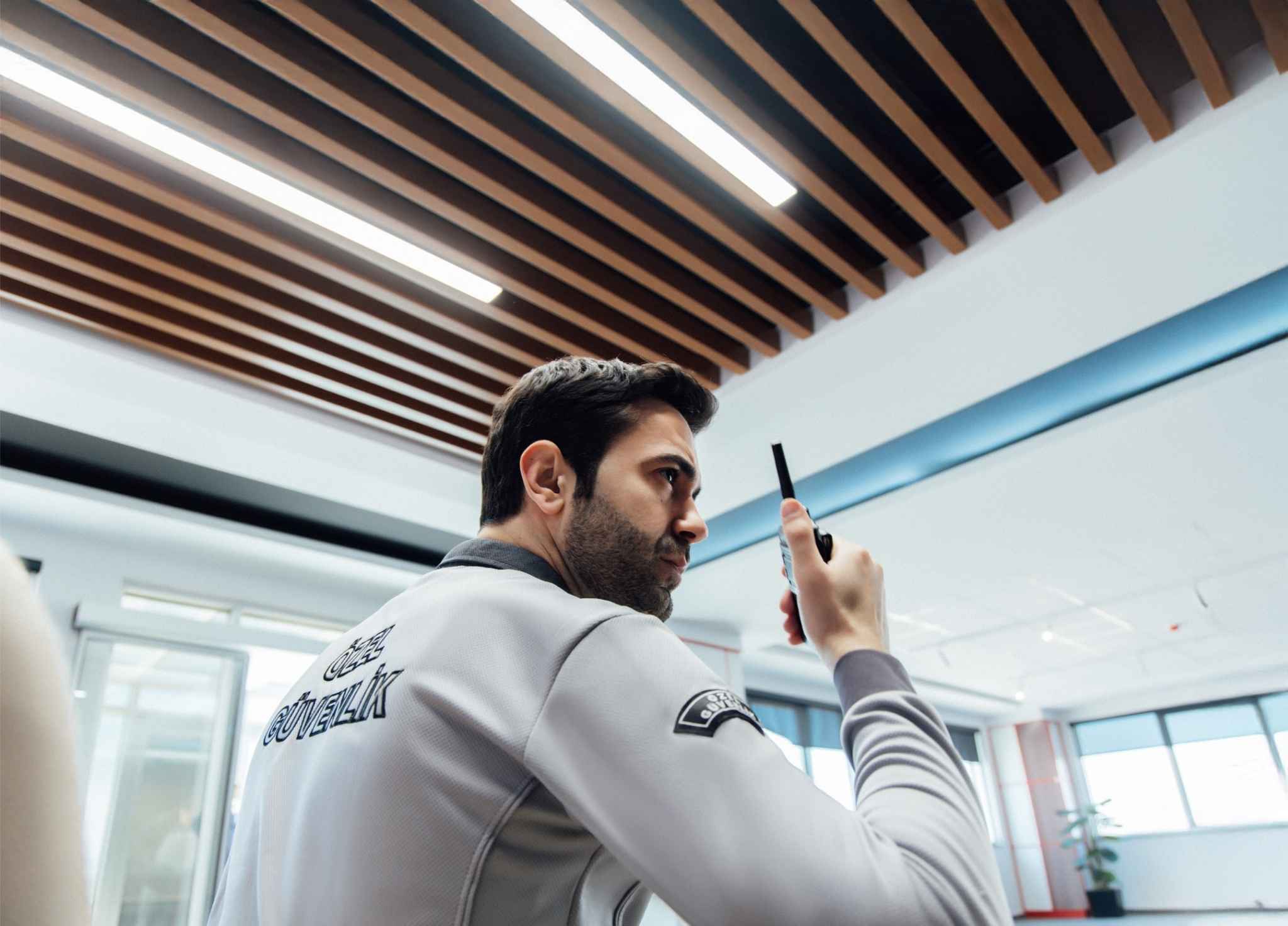
A Titan Savunma officer in a private security uniform communicating by radio inside a building.
What should you look at when comparing security firms in Tunceli?

Start by confirming the licence: a firm without an Interior Ministry operating permit under Law No. 5188 should not get as far as the table. Then put these in writing to each bidder: who heads the Tunceli team, who turns up unannounced and how many weeks apart, how the gap is filled when an officer is on sick leave or holiday, what happens to outdoor posts on snowy or very hot days, how extra summer posts are opened, and in what document the log of checks is handed to you? Comparing the written answers also reveals which line item a gap between prices comes from. Public bodies can add most of these points to the tender specification.

Who will answer for our team in Tunceli, and what stands behind them?

Responsibility lies with our Tunceli City Manager. This is the person who walks your site on day one, selects and starts the officers and checks on them daily, and the first number you dial when you want another post, are unhappy with an officer or want to know how a problem was put right. The City Manager answers to the regional tier headquartered in Erzurum, and that tier to the general directorate in Ankara. The regional tier contributes to the plan and sends auditors to your site without telling anyone first, while training content and the shape of the monthly report are agreed jointly with the general directorate. One contract thus brings together the speed of a local manager and the assurance of a corporate structure.

Can armed officers be stationed at our hospital or care home?

Not at a hospital: under Article 8 of Law No. 5188, private security staff at health and educational institutions may not carry weapons. We apply the same rule at care homes, so everyone we send to either is unarmed. What these places really need is not a weapon but an officer who can defuse tension by talking, who knows patients, residents and their families, and who passes incidents to management without delay. In care homes we agree with the institution which areas residents can move around in safely and which doors close at night, and make sure officers keep to those rules. Clinical decisions, admissions and care work stay with the institution’s own staff.

How do I apply for a private security officer job in Tunceli?

Send your application through our Careers page. Hiring decisions in Tunceli rest with our City Manager, who weighs each applicant against the nature of the site, its shift pattern and the seasonal conditions. Article 10 of the Law lists the core requirements, among them citizenship of the Republic of Turkey, having turned eighteen and having completed the basic course with a pass in its exam. Nobody goes on duty until the governorship has issued the work permit and ID card (Law 5188, Arts. 11–12).

How is outdoor duty organised in Tunceli in both winter and summer?

Records kept by the meteorological service for central Tunceli give a January mean of −1.8 °C, a measured low of −30.3 °C and snow lying up to 285 cm; the same records put the July mean at 27.1 °C, and the thermometer has touched 43.5 °C. We therefore write the orders separately for each season. In the cold months: a booth that warms up, winter kit worn in layers, boots that grip and a standby list for heavy snow. In the hot months: shade, water, light-coloured lightweight clothing and more frequent changes around midday. Officers report icy paths or equipment failing in the heat to the operator; repairs and snow clearing are the operator’s responsibility.

How is security scaled up at facilities during the Munzur Valley season?

At the accommodation and food businesses around the national park, the workload multiplies in summer. That is why the agreement is cut into phases: additional posts in car parks, entrances and shared areas during the high weeks; shifts moved to follow traffic at weekends and public holidays; separate crowd guidance on festival and event days so that exit routes stay clear; and night rounds of empty buildings once the season ends. Running the park and enforcing its conservation rules belong to the public body responsible; our team works only on the premises it is contracted to, and guest registration and room matters stay with reception.

We are a public body: how do we apply for a permit, and how long does it take?

The petition carries your organisation’s name and is handed to the Governorship of Tunceli. The provincial private security commission debates it and the permit takes effect when the governor signs the decision; the Regulation wants the whole procedure finished within ten working days at most. For a body that buys by tender, post locations, shift numbers and report content are already written into the specification, so we prepare a cross-reference table showing which clause each set of post orders answers. As the governorship’s document list changes from time to time, our City Manager checks the current version with you before the file is prepared.

What is the security team’s role in our emergency plan?

Every organisation should have a written scenario for a fire, a flash flood, heavy snow or a power cut lasting hours. The organisation drafts the scenario; we carry out on site the portion that falls to the officers. That portion typically means releasing powered gates and barriers by hand, taking people to a safe assembly area, helping check against the shift list who is still inside, keeping the entrance clear for the fire service and ambulances, and stopping people entering dangerous areas. In care homes it also includes helping staff evacuate residents with limited mobility. Each task is pinned to a named officer and tried out whenever the organisation holds a drill.

Ask for a Written Security Plan for Your Tunceli Site

Through the form, describe the site, count its gates and entrances for us, outline your working or visiting hours, whether the service is needed all year or only for a season or the life of a build, and whether you will buy it by tender or direct contract. Our Tunceli City Manager will be in touch to fix a survey date, and a duty plan and price that take both winter and summer into account will then follow in writing.

Request a Security Proposal

Contact

Request a Security Proposal for Your Organisation

Tell us your facility type, location and general requirements. Together, we can define a service scope that suits your organisation.

Tell Us What You Need

Fields marked * are required.

What Happens Next

  1. Initial DiscussionWe respond within 15 minutes and clarify your requirements and facility details together.
  2. Service ScopeWe assess staffing needs and the working arrangements.
  3. ProposalWe prepare our proposal for the agreed service scope.

General Directorates

Ankara · Çankaya
İstanbul · Levent

Nine regional directorates · 81 provinces

Looking for a role? Visit our careers page