
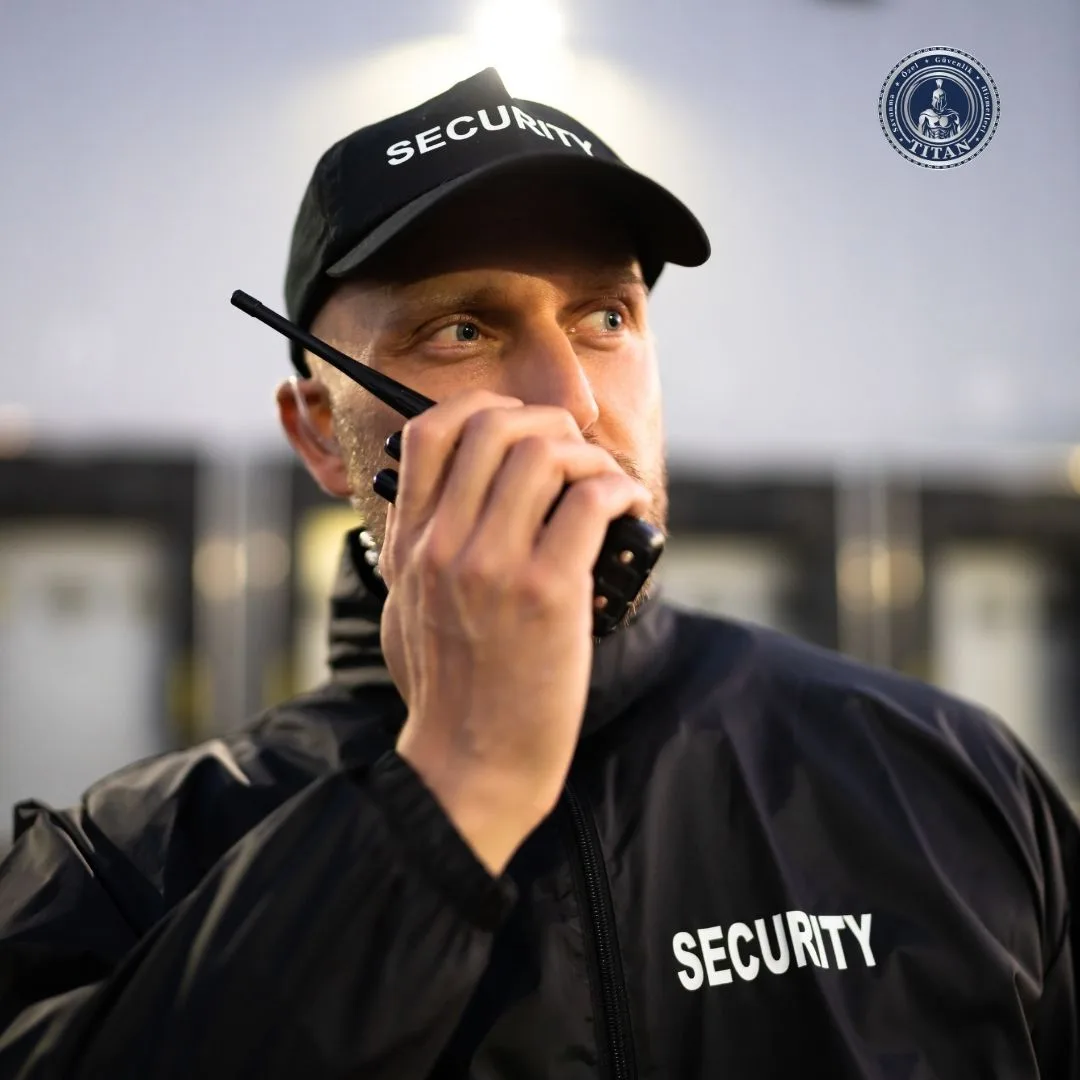
Two-way radio discipline for security teams rests on four habits: listen first, say who you are calling and who you are, keep the message short and clear, and have critical information read back. These habits only work with a written channel plan, call signs everyone knows and a rule that says who owns the channel in an emergency. The radio is just a tool; what holds a team together is the discipline of using it.
This article offers a practical radio discipline framework for shopping centre, office, factory and event teams. This article is general information, not legal advice; in Turkey, the only authority on radio permits and frequencies is the Information and Communication Technologies Authority (BTK).
Channel plan and responsibility list
Radio discipline starts with a one-page channel plan, not with the handset. Hand it out at every shift briefing and post it in the control room. At a minimum it states which channel is for what, who monitors which channel, who owns each channel and what the call signs are.
| Channel (example) | Who monitors | Used for |
|---|---|---|
| Operations | All officers on site and control | Daily flow, patrols, gates and visitors |
| Command | Shift supervisor, area leads, control | Decisions, moving resources |
| Technical and logistics | Engineering, car park, cleaning coordination | Faults, lifts, power, supplies |
A small site may need only one channel; a large event will need more. Two rules never change. Every channel has an owner, usually the control room or the shift supervisor. And call signs belong to roles and places, not people: "Control", "Gate 3", "Car Park 1", "Supervisor". That way it stays clear who is where when shifts change, and names are not broadcast on an open channel.
Message structure: who, to whom, what
A good radio message follows this order:
- Listen. Do not cut into a conversation. After pressing the push-to-talk key, pause briefly before speaking so your first word is not clipped.
- Call: the station you want first, then yourself: "Control, Gate 3."
- Wait for the answer: "Gate 3, Control, go ahead."
- Give the message: where, what, what you need. "Unregistered delivery van at Gate 3, holding it outside, request approval."
- Get a read-back for critical information: "Control copies, unregistered van held outside Gate 3, checking with the supervisor."
- Close: "Gate 3, out."
Short messages beat long explanations; take long issues to the phone or face to face. Say numbers, plates and floor levels slowly and one by one. Remember that radio traffic may be heard by others: rather than names, ID details or sensitive specifics on an open channel, use phrases such as "a visitor" or "registered staff member" and pass the detail through the log or in person.
Codes or plain language?
Many teams use numeric codes familiar from films. The trouble is that codes mean different things to different teams and are misunderstood in a crisis. The US incident management framework, NIMS (FEMA, 2017), is clear on this: it states that using plain language and clear text rather than codes in incident management is a matter of public safety, especially the safety of responders, and that personnel should avoid acronyms and jargon unique to one organisation during incidents involving several organisations. The same document accepts that tactical language is occasionally warranted, for example during an ongoing terrorist event, and that guidance on it belongs in an incident-specific communications plan.
A reasonable middle way for private security:
- All routine communication is in plain language.
- Where needed to avoid alarming the public, define only a few calm codes, for example for a medical situation, a lost child or preparing for evacuation. They are written down, repeated at briefings and practised in drills.
- When police, fire or medical teams arrive, talk to them in plain language; in-house codes stay in-house.
Channel priority in an emergency
When an incident starts, the biggest risk is everyone talking at once. A rule written in advance prevents it:
- Emergency messages start with an agreed prefix and take priority over other traffic.
- The control room or the supervisor takes over the channel: "All stations, this channel is for emergency traffic only." Anyone not involved stays silent or moves to another channel.
- The officer at the scene gives short, regular updates; control passes decisions and tasks in one voice.
- When the incident is over, the channel is explicitly returned to normal and key messages are written in the occurrence log with times.
The radio carries information; people decide who goes, who speaks to the police and who calls an evacuation. The control room operator's job is to piece together fragments of information and maintain the team's situational awareness. Post orders that write this down are worth more than the best handset.
Maintenance, charging and the legal frame
- Test at handover: every officer does a short radio check and looks at battery level when taking over a handset.
- Charging routine: a charging station, spare batteries and a named person responsible. Plan battery swaps for long events.
- Accessories: earpieces and lapel microphones help hearing in noisy crowds and keep traffic more discreet.
- Issue and loss: handsets are numbered and signed out; a lost radio is reported immediately.
- Fallback: what to do when radio fails (phones, a meeting point) is written down.
On the legal side, BTK's guidance on radio installation and usage explains that users who install and operate radio equipment requiring frequency assignment must obtain the assignment as well as a radio installation and use permit and a radio licence; equipment exempt from frequency assignment falls outside this. Which case applies to you is a topic for a separate article. Interference with communications is a matter for the competent authorities only; signal jammers or similar devices have no place on a site.
Checklist and common mistakes
- Is there a one-page channel plan and call-sign list, handed out at briefings?
- Does every channel have an owner?
- Are the emergency prefix and channel takeover rule written down?
- Are codes few, written and trained, and is plain language used with outside agencies?
- Are batteries, charging and fallback communication organised?
Common mistakes: long chats on the channel, names broadcast in the clear, critical messages without read-back, codes everyone understands differently, and starting an event with flat batteries. To prepare an event communication plan with channels and responsibilities, try our event security planner.
Building the communication plan together
Titan Savunma is an Ankara-based private security company operating under a Ministry of Interior licence issued under Law 5188, certified to ISO 9001, 14001, 45001, 22301 and 28000, and working with international companies in English and Turkish. We plan guarding together with your technology: a monitoring, verification and response plan that covers channels, call signs, emergency priority and who decides and who goes. See our concert and event security page.


