
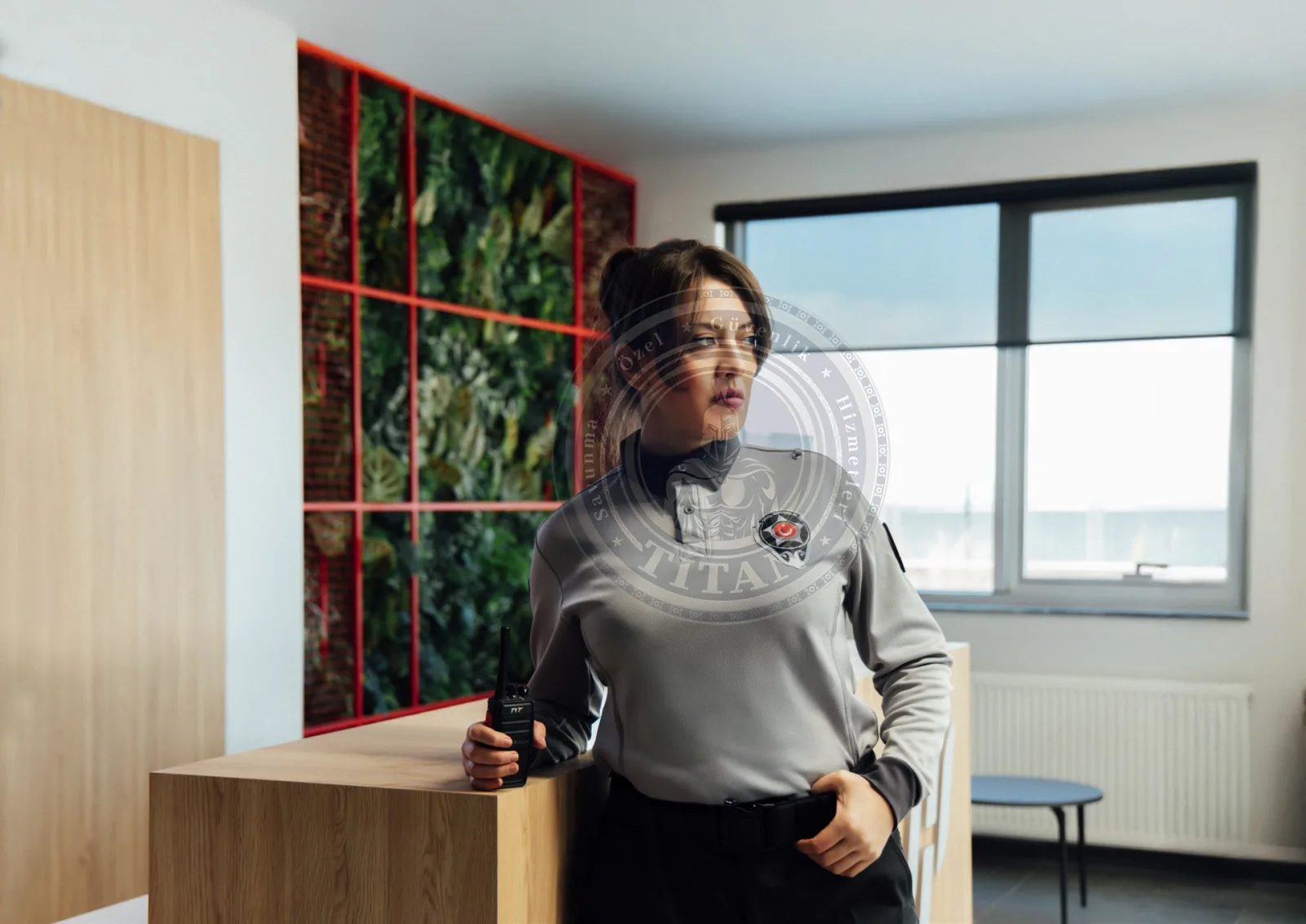
A visitor management system brings pre-registration, identity checks at arrival, temporary badges, escorting and sign-out into one flow. On whether an office in Turkey may photocopy a visitor's ID, the clearest official signal is the Personal Data Protection Board's principle decision for the hotel sector: the Board accepted that hotels may ask to see the ID to verify recorded details, but found that taking a photocopy goes beyond what is needed and has no legal basis. The decision does not bind offices directly, but its reasoning draws a sharp line between seeing an ID and keeping a copy of it.
This article is general information, not legal advice. Legal points are taken only from the Authority's own decisions, guidance and publications and from the law text.
What a visitor management system does
Replacing the paper book at reception, a well-run system improves both the guest experience and security. Typical functions:
- Pre-registration: the host registers the visitor in advance, so reception knows who is coming, to see whom, and when.
- Arrival check: an officer confirms who the visitor is and notifies the host.
- Temporary badge: access limited to the floors and hours needed, with badges that expire automatically.
- Escort: visitors enter restricted areas only with their host or an officer.
- Sign-out: badge return and exit time; the list of visitors still inside is vital during an evacuation.
- Reporting: the ability to answer "who came, when, to see whom?" afterwards.
Our encyclopedia covers visitor reception and the visitor log. This article focuses on the data side for corporate offices and facilities.
ID photocopies: what the hotel decision says
The Board adopted its Principle Decision on Recording Photocopies of Turkish ID Cards of Guests in the Tourism and Hotel Sector on 6 November 2025 (No. 2025/2120); it was published in Official Gazette No. 33102 of 9 December 2025. According to the Authority's decision page:
- Recording a guest's name, surname and Turkish ID number rests on the "expressly provided for by law" and "legal obligation" grounds in Article 5 of Law No. 6698, through the Identity Notification Law No. 1774 and its regulation.
- Hotels may ask for the ID card in order to check recorded details against the official document.
- Taking a photocopy after seeing the card goes beyond that purpose and has no legal basis.
- The practice must end, and copies taken earlier must be destroyed in line with Article 7 of the Law.
The Board adopted the decision unanimously as a principle decision under Article 15(6) of the Law and noted that non-compliance may lead to action under Article 18.
What this means for offices
The decision targets accommodation, and the legal basis for hotel records is the accommodation-specific provisions of the Identity Notification Law. Applying it wholesale to office or factory entrances would be wrong. Its reasoning is still instructive: even hotels, which must keep guest records by law, were told that they may ask to see the card for verification but may not keep a copy. A full copy of an ID card also carries data, such as the photo and date of birth, that is rarely needed to let someone into a meeting.
Your office needs to identify its own legal ground for visitor records. The Authority's 2019 booklet Personal Data Protection with Examples gives, as an example of the controller's legal obligation ground, processing data such as ID numbers, signatures and phone numbers of participants at a seminar in a service building to ensure the security of participants and the building. The example shows a security record can be legitimate; it does not justify keeping copies. Confirm with counsel which ground applies to you.
Data minimisation: what an office really needs
Article 4 of Law No. 6698 requires data to be relevant, limited and proportionate to the purpose. For visitor records, the purpose is usually to know who is in the building, get the visitor to the right person, trace events afterwards if something happens, and account for everyone during an evacuation. For that, many offices can work with:
- name and surname;
- organisation represented;
- host and department visited;
- time in and time out;
- temporary badge number.
If an ID check is needed, the officer looks at the document, compares the name and hands it back. ID numbers, document images or copies should be considered only with a clearly defined purpose and legal ground. Habits such as holding a visitor's ID card at the desk until they leave also deserve a second look. To review the camera side of the same reception, try our CCTV privacy self-check.
Privacy notice and retention
Notice: under Article 10 of the Law, when collecting personal data the controller must tell people its identity, the purpose of processing, to whom and why the data may be transferred, the method and legal ground of collection, and their rights under Article 11. The Authority's page on the duty to inform stresses that people must be informed in every case where their data is processed. A short sign at reception with a QR code or printed full notice works well, and the pre-registration email can link to it.
Retention: under the Regulation on the Deletion, Destruction or Anonymisation of Personal Data, controllers obliged to register with the Data Controllers' Registry prepare a retention and destruction policy; the periodic destruction interval is set in that policy and may never exceed six months. Set a short, written retention period for visitor records that fits the purpose, and check that expired records are actually destroyed in the software and on paper. Old visitor books with ID copies, forgotten archive cabinets and scans in shared folders are the most common problems.
The officer's role: escorts and exceptions
Software keeps the record, prints the badge and notifies the host. The hard moments are handled by people:
- a visitor with no pre-registration whose host cannot be reached;
- a person who does not want to show ID;
- a contractor who needs access to a restricted plant room;
- a visitor who leaves without returning the badge;
- counting visitors still inside during an evacuation.
Each needs a clear step in the post orders: whom to call, where the visitor waits, who escorts, how the event is logged. Friendly but consistent checks are often the visitor's first impression of how seriously an organisation takes security.
Quick checklist
- Do you copy or scan IDs? Are the purpose and legal ground written down?
- Can you explain the purpose of every field you record?
- Is the privacy notice visible at reception and in pre-registration?
- Is the retention period written, and is destruction actually carried out?
- Do visitor badges expire automatically?
- Who holds the visitor list during an evacuation, and how is it used?
How a professional security partner helps
Titan Savunma is an Ankara-based private security company operating under a Ministry of Interior licence granted under Law 5188, with ISO 9001, 14001, 45001, 22301 and 28000 certificates, working with international companies in English and Turkish. We do not sell visitor software. We plan guarding together with your technology: data minimisation at reception, friendly checks, escort and exception steps, all written into post orders with you. See our office and business centre security page.
Sources and Further Reading
- KVKK — Turizm ve Otelcilik Sektöründe T.C. Kimlik Belgesi Fotokopisinin Kaydedilmesi Hakkında İlke Kararı (2025)
- KVKK — Aydınlatma Yükümlülüğü
- KVKK — Örneklerle Kişisel Verilerin Korunması, KVKK Yayınları No: 29 (2019)
- KVKK — Kişisel Verilerin Silinmesi, Yok Edilmesi veya Anonim Hale Getirilmesi Hakkında Yönetmelik (2017)
- Mevzuat Bilgi Sistemi — 6698 sayılı Kişisel Verilerin Korunması Kanunu (güncel metin)


