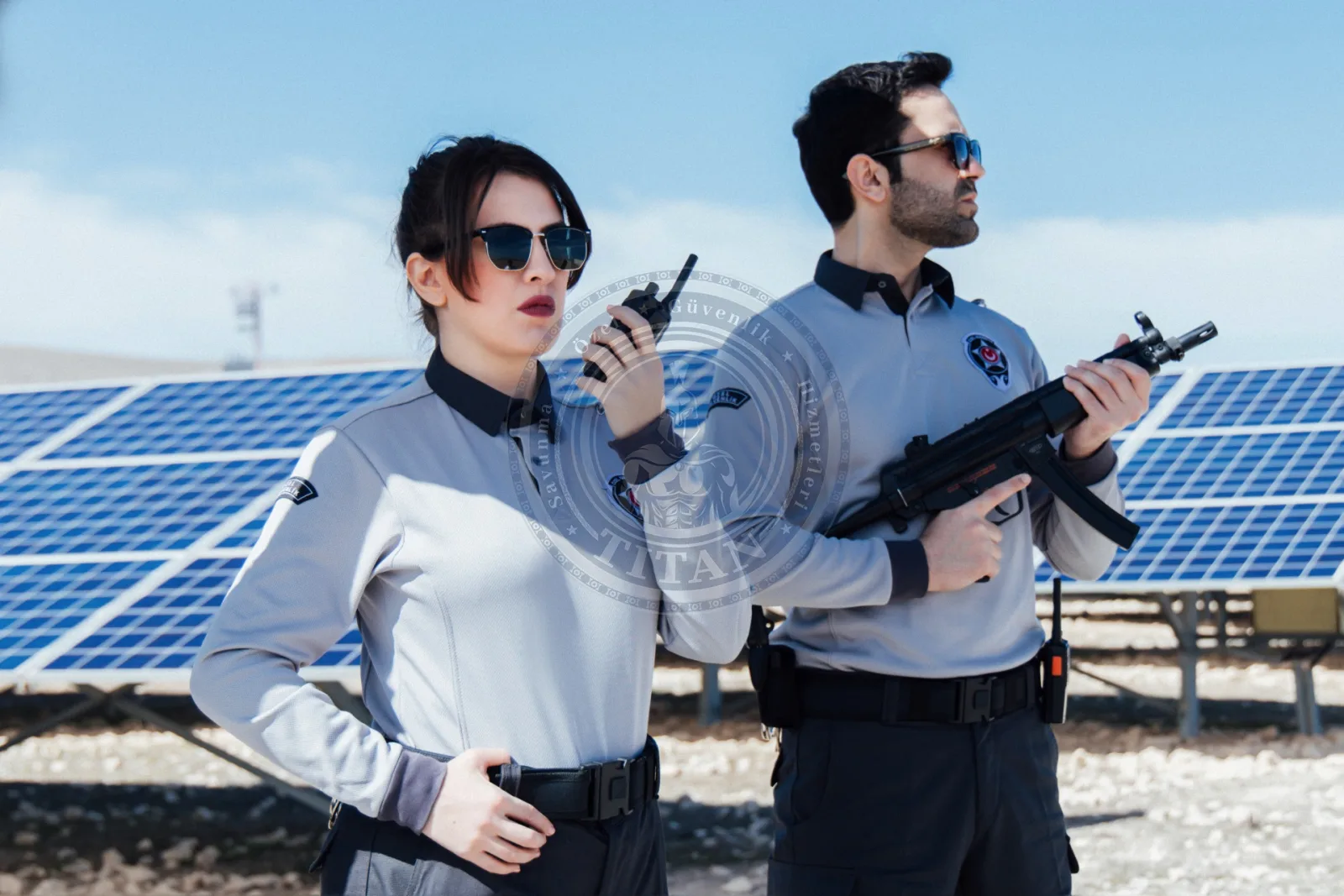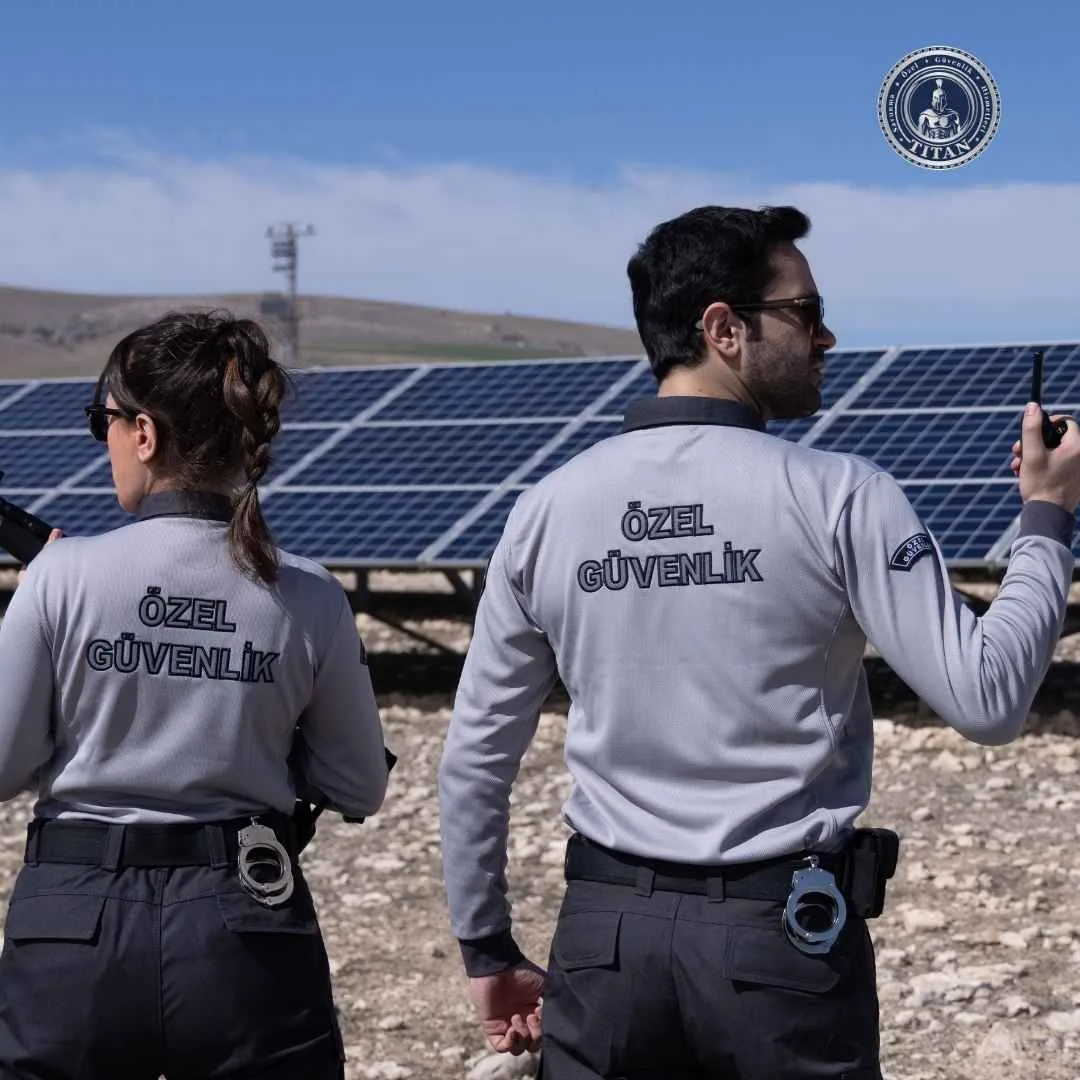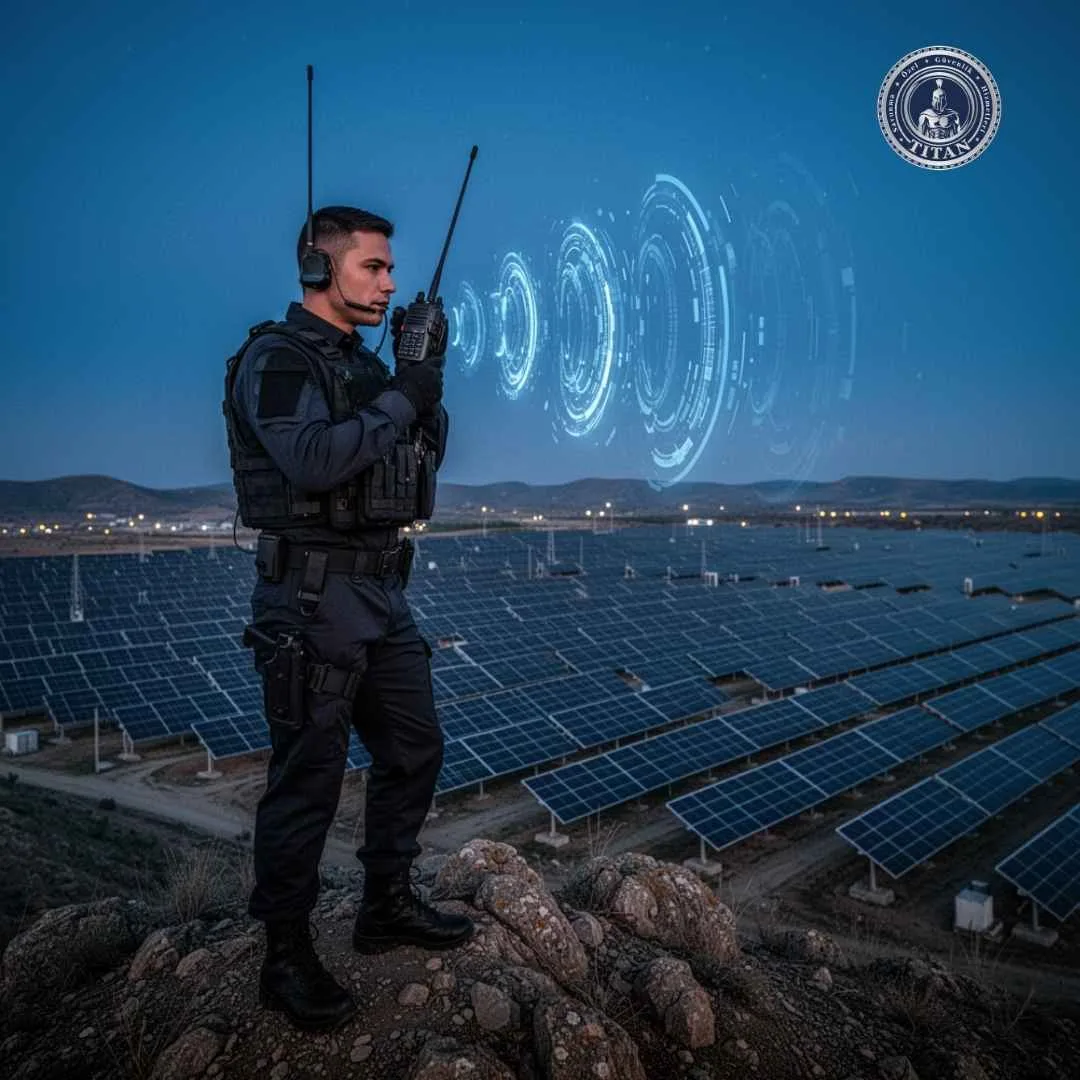
Many solar and wind farms in the Aegean and Mediterranean regions of Turkey sit close to forest, scrub and farmland that burns in hot, dry and windy weather. For these sites, the security team has a defined part in wildfire preparedness: watching for smoke, reporting early and accurately, keeping access roads open for firefighters, helping people leave safely and securing the site once the fire has passed. It is not the security team's job to fight a wildfire, and a good plan says so explicitly.
This guide explains the seasonal risk with reference to research, what Turkish law says about reporting fires and behaviour near forests, how responsibilities for vegetation and firebreaks should be split between O&M and security, and what to do before, during and after a fire.
This article is general information, not legal advice.
What the research says about the risk
A chapter on the legal analysis of forest fires published by the Turkish Academy of Sciences (TÜBA) notes that Turkey sees around 2,000 forest fires a year and that the forest vegetation and climate of the Mediterranean and Aegean regions make them very sensitive to fire. The author reports that 48% of fires over the previous ten years were human-caused, and that this rises to 71% if fires with unknown causes are distributed proportionally.
The Manavgat fire of 2021 shows how such events develop. Writing about their study in npj Natural Hazards, researchers from Istanbul Technical University describe a fire that started on 28 July and was contained on 11 August 2021, burned about 60,000 hectares of forest, shrubland, settlements and farmland, and was driven by strong foehn winds, low humidity and high temperatures. Almost all of the unidentified ignitions were close to settlements and roads, and in a vegetation model run without human ignitions the burned area was four times smaller. They also point out that tourism and fire seasons often peak in the same months.
For a renewable site, the practical lessons are modest but useful: risk concentrates in hot, dry, windy periods; most ignitions are linked to human activity on roads and at the edges of settlements; and once a large fire is running, emergency services are stretched across many incidents at once. A site that sees smoke early and reports it well helps everyone.
Fire watch and early reporting
Guards are often the only people on a remote plant at night and at weekends, which makes them natural fire watchers. The Ministry of Agriculture and Forestry lists 112 as the emergency number for forest fires. Under Article 68 of Forest Law No. 6831, anyone who sees a fire or signs of fire in or near a forest must immediately inform the forest administration, the nearest village headman's office (muhtarlık), the gendarmerie or the local civil administration. Post orders should therefore say:
- Call 112 first, then the site's control room and the owner's emergency contact, in that order.
- Give a usable location: plant name, nearest village, road, and coordinates or a known landmark, plus wind direction and whether the smoke is moving towards or away from the site.
- Record the time of first sighting and of each call in the occurrence book.
- During high-risk periods, add scheduled smoke checks from the highest safe point on site, and keep a pair of binoculars and a charged radio at the post.
Make sure the guard post has the numbers of the local gendarmerie station and muhtar written down, not only stored in a phone that may lose signal.
Vegetation, firebreaks and who does what
Most wildfire exposure at solar and wind sites comes from dry grass and scrub inside and around the fence. Managing it is O&M work: mowing, grazing arrangements, clearing around inverters, transformers and turbine bases, and maintaining firebreaks. Security should not do it. Article 16 of Law No. 5188 forbids employing private security personnel in work other than protection and security, so asking guards to cut grass or clear brush is both unlawful and a distraction from watching.
What security should do is observe and report: grass growing back faster than scheduled, cut vegetation left in piles, rubbish near the fence, unauthorised fires by visitors or contractors, smoking outside designated areas. Turkish law gives these reports weight. Article 76 of the Forest Law prohibits lighting fires in forests outside permitted places, leaving a fire unextinguished, throwing lit cigarettes or materials that can indirectly cause fire into forests, and burning stubble or similar vegetation within four kilometres of forests. Where a facility uses State forest land under a permit, Article 69 makes permit holders responsible for taking all measures to prevent and extinguish forest fires. Article 74 allows the highest local civil administrator, at the forest administration's request, to ban entry to forests for a set period in extraordinary times such as drought. Check whether your site or its access roads fall within such areas, and brief guards on any bans that affect contractor movements.
Evacuation and asset prioritisation
When a fire approaches, people come first, then access for firefighters, and only then assets. Under Law No. 6331 on Occupational Health and Safety, employers must prepare emergency plans and arrangements for firefighting and first aid (Article 11) and take measures so workers can leave the workplace in serious, imminent and unavoidable danger (Article 12). At a renewable site with several employers (owner, O&M contractor, security company), Article 23 requires them to coordinate. The joint plan should cover:
- Triggers. Who decides to evacuate, on what information (instructions from authorities, fire distance, wind change), and how the decision reaches every person on site.
- Headcount. The gate log becomes the evacuation list; the guard confirms everyone has left and reports anyone missing.
- Access. Gates opened and kept open for fire services, internal roads cleared of vehicles, and a guide waiting at the site entrance if crews do not know the site.
- Information for responders. A one-page site sheet with layout, water points, electrical hazards and any storage units, handed over when fire crews arrive.
- Asset list. A short list, agreed in advance with the owner, of items that may be removed only if safe and time allows (records, keys, portable high-value equipment). Nobody stays behind to protect equipment.
Article 15 of the Implementing Regulation obliges private security officers to assist search and rescue personnel in fires, earthquakes and floods within their duty area. That is assistance, under the direction of the professional teams. Article 69 of the Forest Law also gives the highest local civil administrator the coordinating role between the forest administration and other public bodies before and during forest fires; the site should follow the instructions that come through that chain.
After the fire: securing a damaged site
A burned site is vulnerable. Fences may be down, cameras and alarms without power, and exposed or damaged cable attracts theft. The days after a fire also bring sightseers, journalists and, sometimes, people looking for scrap. The security role shifts to:
- Restoring a temporary perimeter and visible presence as soon as the authorities allow access.
- Keeping people out of unsafe areas until the O&M team has made electrical equipment safe.
- Photographing and logging damage with time stamps before clean-up starts, which matters for both cause investigations and insurance.
- Protecting the scene if a crime is suspected: Article 16 of the Regulation tasks officers with preserving the scene and evidence and handing over to the general law enforcement.
- Controlling the arrival of loss adjusters, repair contractors and salvage teams with an updated access list.
Our bulletin on solar plant insurance and security records explains the records insurers usually ask for.
Seasonal readiness checklist
- Fire season dates and high-risk weather triggers agreed with the O&M contractor.
- Vegetation and firebreak work scheduled and verified before the season, with security reporting gaps.
- Post orders updated: smoke checks, 112 first, Forest Law Article 68 reporting duty, contact sheet.
- Joint emergency and evacuation plan under Law 6331, tested in a short drill with all employers on site.
- Site sheet for fire crews printed at the gate.
- Agreed asset list and the rule that nobody stays to protect equipment.
- Post-fire security and evidence procedure ready, with temporary fencing and lighting options identified.
About Titan Savunma
Titan Savunma is an Ankara-based private security company licensed by the Ministry of Interior under Law No. 5188 and certified to ISO 9001, 14001, 45001, 22301 and 28000. We work with international companies in English and Turkish and plan services for sites in different provinces with a single point of contact, written scope and regular reporting. See our approach to solar power plant security and critical infrastructure security.
Sources and Further Reading
- Ekberzade, B. (Istanbul Technical University) — Mediterranean forests under pressure from mega-fires on the climate-human nexus, Springer Nature Research Communities, on the npj Natural Hazards paper 'Up in flames: the human factor behind a megafire in Mediterranean Türkiye' (2025)
- Elvan, O.D. — Legal Analysis of Forest Fires, in Forest Fires: Causes, Effects, Monitoring, Precautions and Rehabilitation Activities, Turkish Academy of Sciences (TÜBA) Science and Thought Series (2021)
- T.C. Mevzuat Bilgi Sistemi — Forest Law No. 6831 (Orman Kanunu)
- T.C. Tarım ve Orman Bakanlığı — Acil numaralar: 112 / Orman Yangın
- T.C. Mevzuat Bilgi Sistemi — Law No. 6331 on Occupational Health and Safety
- T.C. Mevzuat Bilgi Sistemi — Law No. 5188 on Private Security Services
- T.C. Mevzuat Bilgi Sistemi — Implementing Regulation of Law No. 5188 (MevzuatNo 7190)