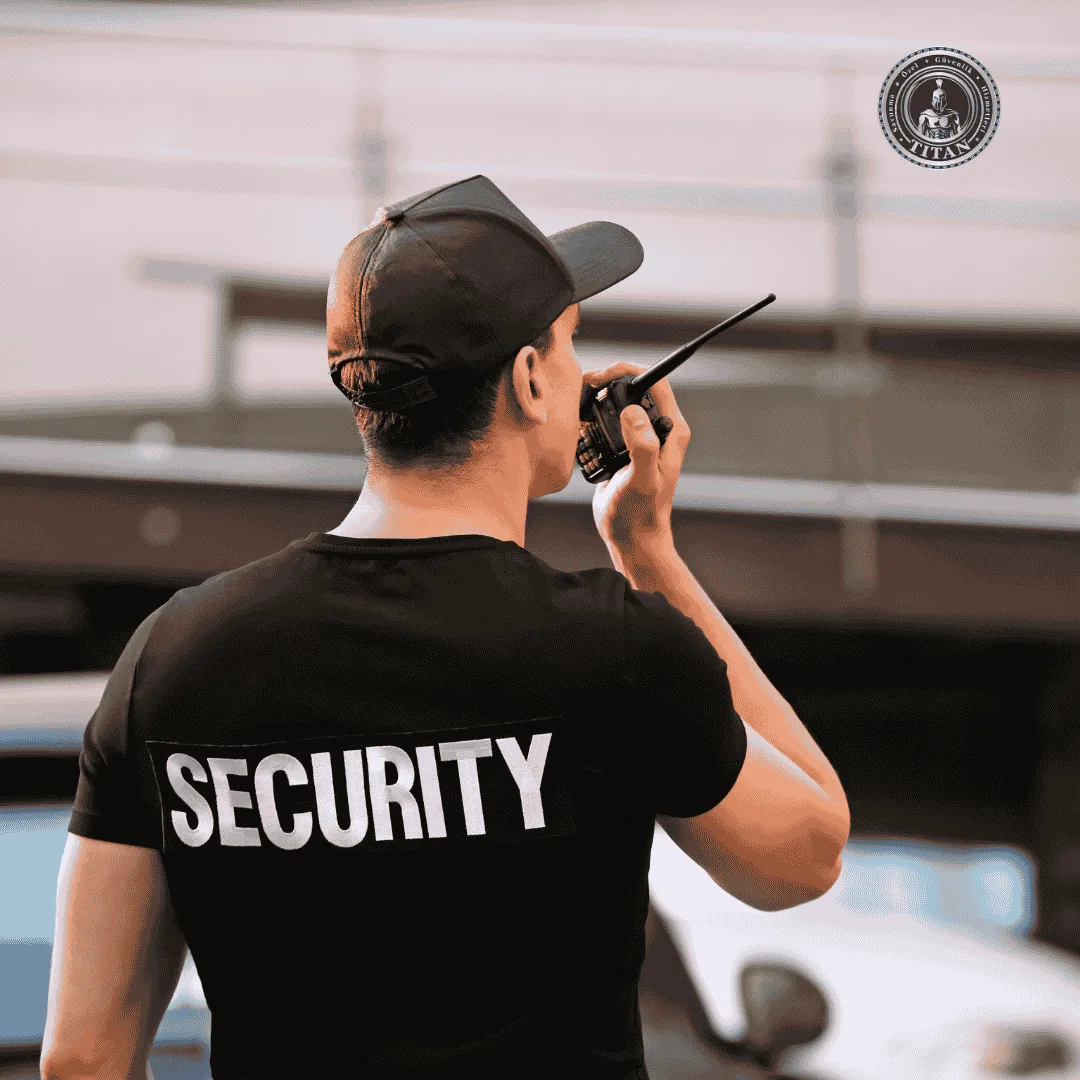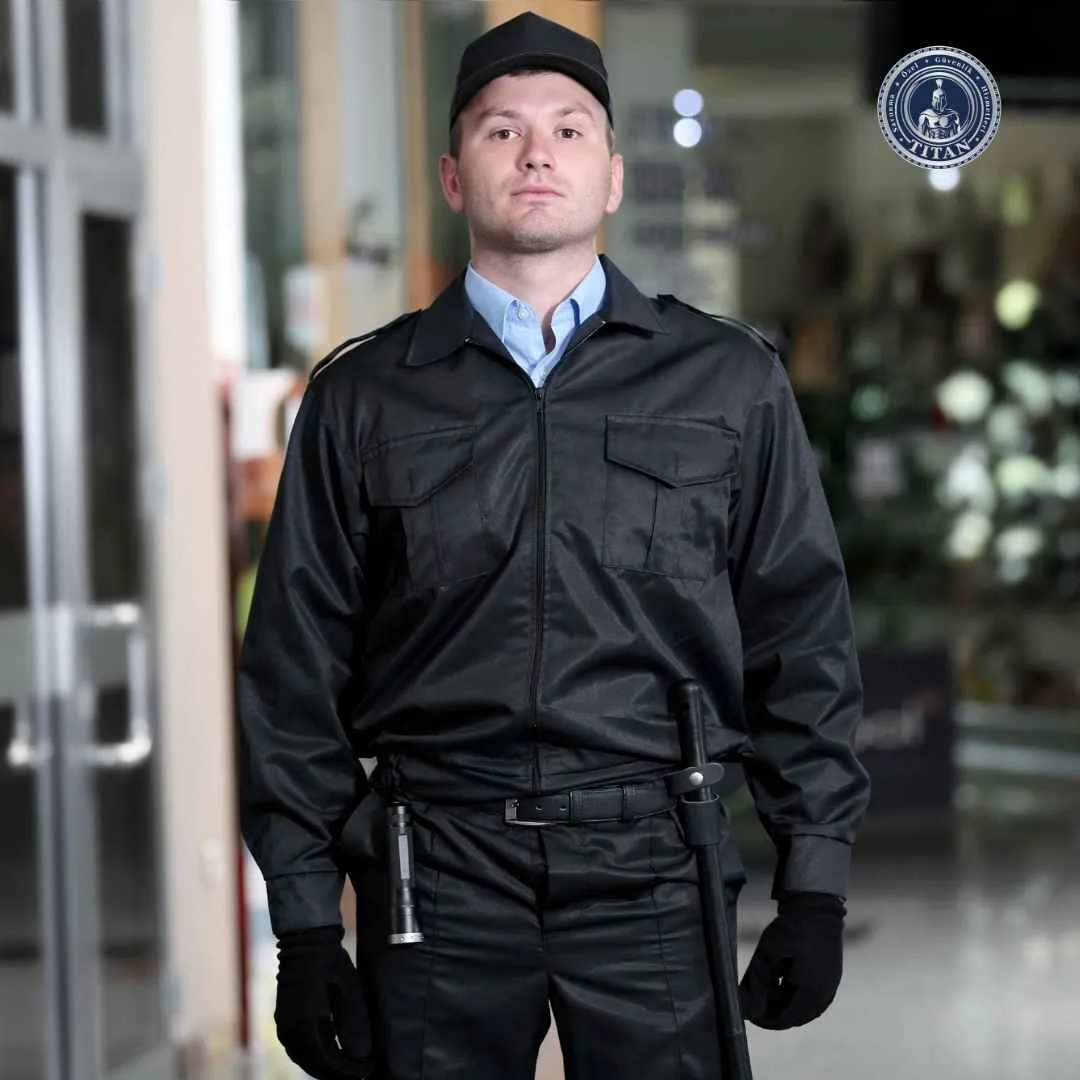
Workplace CCTV is lawful in Turkey under the Personal Data Protection Law (KVKK, Law No. 6698) when the purpose is set in writing before the cameras go up, each camera views only what that purpose needs, employees and visitors are informed before they are recorded, only authorised people can see the footage, and recordings are deleted automatically after the shortest period the purpose allows. On 8 June 2026 the Personal Data Protection Authority published a public announcement that spells this out point by point, and reminded employers that failures can lead to action, including administrative fines.
This article is general information, not legal advice.
Below we turn the announcement into the questions a facility manager, HR director or country manager actually faces: where a camera may point, when audio becomes a problem, how long to keep footage, who should watch it, and where your security provider fits. If you want to check one of your own sites in a few minutes, our free CCTV Privacy (KVKK) Self-Check asks the same questions.
What the June 2026 announcement changes
Camera recording has counted as processing personal data under Law 6698 since 2016, so the announcement creates no new duty. What it adds is clarity. Noting that it had received many complaints and reports about cameras used unlawfully or for unrelated purposes, the Authority used the announcement to list what it will look at.
Its legal basis has three legs. First, the general principles in Article 4 of the Law: lawfulness and fairness, specified, explicit and legitimate purposes, relevance, limitation and proportionality, and keeping data only as long as necessary. Second, the processing conditions in Article 5; the announcement recalls that, as a rule, personal data may not be processed without explicit consent, but that exceptions such as a legal obligation of the controller and legitimate interests exist. Third, the employer's own duties: the announcement refers to the employer's obligation to protect the employee's personality and ensure health and safety (Turkish Code of Obligations, Art. 417) and to monitor whether occupational health and safety measures are followed (Law No. 6331, Art. 4). In short, employers may use cameras; the question is how.
Purpose: write it down before you install
The announcement's first expectation is that the reason for each camera is defined clearly and in advance for the specific site. The announcement gives workplace security, preventing and detecting crime, and employees' occupational health and safety as examples. That written purpose drives everything else: the legal basis, where the camera points, the retention period and the privacy notice.
The announcement names two things that are not legitimate purposes. One is using cameras installed for security to track attendance or performance. The other is abstract aims such as seeing productivity, tightening discipline or keeping general control. This is the problem we meet most often in practice: a camera goes up against theft, and months later a manager starts checking who sits for how long during breaks. On the announcement's approach that is a different processing activity with no basis.
Placement: where a camera may and may not look
The announcement treats proportionality as three separate questions: is the camera suitable for the purpose, is it necessary, and is it proportionate? Cameras at entrances and exits, storage areas and cash points, where there is a security risk, can be proportionate, but position and viewing angle are part of that assessment. The table applies the announcement's wording to typical workplace areas.
| Area or setting | The announcement's approach | In practice |
|---|---|---|
| Building entrance, vehicle gate, storeroom, cash office | Can be proportionate, depending on position and angle | Keep an in-house list of each camera's purpose and view |
| Toilets, changing rooms, prayer rooms, rest areas | No cameras should be placed there | Remove or re-aim; a camera at the door must not see inside |
| Wide angle covering the whole office | No wide-angle or face-focused recording | Focus on the point with a reason; use privacy masking |
| Audio recording | Not to be used unless lawfulness and necessity are clearly shown | Switch audio off on cameras and recorder unless justified |
| Areas open to the public | Consider people outside the scope, especially children and vulnerable people | Do not record pavements, neighbouring doors or waiting areas without need |
The announcement also asks employers to weigh zoom functions and whether recording is continuous or intermittent, and stresses that employees keep a reasonable expectation of privacy even at work. The wider the monitoring, the heavier the intrusion. That is why a camera should be placed to see a specific risk, not to make everything visible. For a short definition, see the encyclopedia entry on CCTV recordings and KVKK.
Informing people: a sign alone is not enough
Article 10 of the Law requires the controller, when data are obtained, to tell people its identity, the purpose, to whom and why data may be transferred, the method and legal basis of collection, and their rights. The announcement adds that employees must be informed. A two-layer approach works well in practice:
- A sign seen before entering the recorded area, stating that recording takes place, who the controller is and where the full notice can be found.
- A full privacy notice at reception, on the website or behind a QR code, covering every element of Article 10.
- Employee information through onboarding documents, the staff handbook or a written memo, with a record of who was informed and when.
The European Data Protection Board's Guidelines 3/2019 on video devices do not bind anyone in Turkey, but they are a useful comparison for international companies that already run GDPR programmes. They recommend placing the warning sign so that people can recognise the surveillance before entering the monitored area, at roughly eye level, pointing clearly to the second layer of information, which should be reachable without entering the monitored area. Where many staff or visitors are foreign, an English version of the notice is a practical way to meet the expectation of clear and plain language. The encyclopedia entry on the duty to inform summarises the rule.
Retention and access: shortest time, fewest people
The announcement gives no number of days. It asks that recordings be kept for the shortest possible time, warns that keeping them longer than necessary may breach the Law, and requires an automatic destruction mechanism. If an incident occurs, only the recording of that incident is kept for the legal process. This is Article 7 of the Law applied to cameras: once the reason for processing ends, data are deleted, destroyed or anonymised.
The EDPB guidelines offer helpful reasoning here too: most damage is noticed within a day or two, so in many cases footage should be erased, ideally automatically, after a few days, and the longer the period, especially beyond 72 hours, the more justification of purpose and necessity is needed. That is not a limit under Turkish law. Set your own period in writing for your purpose and keep the reasoning on file.
On access, the announcement asks for technical and administrative measures such as an authorisation matrix, access limited to authorised people, and no sharing of footage with unauthorised persons. This is the data-security duty in Article 12 of the Law, applied to cameras. In practice that means personal user accounts, a log of who viewed or exported which recording, when and why, no monitors that anyone walking past can see, and a written procedure for footage requests from police, prosecutors or insurers that says who approves and how the extract is limited to the relevant part.
When your security company is the processor
If cameras are watched by a private security company's officers rather than your own staff, or recording management is outsourced, the roles must be clear. Law 6698 defines a processor as a natural or legal person that processes personal data on behalf of the controller, based on the authority the controller gives it (Art. 3). Under Article 12 of the Law, when data are processed on the controller's behalf, the controller is jointly responsible with that person for the security measures, and neither may disclose the data unlawfully or use it outside the purpose of processing.
In the contract this becomes concrete. The security services contract or an annex should state the limits of the officers' authority over recordings (live viewing, reviewing past footage, exporting), confidentiality, the technical and administrative measures required, how quickly you will be told if a breach is noticed, and return or deletion of data when the contract ends. Post orders must match: an officer who shows footage to a visitor or colleague, or films a screen on a phone, outside the written procedure raises the risk directly, whatever the contract says.
One more distinction: Law No. 5188 on Private Security Services lists what private security officers may do, but it does not regulate the personal-data side of camera recording; that falls under KVKK. An officer's powers and the legal basis for recording are separate questions.
A ten-minute self-check and common mistakes
The CCTV Privacy (KVKK) Self-Check takes one site through four steps (site and responsibility, purpose and placement, informing people, retention and access) and ranks gaps as high priority, medium priority or to confirm, each with the article of the Law or the Authority announcement behind it. It runs entirely in your browser and asks for no company name, address or camera positions; nothing reaches us unless you choose to send the enquiry form. It gives no fine amounts and no legal opinion.
The mistakes we see most often:
- Years after installation, nobody can say in writing why the cameras were put up.
- One camera that sees into a rest area, or through a changing-room door, goes unnoticed.
- Audio recording left on as a factory setting.
- The recorder keeps footage until the disk fills, so retention is decided by hardware capacity.
- One shared username and password handed over from shift to shift.
- No personal-data clauses in the contract with the security company.
- A Turkish-only sign with no route to the full notice.
Titan Savunma is an Ankara-based private security company operating under a Ministry of Interior licence granted under Law No. 5188, with ISO 9001, 14001, 45001, 22301 and 28000 certificates. We work in English and Turkish and plan services for sites in different provinces with a single point of contact, a written scope and regular reporting. More about us as a private security company in Turkey.
Sources and Further Reading
- KVKK (Personal Data Protection Authority) — İş yerlerinde güvenlik kamerası sistemi kullanımında dikkat edilecek hususlara dair kamuoyu duyurusu (8 June 2026)
- T.C. Mevzuat Bilgi Sistemi — Law No. 6698 on the Protection of Personal Data (consolidated text)
- European Data Protection Board — Guidelines 3/2019 on processing of personal data through video devices, Version 2.0 (2020)
- T.C. Mevzuat Bilgi Sistemi — Law No. 5188 on Private Security Services (consolidated text)
- Titan Savunma — KVKK Kamera Uyum Ön Kontrolü / CCTV Privacy Self-Check (tool logic checked 2026-11-11)