
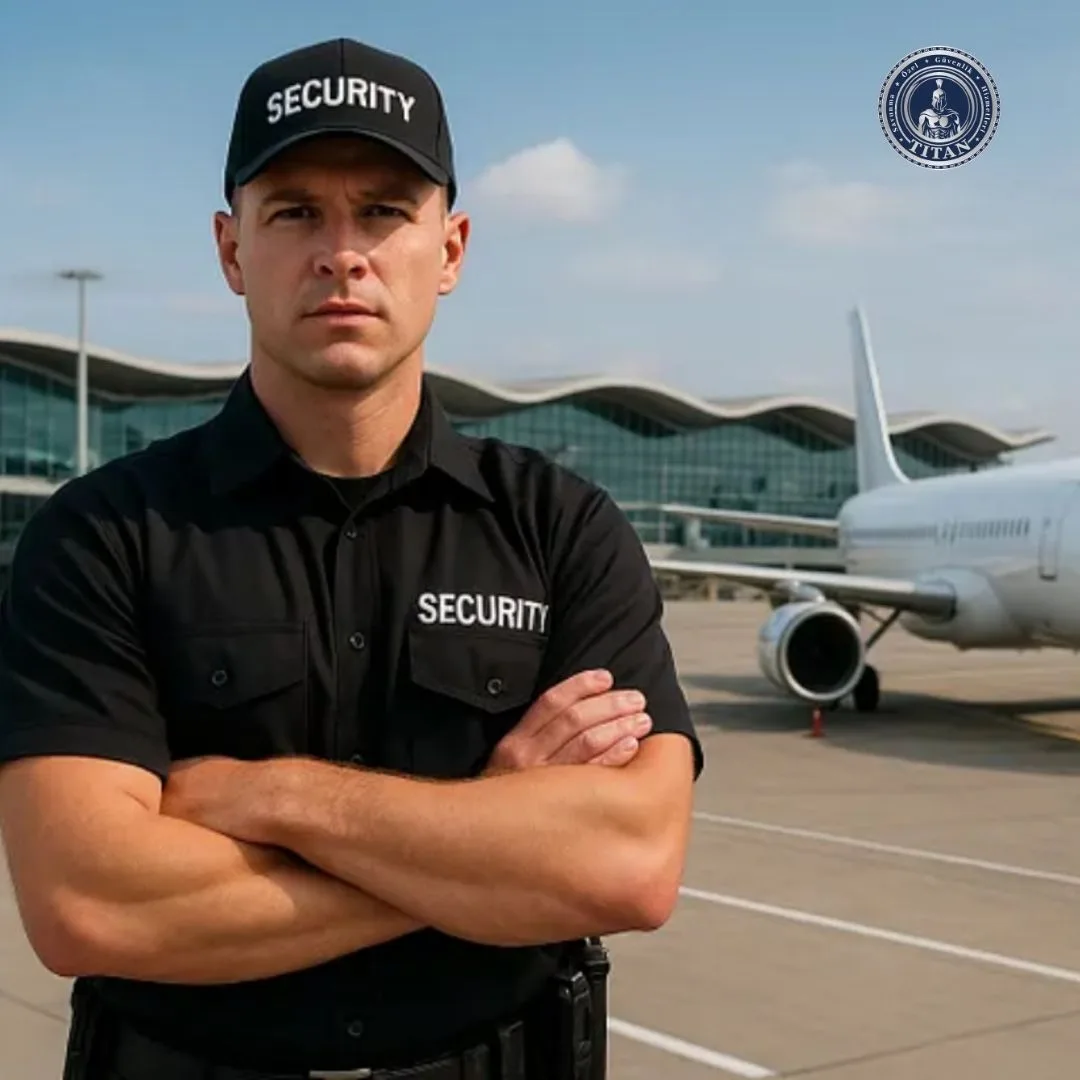
An X-ray screener looks at the image produced by a baggage scanner and decides, often within seconds, whether a bag needs a closer check. The task is hard because the items being searched for are very rare, objects overlap in the image and decisions are made under time pressure. Research shows that rare targets are missed far more often than common ones, and that systematic computer-based training clearly improves image interpretation. X-ray screener training is therefore not a one-off course but a measured, repeated process.
This article is for security managers, training leads and operators of event venues and public buildings. It is not about how the scanner works, but about why the person at the screen struggles and how an organisation can manage that. For the equipment itself, see our encyclopedia entry on X-ray baggage screening. How threat items look on screen is deliberately not covered.
What does an X-ray screener actually do?
The job is more than watching a monitor. The screener reviews each bag image in the flow, uses image tools, asks for a bag to be opened in front of its owner when something looks wrong, informs a supervisor about findings and keeps records. A study by Hofer and Schwaninger at the University of Zurich on measuring threat detection performance in X-ray screening puts it plainly: technology is only as effective as the people who operate it; at rush hour screeners often have only a few seconds to inspect an image and decide; and recognising a threat object depends largely on perceptual experience and training.
The prevalence effect: rare targets are missed more
One of the clearest explanations of why the task is difficult comes from Wolfe, Horowitz and Kenner's 2005 Nature paper, Rare targets are often missed in visual search. The researchers varied how often a target appeared in an artificial baggage-screening task. When a target was present on half the trials, observers made errors 7 percent of the time; when it appeared on only 1 percent of trials, errors rose to 30 percent, mostly misses. In a second experiment mixing targets of different prevalence, observers missed 11 percent of common targets, 25 percent of rarer targets and 52 percent of very rare targets.
The implication for security is direct. At a real office or event entrance, a dangerous item is far rarer than even the rarest laboratory condition. When people rarely find what they are looking for, they tend to end their search sooner and call the bag clear. That is not carelessness or bad faith; it is how visual search works. The answer is not to blame the screener but to design training, measurement and working patterns around this reality.
Why computer-based training helps
In Hofer and Schwaninger's study, participants with no previous computer-based training used an individually adaptive training system, and their detection performance was tested before training and after an average of 20 training sessions. In the data of the 62 participants analysed, a large training effect was clearly visible on every performance measure used. Performance improved whether images were shown for four or eight seconds, and detection was slightly better with eight seconds.
Three lessons follow for organisations:
- Image interpretation is a learnable skill: teaching how to operate the machine is not enough; screeners need to work through many images of gradually increasing difficulty.
- Training should be individual: adaptive systems focus on whatever each screener finds hardest.
- Time pressure affects quality: less viewing time means weaker performance, so cutting image time to speed up a queue is a false economy.
Fatigue, breaks and rotation
Reviewing images continuously is mentally tiring, which is why aviation security has detailed rules. The European Union's Implementing Regulation (EU) 2015/1998, at point 4.1.2.11 on cabin baggage, caps the time a screener normally spends continuously reviewing images when there is an uninterrupted flow of images, and requires a break from image review after each such period; the same rule is repeated for hold baggage and cargo.
Office towers, hospitals and event venues are not bound by that regulation, but the principle carries over. Post orders should say how long a screener stays on the screen without a break, which task they rotate to next (bag searches, the walk-through detector or queue management, for example) and how breaks are protected at peak times. The exact rotation pattern depends on flow, number of lanes and risk assessment; what matters is treating fatigue as a planned risk, not a personal weakness.
Threat image projection and measuring performance
Threat image projection (TIP) is a function in some screening systems that occasionally inserts virtual threat images into real bag images. Whether the screener notices them is recorded, so performance can be measured on the job. Hofer and Schwaninger note that regulators use TIP data to judge screener performance, and they add an important warning: the hit rate alone is not a valid measure. An anxious screener could score a high hit rate simply by flagging most bags; security would then come at the expense of efficiency, showing up as long queues at the checkpoint. The authors therefore recommend measures that take false alarms into account alongside hits.
For organisations, the message is that a screener should be assessed not only on how many threats were caught but also on how many clean bags were stopped unnecessarily. Where a system has no TIP, regular, recorded and confidential tests and computer-based assessments can serve the same purpose.
Certification and questions to ask your provider
In regulated settings such as airports, screener certification follows the rules of the relevant authority. At office buildings, public buildings or events, the content and continuity of training should be written into the contract with the security company and into the post orders. When buying a security service, ask:
- How were screeners trained in image interpretation, and does that training cover the image tools of the scanner on your site?
- How often is refresher training held, and how is it documented?
- How is performance measured: hits only, or false alarms as well?
- Are maximum continuous screen time and rotation written down?
- What flow measures protect viewing time at peak hours?
- Is it defined who decides on a finding and whom they inform?
You can make these questions part of a provider assessment with our security provider scorecard.
Technology produces the image, people make sense of it
The scanner produces the image, and some systems can add markers to help the screener; but it is a trained person who interprets the image, verifies the concern and talks to the visitor. A good screening point is built on well-trained screeners who are measured regularly and whose breaks are protected. Titan Savunma is an Ankara-based private security company holding a Ministry of Interior operating licence under Law 5188 and ISO 9001, 14001, 45001, 22301 and 28000 certificates, working with international companies in English and Turkish. We plan guarding together with your technology and run your monitoring, verification and response plan with a written scope and regular reporting. See our manned guarding services for details.
Sources and Further Reading
- Wolfe, Horowitz & Kenner — Rare targets are often missed in visual search, Nature 435 (2005)
- Hofer & Schwaninger, University of Zurich — Reliable and Valid Measures of Threat Detection Performance in X-ray Screening, IEEE ICCST Proceedings 38 (2004)
- EUR-Lex — Commission Implementing Regulation (EU) 2015/1998 on aviation security (2015)


