
Factory and Industrial Zone Security in Aksaray
For vehicle-parts, rubber and plastics, metal and food plants in Aksaray OSB and the district industrial zones, we plan shift entry, lorry and vehicle control, night patrols and stockyard monitoring.
For Industry, Logistics and Institutions in Aksaray · Turkey
As a private security company planning services for factories, industrial zones, depots, construction sites, campuses and tourism facilities in Aksaray, we give you one contact on the ground: our Aksaray City Manager, who carries out the site survey, builds and leads the team and handles daily supervision. For a business choosing among security companies in Aksaray, the real question is who will run the site and who will check that work; with us, the second task lies with our Central Anatolia Regional Directorate and Ankara head office, through planning support, unannounced audits, training and reporting standards. From the outset we factor in the province’s heavy-industry shifts, lorry traffic, freezing winters and hot summers.
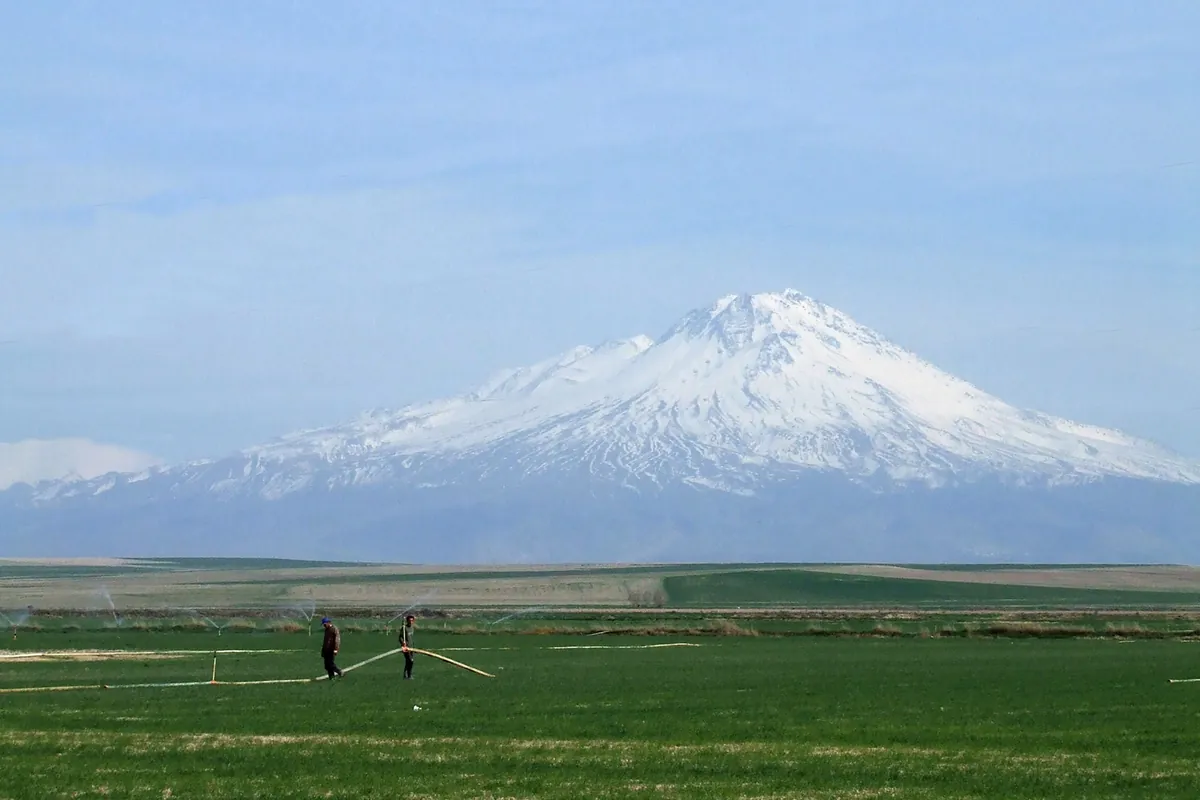 Aksaray
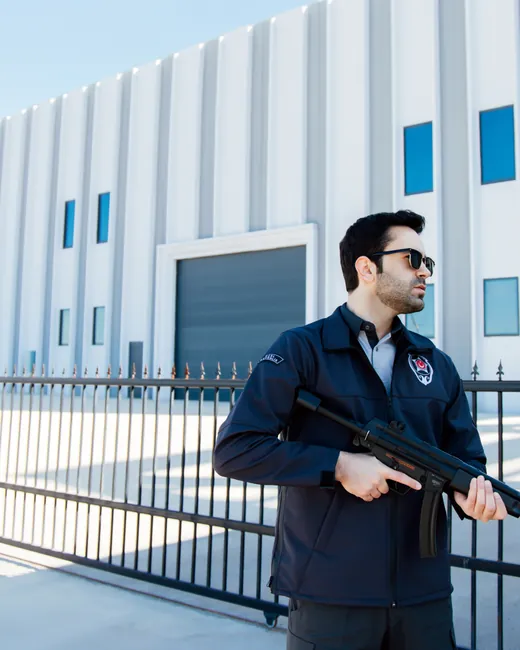 Titan SavunmaCity Management
Service Scope
According to 2025 social security data, more than a quarter of compulsorily insured employees in Aksaray work in manufacturing, and motor vehicles, rubber and plastics, and food production account for roughly two to three times their national share of jobs. Alongside Aksaray OSB, industry is spreading into the districts through new organised industrial zones in Sultanhanı, Eskil and Ortaköy. We divide our service areas along these lines.
For vehicle-parts, rubber and plastics, metal and food plants in Aksaray OSB and the district industrial zones, we plan shift entry, lorry and vehicle control, night patrols and stockyard monitoring.
At warehouses, transfer yards, lorry parks and construction projects we build vehicle entry and exit logs, seal and delivery-note checks, materials tracking and night-time perimeter security into the post orders.
At university campuses, healthcare facilities and public service buildings we set up routines to manage visitor and vehicle flows; in education and healthcare facilities we work with unarmed officers, as the law requires, chosen for their communication skills.
At the province’s hotels and other accommodation we plan officer numbers around the Ihlara Valley visitor season, and write car park, entrance and emergency roles together with the site team.
A Planned Start
Before the first shift starts at a factory, depot or campus in Aksaray, three questions have been answered on paper: who your contact is, which post is staffed at which hours, and who audits this routine and how often.
Our Aksaray City Manager walks the site and notes gates, shift change times, daily lorry and staff-bus traffic, open storage areas and lighting in person.
The private security permit is something the client organisation itself requests from the Governorship of Aksaray; our City Manager gathers the full set of papers for the provincial private security commission together with you.
Our City Manager writes the post orders, selects the officers and shift supervisor and sets up cover for leave and sick days; and where the team reaches 15 officers, the security supervisor that Law No. 5188 calls for joins it.
The routine checks made by our Aksaray City Manager are tested separately by our regional directorate and head office in planned and unannounced audits; each month’s report tells you what was found and what was done about it.
Your Sector’s Priorities
The 2025 social security figures put Aksaray at 9,931 workplaces and 66,373 compulsorily insured employees, roughly half as many again (52%) as nine years earlier. In a province growing this fast, a factory’s shift gate, a construction site’s materials yard and a campus visitor entrance call for different decisions within the same week. Our Aksaray City Manager takes those decisions on the ground. Whether they are the right ones is watched over by our Central Anatolia Regional Directorate and Ankara head office, which support planning, carry out unannounced audits and set the yardstick for training and reporting. The agility of local management and the assurance of a corporate structure thus come together in one contract.
The professional experience and security training of retired law enforcement personnel within our team contribute to our approach.
Posts are staffed around the plant’s shift changes and lorry reception hours.
For outdoor posts, booths, clothing and rotation for frosty and hot days are set out in advance.
The service contract and every officer who joins or leaves are notified to the governorship before the legal deadline, and a record of each notification is kept.
For international brands in Turkey, we offer a single point of contact, a written scope and regular reporting. Work with us as your security partner
Expert View and Recommendations
A security proposal in Aksaray starts from a few plain questions about the site: How many people pass through the shift gate at once? How many lorries arrive each day? Is the site in the main industrial zone, on a new plot in a district, or on a campus? The six sections below look at the province’s industrial scale, industrial zones, campuses and public buildings, tourism and climate together with the rules of Law No. 5188.
Aksaray’s 66,373 compulsorily insured employees are spread across 9,931 workplaces (2025 social security yearbook); in 2016 the figure was 43,755. Roughly nine workplaces in ten employ 1–9 people, yet it is the large ones that carry employment: about 38% of insured workers are at the 144 workplaces with 50 or more employees, and roughly one fifth at the 18 with 250 or more. Four workplaces with 1,000 or more employees have 7,149 staff between them, about 11% of insured workers and above the Turkish average of around 7%.
Manufacturing accounts for 26.4% of insured employment (23.8% nationally). Motor vehicle manufacturing has 2,642 insured employees, rubber and plastics 1,796 and food manufacturing 4,096; the local job share of these three branches is roughly two to three times the national figure. According to press reports from December 2025, lorries have been built in Aksaray since 1986; lorry production and the suppliers that feed it are the distinguishing feature of the province’s manufacturing base.
This scale brings the following to the fore in a security plan:
Writing separate rules for the office entrance, the production entrance and the dispatch gate of the same plant works better than a single general instruction.
According to a statement by the Governor of Aksaray in February 2022, around 13,000 people were working at Aksaray OSB, and the same statement announced that three new organised industrial zones had been established in Sultanhanı, Eskil and Ortaköy. Industry is thus expanding from the provincial centre into the districts.
Expansion means construction and haulage. The 2025 social security yearbook records 10,662 insured employees at 1,299 temporary workplaces in the province, of which construction sites are the typical example. Building construction has 7,761 insured employees, road transport 2,839 at 935 workplaces, and warehousing and support activities 584.
A site’s security needs change with the stage it has reached:
On new plots the perimeter fence and lighting may not yet be complete; we list these gaps separately in the survey report and recommend the number of posts accordingly.
The public sector weighs more heavily as an employer in Aksaray than in Turkey as a whole. According to the 2025 social security yearbook, 16% of compulsorily insured employees, or 10,625 people, work at 275 public workplaces; together with 18,097 civil servants, roughly one third of salaried employees are in the public sector. Health services have 3,196 insured employees and education 2,361.
According to Aksaray University’s 2020 Administrative Activity Report, the university has 7 campuses in the provincial centre and the districts, around 4.06 million m² of open land and more than 190,000 m² of indoor space; the main campus alone covers about 3.79 million m². The same report puts student numbers at over 21,000.
At universities and hospitals the plan starts from one rule: under Article 8 of Law No. 5188, armed private security officers may not be employed there. The points that come to the fore in planning:
At public bodies we write the post orders to the institution’s technical specification, and at universities and hospitals to the institution’s own visitor rules.
The Ihlara Valley drew 510,000 visitors in 2025, a figure announced by the Provincial Directorate of Culture and Tourism in January 2026. Ministry of Culture and Tourism figures for August 2026 show 727 rooms and 1,461 beds at 17 licensed accommodation establishments in the province, and 960 beds at 16 establishments with a basic accommodation licence. The security plan should work for both overnight guests and tour groups:
The contract can set out by calendar how officer numbers rise and fall with the season; every officer who starts or leaves is notified to the Governorship of Aksaray.
Carrying luggage, valet parking and reception work cannot be handed to a security officer: Article 16 of Law No. 5188 forbids employing officers in anything other than protection and security. These jobs must stay with the site’s own staff.
Aksaray’s climate record shows both extremes at once. In the Turkish State Meteorological Service’s provincial statistics for 1929–2025, the January mean is 0.6 °C, daily lows in January average −3.4 °C and daily highs in July average 30.7 °C. The records are harsher: −29.0 °C on a February day, 40.8 °C on an August day, and 46 cm of lying snow in January 2022. Adding up the monthly averages gives annual rainfall of around 360 mm.
Factory gates, lorry reception areas and construction site entrances experience both extremes. What we suggest the contract should cover:
The emergency plan belongs in the same file. According to assessments citing MTA (General Directorate of Mineral Research and Exploration) studies, the active fault that stands out for the provincial centre is the Tuz Gölü Fault Zone. The protection and security plan should give written answers on four points:
With these points the security team does not take over the site’s emergency plan; it knows its own part within it.
An organisation or business in Aksaray that wants a company to provide its security obtains the private security permit in its own name; if the site is within the province, the application is addressed to the Governorship of Aksaray. Under Article 3 of Law No. 5188, having security provided by a company is subject to the governor’s permission, given on a decision of the provincial private security commission. The upper limit on timing comes from Article 8 of the implementing regulation: ten working days.
The statutory timetable after the permit is our job:
Keeping to these deadlines and running the site day to day both fall to our Aksaray City Manager, who follows on the ground shift and dispatch times in the industrial zones, materials movements at construction sites, term-time peaks on campuses and the season at hotels. The City Manager’s own work does not go unchecked either: our Central Anatolia Regional Directorate and Ankara head office contribute to planning, carry out the unannounced audits and set the standard for training and reporting.
Items you will want to see in writing in a proposal when assessing a firm:
We recommend confirming local practice with the Governorship of Aksaray before applying.
Before We Speak
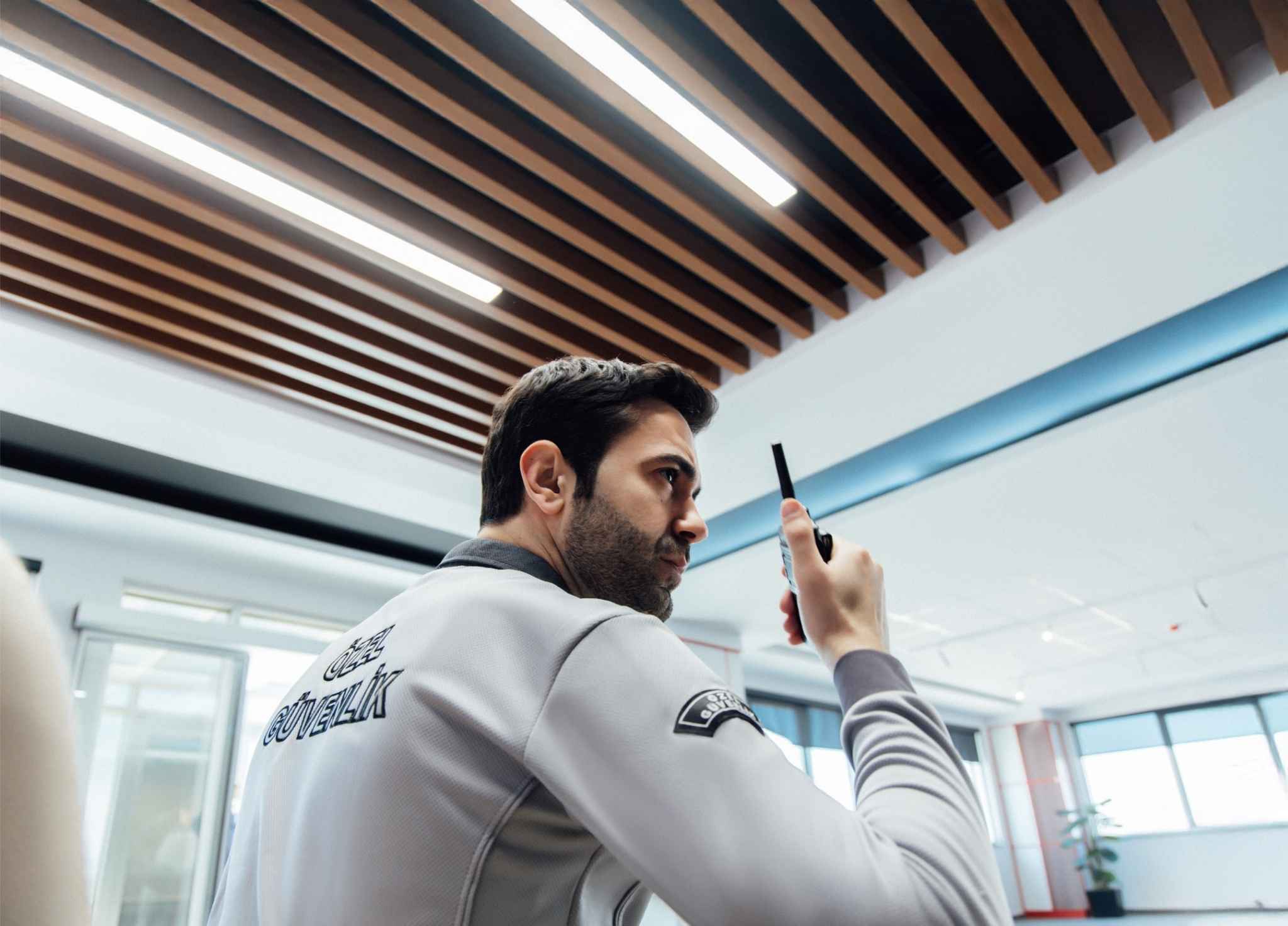
First confirm that the company holds an operating licence from the Ministry of Interior; then set three things side by side in the proposals: who your contact on site will be, who carries out routine and unannounced audits and how often, and who covers a post when an officer cannot attend. With us, the local contact is our Aksaray City Manager, independent audits are carried out by our Central Anatolia Regional Directorate and Ankara head office, and the answers to these three questions are set out in writing in the proposal.
Yes. For each site in Sultanhanı, Eskil or Ortaköy, our Aksaray City Manager draws up a separate plan for posts, shift handovers and how often check visits take place. On new industrial plots the need usually starts with construction-site security and turns into gate and dispatch control once production begins, and we write the proposal around these stages.
The permit is requested not by the firm providing the service but by the organisation or business that will use it, and the request is addressed to the Governorship of Aksaray. The provincial private security commission takes up the request and decides; the permit document is issued once the governor has approved that decision. The implementing regulation allows no more than ten working days for this. Our Aksaray City Manager is at your side while the file is put together.
It is enough to tell us the site’s industrial zone or district, shift times, number of gates, daily lorry and visitor traffic and your camera system, if you have one. With this our City Manager schedules the site survey, and we then prepare a written proposal that includes the number of posts.
The place to apply is our Careers page; you can say in your application that you would like to work in Aksaray. On requirements, the yardstick is Law No. 5188: anyone working as a private security officer must have successfully completed basic private security training and hold a work permit from the governorship. The other conditions in the law include being at least 18, with at least lower-secondary schooling for unarmed duty and at least upper-secondary schooling for armed duty.
Temperatures from −29.0 °C to 40.8 °C and a snow depth of 46 cm have been measured in Aksaray (Turkish State Meteorological Service, 1929–2025). For factory gates, lorry reception areas and construction site entrances we therefore write heated booths, winter clothing and short patrol rounds for winter, and shade, drinking water and rotating duties around midday for summer, into the scope. The contract states who provides the booths and heating.
According to a statement by the Provincial Directorate of Culture and Tourism in January 2026, the Ihlara Valley received 510,000 visitors in 2025. At accommodation sites we tie officer numbers to the season calendar and write car park and coach access, night-time coordination with reception and emergency roles together with site management. The service can also be bought for a fixed period; the service start and officer changes are notified to the governorship.
In assessments that cite the active fault studies of the General Directorate of Mineral Research and Exploration (MTA), the fault that stands out for the provincial centre is the Tuz Gölü Fault Zone. The protection and security plan should therefore spell out the officers’ part: who stands on the evacuation route, who takes the headcount at the assembly point, who opens the gate and barrier, and who passes word to whom. We also recommend that officers take part in the site’s drills.
Tell us your site’s industrial zone or district, shift pattern and number of gates; we will set a survey date with our Aksaray City Manager and send you a written quote that sets out the posts.
Contact
Tell us your facility type, location and general requirements. Together, we can define a service scope that suits your organisation.
Fields marked * are required.
Looking for a role? Visit our careers page