
Factory and Industrial Zone Security in Karaman
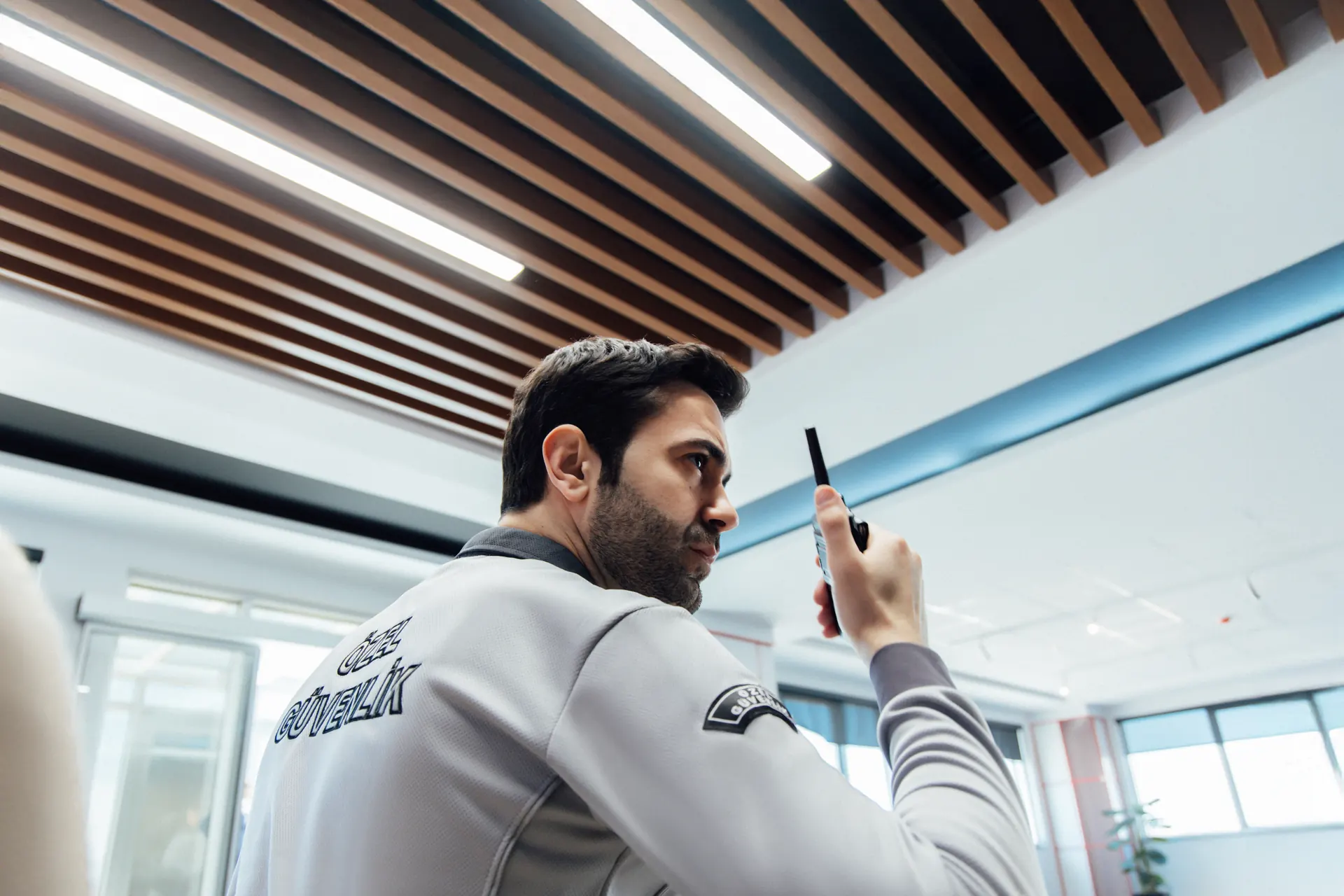
In Karaman OSB’s food, packaging and machinery plants, one duty plan covers the shift gate, staff buses and lorry arrivals, the dispatch ramp and the perimeter patrol after dark.
For the Food Industry, Cold Stores and Campuses in Karaman · Turkey
Titan Savunma is a Ministry of Interior–licensed private security company in Karaman that organises duties for food plants, industrial zone premises, cold stores and campuses. For anyone comparing security companies in Karaman, what to know first about us is our two-tier setup. On the ground, our Karaman City Manager is in charge: they survey the site, put the team together and handle everyday supervision and coordination. Above that, our regional directorate for Central Anatolia and our head office in Ankara safeguard the local operation by supplying planning help, surprise inspections, training and a common reporting format. Our duty routines are shaped by the city’s shift-based food production, its outbound freight and a dry climate where winters bite and summers are hot.
Service Scope
Social security figures for 2025 put one in every five compulsorily insured workers in Karaman in food manufacturing. Karaman OSB reports that its organised industrial zone spans 1,024 hectares and that 11,523 people are employed at its operating plants. We have shaped our service lines in Karaman to match this industrial make-up.
In Karaman OSB’s food, packaging and machinery plants, one duty plan covers the shift gate, staff buses and lorry arrivals, the dispatch ramp and the perimeter patrol after dark.
For cold stores, product warehouses and freight yards, our plans cover logging vehicles and seals, how the gate runs while loading is under way, and watch-keeping once the working day ends.
On university campuses and at health institutions, student, patient and visitor movement is handled by officers who are unarmed, as the law requires, and who are picked for how well they communicate.
For power generation and distribution plants, lignite fields and quarries, entry registration, night rounds across isolated ground and camera monitoring are organised to suit the operator’s site rules.
A Planned Start
Shift changeover and dispatch hours are when security at a Karaman site is under most pressure. For that reason our Karaman City Manager owns the whole process, and the regional directorate and head office check that work through audits of their own.
Our Karaman City Manager visits the site during a shift changeover and a dispatch window, recording the gates, bus and lorry routes, and storage and stock zones.
It is the organisation receiving the service that files the permit request with the Governorship of Karaman; our City Manager puts together, alongside you, the paperwork that goes before the provincial commission for private security.
Our City Manager drafts the instructions for every post, chooses the officers and the shift supervisor and manages the team; where fifteen or more officers work at a plant, we also assign the security supervisor called for in Article 5 of the Law.
Routine checks at shift gates and dispatch points are done by our City Manager; our regional directorate for Central Anatolia and our head office in Ankara put them to the test with scheduled and surprise audits. What both tiers find, and what was done about it, comes to you each month in a report.
Your Sector’s Priorities
In 2025, social security data counted 41,870 compulsorily insured workers across 5,971 workplaces in Karaman, with the workplace count up roughly 39% on 2016. Some 89% of workplaces have between one and nine staff, yet the 113 with 50 or more people employ around 44% of insured workers. That is why gates carrying large shifts are the focal point of security planning in the city. Our Karaman City Manager keeps watch on them daily, and behind that work stand our regional directorate for Central Anatolia and our head office in Ankara, which provide planning help, surprise audits, training and a common reporting format.
The professional experience and security training of retired law enforcement personnel within our team contribute to our approach.
Staff, shuttle and visitor entry are each planned around shift times.
Vehicle, number plate and seal details are logged at every entry and exit.
Contracts and staff changes are notified to the Governorship of Karaman within the statutory deadlines.
For international brands in Turkey, we offer a single point of contact, a written scope and regular reporting. Work with us as your security partner
Expert View and Recommendations
What a business buying security in Karaman needs to know differs from what a large office block needs: How many people come through the gate when shifts change? How many lorries go out every day? Who keeps an eye on the warehouse overnight? Who is your contact on site, and who checks on them? The six sections that follow take up these questions through the province’s food industry, industrial zone, energy and mining sites, campuses and climate, inside the framework of Law No. 5188.
According to the 2025 social security yearbook, 41,870 compulsorily insured employees work at 5,971 workplaces in Karaman. Of these, 13,690, or 32.7%, are in manufacturing, against 23.8% for Turkey as a whole. Within manufacturing, the weight lies in food: 8,925 people work at 240 workplaces making food products. That is 21.3% of the province’s compulsorily insured employees and, by a calculation from the same data, a concentration more than six times the Turkish average. In the social security table, food manufacturing is the largest single line of activity in the province; in statements by its chamber of commerce and industry, the city is associated with packaged products such as biscuits, wafers and chocolate.
Workplace size points the same way: 113 workplaces with 50 or more employees account for about 44% of insured workers, and 17 workplaces with 250 or more for about 22%. Women make up 34.6% of insured employees, in line with the Turkish average (34.7%).
This feeds into the security plan as follows:
Noting your shift times, the headcount on each shift and the number of shuttle vehicles before requesting proposals lets you read the offers you receive on the same basis.
According to Karaman Organised Industrial Zone’s own website, the zone covers 1,024 hectares, has 310 industrial plots in its approved development plan and employs 11,523 people at its active plants. The sector breakdown on the same site shows food production at 38, packaging and plastics at 34, machinery at 32, cold storage at 30, metal and steel at 24, and wood, pallets and furniture at 22. The 2025 social security data are consistent with this picture: employment in paper products is about four times more concentrated in the province than the Turkish average, and 732 insured employees work in warehousing and support activities.
When food, packaging, pallets and cold storage operate side by side in one zone, the busiest point for security is the dispatch gate:
Under Article 16 of Law No. 5188, private security staff cannot be set to work on anything beyond protection and security. That is why loading, weighing and any handling of the refrigeration system remain with the site’s own employees, while the officer keeps records, watches and reports.
Karaman’s industry is not made up of factories alone. According to the 2025 social security yearbook, 603 compulsorily insured employees work at 66 workplaces in electricity and gas generation and distribution, 317 in coal and lignite extraction, and 750 at 78 workplaces in other mining, which includes quarrying. By calculation, employment in these branches is about 2, 3.9 and 5.3 times more concentrated in the province than the Turkish average respectively. A further 1,921 people work in civil engineering construction, and 663 temporary workplaces are registered in the province.
What these sites have in common is that they are large, far from settlements and lightly staffed at night. We recommend that the post orders cover:
On energy and mining sites, occupational health and safety requirements and the operator’s site instructions come first, and we draft post orders to fit them, working with the operator’s managers. Access to areas with high voltage or explosives is the operator’s call; the officer enforces the authorisation list it sets.
Karamanoğlu Mehmetbey University was founded in 2007. According to its 2025 Annual Activity Report it has 19,569 students and 900 academic staff; the Yunus Emre Campus covers about 1.61 million m², and the university also has campuses in the districts of Ermenek and Kazımkarabekir. Total indoor space is 200,560 m². According to 2025 social security data, 7,357 compulsorily insured employees work at 324 public workplaces in the province; adding 12,864 civil servants puts about 37% of salaried employees on the public side.
Under Article 8 of Law No. 5188, armed private security officers may not be employed at education institutions such as university campuses, or at healthcare facilities; at public buildings, the commission’s decision settles the question of weapons. At all of these sites the work centres on communication and guidance:
We recommend that officers learn the institution’s own rules when they start, and that these rules are kept as an annex to the post orders.
Turkish State Meteorological Service statistics covering 1951–2025 put Karaman’s mean January temperature at 0.7 °C and its mean January low at −3.6 °C, with the mean July high climbing to 31.1 °C. The extremes in those records are −28.0 °C and 41.4 °C, and the deepest snow, 85 cm, was measured on 27 December 2016. Summing the monthly means yields roughly 335 mm of precipitation a year.
For factory gates, ramps and open stockyards we recommend two separate seasonal plans:
Emergency readiness is also part of the post orders. When fire, a gas leak or an earthquake forces an evacuation, the security team is already standing at the gate. We recommend that the plant’s protection and security plan covers at least the following in writing:
Security work supports the plant’s existing emergency plan; it is not a substitute for that plan.
A factory, warehouse or institution in Karaman that hands its security to a company must hold the permit in its own name. Article 3 of Law No. 5188 has the governor grant the permit once the provincial commission for private security has reached its decision; for sites inside Karaman’s provincial boundaries, the place to apply is the Governorship of Karaman. Article 8 of the regulation requires such applications to be concluded within ten working days.
After the permit is issued, meeting the notification deadlines falls to us:
Our Karaman City Manager handles this timetable and the daily running of the site, keeping a first-hand eye on movement at shift gates, dispatch logs, night rounds at cold stores and crowded days on campus. Our regional directorate for Central Anatolia and our head office in Ankara back the planning, carry out scheduled and surprise audits separately from the City Manager, and define the training and reporting standards.
Our proposal sets out in writing:
We suggest confirming the details of local practice with the Governorship of Karaman before you apply.
Before We Speak
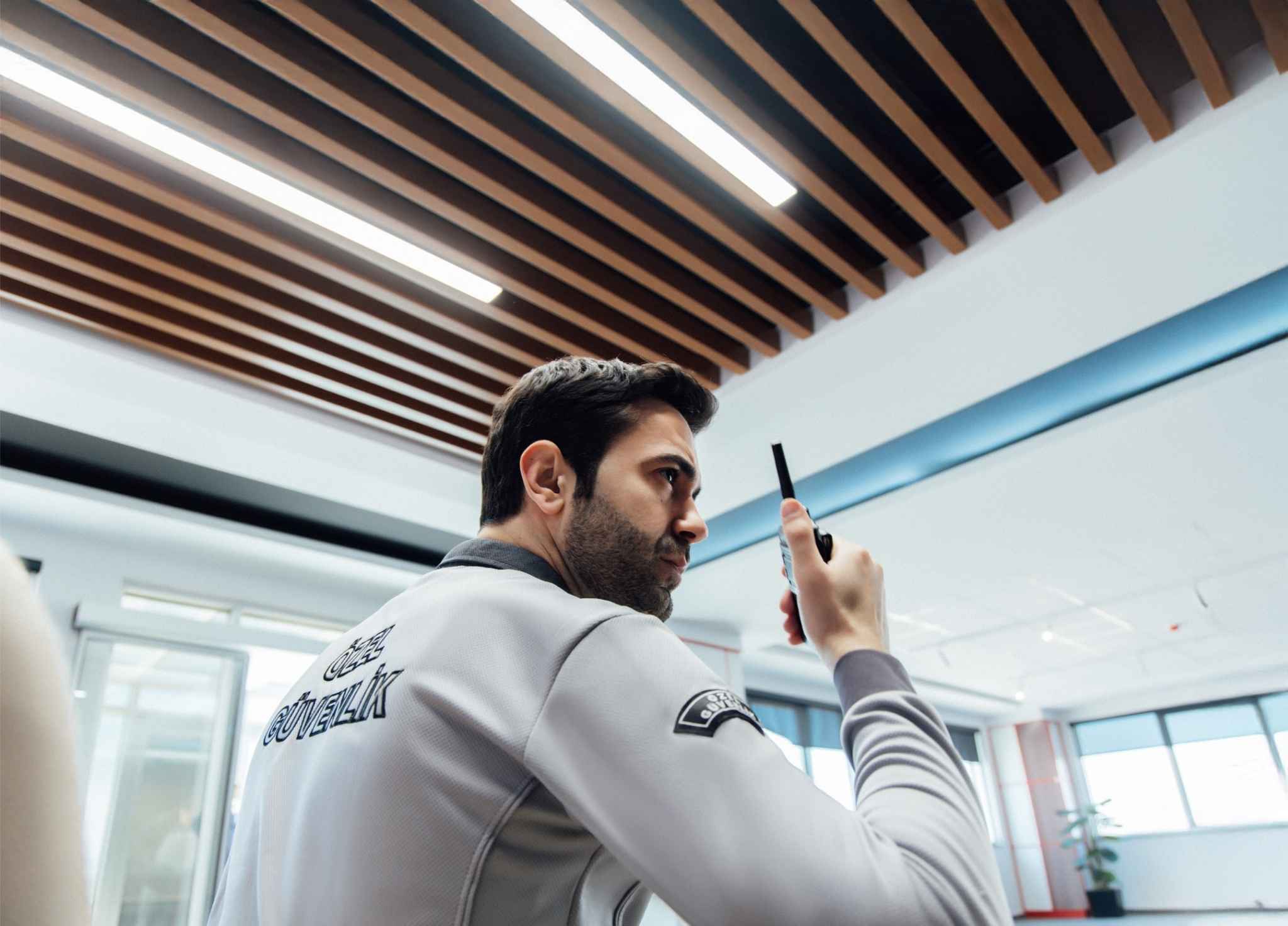
Our Karaman City Manager. They do the survey in person, draft the post orders, assemble the team and are your everyday point of coordination; the shift supervisor and officers are based at your site and follow your shift pattern. Planning help, surprise audits, training and the reporting format come from our regional directorate for Central Anatolia and our head office in Ankara.
Start by checking that the firm holds an operating licence from the Ministry of Interior, and find out who you will deal with on site. Then compare the proposals using the same yardsticks: how many posts, which duty hours, how often audits happen, who steps in when an officer is absent, and how reporting works. Where food is produced in shifts, an offer that links gate and dispatch routines to written post orders is simpler to hold to account than one that quotes only a number of people.
The permit is taken out by the organisation receiving the service, in its own name. It applies to the Governorship of Karaman; the file is settled by the provincial commission for private security, and the governor’s approval issues the permit. Under the regulation, these applications must be concluded within ten working days at most.
Use the form to let us know whether the site lies within the industrial zone or out in one of the districts, how many shifts you run and when, your staff and vehicle gates, daily lorry numbers and any cold storage. Our Karaman City Manager uses these details to plan the survey.
Applications for jobs in Karaman come in through our Careers page as well. It helps if you say that you want to work in Karaman and, if you already have a private security identity card from a governorship, whether it covers armed or unarmed duty. Law No. 5188 lays down the general requirements for officers in Article 10, the governorship’s work permit in Article 11 and the identity card in Article 12. Wherever we can, we plan to staff Karaman sites with people from the province. Social security data for 2025 record 248 insured workers at 36 workplaces registered in the province in investigation and security activities; each new officer is reported to the Governorship of Karaman within fifteen days of starting.
The post orders are drafted alongside the plant’s food safety rules, spelling out which gate visitors and contractors use and how they are logged, the clothing and hygiene steps for going into production areas, and which sections are off limits to officers. Because Article 16 of Law No. 5188 bars employing officers in anything other than protection and security, production, packing and loading remain the job of the plant’s own workforce.
The Turkish State Meteorological Service’s records for 1951–2025 give Karaman a record low of −28.0 °C and a record high of 41.4 °C, with January lows averaging −3.6 °C. So for gate and patrol posts our scope includes heated booths and winter kit in the cold season, and in summer shade, water and midday rotation of duties; the contract also says who supplies the booths and the electricity.
Karaman OSB’s own website lists cold storage with a figure of 30 in its sector breakdown. In such stores the officer logs vehicles, number plates and seals, checks doors and ramps when no loading is going on, and passes any after-hours alarm to the contact named in the post orders. Handling the refrigeration plant, loading and weighing fall outside security work; the contract names separately who looks after them.
Share whether your site lies within the industrial zone or out in one of the districts, how your shifts run, how many gates you have and how many lorries come and go each day; our Karaman City Manager will organise the survey and we will send you a written duty proposal.
Contact
Tell us your facility type, location and general requirements. Together, we can define a service scope that suits your organisation.
Fields marked * are required.
Looking for a role? Visit our careers page