For Factories, Industrial Zones and Timber Sites in Düzce · Turkey

Private Security Company in Düzce

As a private security company operating under a Ministry of the Interior licence, we organise duties in Düzce for sites ranging from pharmaceutical and plastics plants and industrial zone plots to timber and board yards, hospitals and campuses. When choosing between security companies in Düzce, what most businesses really want to know is who will look after the site day by day once the service has begun; with us, that is our Düzce City Manager. It is the City Manager who first walks the site, selects the officers, leads the team and checks the posts every day. The corporate side rests with our Black Sea Regional Directorate and our Ankara head office, which help shape the duty plan, carry out surprise inspections independent of the City Manager, and lay down what training covers and how reports look. In Düzce we allow from the outset for the rapid rise in workplaces since 2016, manufacturing rooted in forest products, wet winters and the high earthquake hazard.

Private Security Company in Düzce

Service Scope

Types of Site We Take On in Düzce

Social security figures for 2025 make Düzce’s industrial weight plain: the number of workplaces has grown by about 45% since 2016, and the local employment share of pharmaceutical manufacturing is 6.4 times the Turkish average, that of wood and wood products 5.8 times. The four headings below follow from that profile.

Factory and Industrial Zone Security in Düzce

At glass and automotive supply plants in Düzce 2nd Organised Industrial Zone (OSB), and at pharmaceutical, plastics and metal factories elsewhere in the province, we arrange gate control, shift entries and exits, loading ramps and night patrols to match each plant’s production calendar.

Timber, Board and Forest Products Yard Security in Düzce

At yards where logs, sawn timber and board stock sit in the open, we set up night-time watch, logged patrols for early signs of fire and records of vehicles and loads in and out, all in line with the operator’s fire plan.

Hospital and Campus Security in Düzce

At hospitals, Düzce University campuses and schools we draw up post and shift plans around the busy periods of patients, students and visitors; under Article 8 of Law No. 5188, officers at these facilities carry no weapons.

Warehouse, Logistics and Construction Site Security in Düzce

At warehouses, vehicle yards and construction sites we put goods reception, driver and subcontractor entry and the watch over materials left on site out of hours into written post orders.

A Planned Start

How the Service Is Planned

Before the first shift at a site in Düzce, three points go into an annex to the contract: who your everyday contact is, how posts will run on an unusual day of storm, heavy snow or earthquake, and who confirms that supervision has taken place. Day by day the site is run by our City Manager, and a separate check on whether that management is working as it should comes from our Black Sea Regional Directorate together with the Ankara head office.

  1. Site Survey and Risk Map

    Our Düzce City Manager goes round the site step by step and marks the gates, the perimeter, areas where stock is kept in the open, dispatch traffic and the emergency assembly points on a risk map.

  2. The Düzce Governorship Application

    The private security permit is obtained through an application that the organisation buying the service makes in its own name to the Governorship of Düzce; you put together the file for the provincial private security commission with our City Manager’s help.

  3. Team, Shift Supervisor and Cover

    Our City Manager chooses the officers and shift supervisors, and also plans staff transport and who takes over a post when an officer is absent. Once the number of officers at the site reaches fifteen, the security supervisor called for by Article 5 of the Law joins the team as well.

  4. Checks, Unannounced Audits and Reporting

    Checking the posts each day falls to the City Manager. Through visits that are announced beforehand and visits that are not, our Black Sea Regional Directorate and Ankara head office verify that these checks are actually carried out; what they find, and what is done about it, comes to you in a written report.

Your Sector’s Priorities

Daily Management in Düzce, Assurance from Our Regional Directorate and Head Office

Düzce’s 11,009 workplaces had 84,126 compulsorily insured employees on their books in 2025, according to social security data. Around 87% of workplaces have a headcount below ten, yet the 247 workplaces that employ 50 people or more hold roughly 43% of all insured employees. Even once civil servants are added, the public sector makes up only around a quarter of employees; working life in the province is weighted towards the private sector. In a province like this, the person who looks after your site every day is our Düzce City Manager. Support for the duty plan, unannounced audits kept separate from the City Manager, training content and the format of reports are the responsibility of our Black Sea Regional Directorate and Ankara head office, so local management is backed by a corporate chain of oversight.

Law Enforcement Background

The professional experience and security training of retired law enforcement personnel within our team contribute to our approach.

  • Logged Patrols Against Fire

    Areas holding timber, board and plastics stock become fixed stops on night rounds, and every round is logged with its time.

  • Written Plans for Storms, Snow and Earthquakes

    Where the officer stands, whom they alert and what they do during an evacuation on an exceptional day are written into the contract.

  • Governorship Notifications on Time

    We notify the Governorship of Düzce of the contract start and of every change of officer within the statutory period.

For International Companies

For international brands in Turkey, we offer a single point of contact, a written scope and regular reporting. Work with us as your security partner

Expert View and Recommendations

Six points to settle when choosing a security firm in Düzce

A pharmaceutical manufacturer, a timber business and a hospital management looking for security in Düzce want different things. The first puts visitor and contractor records first, the second fire watch over an open stockyard, the third the crowded hours in the emergency department. The sections that follow cover, in turn, the fast rise in Düzce’s workplaces, its forest products manufacturing, its industrial zones and building sites, its health and education facilities, its wet winters and its earthquake hazard, each read alongside the rules of Law No. 5188.

Research we draw on (5)
  1. 5188 sayılı Özel Güvenlik Hizmetlerine Dair Kanun — Mevzuat Bilgi Sistemi
  2. Özel Güvenlik Hizmetlerine Dair Kanunun Uygulanmasına İlişkin Yönetmelik (Mevzuat Bilgi Sistemi, güncel metin)
  3. SGK İstatistik Yıllığı 2025
  4. Meteoroloji Genel Müdürlüğü — Düzce il istatistikleri
  5. GFDRR ThinkHazard — Düzce deprem tehlikesi

Growing industry and sensitive production: pharmaceutical, plastics and metal plants

Düzce had 11,009 workplaces and 84,126 compulsorily insured employees under the main employee scheme (4/1-a) in the 2025 social security yearbook. Set against 2016, when there were 7,608 workplaces and 66,784 insured employees, that means growth of about 45% in workplaces and about 26% in insured employment over nine years. The growth is led by the private sector, which accounts for 10,701 of the workplaces and 75,381 of the insured employees. Some 19% of insured employees are at the 31 workplaces with 250 or more staff, three of which employ more than a thousand people.

Industry is clearly specialised in a few branches. Pharmaceutical manufacturing stands out: only 3 workplaces, but 1,321 insured employees, giving the branch a local employment share about 6.4 times the Turkish average. Rubber and plastics, with 3,519 insured employees at 91 workplaces, are concentrated at about 3.3 times the national level. Fabricated metal employs 4,273, clothing 4,666, motor vehicles and parts 2,470 and basic metals 1,714.

In sensitive production concentrated in a few large plants, security is as much about access inside the site as about checks at the gate:

  • Visitors and contractors: Each entry logged separately with identity, escort and duration.
  • Area boundaries: Entry to production, laboratory and storage areas tied to the operator’s authorisation list; the officer enters these areas only on the terms the operator defines.
  • Dispatch: Vehicle registration, seal and times in and out recorded at the gate, with checks on the content of shipping documents remaining with the operator’s staff.
  • Shift changes: At plastics, metal and automotive supply plants, checking passes and staff buses at the same time during the crowded entry and exit hours.

Writing into the contract from the outset how posts and headcount will be reset as the site grows saves time when a new line or building comes into use.


Forest products: fire and theft watch over open stockyards

According to press reports in January 2026, more than half of Düzce’s land area is covered by forest, and that shows directly in local industry. In 2025 social security data, wood and wood products manufacturing (excluding furniture) has 149 workplaces and 1,936 insured employees, a local employment share about 5.8 times the Turkish average. Furniture manufacturing adds 185 workplaces and 2,133 insured employees, and forestry a further 355.

Logs, sawn timber, chips and board stock often sit in open or semi-open areas. We suggest writing the following into the security plan for such a yard:

  • Stock areas as fixed stops on night rounds, with each stop logged with its time
  • Whom the officer alerts, and in what order, on seeing smoke, sparks or an unauthorised fire
  • Keeping the fire engine access route and the front of fire hose cabinets clear
  • A rule that no vehicles or people remain on site out of hours, with exceptions subject to written permission
  • Vehicle, registration and time records for every load of logs and timber leaving the site

Looking after extinguishing systems, issuing hot-work permits and inspecting fire equipment are part of the operator’s own occupational health and safety arrangements. Article 16 of Law No. 5188 limits an officer’s duties to protection and security, so the officer oversees and logs how these rules are applied while leaving the technical work to others.

Industrial zones, warehouses and construction sites: full plots and heavy vehicle traffic

According to business press reports in October 2024, every plot at the 81-hectare Düzce 2nd OSB is taken; 11 companies produce there and about 1,850 people work in the zone. Glass, automotive supply and solar panel systems are the leading lines of production.

The 2025 social security figures also reveal the services that surround industry: 4,187 insured employees in road transport, 972 in warehousing and transport support and 7,261 in building construction. Services to buildings and landscaping employ a further 2,748, which makes it all the more important to plan security in step with the site’s other support services.

The main points in these settings are:

  • Shared areas: A patrol plan for zone roads and boundaries shared with neighbouring plots, in line with the OSB management’s rules.
  • Lorries and ramps: A post of its own, apart from the gate, for the lorry waiting area, loading ramps and open stockyard, with every driver entry logged.
  • Construction phase: Night-time watch over areas holding materials and plant, with subcontractor staff admitted against an up-to-date list.
  • Support teams: Entry times of cleaning, maintenance and catering teams matched against the security log.

If a new plot or an extension is on the way, separate duty plans for the construction period and for production make the work easier.

Hospitals and campuses: growing health capacity and unarmed duty

Healthcare employs 3,022 insured people in Düzce and education 2,642, according to 2025 social security data. Health capacity is expected to grow: according to press reports in March 2026, a 400-bed Training and Research Hospital is planned for the province. The project includes 139 intensive care beds, 15 operating theatres and an emergency department able to treat 100 patients at once, and once the hospital is complete, total capacity together with the existing state hospital is expected to reach 1,000 beds. On the education side, Düzce University’s campuses and the province’s schools are a planning topic of their own.

Our plans for hospitals, campuses and schools cover these points:

  • Unarmed duty: At schools, universities, hospitals and other education and healthcare institutions there are no armed officers, by virtue of Article 8 of Law No. 5188; the team works without weapons.
  • Emergency department: A separate post at the emergency entrance at night and at busy times, with calm communication when tension rises and a routine for alerting the police without delay.
  • Visiting hours: Access to the wards managed according to the hospital’s visiting rules.
  • Campus: Extra posts planned in advance for exam and enrolment weeks, event days and halls of residence.
  • Moving period: When services move into a new hospital building, protecting the areas being vacated and those being opened at the same time.

In public procurement, our proposal meets the posts, shifts and officer qualifications in the technical specification clause by clause, and sets out the form and frequency of reporting.

Wet winters, storms and earthquakes: planning for exceptional days

Winters in Düzce are fairly mild but wet. January, in the Turkish State Meteorological Service’s 1959–2025 statistics, averages 3.8 °C with a mean low of 0.6 °C, and the monthly precipitation averages add up to roughly 837 mm a year. The records also show exceptional days: snow depth has reached 80 cm, wind speed 45.8 metres per second, and the temperature has fallen as low as −20.5 °C.

On earthquakes, ThinkHazard, a tool of the World Bank-hosted GFDRR, rates Düzce’s earthquake hazard as high; it puts the chance of potentially damaging shaking within the next 50 years at more than 20%. In a security plan this is a matter of preparedness.

We recommend that the contract covers:

  • Storms: Firmly anchored booths, a check after each round for objects that could topple or be blown about, and immediate reporting of camera and lighting faults.
  • Snow and rain: Rainwear, boots and winter kit; snow in front of gates and barriers is cleared by the operator, not given to security officers.
  • Earthquake and evacuation: The officer’s position during evacuation, the assembly area, keeping exit gates open and who holds the headcount list.
  • If communications fail: Radio or a pre-agreed meeting point to use when phones are down.
  • Drills: The security team taking part in the operator’s emergency drills, with the results recorded in the report.

No plan can prevent a natural event; the aim is that, even on an exceptional day, everyone knows in advance who stands where and whom they alert.

Permits from the Governorship of Düzce and the City Manager’s part

An organisation that wants an outside provider to protect its site in Düzce obtains the permit in its own name from the Governorship of Düzce. Article 3 of Law No. 5188 leaves the decision on the application to the provincial private security commission, after which the governor’s approval makes the permit final; the commission has no more than ten working days to decide, under Article 8 of the implementing regulation.

Once the permit is in place, the Law gives us these obligations:

  • First day of service: We hand a copy of the service contract to the Governorship of Düzce before the end of working hours on the day the service starts (as required by Law Art. 5 and Regulation Art. 10).
  • Changes in the team: Whenever an officer starts, quits or changes post, we inform the governorship within fifteen days (Articles 11 and 12 of the Law, Article 8 of the Regulation).
  • Fifteen or more officers: At a site of that size, Article 5 of the Law requires a security supervisor with at least an associate degree.

Our Düzce City Manager handles the site’s daily operation: they carry out the first inspection, selects and leads the officers, keeps track of notification dates, checks that fire and evacuation instructions are applied rather than left on paper, and works with you one to one. Behind this local work sit our Black Sea Regional Directorate and Ankara head office, which contribute to the duty plan, inspect independently of the City Manager both with and without prior notice, and fix the standard that training and reporting must meet.

When you put proposals side by side, we suggest asking every firm:

  • Who will we deal with on site every day, and who will run the shifts?
  • Who checks up on the officers, and how often, by day and by night?
  • Will written post orders be prepared for fire, storms and earthquakes?
  • How is it decided who replaces an officer who does not turn up?

Our proposal answers these questions one by one for your site. Because the list of required documents is sometimes revised, it is worth confirming the latest version with the Governorship of Düzce ahead of the application.

Before We Speak

Frequently Asked Questions

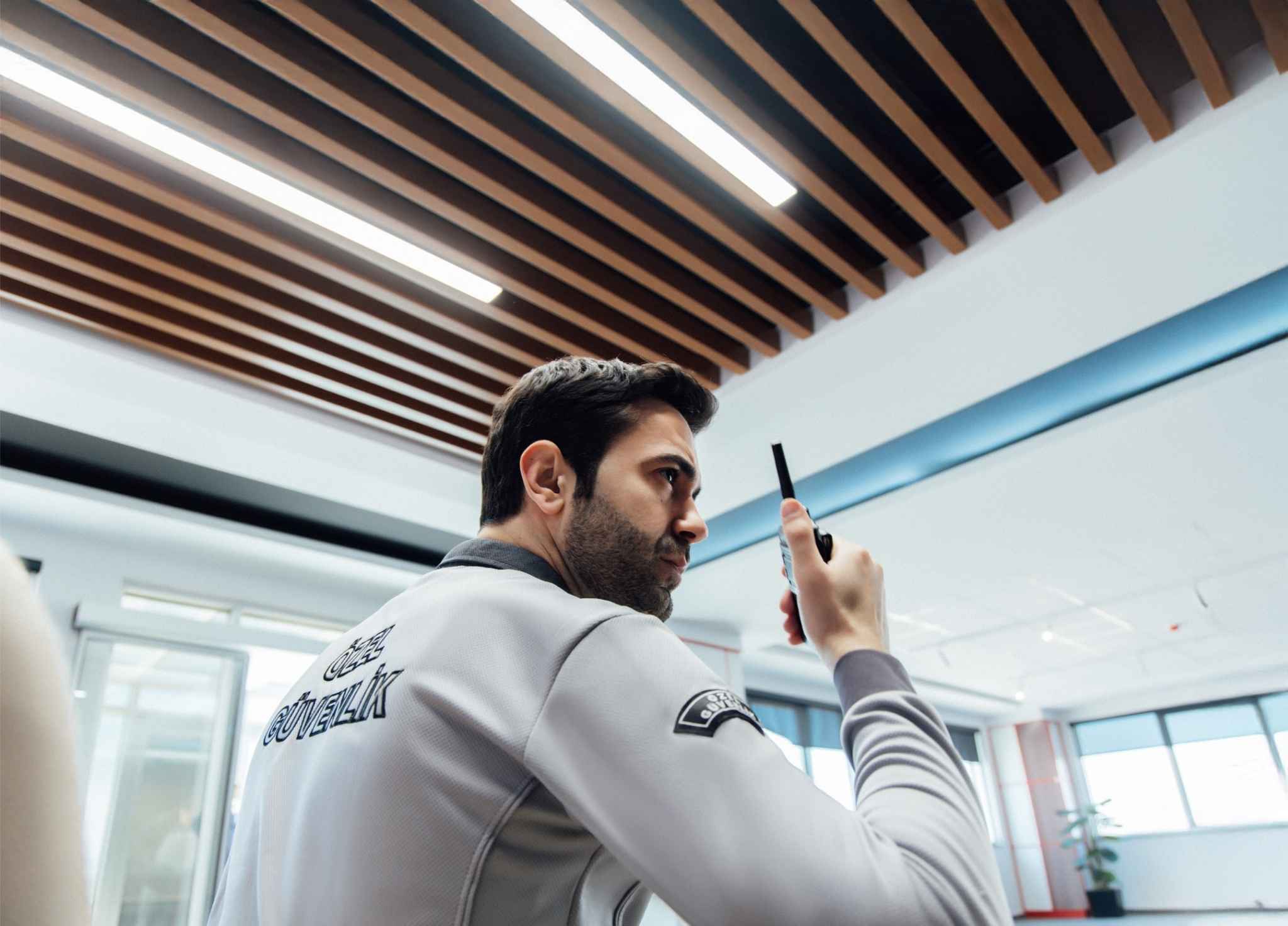
A Titan Savunma officer in a private security uniform communicating by radio inside a building.
How do you choose between security firms in Düzce?

Begin with the licence: is the operating permit the Ministry of the Interior granted the company still in force today? Then see whether the proposal was genuinely drawn up with your site in mind: does it say in writing what officers do in a fire or emergency, who replaces an officer who cannot come, and who audits the service and how often? The proposal we prepare once our Düzce City Manager has seen your site answers each of these questions separately.

Who is our contact in Düzce once the service starts?

Our Düzce City Manager: the person who first tours the site, selects and leads the team, checks the posts every day with the shift supervisors and hears your requests directly. For the duty plan, surprise inspections, training and the shape of reports, the City Manager can draw on our Black Sea Regional Directorate and Ankara head office.

Can you also cover a site outside the town centre, for example in Akçakoca, Kaynaşlı, Gölyaka or Cumayeri?

Yes. Once our City Manager has inspected a district site in person, they decide how the team there is set up, the staff transport timetable and the frequency of checks. The proposal also sets out separately what happens on days when snow or storms could disrupt the shift handover.

Which authority do you apply to for a private security permit in Düzce?

The permit comes from the Governorship of Düzce, on an application by the organisation that will receive the service. It is the provincial private security commission that reviews the file; once it has decided, the permit is granted by the governor. Under the implementing regulation, the commission’s review should take no longer than ten working days. Whether the site is in the centre or in a district, the application is made to the Governorship of Düzce.

What is the security officer’s role against fire risk at a timber or board yard?

The officer goes round the stock areas at set times. On noticing smoke, sparks or a fire lit without permission, they immediately alert the people named in the operator’s fire plan, keep the fire brigade’s way in free and make sure no unauthorised person enters the area. Servicing extinguishing systems and granting hot-work permits stay with the operator’s personnel: under Article 16 of Law No. 5188 an officer may not be assigned any work other than protection and security.

How do outdoor posts in Düzce keep working through storms and snow?

Winters in Düzce are fairly mild: in the Turkish State Meteorological Service’s 1959–2025 measurements the January mean is 3.8 °C. Even so, the same records show snow 80 cm deep, winds of 45.8 metres per second and a low of −20.5 °C. A firmly anchored booth, rainwear and winter kit, a perimeter round after a storm to look for fallen or blown objects and, where necessary, moving the officer to a sheltered post are therefore included in the scope.

How does the high earthquake hazard affect the security plan?

In GFDRR’s ThinkHazard assessment, Düzce falls in the high earthquake hazard class. The post orders therefore spell out where the officer stands during an evacuation, the assembly area, keeping exit gates open, who carries the headcount list and how to communicate if the phones go silent. We also recommend that the security team joins the operator’s emergency drills and that the drill results go into the report.

How do I apply for a job as a private security officer in Düzce?

Applications from would-be officers are collected on our Careers page. The team that will work in Düzce is put together by our Düzce City Manager, and wherever we can we give priority to candidates who live in the province. In the 2025 social security data, 762 insured employees appear at investigation and security businesses registered in Düzce. Article 10 of Law No. 5188 lists the general conditions for working as a private security officer; they include citizenship of the Republic of Turkey, being at least 18 and having passed basic private security training. Under Articles 11 and 12 of the Law, it is the governorship that grants an officer’s permit to work and issues their ID card.

Request a Written Duty Proposal for Your Site in Düzce

Tell us which district the site is in, the type of site (factory, industrial zone plot, timber or board yard, warehouse, hospital or campus), the hours it operates and the number of entrances; our Düzce City Manager will agree a survey date with you, and once the site has been seen we will send our duty proposal in writing.

Request a Security Proposal

Contact

Request a Security Proposal for Your Organisation

Tell us your facility type, location and general requirements. Together, we can define a service scope that suits your organisation.

Tell Us What You Need

Fields marked * are required.

What Happens Next

  1. Initial DiscussionWe respond within 15 minutes and clarify your requirements and facility details together.
  2. Service ScopeWe assess staffing needs and the working arrangements.
  3. ProposalWe prepare our proposal for the agreed service scope.

General Directorates

Ankara · Çankaya
İstanbul · Levent

Nine regional directorates · 81 provinces

Looking for a role? Visit our careers page