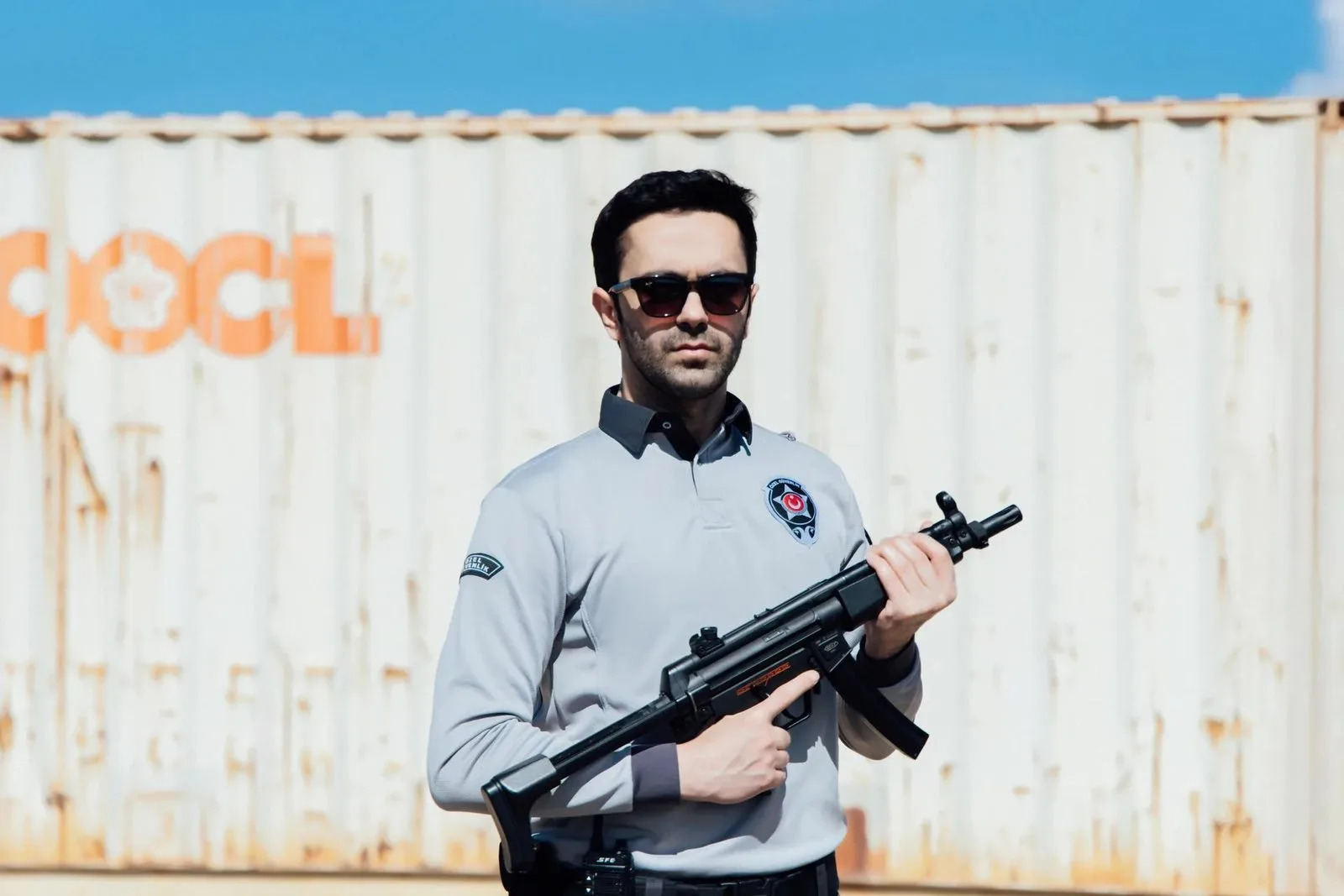
Short answer: Securing hydropower plants and dam sites in Artvin is less about guarding one gate and more about tying together pieces spread along a valley. The powerhouse, the switchyard, the weir or intake structure, cable trenches and service roads often sit at separate points. What holds them together is strict logging at the single entry point on the narrow valley road, a monitored camera and alarm layer, patrols at unpredictable times and a plan, written in advance, for winter snow and loss of communications. One more line has to be drawn at the start: where do the duties of the operator, private security and the police begin and end?
This article is general information, not legal advice.
Why is hydropower security in Artvin a subject of its own?
According to a February 2026 news report (İHA) citing State Hydraulic Works (DSİ) data, 39 hydropower plants are in operation in Artvin, with a combined annual generation capacity of 8,015 million kWh. The Social Security Institution's 2025 Statistical Yearbook shows the same picture through employment: electricity, gas, steam and air conditioning supply employs 814 compulsorily insured workers (Article 4/1-a) at 51 workplaces in the province. Comparing that sector's share of compulsorily insured employment in the province with its national share (our own calculation from the SGK tables), it is about 4.5 times more concentrated in Artvin than in Türkiye as a whole.
What sets these sites apart from a factory:
- Dispersion: The parts of a hydropower scheme line up along a valley. Sometimes only a service road links the powerhouse to the intake or weir. The officer at the gate sees the entrance, not the whole site.
- Remoteness: Some plants may be monitored remotely and run with few staff. If nobody is on site at night, there is no natural observer to notice an intrusion.
- Portable value: Copper in the switchyard, cable trenches, store and workshop, spare parts and hand tools can all be stolen. The loss goes beyond the stolen material: generation may stop, and a repair crew and materials have to be brought up the valley.
- A single road: In narrow valleys the site is often reached by one road. Used well, that is not a weakness but a strong control point.
What does the research say?
1. Cable theft responds to metal prices
A time-series study of 76 months of police records (2006–2012) from the British railway network found that changes in the copper price were positively associated with variations in the volume of "live" copper cable theft; it left the cause of a recent downward trend unclear (Sidebottom, Ashby and Johnson, Journal of Research in Crime and Delinquency, 2014). The study concerns railways in Great Britain, not hydropower, and the association is not by itself proof of causation. Our practical takeaway: when copper prices rise markedly, it is sensible to reassess the risk to the switchyard, cable trenches and stores.
2. Metal theft is planned and may return to the same place
A study of when and where metal theft occurred on the same network, using police-recorded crime, found only weak seasonality, with offences concentrated at night and at a small number of locations near, but not within, major cities. The risk of repeat victimisation, meaning the same place being hit again, lasted longer than has been found for other crime types. The authors argue these features point to planned rather than opportunistic offending, with scrap-metal dealers acting as facilitators (Ashby et al., Security Journal, 2017). Artvin's valleys are not the British rail network, but two lessons travel: the weeks after a cable or materials incident deserve extra attention, and it is worth assessing how the site looks from outside during the day.
3. Evidence on guards is limited to specific places and crimes
According to the published abstract of a review of security guards, place managers and defensible space, twelve evaluations met its criteria. Security guards were judged a promising technique of formal surveillance when deployed in car parks and targeted at vehicle crime (Welsh, Mudge and Farrington, Security Journal, 2010). That finding is limited to car parks and vehicle crime, and the review is not specific to energy sites. Our inference is that an officer adds value when tied to a specific risk (such as the switchyard and stores) and a specific task (entry logging, alarm verification, patrol). The benefit of an officer posted simply "to have someone on site" is hard to measure.
4. Cold is a hazard for the officer too
A scoping review of cold exposure and musculoskeletal conditions brought together 17 studies, most of them cross-sectional. They indicate that cold exposure increases the risk of these conditions, although differences in measurement ruled out a meta-analysis and the authors call for studies that better establish the order of cause and effect (Farbu et al., Frontiers in Physiology, 2022). The review is not specific to security officers, but it is a reminder that an officer patrolling outdoors in winter is not outside this picture.
Artvin's winters should not be underestimated. According to Turkish State Meteorological Service statistics for 1949–2025, the greatest snow depth recorded in central Artvin is 142 cm (3 February 1989) and the lowest temperature −16.1 °C. These figures are for the provincial centre; conditions at higher powerhouses and intakes may differ and should be assessed site by site.
The parts of the site and the security task at each
The table below is not a rulebook but a starting framework to be adapted during the site survey.
| Part of the site | Main risk | Security officer's task |
|---|---|---|
| Entry point (valley road) | Unlogged vehicles and people, materials leaving without paperwork | Entry-list, vehicle and work-order checks; entry and exit log; matching outgoing materials to documents |
| Switchyard | Cut fences, stripped cable and earthing copper | Perimeter rounds, fence and lock checks, alarm verification. The officer goes only as far as the operator permits and never touches energised equipment. |
| Powerhouse | Unauthorised entry, slack key and card control | Key handover log, door and window checks, visitor escort |
| Weir / intake | A remote point out of sight | Vehicle checks at unpredictable times, camera and alarm verification |
| Store and workshop | Missing cable drums, spare parts and tools | Seal checks, regular stock counts, materials in-and-out register |
| Maintenance and contractor periods | Many outsiders on site, materials left in the open | Daily contractor list, vehicle log, site check at end of work |
Where duties stop: operator, private security and police
In Artvin some energy sites are run by public bodies and others by private companies, and two different operators may have facilities in the same valley. Before the security plan is written, the boundaries need to be clear:
- Permission: Under Law No. 5188, setting up an in-house security unit or contracting the service to a company requires the governor's permission following a decision of the provincial private security commission (Article 3). The same article states that having an in-house unit does not prevent an organisation from also contracting a security company when needed. Where a public operator uses both, it should be written down exactly which points the company covers.
- Area of duty: Private security officers may use their legal powers only while on duty and within their area of duty (Article 9). A public road between sites or land belonging to another operator may fall outside it. Which plots and which fences form the area of duty should be shown in the contract and on a map.
- Limits of the job: Private security staff may not be employed on work other than protection and security (Article 16). Operating electrical equipment, switching, weighbridge or meter tasks stay with the operator's own employees.
- After an incident: The officer protects the scene and evidence (Article 7); investigation is for the judicial authorities and the police or gendarmerie. Meeting the responsible unit before anything happens and sharing the site plan and entry points can make the response smoother.
Checklist for winter and loss of communications
- Coverage map: During the survey, mark every point where mobile coverage is weak or absent, and choose a second channel such as radio or satellite accordingly.
- Lone working: For an officer patrolling alone, set regular "all well" check-ins and write down what happens if no reply comes.
- Snow plan: Agree before winter how shift changes work when the road is closed, how the officer on site is fed, kept warm and rested, and who is responsible for clearing the road.
- Power for cameras and alarms: Know how long cameras and alarms keep working if power or data lines fail, and who watches the site meanwhile.
- Unpredictable patrols: Do not visit remote points at the same time every day; record rounds with an electronic patrol system. Shorten foot checks on snow and ice, and keep vehicles and kit (chains, torches, warm clothing) ready.
- After an incident: Increase patrol frequency and store checks in the weeks following a cable or materials incident.
- Metal prices: Reassess switchyard and store risks when copper prices rise markedly.
Common mistakes
- Assuming the officer at the gate protects a site spread along a whole valley.
- Installing cameras that nobody watches; closing alarms without verifying them.
- Giving the officer tasks involving energised equipment, or not writing down how far into the switchyard they may go.
- Not mapping the boundary between public and private operators, or between an in-house unit and the contractor.
- Writing the winter plan after the first snowfall.
- Relaxing entry logging during maintenance and contractor periods.
- Returning to the old level of protection after a cable incident on the assumption that it will not happen again.
A note on practice in Türkiye
Camera footage and entry logs contain personal data, so their purpose, retention period and the information given to the people concerned should follow the rules the operator sets as data controller under Personal Data Protection Law No. 6698. Occupational Health and Safety Law No. 6331 also requires the employer to carry out, or commission, a risk assessment (Article 10); hazards such as lone working, cold and snow belong in that assessment.
You can find our approach for sites in the province on our private security in Artvin page, and our plan for energy facilities on our energy generation and distribution security page. For a first look at your site's risks, try our security risk assessment tool.
Titan Savunma is an Ankara-based private security company licensed by the Ministry of Interior under Law No. 5188 and certified to ISO 9001, 14001, 45001, 22301 and 28000. We work with international companies in English and Turkish, and our Artvin City Manager, supported by our Black Sea Regional Directorate and our Ankara General Directorate, surveys your site in person and prepares the entry point, switchyard, patrol and winter plan with you. To request a site survey, please use our contact page.
Sources and Further Reading
- Sidebottom, A., Ashby, M. & Johnson, S. D. — Copper Cable Theft: Revisiting the Price–Theft Hypothesis, Journal of Research in Crime and Delinquency 51(5), 684–700 (2014)
- Ashby, M. P. J., Bowers, K. J., Borrion, H. & Fujiyama, T. — The when and where of an emerging crime type: The example of metal theft from the railway network of Great Britain, Security Journal 30(1), 1–23 (2017)
- Welsh, B. C., Mudge, M. E. & Farrington, D. P. — Reconceptualizing public area surveillance and crime prevention: Security guards, place managers and defensible space, Security Journal 23(4), 299–319 (2010)
- Farbu, E. H., Höper, A. C., Reierth, E., Nilsson, T. & Skandfer, M. — Cold exposure and musculoskeletal conditions: a scoping review, Frontiers in Physiology 13, 934163 (2022)
- Sosyal Güvenlik Kurumu — SGK İstatistik Yıllığı 2025, Bölüm 1: Sigortalı ve İşyeri İstatistikleri (Tablo 1.11)
- Meteoroloji Genel Müdürlüğü — Artvin il istatistikleri (1949–2025)
- Habertürk / İHA (DSİ verisi) — Çoruh'un mavi gerdanlıkları Artvin'e güç katıyor (09.02.2026)
- 5188 sayılı Özel Güvenlik Hizmetlerine Dair Kanun (Mevzuat Bilgi Sistemi)