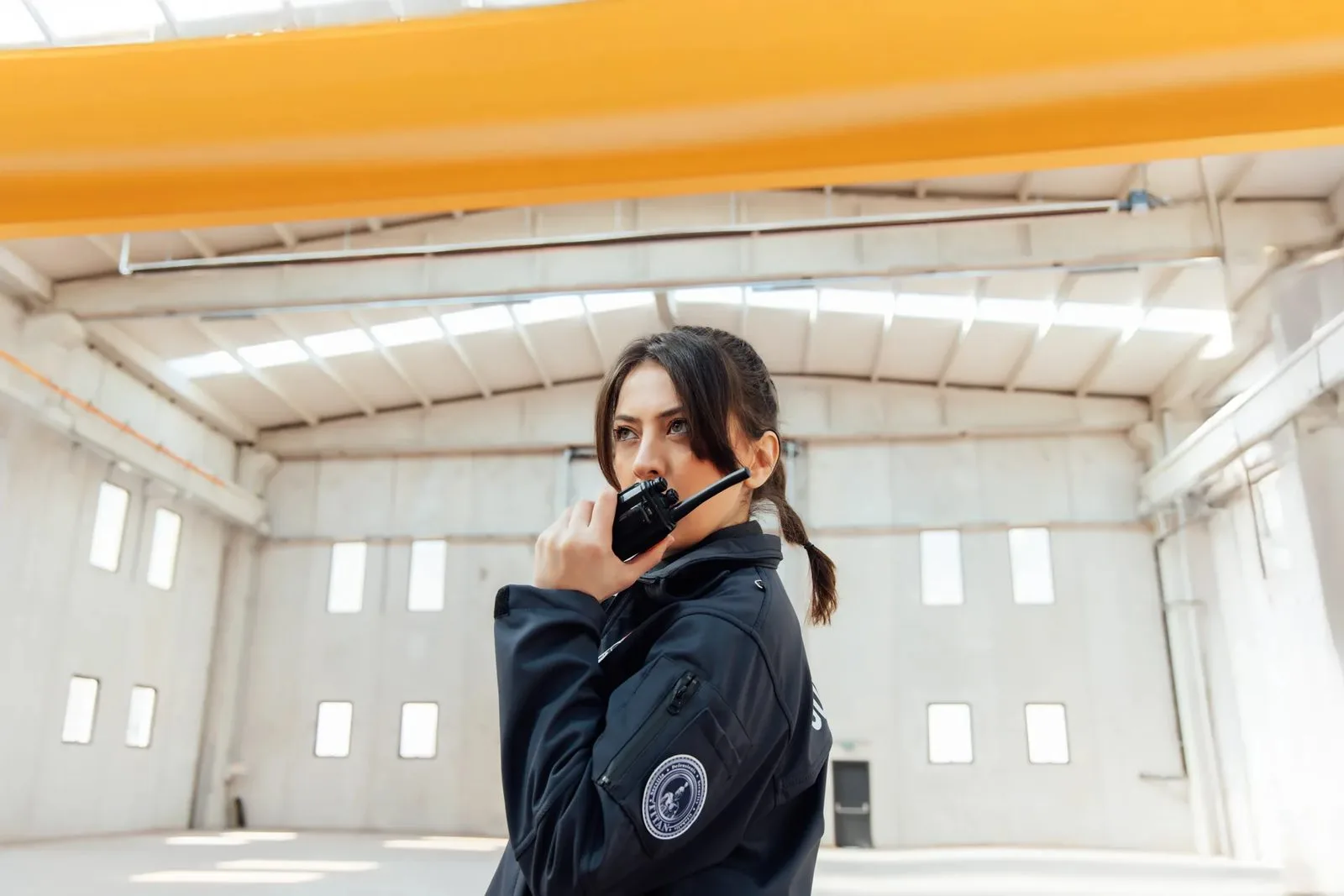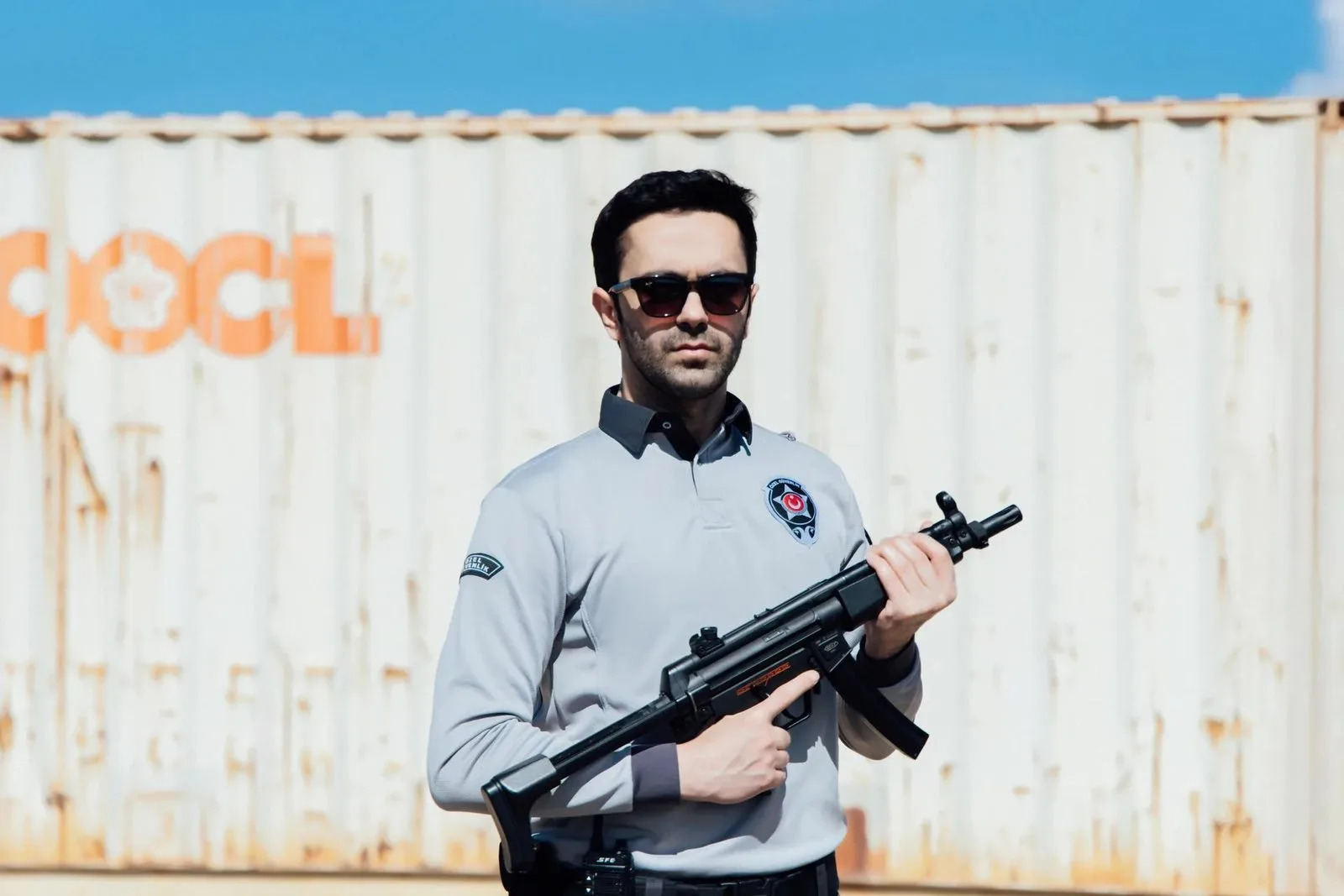
Short answer: Perimeter security at a coal-fired power plant or a large coal stockyard in Zonguldak is not only about keeping intruders out. On a large site, three jobs run side by side: spotting and reporting early signs of self-heating in the stockpiles, recording coal and scrap losses at the gate and on the yard, and dividing entry to a critical facility into zones so that each person reaches only the area their work requires. A security officer does not replace the site's fire and operations team; but at night and at weekends the officer is the person who walks the yard most often, and when those observations are recorded systematically, the officer becomes the first link in the early-warning chain.
This article is general information, not legal advice.
Why power plants and stockyards in Zonguldak are a separate security question
Zonguldak's labour market is shaped by coal and energy. By our calculation from the Social Security Institution (SGK) Statistical Yearbook 2025, the province's share of insured employment in coal and lignite mining is about 44 times the Turkish average, with 8,398 insured employees in 55 workplaces. Electricity, gas and steam supply accounts for 46 workplaces and 2,212 insured employees, about three times the national share. Warehousing and support activities for transport employ 2,493 people. Four workplaces in the province employ 1,000 or more insured people each. In short, the sites where coal is mined, moved, stockpiled and burned sit close together and operate at scale.
The climate is part of the picture. According to the Turkish State Meteorological Service (MGM), the monthly rainfall averages in Zonguldak add up to about 1,200 mm a year, the highest temperature on record is 40.5 °C (June) and the deepest recorded snow cover is 105 cm (1961). Rain and fog narrow what a patrol can see, while summer heat and wind are among the external factors that, as the research below shows, affect how a stockpile behaves.
For a site manager this becomes three questions. Who notices that a stockpile is starting to heat up, how often, and with what record? Does every loaded vehicle entering and leaving match its paperwork? Is it written down, and enforced at the gate, who may go how far into the plant?
What does the research say?
1. Self-heating: the source is the coal, the trigger is the conditions
A peer-reviewed review of research on spontaneous combustion of coal summarises that the heat source is low-temperature oxidation of the coal, and that the process is strongly influenced by temperature, the coal's oxidation history, coal properties and particle size distribution (Onifade and Genc, International Journal of Mining Science and Technology, 2020). The authors also note that none of the commonly used methods for predicting a coal's liability to spontaneous combustion has become a standard. That explains why regular observation and measurement on the ground matter more than any single “risk score”.
Another peer-reviewed study focusing on power plant stockyards describes the problem as significant worldwide, leading to health hazards, environmental pollution and coal loss, and states that spontaneous combustion depends both on the coal's intrinsic characteristics and on external parameters such as stockpile geometry, wind speed, wind direction and local temperature (Mohalik et al., International Journal of Coal Preparation and Utilization, 2021). The study, based on samples from a power plant stockyard in India, is essentially a laboratory and field trial of firefighting chemicals; even so, its approach includes thermal monitoring of the affected area before and after treatment. Our lesson: the shape of the pile and the weather are variables a security patrol should watch too.
2. The inside of a pile behaves differently from its surface
In a study by researchers from Turkish universities, the internal temperature of a coal pile 5 m wide, 10 m long and 3 m high, weighing about 120 tonnes, was monitored for three months under normal atmospheric conditions: readings from 20 points spread across two layers were logged every three hours, and internal temperatures rose to 31 °C (Ozdeniz et al., Energy Sources Part A, 2008). In the same author's industrial-scale study of a similar pile of about 120 tonnes, built in a company's stock area, air temperature, humidity, pressure, wind speed and wind direction were measured continuously alongside pile temperatures; the paper stresses that fires in coal left on stock areas for long periods cause serious economic and environmental damage (Ozdeniz, Energy Sources Part A, 2010). These studies used single, relatively small piles and do not represent a whole power plant yard. In both, the measurements were placed inside the pile. Our inference: heating can progress inside a pile before it shows on the surface, so an eye or a camera that looks only at the surface may notice it late.
3. Thermal cameras and drones are powerful but not enough on their own
At a coal mine in China, researchers combined a drone-mounted thermal camera with ground surveys to map coal fire areas; flights were made at 300 m, thermal images were calibrated against ground temperature readings, and anomalies were mapped as four fire zones and seven small anomalies (He et al., Scientific Reports, 2020). Citing earlier work, the authors note that thermal surveys in autumn or before dawn give the best results, that they flew on a cloudy day to minimise solar heating, and that the shortcomings of thermal images must be compensated by interpreting visible imagery, ground investigation and drilling. This is a mine site, not a power plant stockyard. The practical reading: a thermal camera or drone survey makes sense when it is combined with ground patrol observations and the site's own temperature measurements.
4. Bulk cargo losses can be tracked with data
A peer-reviewed study of bulk cargo theft in ports describes it as a long-standing, serious problem and notes that traditional risk assessment relies on experts and surveys, which is not optimal for proactive prediction; the authors report that models built on multi-source data predicted theft risk with accuracy and recall above 0.8 (Song et al., Applied Sciences, 2020). The setting is a port and cannot be transferred directly to a power plant. Our conclusion is narrower: when gate, weighbridge and stock records are kept consistently, losses become visible as a pattern, not just as a count discrepancy.
5. The human factor at a critical facility
A study of the human factor in critical infrastructure security notes that full protection against insider attacks is often neither feasible nor economic, but that these threats can be managed through suitable risk management; it observes that attackers can breach organisational security through social engineering, that is, through interaction with people, and proposes an awareness training framework for operators covering threats such as pretexting (Ghafir et al., The Journal of Supercomputing, 2018). The study is mainly about information security; an unknown person at the gate saying “I'm here for maintenance” is the physical version of the same threat.
Watching for heating and fire on a large stockyard: the officer's share
Measuring heat in the stockpiles and responding to it is the job of the site's operations and fire team. The security team's share is observation, recording and reporting. Based on our field experience, we recommend the following routine:
- Stockpile map: The yard is divided into numbered zones; the patrol passes set checkpoints in each zone and records each pass.
- Observation list: The officer notes signs such as smoke, steam, unusual smells, cracks or subsidence on the pile surface, and patches that dry faster than their surroundings or where snow does not settle. These signs are not a diagnosis; they are a report to the site's responsible person.
- Reporting chain: It is written down to whom an observation goes, by which route and within what time; open reports are handed to the next team at shift change.
- Weather note: An extra round follows strong wind, long hot spells or heavy rain; the conditions that research lists as external factors go into the patrol schedule.
- Thermal cameras: If the site uses thermal cameras, the alarm screen is also watched in the security control room and it is clear who receives an alarm; because the image shows only the surface, it is read together with ground observations.
Coal and scrap losses
On a large plant or stockyard, losses can build up in two places: on the yard itself and at the gate. On the yard, piles close to the fence line, metal scrap from maintenance and dismantling work, cable drums and spare-part areas attract attention. Managing the scrap area with its own fence or at least its own record, weighing and logging material removed once dismantling ends, and releasing scrap only on written instruction keep losses visible. Holes in the fence, cut wire and unused side gates should be checked on every patrol and reported with photographs.
Matching paperwork and load for loaded vehicles
Vehicles bringing coal to the plant and taking away ash or scrap make up the busiest gate traffic. The gate officer's job is to match the same information on entry and exit:
- On entry: Plate, driver and consignment note are checked against the list notified in advance; a vehicle not on the list goes to the waiting area and does not enter the site until the supervisor approves.
- At the weighbridge: Entry and exit weighings are recorded with the same plate and time; the net quantity is compared with the paperwork, and any difference above the site's tolerance is reported.
- On exit: Is a vehicle that has unloaded really empty, and is a loaded vehicle carrying what the paperwork says? This is checked at the gate by eye and, where needed, with an overhead camera view.
- Record reconciliation: Gate records, weighbridge records and stock movements are compared at set intervals; small recurring differences are examined separately.
Layered access at a critical facility
Not every area of a power plant is equally sensitive. Layered access means dividing the site into nested zones and writing down, for each zone, who may enter, with which document and with whose escort. A typical split is: the outer perimeter and car park; the administrative building; the stockyard and loading area; and the most sensitive parts, such as production, control and switchyard areas. Visitors and contractor staff go only as far as the zone where they have work, are escorted in sensitive zones, and their entry and exit times are recorded. Because the number of people on site rises during maintenance outages, the access list should be updated daily, and anyone whose pass or permit has expired should be removed at once. If an unknown person at the gate cites a familiar name or an urgent job, the officer keeps them at the gate and verifies with the responsible person on site.
A practical checklist
| Area | What to do | Why |
|---|---|---|
| Stockpile watch | Numbered zones, recorded checkpoints, an observation list and a written reporting chain. | Heating can progress inside a pile before it shows on the surface; recording early signs gets the information to the site team in time. |
| Weather | Extra rounds after wind, long hot spells and heavy rain. | Research lists wind and local temperature among external factors. |
| Thermal monitoring | Alarms are also watched in the control room; images are read with ground observations. | Researchers recommend compensating for thermal images' shortcomings with ground investigation. |
| Scrap area | Separate area or record, weighing and logging after dismantling, release on written instruction. | Losses of unrecorded material go unnoticed. |
| Loaded vehicles | Plate, driver, paperwork and weighbridge record are matched; out-of-tolerance differences are reported. | Consistent records make losses visible as a pattern. |
| Layered access | Zone-based rights, escorts, a daily updated list, entry and exit logs. | Research on critical infrastructure highlights the human factor as an often-ignored weakness. |
| Fence line | Holes, cut wire and side gates checked on every patrol; photo reports. | On a large site an unseen gap may go unnoticed for a long time. |
Common mistakes
- Leaving stockpile watch to a thermal camera alone and forgetting that it sees only the surface.
- Passing on smoke or a smell by word of mouth, with no record and no reporting deadline.
- Keeping the same patrol routine on windy and hot days.
- Leaving dismantling scrap unweighed and unlogged.
- Letting a vehicle through without comparing the weighbridge ticket with the paperwork, or not checking that an unloaded vehicle leaves empty.
- Giving contractor staff site-wide permits and not clearing the list when an outage ends.
- Letting in an unknown person who claims an urgent job without verification.
A note for Turkey
Under Law No. 5188, having a private security company provide the service requires the provincial governor's permission, granted on the decision of the private security commission; in Zonguldak the organisation receiving the service applies to the Governorship of Zonguldak. The implementing regulation provides for a protection and security plan for the site served, and it makes sense to handle stockyard patrols, gate checks and access zones together with that plan. The emergency plan and firefighting arrangements are the employer's responsibility under Occupational Health and Safety Law No. 6331, and the security team's reporting chain should be aligned with that plan. Gate and weighbridge cameras and vehicle, driver and visitor records contain personal data and should be processed under the rules the site sets in line with Personal Data Protection Law No. 6698.
You can find our service approach for sites in the province on our private security in Zonguldak page, our approach to power and grid sites on our energy generation and distribution security page, and our view of access control at critical sites on our critical infrastructure security page.
Titan Savunma is an Ankara-based private security company licensed by the Ministry of Interior under Law No. 5188 and certified to ISO 9001, 14001, 45001, 22301 and 28000. We work with international companies in English and Turkish, and our Zonguldak City Manager, supported by our Black Sea Regional Directorate and Ankara General Directorate, reviews your plant or stockyard on site at night and during delivery hours and builds the stockpile watch, gate and access routine with you. To request a site survey, please use our contact page.
Sources and Further Reading
- Onifade, M. & Genc, B. — A review of research on spontaneous combustion of coal, International Journal of Mining Science and Technology 30(3):303–311 (2020)
- Mohalik, N. K., Ray, S. K., Mishra, D., Pandey, J. K., Mondal, S., Khan, A. M. & Singh, R. K. — Prevention and control of spontaneous combustion/fire in coal stockpiles of power plants using firefighting chemicals, International Journal of Coal Preparation and Utilization 42(10):3173–3184 (2022; çevrimiçi 2021)
- Ozdeniz, A. H., Çorumluoğlu, Ö., Kalaycı, İ. & Sensogut, C. — 3.5 D Temperature Model of a Coal Stockpile, Energy Sources, Part A 30(12):1085–1097 (2008)
- Ozdeniz, A. H. — Determination of Spontaneous Combustion in Industrial-scale Coal Stockpiles, Energy Sources, Part A 32(7):665–673 (2010)
- He, X., Yang, X., Luo, Z. & Guan, T. — Application of unmanned aerial vehicle (UAV) thermal infrared remote sensing to identify coal fires in the Huojitu coal mine in Shenmu city, China, Scientific Reports 10:13895 (2020)
- Song, R., Huang, L., Cui, W., Óskarsdóttir, M. & Vanthienen, J. — Fraud Detection of Bulk Cargo Theft in Port Using Bayesian Network Models, Applied Sciences 10(3):1056 (2020)
- Ghafir, I., Saleem, J., Hammoudeh, M., Faour, H., Prenosil, V., Jaf, S., Jabbar, S. & Baker, T. — Security threats to critical infrastructure: the human factor, The Journal of Supercomputing 74(10):4986–5002 (2018)
- SGK — İstatistik Yıllığı 2025 (Tablo 1.11, 1.14, 1.15)
- Meteoroloji Genel Müdürlüğü — Resmi İstatistikler: Zonguldak (1938–2025)