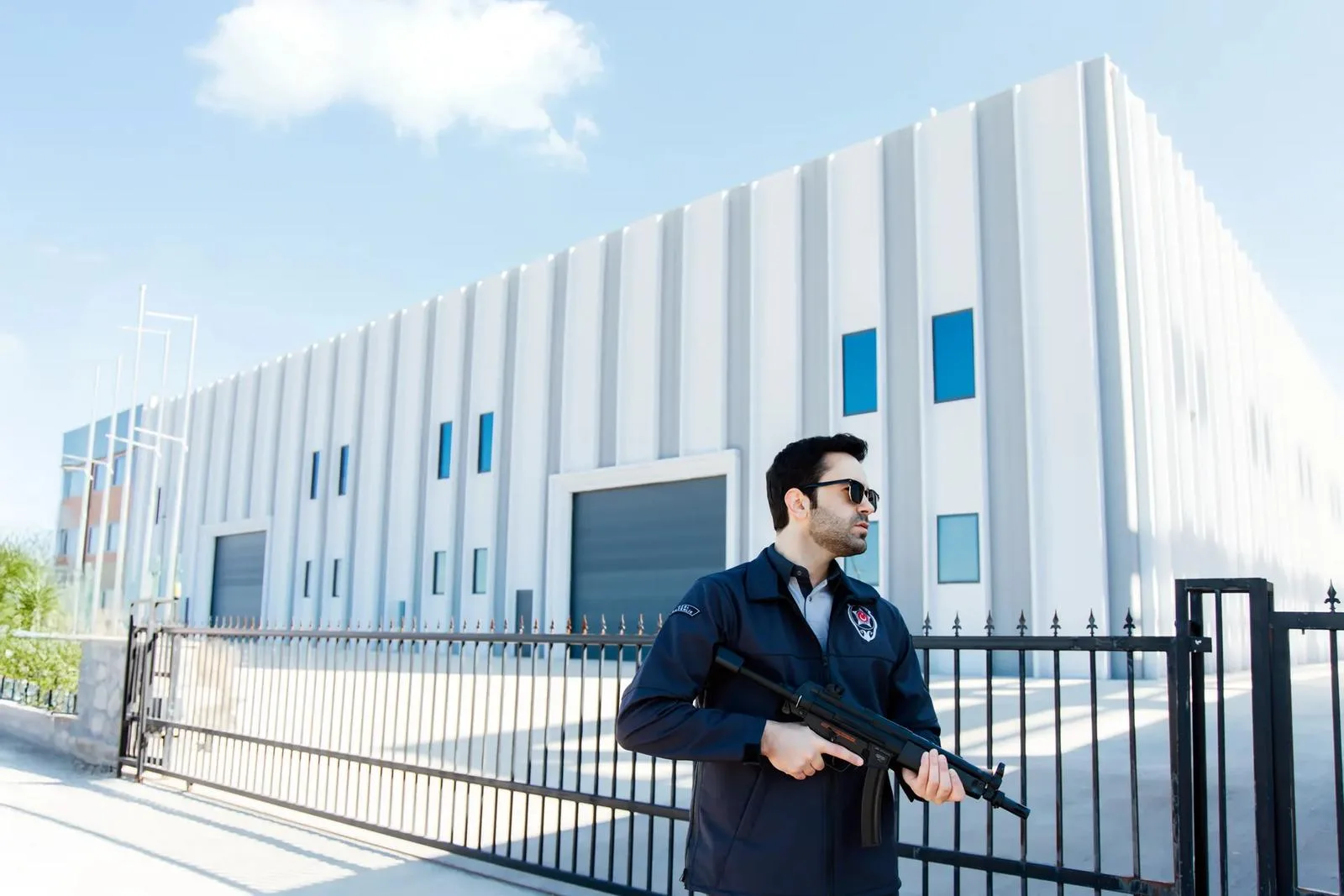
Short answer: In Bitlis, winter is not a pause for construction sites and quarries but a security season of its own. When work stops, the people leave, yet the plant, cable, rebar, fuel and site cabins stay where they are. Getting through the season well means writing four jobs down in advance: logging and gathering plant and materials on closing day, checking after every heavy snowfall whether the fence is still a real barrier, inspecting the site cabins regularly for snow load, heating and locks, and, before the site reopens in spring, counting everything against the closing list.
This article is general information, not legal advice.
Why winter belongs in the construction calendar in Bitlis
For Bitlis, the Turkish State Meteorological Service records a maximum snow depth of 250 cm, measured on 5 March 2012, in its 2011–2025 series. The January mean temperature is −4.2 °C, with a mean daily minimum of −7.9 °C, and readings below −24 °C have been recorded in December and January. The figure that tells us most, though, is March: it is the wettest month of the year, with 195.8 mm of precipitation, 16.4 wet days on average and a mean temperature of just 1.0 °C. Snow in Bitlis is not only deep but long-lasting, and in the months when temperatures hover around freezing, snow and rain mix. The series is short, covering fifteen years, and should be read with that in mind.
The construction workload is substantial too. According to the Social Security Institution (SGK) Statistical Yearbook 2025, building construction, civil engineering and specialised construction together employ 6,740 people insured under category 4/1-a at 619 workplaces in Bitlis, roughly one in six of the province's registered employees (our own calculation). Quarrying accounts for 24 workplaces and 294 insured employees, about twice the national weight of the sector, and non-metallic mineral products such as cement, brick and concrete for 70 workplaces and 958 employees. A further 8,984 people work at 674 workplaces registered as temporary, a category that typically includes construction sites. Building will continue: according to Ekonomi Gazetesi, a new 128-hectare organised industrial zone with 120 plots is being set up in the province, and part of its infrastructure and factory construction will inevitably spend a Bitlis winter on site.
What does the research say?
1. An empty site is an unguarded site
Routine activity theory holds that crime arises when a motivated offender meets a suitable target in the absence of a capable guardian. A critical review of the guardianship literature defines the guardian as someone who can interrupt contact between offender and target, directly or indirectly. It finds that evaluations of guardianship-related interventions support the concept, while high-quality field tests are almost entirely missing (Hollis-Peel et al., Crime, Law and Social Change, 2011). The review is not about construction; our inference is that when a site closes for winter and the flow of workers, subcontractors and suppliers stops, its natural guardians disappear with them. A winter routine is a deliberate way of filling that gap.
2. Snow load peaks when snow and rain mix
A peer-reviewed back-analysis of a large experimental hall near Montpellier, on France's Mediterranean coast, whose roof could not carry the combined snow and rain load in late February and early March 2018, when heavy snowfall turned into intense rain, shows how the rain saturated the snow layer and markedly increased the load, and how a low roof pitch and widely spaced drainage outlets slowed the escape of water. The authors note that rain-on-snow loads can occur when temperatures are close to zero (Ousset et al., Natural Hazards and Earth System Sciences, 2023). This is a detailed analysis of a single event and cannot be generalised on its own. Still, with March in Bitlis both the wettest month and hovering around freezing, it explains why site cabins, material shelters and temporary roofs need closer attention as winter ends rather than at its height.
3. Records drift unless they are counted
A study of nearly 370,000 inventory records across 37 stores of one retailer found 65% of them to be inaccurate. The authors show that regular auditing practices reduce the error, while the complexity of the operation increases it (DeHoratius and Raman, Management Science, 2008). The data come from shops, not construction sites. On a site, things are harder: materials are spread across many points, buried under snow for months, and by spring nobody remembers exactly what was left where in November. The spring count is therefore less a hunt for losses than a way of tying the records back to reality.
4. Cold also dulls the officer on duty
A review of the health effects of cold indoor and outdoor work reports that cold can reduce performance and productivity, increase accidents and injuries and cause respiratory complaints. It names identifying workplace and individual cold risks as the first step in managing them, with tailored prevention advice for susceptible workers (Mäkinen and Hassi, Industrial Health, 2009). The review contains no measurements specific to security officers, but it explains why warm-up breaks and a heated waiting point belong in the plan for anyone patrolling a snowbound site for long periods.
5. Official guidance: when the site closes
The UK Health and Safety Executive's guidance on protecting the public around construction sites advises securing sites adequately at the end of the working day, isolating and immobilising vehicles and plant and, if possible, locking them in a compound, barriering off or covering excavations, removing access ladders from excavations and scaffolds, and maintaining the fencing. In populated areas it typically expects a two-metre, small-mesh fence or hoarding. In Bitlis, what matters is how much of those two metres stays above the snow, and we come back to that below.
Closing day: handing the site over to winter
Winter security is set up on the day work stops. A step skipped then cannot be made up under the snow in February.
- Plant: excavators, loaders, compressors and generators are brought into a single compound; ignition keys are not left on site but handed over against a signed record. Each machine's hour meter reading goes on the closing list, because a higher reading in spring is the clearest sign that a machine was run without permission over the winter.
- Fuel: tanks are drained as far as practical, tank and pump caps are locked, and the remaining quantity is recorded.
- Portable valuables: cable drums, rebar, survey instruments and hand tools go into a locked cabin or off site, and whatever remains is photographed.
- Quarries: the crushing and screening plant is isolated, the weighbridge hut and conveyor line are locked, and the quarry entrance gets a barrier that can still be closed after snow clearing.
- Excavations and scaffolds: open excavations are covered or barriered and scaffold ladders removed. Snow hides these openings, and a hole nobody can see is a hazard for an intruder and for a patrol alike.
- Contacts: a single page sets out who calls whom, and when, between the site's winter lead, the client's technical team and the security officer.
The fence under snow: two metres, and how much after a storm?
In a province where snow depth is measured in metres, a fence does not keep the height it had on the day it went up. Snow drifted against it by the wind, or pushed aside by ploughs, can build a ramp on the outside, and from the top of that ramp a two-metre fence may be no higher than a person's waist. Snow load can bend panels, gate and barrier hinges can freeze, and once the access road is cleared, snow piled in front of the gate can stop it from closing. Checking the fence is therefore not a one-off task: after every heavy snowfall and every clearing operation, the whole fence line should be walked or reviewed on camera from end to end.
Snow also helps the watcher. Fresh footprints are a record of who entered the site, where and roughly when. On the first round of the morning, the patrol checks the fence line for tracks, photographs anything unexpected and reports it. On a site lying still under snow, this simple habit can pay off before any camera does.
Site cabins: locks, snow load and heating
In winter, site cabins do three jobs: storage for valuable materials, a room for documents and equipment, and the officer's waiting point. Each needs its own checks.
- Locks and doors: a frozen lock can look like a forced one. On every round the door, lock and seal are checked, and the seal number of a sealed cabin is entered on the list.
- Snow load: snow building up on cabin roofs and material shelters is reported to the client's technical team, especially on days when rain is forecast on top of snow; the decision to clear it, and the work itself, belong to that team.
- Heating and power: the type of heater, ventilation and fire extinguisher in the officer's cabin are set by the occupational safety specialist, and what to do during a long power cut is written down in advance.
- Documents: project files and records containing personal data are moved to a locked cabinet or back to the client's premises before winter.
How to set up a winter watch
On a site closed for winter, the point of the watch is less to be present all the time than to see the site regularly and on record. Patrol times are varied, and the route covers the fence line, the plant compound, the fuel tank and the cabins. In the cold, outdoor rounds are kept short with warm-up breaks between them, and on days with heavy-snow warnings the shift supervisor calls the officer more often. Shift handovers are written with road closures in mind: if the incoming officer cannot get through, the outgoing officer knows what to do and whom to tell. A torch, non-slip boots, a reflective vest and a charged spare phone are part of the winter kit.
Spring reopening: count, then hand over
Before the site reopens, the client's representative and the security lead walk the site together with the closing list in hand. Plant locations and hour meter readings, fuel levels, cabin seals and material photographs are compared one by one, and any difference is written up the same day. The fence line is walked once more from end to end, and bent panels or loosened fixings are put right before work restarts. Once the count is done, the site and its records are handed over to the new season's team.
Checklist: from winter closing to spring reopening
| When | What to do | Why |
|---|---|---|
| Closing day | Plant into the compound, keys signed over, hour meters and fuel recorded. | This list is the only basis for the spring comparison. |
| Closing day | Cable, rebar and tools into a locked cabin; remaining materials photographed. | Portable valuables are the first target. |
| After every heavy snowfall | Walk the whole fence line looking for snow ramps outside, bent panels and frozen gates. | Snow can cut a fence's effective height. |
| Every morning | Check fresh snow for tracks; photograph and report anything unexpected. | Footprints are a self-made entry log. |
| Every round | Check cabin locks and seal numbers. | A seal shows whether a door has been opened. |
| Days with rain forecast on snow | Report snow on cabin roofs and shelters to the technical team. | Wet snow can markedly increase the load. |
| Heavy-snow warnings | Short outdoor rounds, warm-up breaks, frequent supervisor contact, handover back-up. | Cold reduces alertness and performance. |
| Spring reopening | Joint count against the closing list, written record of differences, fence line put right. | Records drift from reality unless counted. |
Common mistakes
- Leaving the site entirely empty because "nobody will come in this snow".
- Leaving ignition keys in the machines or the cabin, and not recording hour meter readings at closing.
- Checking the fence once in autumn and not again for the whole snow season.
- Pushing cleared snow against the outside of the fence.
- Leaving snow to build up on cabin roofs until April.
- Expecting the security officer to clear snow, operate plant or run the store.
- Letting the crew back on site in spring without a count, and discovering shortfalls months later.
- Installing cameras without deciding who keeps the recordings, and for how long, under Türkiye's Personal Data Protection Law No. 6698.
A note on practice in Türkiye
Article 16 of Law No. 5188 states that private security officers may not be employed in work other than protection and security services. On a site closed for winter this rule is easily forgotten: clearing snow, running plant, handing out fuel or receiving deliveries is not the officer's job; the officer watches, records and reports. Heating in cabins, slippery ground and cold work should be written into the risk assessment required under Occupational Health and Safety Law No. 6331 as a separate winter period. The emergency plan needs a winter update as well, treating fire, long power cuts and the access road being closed by heavy snow as separate headings, each stating whom the officer calls and where they wait.
The duties we cover on construction and quarry sites are set out under construction site security, and the way we work with factories, public buildings and sites across the province is described under private security company in Bitlis. To make a first assessment of your own site's winter risks, you can use our security risk assessment tool.
Titan Savunma is an Ankara-based private security company licensed by the Ministry of Interior under Law No. 5188 and certified to ISO 9001, 14001, 45001, 22301 and 28000. We work with international companies in English and Turkish, and our Bitlis City Manager, supported by our Eastern Anatolia Regional Directorate in Erzurum and our Ankara General Directorate, visits your site before it closes and writes the winter and spring reopening routine with you. To arrange that visit, write to us via our contact page.
Sources and Further Reading
- Hollis-Peel, M. E., Reynald, D. M., van Bavel, M., Elffers, H. & Welsh, B. C. — Guardianship for crime prevention: a critical review of the literature, Crime, Law and Social Change 56(1):53–70 (2011)
- Ousset, I., Evin, G., Raynaud, D. & Faug, T. — Back analysis of a building collapse under snow and rain loads in a Mediterranean area, Natural Hazards and Earth System Sciences 23:3509–3523 (2023)
- DeHoratius, N. & Raman, A. — Inventory Record Inaccuracy: An Empirical Analysis, Management Science 54(4):627–641 (2008)
- Mäkinen, T. M. & Hassi, J. — Health Problems in Cold Work, Industrial Health 47(3):207–220 (2009)
- HSE (Health and Safety Executive, Birleşik Krallık) — Construction: Protecting the public
- SGK — İstatistik Yıllığı 2025 (Sigortalı ve İşyeri İstatistikleri, Tablo 1.11 ve 1.17)
- Meteoroloji Genel Müdürlüğü — Resmî İstatistikler: Bitlis (2011–2025)
- Ekonomi Gazetesi — Bitlis'te ilave organize sanayi bölgesi kuruluyor (19.06.2026)
- 5188 sayılı Özel Güvenlik Hizmetlerine Dair Kanun (md. 16), Mevzuat Bilgi Sistemi