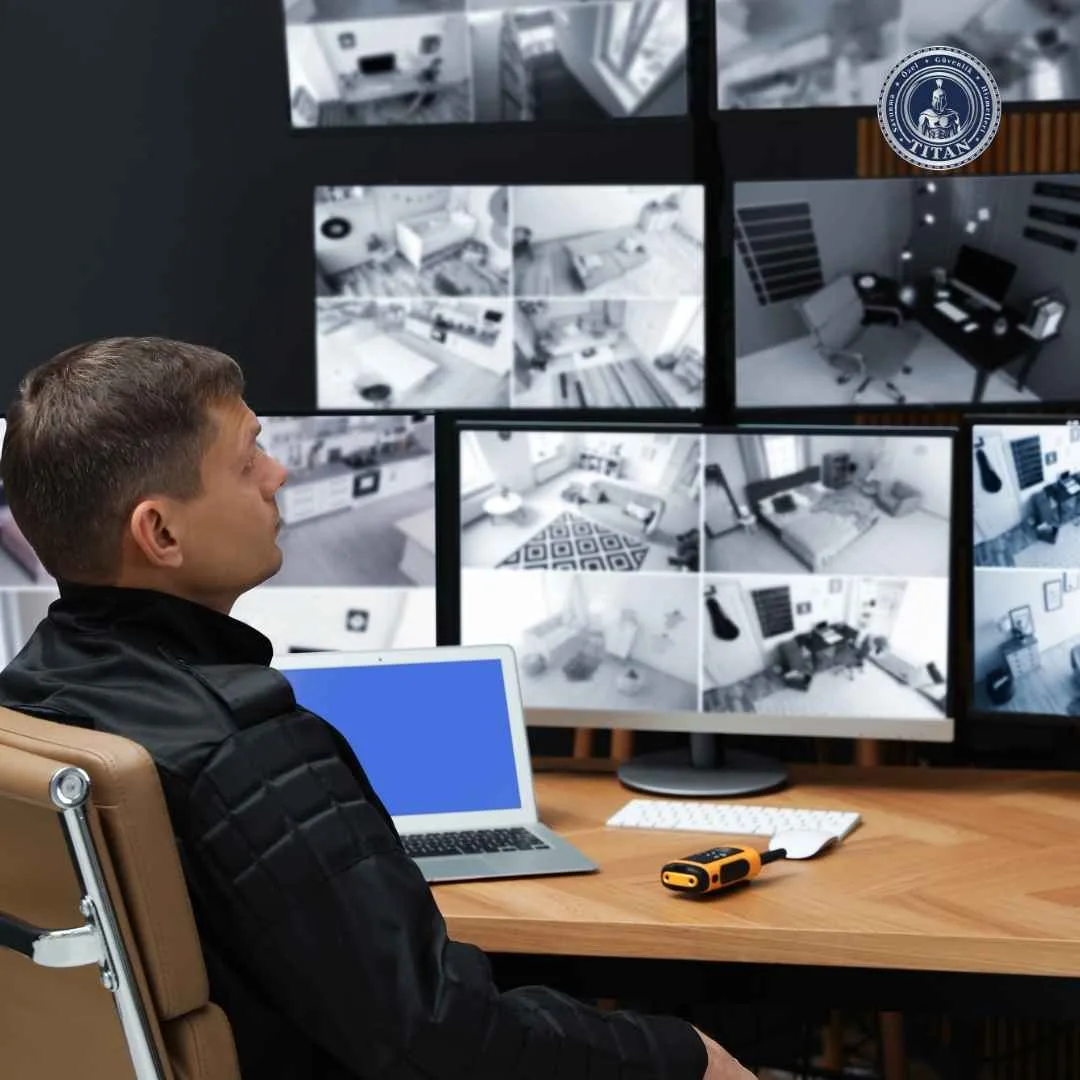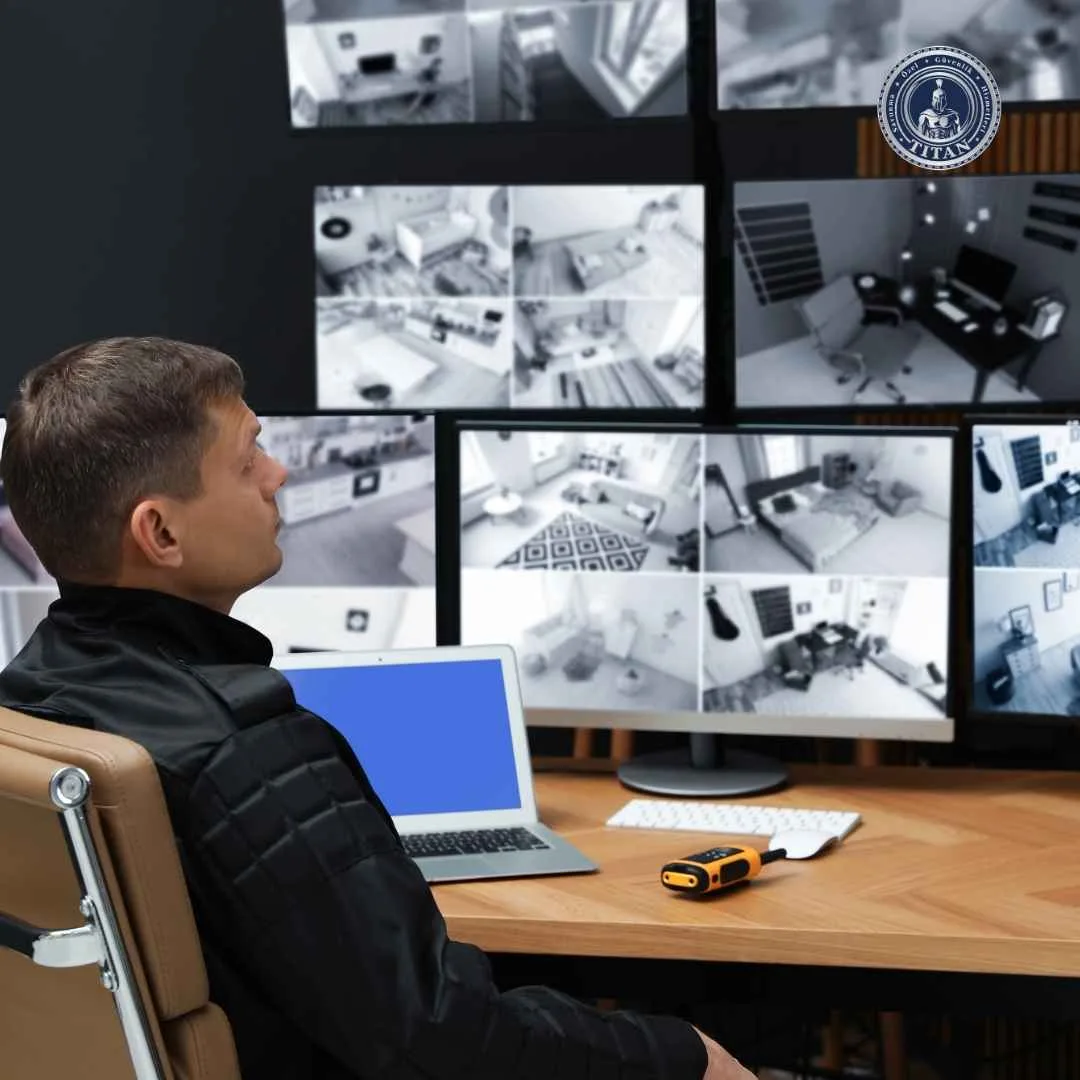
In a colocation data centre you place your servers in another company's building, but responsibility for the security of your data does not move into the building with them. It stays with you. For international companies, banks and technology firms operating in Turkey, the practical question is simple: the operator guards the building, but who guards the cage, the access list, the deliveries and the old disks?
The short answer: the operator secures the building, perimeter, shared areas and infrastructure. The tenant decides who may enter its cage, who may touch its equipment and how its media is destroyed, and must be able to prove it. Article 12 of Turkey's Law No. 6698 on the Protection of Personal Data (KVKK) states that where personal data is processed by another person on the data controller's behalf, the controller is jointly responsible with that person for the required security measures.
This article is general information, not legal advice.
Shared responsibility: who secures what?
Agreeing a responsibility matrix like the one below before signing avoids most of the later "that was your job" disputes.
| Area | Operator | Tenant |
|---|---|---|
| Perimeter and main entrance | Physical barriers, ID checks, security officers | Keeping the authorised-person list current |
| Shared areas and corridors | Cameras, patrols, record retention | Process for requesting footage after an incident |
| Cage and cabinet | Cage structure, lock infrastructure | Issuing keys or cards, internal access rules |
| Remote hands (smart hands) | Staff, ticketing system | Instructions, approval, checking results |
| Deliveries and shipments | Loading dock, temporary storage | Advance notice, inventory matching, release approval |
| Media destruction | Destruction service and certificate, if offered | Decision, method, keeping the records |
Cages, cabinets and the access list
The tenant's most important security tool is the authorised-person list it gives the operator. The operator admits whoever is on the list after an ID check; whether the list is correct is the tenant's responsibility. If a former employee or a contractor whose contract has ended stays on the list, the door is effectively open, however good the building security is.
- Review the list at least quarterly and report leavers on the day they leave.
- Assign each cage key or card to a named person; avoid shared keys.
- Manage permanent access and one-off access separately.
Many facilities use biometric readers. Article 6 of the KVKK classifies biometric data as a special category of personal data, so it should be settled in advance who processes your employees' biometric data, on what legal basis, and how employees are informed.
Escorts and smart hands
If the tenant's own contractor needs to enter the cage, the contract should say who escorts them: the operator's staff or the tenant's own employee. With smart hands, operator staff touch your equipment, so every task should be tied to a written work order, a named approver and a completion record. For tasks involving data-bearing parts, such as a disk swap, the serial number of the removed part and who received it should be logged.
For banks this is regulated. Under Article 17 of the Regulation on Banks' Information Systems and Electronic Banking Services issued by the Banking Regulation and Supervision Agency (BDDK) in 2020, access to data centres by bank employees who are not authorised personnel, visitors, outsourcing providers and contractor staff requires approval. Their activities are closely monitored and they must be escorted, and requests, approvals, actions and entries and exits are logged. The same article requires camera systems with no blind spots that keep recordings for at least one year, with footage backed up to a different location. For non-banks this is not directly binding, but it is a useful benchmark.
Deliveries and shipments
The weakest point of many data centres is the loading dock. When new servers arrive or faulty parts leave, it can be unclear who approved what.
- Every delivery is pre-notified, and the operator holds un-notified boxes in a waiting area.
- Incoming equipment is matched against serial numbers on the tenant's inventory list.
- Any equipment leaving the facility needs the tenant's written release, and for disks going back under warranty (RMA) the wipe-or-destroy decision is made in advance.
Media destruction and records
Turkey's Regulation on the Deletion, Destruction or Anonymisation of Personal Data (Official Gazette, 28 October 2017, No. 30224) requires deletion, destruction and anonymisation to be recorded, and those records to be kept for at least three years unless other legal obligations apply (Article 7). The controller explains the methods it uses in its policies and procedures, and for controllers required to have a retention and destruction policy, the periodic destruction interval may not exceed six months (Article 11).
The physical controls in Annex A of ISO/IEC 27001:2022 point the same way: 7.10 Storage media and 7.14 Secure disposal or re-use of equipment call for a documented disposal process and, where a third-party disposal company is used, its records too. In practice a destruction certificate should list serial numbers, method, date, and who carried out and witnessed the destruction.
Contract and audit evidence
Article 12(3) of the KVKK requires the data controller to carry out, or have carried out, the necessary audits. In colocation that means being able to get evidence from the operator. The contract should cover:
- How often, and in what format, the tenant receives entry and exit logs for its own cage.
- Camera retention periods and the process for requesting footage after an incident.
- The time limit and channel for notifying the tenant of security incidents.
- Audit rights: on-site inspection, or sharing of independent audit reports.
- If the operator outsources guarding, that company's operating licence under Law No. 5188 and the officers' state-issued ID cards.
Certificates help, but read the scope. Check the scope statement of an ISO 27001 certificate to confirm it covers your facility and its physical security processes. For banks, Article 25 of the same BDDK regulation requires primary and secondary systems to be kept in Turkey, and Article 29 requires senior management to oversee outsourcing risks.
Common mistakes
- Submitting the authorised-person list once and never updating it.
- Requesting smart hands work by phone without a written work order.
- Returning faulty disks to the manufacturer before deciding how they will be wiped or destroyed.
- Accepting the operator's certificate without reading its scope.
- Asking for footage after an incident and finding it has already been overwritten.
For facility-level physical security, see our data centre physical security page, and for closing contractor access, our bulletin on ending contractor access after data centre maintenance.
About Titan Savunma
Titan Savunma is an Ankara-based private security company operating under a Ministry of Interior licence issued under Law No. 5188. It holds ISO 9001, 14001, 45001, 22301 and 28000 certificates, works with international companies in English and Turkish, and plans services for sites in different provinces of Turkey with a single point of contact, written scope and regular reporting. Learn more on our private security in Turkey page.
Sources and Further Reading
- Law No. 6698 on the Protection of Personal Data, Mevzuat Bilgi Sistemi
- Bankaların Bilgi Sistemleri ve Elektronik Bankacılık Hizmetleri Hakkında Yönetmelik, Resmî Gazete 15 March 2020 No. 31069
- Kişisel Verilerin Silinmesi, Yok Edilmesi veya Anonim Hale Getirilmesi Hakkında Yönetmelik, Resmî Gazete 28 October 2017 No. 30224
- ISO 27001:2022 Annex A Physical Controls, URM Consulting