Data centre operators buying a guarding service often say: “We are within ISO 27001 scope, so the service must fit that.” On its own, that sentence does not tell a contractor what to do. Which door the officer stands at, with what authority and on whose approval all still have to be written down. This article turns the relationship between the Annex A physical controls and manned guarding into practical questions.
The full texts of ISO/IEC 27001 and 27002 are paid for and are not reproduced here. Control titles and explanations below rely on the secondary sources linked. For your own programme, consult the standard itself and your certification body.
What does Annex A expect of an officer?
According to the standard's scope record, ISO/IEC 27001 specifies requirements for establishing, implementing, maintaining and continually improving an information security management system, including requirements for assessing and treating information security risks. Secureframe's summary says Annex A of the 2022 edition has 93 controls in four themes, 14 of them physical. It also explains that the Statement of Applicability sets out which controls have been selected and why.
The key point is that the physical control titles do not specify a number of officers. ISMS.online, describing control 7.4 on physical security monitoring, lists guards as one of several tools, such as cameras and alarms, that can be used alone or together. Whether officers are needed, and at what hours, follows from the organisation's risk assessment.
NIST SP 800-53 takes a similar line. It is a US catalogue and is not binding in Turkey, but it is useful for comparison. Control PE-3 refers to controlling entry and exit with organisation-defined systems or devices, guards, or both. The enhancement calling for guards 24 hours a day, seven days a week sits outside the baselines.
From control title to duty
These titles from URM Consulting's list matter most to an officer. The right-hand columns are our suggested mapping, not the text of the standard.
| Control title | What an officer might contribute | What an officer should not decide |
|---|---|---|
| 7.1 Physical security perimeters | Perimeter patrols, reporting open doors and damage | Where the perimeter runs |
| 7.2 Physical entry | Checking identity and approval, visitor log and pass | Who is granted access |
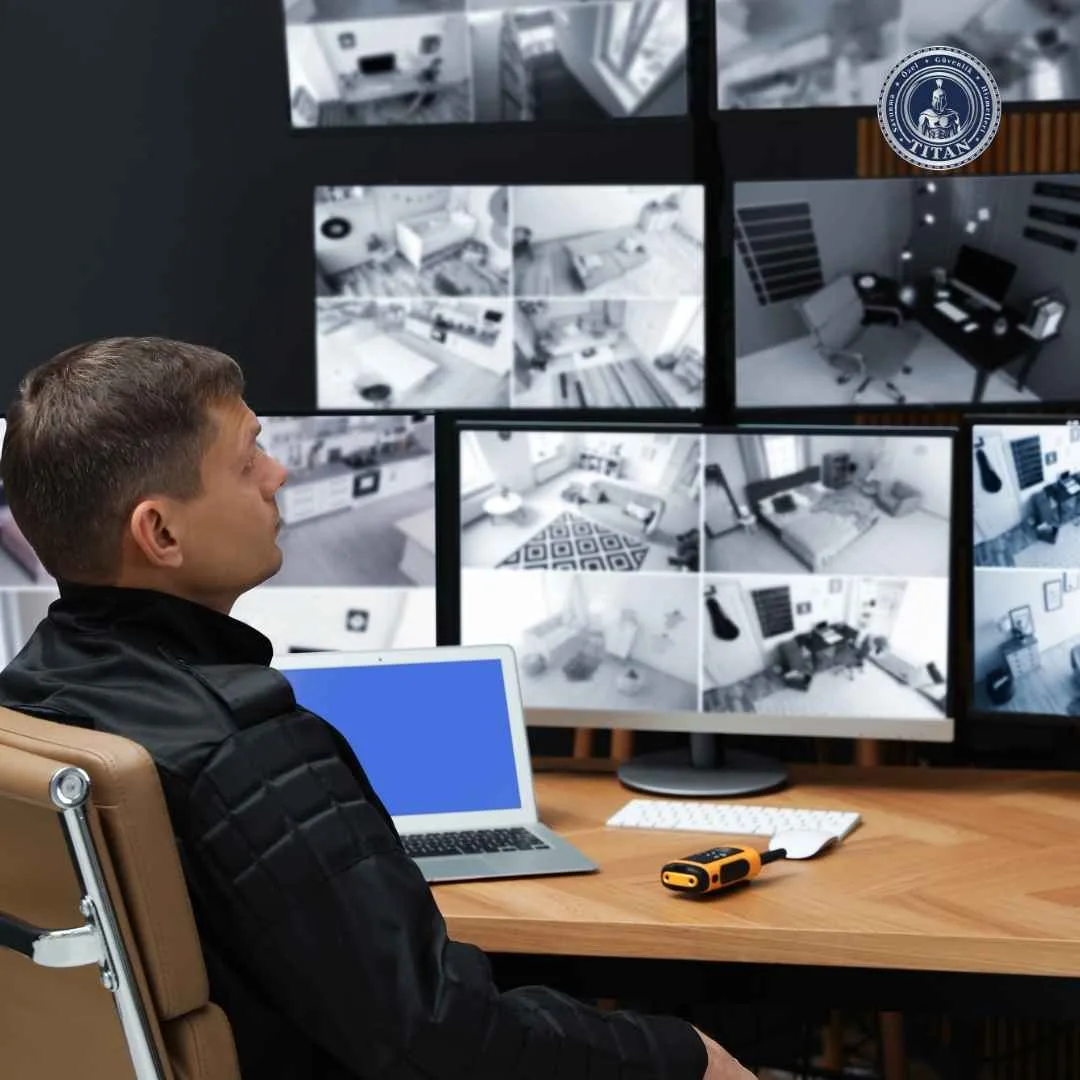
| 7.4 Physical security monitoring | Watching alarms and cameras, reporting incidents | Who may receive recordings |
| 7.6 Working in secure areas | Escorting where defined, checking vacant areas | Whether technical work is correct |
| 7.13 Equipment maintenance | Matching a maintenance team's entry to its work order | Whether maintenance is needed |
Put layered access on paper
The number of layers varies by building. What matters is that, at every boundary, it is clear who grants passage and on what basis. A sample template:
| Layer | Who passes | What the officer checks | Who owns the approval |
|---|---|---|---|
| Site entrance | Staff, contractors, supplier vehicles | Appointment list, identity | Facilities or operations |
| Building and reception | Registered visitors, authorised staff | Registration, pass issue and return | The hosting department |
| Technical areas | Teams with a work order | Work order, time window, escort details | Technical operations |
| Data hall and customer cage | People authorised for that area | Authorisation list, customer approval where relevant | The access owner, subject to the customer contract |
ISMS.online's explanation of 7.2 recommends that delivery and loading areas are controlled and, where possible, separated from IT facilities. Courier and goods reception should therefore be treated as a separate line in the table above. Keeping delivery staff out of the corridor towards the data hall should be part of the plan from the start.
A contractor escort means officer hours
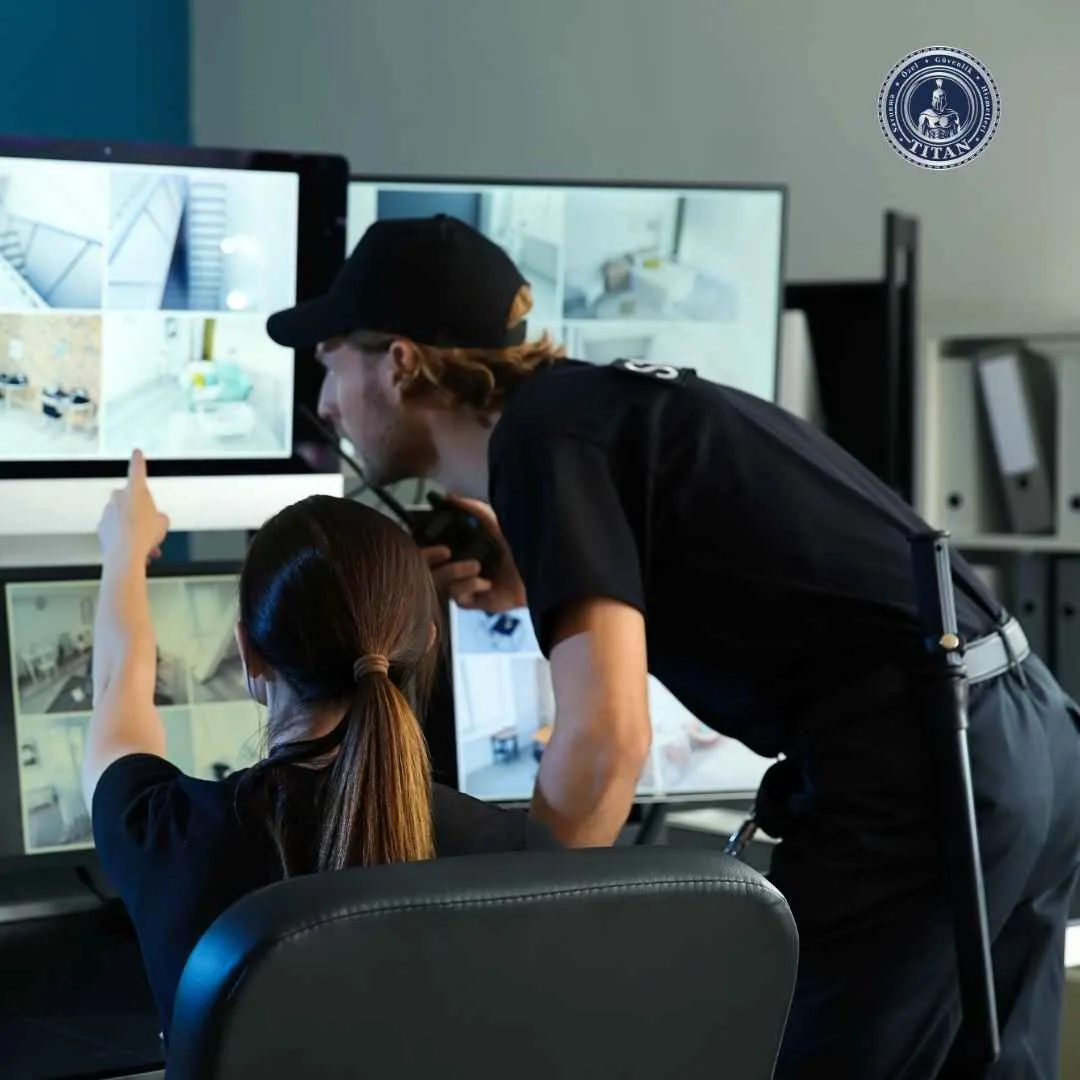
PE-3 calls for escorting visitors and controlling visitor activity in circumstances the organisation defines. It adds that people with permanent access authorisation are not considered visitors. ISMS.online's explanation of 7.6 stresses that unsupervised activity should not take place in secure areas and that vacant secure areas should be locked and periodically checked.
The point most often missed in contracts is who does the escorting. When an officer leaves to escort someone, their post may stand empty. An officer also cannot judge whether work inside a cabinet has been done correctly. These points should be written down in advance:
- Who escorts: technical staff, a security officer or both. Which applies in which area?
- Purpose of the escort: physical supervision only, or technical oversight of the work? An officer can take on only the first.
- Post cover: who watches the door when the officer is escorting? How much notice is needed for an escort request, and how is it made?
- Breakdown: if a contractor leaves the group or goes beyond the work order, whom does the officer tell, and who stops the work?
- Close-out: can the pass return, exit time, area check and closure of the work order be followed in one record?
The officer's legal limits do not come from the standard
In Turkey, an officer's powers derive from Law No. 5188, not from an information security policy. Article 7 lists powers such as passing people entering the protected area through a metal detector gate, searching them with a detector and passing belongings through X-ray or similar systems. Article 9 limits these powers to the time on duty and the duty area. The service needs the private security permit in Article 3, and the company needs the activity licence in Article 5.
So policy items such as “all bags are opened on exit” or “device serial numbers are checked” should not be copied straight into guarding instructions. Clarify the basis for each practice, and what happens if someone refuses, with your legal adviser. One practical approach is to tie equipment removal to a permit form and an authorised approval, and to give the officer the job of checking the form.
Camera monitoring and data protection
If an officer will work in a monitoring room, data protection belongs in the contract too. The Turkish data protection authority's announcement of 8 June 2026 treats using cameras to monitor employees' attendance or performance as a use beyond the stated purpose. It calls for access to recordings to be limited to authorised people, supported by procedures and measures such as an authorisation matrix, for recordings to be kept for the shortest possible time and for automatic deletion. An officer's authority to watch should therefore be kept separate from the authority to share recordings.
What might an auditor ask an officer?
URM Consulting reports that auditors may look at an officer's duties, awareness of the information security management system and how incidents are reported. It also notes that during entry checks auditors may attempt tailgating or social engineering. This is one consultancy's experience, but it is a useful place to start preparing. Test the following before the service begins:
- Can the officer explain what to do about a familiar employee who has forgotten a pass?
- Can they say what they do if they notice tailgating, and whom they tell?
- Do they know where to find the current version of the authorisation list?
- Can they distinguish the reporting route for an information security incident from that for a physical one?
- Does the contractor agreement define these duties, the record format and who owns the records?
These checks do not transfer responsibility for the management system to the contractor. The system belongs to the organisation; the contractor carries out the physical duties written for it and produces records. For our service scope, see data centre physical security.
Sources and Further Reading
- ISO/IEC 27001:2022 kapsam kaydı (Estonian Centre for Standardisation, EVS)
- ISO 27001:2022 and ISO 27002:2022 Explained (Secureframe)
- ISO 27001:2022 Annex A Physical Controls (URM Consulting)
- Annex A 7.2 Physical Entry (ISMS.online)
- Annex A 7.4 Physical Security Monitoring (ISMS.online)
- Annex A 7.6 Working in Secure Areas (ISMS.online)
- NIST SP 800-53 Rev. 5, PE-3 Physical Access Control (CSF Tools)
- NIST SP 800-53 Rev. 5 (NIST CSRC)
- İş Yerlerinde Güvenlik Kamerası Sistemi Kullanımına Dair Kamuoyu Duyurusu, 8 Haziran 2026 (KVKK)
- 5188 sayılı Özel Güvenlik Hizmetlerine Dair Kanun (Mevzuat Bilgi Sistemi)