This article is general information, not legal advice.
Planning hospital security posts in Turkey starts with the areas where risk concentrates, not with the floor plan as a whole. In most general hospitals that means the emergency department, which usually needs a continuously staffed post; maternity, newborn and paediatric units, which need controlled access and a rehearsed Code Pink; the pharmacy and controlled-drug storage, which need an authorised-person list, access control and logged deliveries; and the main entrance and visitor flow that connect them. Every post is planned within one fixed legal boundary: under Law No. 5188, armed private security officers may not be employed in health facilities.
This guide is written for hospital managers, international healthcare investors and operators of private and city hospitals. It summarises the evidence on violence in hospitals, goes through the high-priority areas one by one, sets out the Turkish legal framework, and ends with a walk-through of our free Hospital Security Planner.
What the evidence says about violence in hospitals
Violence against health workers is common enough to shape the security plan. The World Health Organization notes that between 8% and 38% of health workers suffer physical violence at some point in their careers, that many more face threats or verbal abuse, and that most violence comes from patients and visitors (WHO). WHO, the ILO, the International Council of Nurses and Public Services International jointly published framework guidelines for addressing workplace violence in the health sector.
The largest pooled estimate comes from a systematic review and meta-analysis by Liu and colleagues in Occupational and Environmental Medicine, pooling 253 studies from many countries with more than 330,000 participants. It looked at violence by patients and visitors and found that 61.9% of health workers reported exposure to some form of workplace violence and 24.4% reported experiencing physical violence in the past year, with prevalence especially high in Asian and North American countries, in psychiatric and emergency department settings, and among nurses and physicians (Liu et al., 2019).
For Turkey specifically, a national cross-sectional study by Pinar and colleagues surveyed 12,944 health workers selected from the whole workforce. In the previous 12 months, 44.7% had experienced workplace violence; verbal violence (43.2%) was far more common than physical violence (6.8%). Working hours and shift work were among the independent risk factors (Pinar et al., 2017). For planning, the useful points are that most reported incidents were verbal and that working hours and shift work were linked to risk, so de-escalation skills and fast call chains matter more than a show of force.
The emergency department: the post that sets the tone
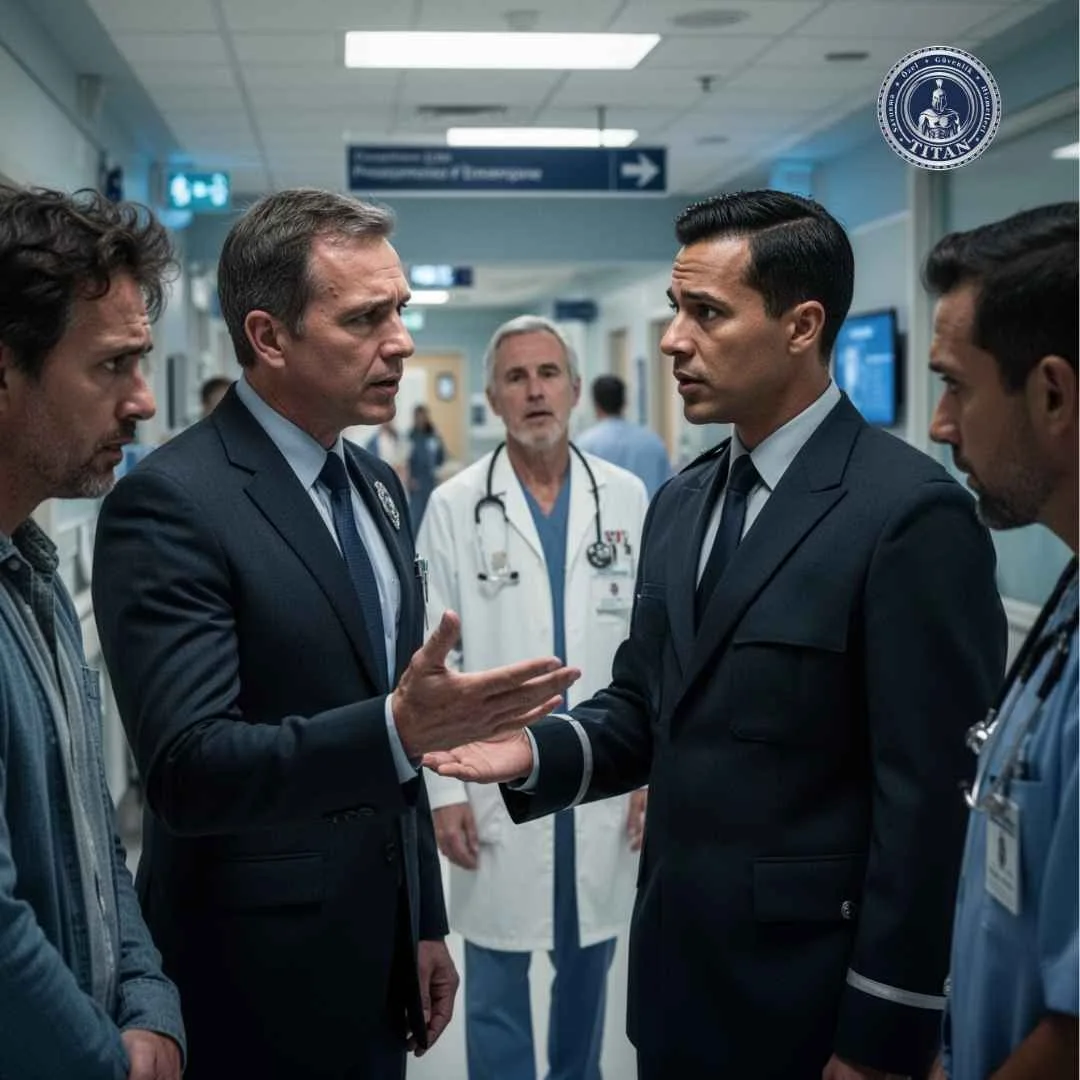
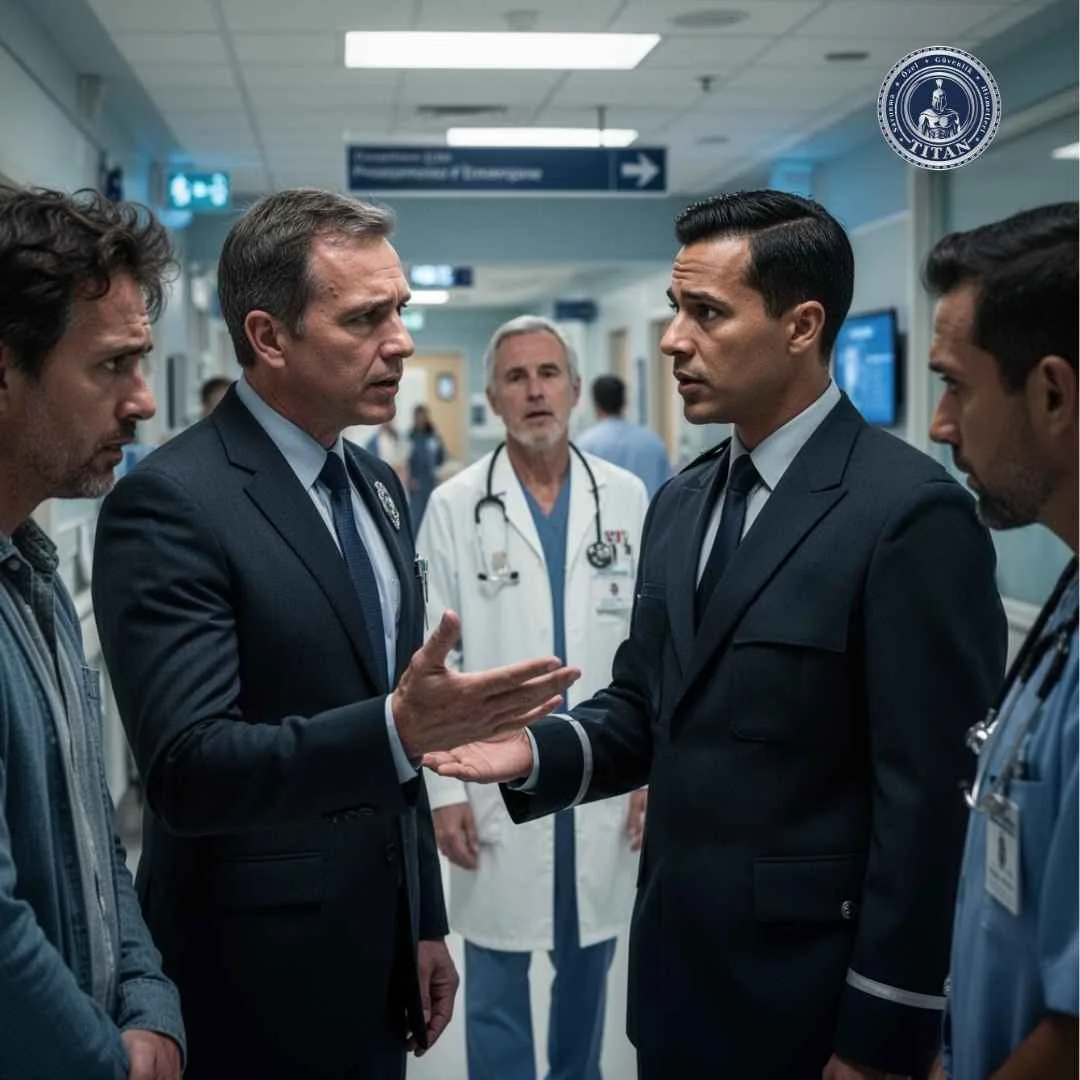
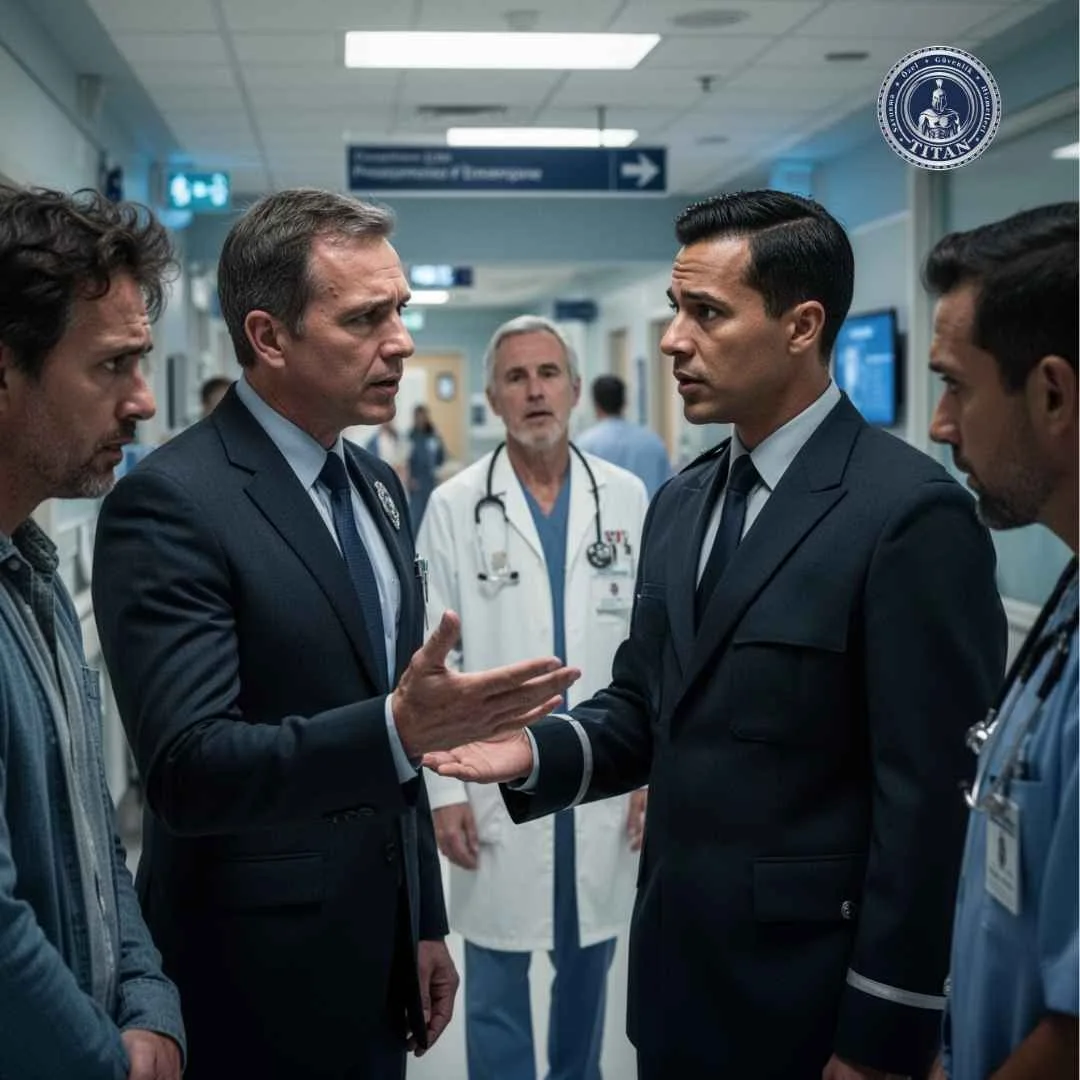
The emergency department (acil servis) is where the evidence and day-to-day experience agree. A 24-hour emergency department normally needs a post at its entrance and waiting area for the whole of its opening, with duties that include managing visitor flow, applying the rule on how many companions may accompany a patient, calming tense situations and giving the first response to a Code White call. Planning points that make that post work:
- A waiting-area layout that lets staff see the room and keeps the treatment area behind a controlled door.
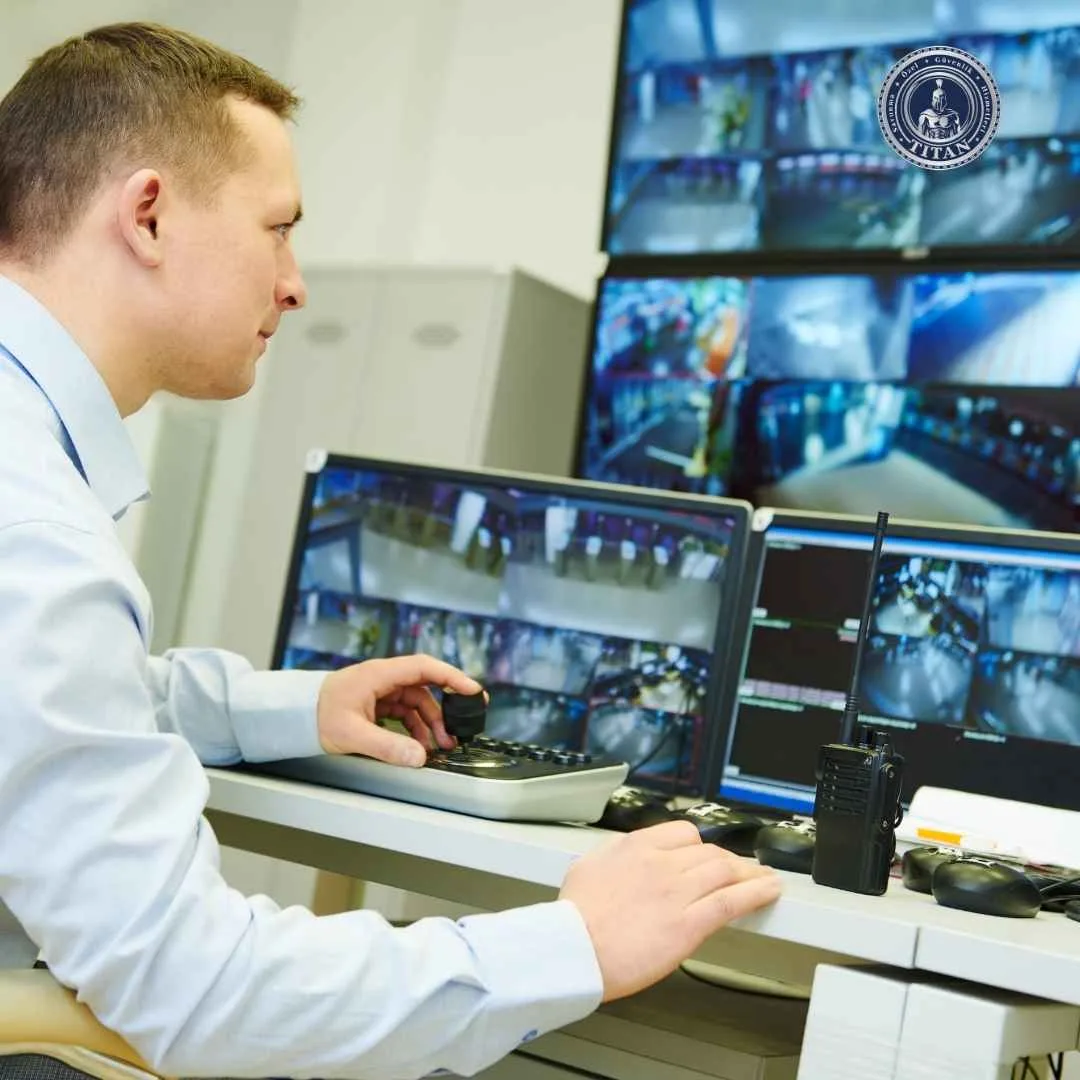
- Panic buttons at triage, treatment rooms and cash desks that reach a control room, with response times tracked.
- A clear companion rule, published at the entrance, that security can point to rather than improvise.
- An agreed hand-over to the police, since officers' powers end where the law says they end.
- De-escalation training and debriefs after incidents, so lessons reach the clinical team as well as security.
Maternity, newborn and paediatric units: Code Pink
Many hospitals use an internal alert, commonly called Code Pink, for a suspected missing or abducted infant or child. Its value depends on preparation rather than on the number of people who respond. A workable plan covers card or controlled access to the newborn unit, a rule on who may carry a baby through corridors, a defined lockdown of exits when the code is called, camera coverage of the unit's entrances and lifts, and regular drills with clinical staff. Security's tasks during the code, such as which exits are covered first, belong in the written procedure, not in a public article. We look at this area in more depth in our bulletin on infant security in maternity wards.
Psychiatric and mental health units are the other place where the evidence points to elevated risk. The security role there should be agreed in writing with the clinical team: when security is called, who leads, and how patient dignity and privacy are protected.
Pharmacy and controlled-drug storage
The pharmacy is a high-priority area for a different reason: the risk is theft and diversion rather than violence. The controls are mostly administrative, with security as one part:
- An up-to-date list of authorised persons, enforced by card access to the pharmacy and drug stores.
- Camera recording of the storage entrance and receiving point, with defined retention and access rules.
- Logged deliveries, escorted where the plan requires it, and after-hours door checks by the building patrol.
- Access records that the pharmacy and quality unit can reconcile, not just security logs.
Code White, unarmed security and the law
Code White (Beyaz Kod). In Turkey, Beyaz Kod is the Ministry of Health's system for recording violence against health workers. According to the Ministry, incidents are recorded in the system, the staff member's managers must report the offence to the judicial authorities, and the Ministry's lawyers provide legal assistance if the health worker requests it. Reports can be made through the 24-hour 113 line, online, or through the hospital's Employee Rights and Safety Unit (Çalışan Hakları ve Güvenliği Birimi) (Ministry of Health, Beyaz Kod). The hospital's own internal response, meaning who is called, who arrives and how the staff member is supported, should be written down alongside the reporting route and tested in drills.
No armed private security in health facilities. Article 8 of the Private Security Services Law No. 5188 states that armed private security officers may not be employed in health facilities, along with schools, gaming establishments and venues serving alcohol (Law No. 5188). Hospital security in Turkey is therefore unarmed by law, and the plan relies on presence, procedures, technology and fast police support.
Officers' powers are listed. Article 7 sets out what officers may do, including passing people through walk-through detectors and searching them with hand-held detectors at the entrance to a protected area, apprehension under Article 90 of the Code of Criminal Procedure, and the use of force only within the limits of the laws it refers to. Under Article 9, events requiring apprehension or force are reported to the police by the fastest means and the person is handed over to them.
Cameras and patient privacy. Recording in a hospital captures people in a health context. Under Article 10 of KVKK (Law No. 6698), people must be informed when their data is collected (Law No. 6698), and retention and access rules must be set. Cameras have no place in examination rooms, wards or other areas where patient privacy is required.
Night shifts. Many hospital posts run around the clock. Under Article 69 of Labour Law No. 4857, night work may not exceed seven and a half hours, but in private security and health services it may do so with the employee's written consent (Labour Law No. 4857). That consent, rotations and rest periods are part of the staffing plan made for each hospital.
Accreditation: SKS and JCI at a general level
Hospitals in Turkey are assessed against the Ministry of Health's Health Quality Standards (Sağlıkta Kalite Standartları, SKS), and some also hold Joint Commission International (JCI) accreditation. Both expect safety and security to be planned, documented and reviewed. The exact requirements differ by set and edition, so the security team should work from the current standard text with the hospital's quality unit. In practice, an evidence file that usually serves both includes:
- A written security plan and security risk assessment with review dates.
- Code White and Code Pink procedures, call chains and drill records.
- Restricted-area lists and current authorisation lists.
- Camera notices, retention periods and access logs for recordings.
- Incident records with corrective actions, and security staff training records.
- The visitor policy as published to patients and visitors, and controlled-drug access records.
How to use the free Hospital Security Planner
The Hospital Security Planner turns the points above into a first draft in three short steps, without asking for a hospital name, address or any patient information:
- Hospital and campus: hospital type (state, city, university, private, outpatient centre or specialty hospital), bed range, number of blocks, parking and outpatient clinic hours.
- Clinical and sensitive areas: whether there is a 24/7 emergency department, a maternity or newborn unit, a paediatric ward, a psychiatric unit and a pharmacy, and how visiting is organised.
- Processes and technology: whether a Code White process (and, where there are newborn or paediatric units, a Code Pink process) is written and drilled, and whether panic buttons, cameras and card access to restricted areas are in place.
The plan lists suggested duty posts, such as the main entrance, emergency department, visitor control, car park and grounds patrol, building patrol and control room, with their coverage windows and weekly coverage hours (posts such as the pharmacy area are left to be set during the survey), plus shift-pattern options and the relevant working-time notes. It flags priority areas, adds Code White notes, summarises the legal framework and gives the evidence-file checklist above. Answers left as "I do not know" are marked to confirm. The planner shows how many hours a week each post is kept open; it gives no prices and no staff numbers, and your answers stay in your browser. For threats beyond the clinical areas, such as the campus perimeter or utilities, our free security risk assessment tool is a useful companion.
Titan Savunma is an Ankara-based private security company licensed by the Ministry of Interior under Law No. 5188 and certified to ISO 9001, 14001, 45001, 22301 and 28000. We work in English and Turkish and plan healthcare security for facilities in different provinces with a single point of contact, a written scope and regular reporting. To see a first draft for your hospital, try the free Hospital Security Planner.
Sources and Further Reading
- Liu J, Gan Y, Jiang H, et al. — Prevalence of workplace violence against healthcare workers: a systematic review and meta-analysis, Occupational and Environmental Medicine 76(12):927–937 (2019)
- Pinar T, Acikel C, Pinar G, et al. — Workplace Violence in the Health Sector in Turkey: A National Study, Journal of Interpersonal Violence 32(15):2345–2365 (2017)
- World Health Organization — Preventing violence against health workers
- T.C. Sağlık Bakanlığı — Beyaz Kod (reporting system for violence against health workers)
- Law No. 5188 on Private Security Services, Articles 7, 8 and 9, mevzuat.gov.tr
- Law No. 6698 on the Protection of Personal Data (KVKK), Article 10, mevzuat.gov.tr
- Labour Law No. 4857, Article 69 (night work), mevzuat.gov.tr