If you are writing a physical security plan for a microbiology laboratory, a university molecular biology unit or a biobank in Turkey, the first question should not be "which door gets a card reader?". The right question is which materials, devices and data would cause serious harm if they were lost or reached the wrong hands, and who can actually get to them today. The World Health Organization's (WHO) laboratory biosecurity guidance, published in 2024, recommends exactly that order: risk assessment first, then controls proportionate to the risk.
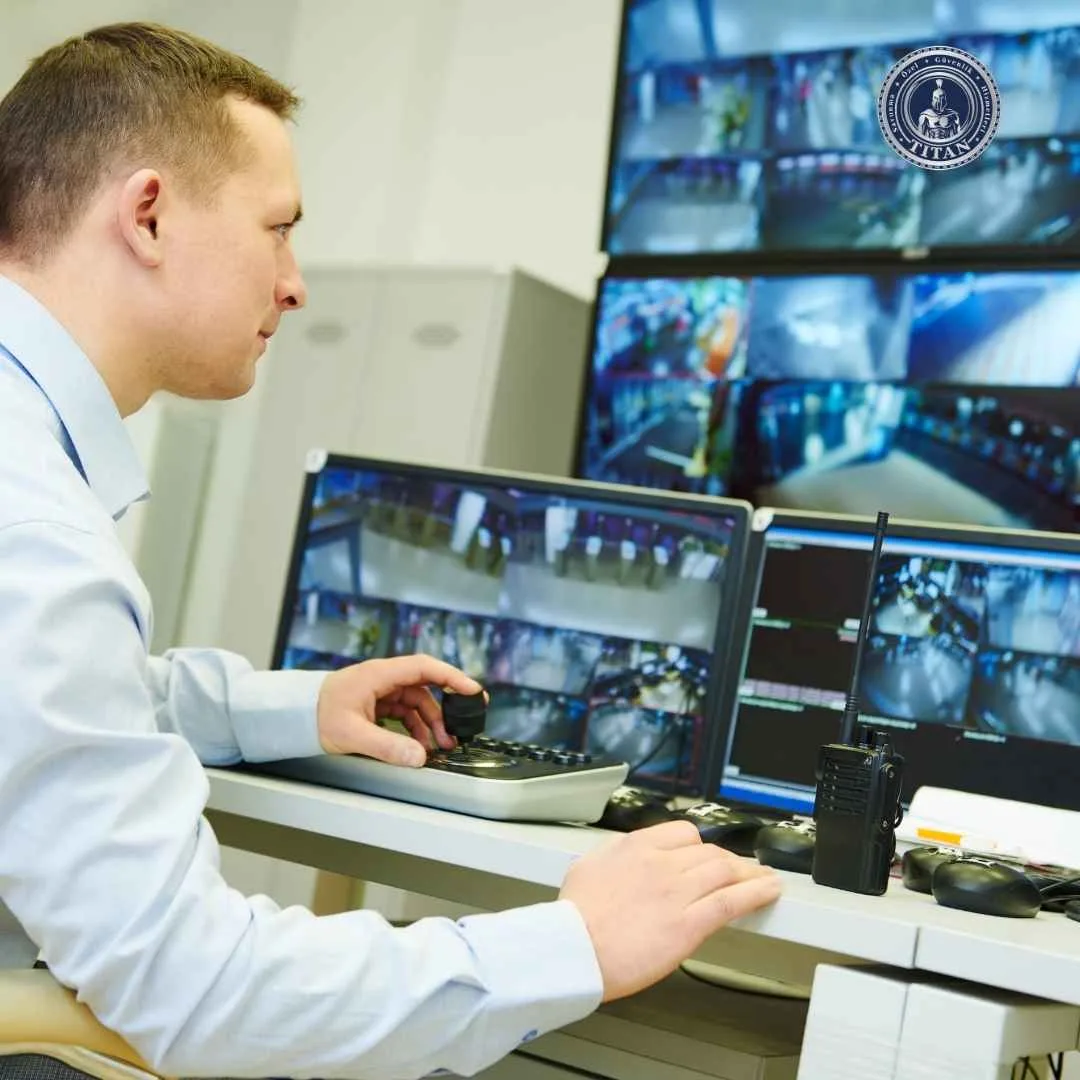
The short answer: laboratory biosecurity is much more than locks and cameras. The WHO guidance treats physical security together with personnel reliability, inventory control, information and cyber security, incident reporting and transport security. A contracted security officer is an important but limited part of that system. Officers manage entry to the building and restricted zones, run the escort routine for visitors and maintenance staff, and give first response to alarms and camera events. Decisions on who may handle which material belong to the laboratory and the institution.
This article is general information, not legal advice. It is written at planning level and does not discuss the vulnerabilities of any specific facility.
Biosafety versus biosecurity
The two terms are often used interchangeably, including in Turkish, where "biyogüvenlik" is sometimes used for both. The WHO Laboratory biosecurity guidance draws a clear line. Biosafety covers the containment principles, technologies and practices that prevent unintentional exposure to biological agents or their accidental release: protective equipment, biological safety cabinets, standard operating procedures. Biosecurity covers the policies and practices for the protection, control and accountability of biological material, technology and information, with the aim of preventing unauthorised access, loss, theft, misuse and diversion.
The guidance treats the two as a continuum, and that matters for security planning. Locking a fire door from the outside may look like a biosecurity gain, but it can block evacuation and so undermine both biosafety and occupational safety. Physical security decisions in a laboratory should therefore be taken with the biosafety officer and the occupational health and safety team, not by the security contractor alone.
How the WHO 2024 guidance is structured
WHO published the guidance as a complete revision of its 2006 document. According to WHO's announcement, the update strengthens cyber security and the protection of confidential information, addresses risks from new technologies such as genetic modification and artificial intelligence, and gives guidance on keeping laboratories secure during war, civil unrest and natural disasters. Its main parts are:
- Programme management: an institutional policy, an institutional biosafety committee and a biosafety officer.
- Biosecurity risk assessment and incident types: incidents directly involving biological agents, physical security incidents, personnel-related incidents, information and cyber security incidents, and deliberate events.
- Risk control measures: personnel reliability and screening, physical security and access regulation, inventory control, destruction and waste management, information and cyber security, emergency preparedness.
- Transfer and transport of high-consequence material, and national and international regulation.
- Annexes with a risk assessment template and emergency response templates.
The guidance applies the risk- and evidence-based approach of the Laboratory Biosafety Manual, fourth edition (2020), to biosecurity. In practice that means graded controls according to what a laboratory holds and does, rather than identical measures everywhere.
Access layers and material accountability
WHO divides physical security into passive and active measures. Passive measures are not monitored in real time but still need maintenance: card or key entry, perimeter walls, night lighting, alarm and CCTV systems, lockable freezers and cabinets, locked doors and back-up power for security systems. Active measures involve a person or system watching or intervening: security officers, check-in at reception, CCTV monitored by officers, alarm monitoring, recording visitor details, clearance-based access to restricted areas and escorts for anyone without clearance.
A practical layering model for planning:
- Campus or building entrance: identity and purpose of visit recorded, visitor badge issued.
- Laboratory floor or corridor: cards valid only for laboratory and support staff; everyone else is escorted.
- Laboratory room: access tied to an authorised list, with entry and exit records.
- Storage point: locked freezer or cabinet, keys or codes held by a small number of named people.
On inventory, the guidance recommends keeping an up-to-date list of biological materials, storing and auditing inventory records securely and investigating every discrepancy. The inventory of high-consequence material is itself sensitive information with access limited to a few people; procedures such as two employees jointly removing material from stock are given as examples. Unexplained discrepancies are to be reported to the appropriate authorities as possible theft or loss. The security officer's role here is not to count samples. It is to log openings and closings of locked areas, check out-of-hours access requests against the authorised list and report anything unusual to the responsible scientist at once.
Personnel reliability within legal limits
The WHO guidance says reliable personnel are crucial in laboratories working with high-consequence material, to reduce insider threats. It recommends pre-employment screening, telling candidates in job advertisements that background checks will be made, ongoing observation by supervisors, anonymous and no-fault reporting channels and a code of conduct. It adds two cautions worth repeating. Peer reporting can be misused, so there must be an investigation process in which the accused person can respond. And candidates from other countries should not be disadvantaged simply because security screening is harder to obtain for them.
In Turkey, these measures must be designed within data protection law. Law No. 6698 on the Protection of Personal Data (KVKK) classes data on criminal convictions and security measures, health data and biometric data as special-category personal data (Article 6). Processing it is prohibited as a rule and is allowed only on the grounds listed in Article 6, such as explicit consent, express provision in law, or legal obligations in employment and occupational health and safety, and only with the adequate measures set by the Personal Data Protection Board. Fingerprint or iris readers process biometric data, so the legal basis and a less intrusive alternative should be assessed before choosing one. A practical rule for the institution: define screening scope in writing according to each role's access level, collect no more than you need and limit access to results to human resources.
Contracted officers fall under a separate regime. Law No. 5188 on Private Security Services requires private security officers to be Turkish citizens, free of convictions for specified offences, trained and subject to a favourable security investigation (Article 10), and their work permit is issued by the governorship (valilik) (Article 11). That does not automatically entitle an officer to enter the inner layer of a laboratory; escort and authorisation rules apply to officers too.
Incident reporting and near misses
The WHO guidance describes biosecurity near misses as events that did not, but could have, led to loss or release. Its examples are things a security team meets in ordinary shifts: a lost access card, suspicious people loitering around the laboratory, staff showing unusual interest in where agents or equipment are kept, a failed door-lock system. Such events should be reported, classified, analysed for common links and fed back into training. The guidance also asks plans to cover rare but severe scenarios, such as intruders on site at a weekend or a total power loss with back-up generators failing.
Turkish occupational safety law expects similar discipline. Law No. 6331 on Occupational Health and Safety requires employers to keep employees without adequate information and instructions out of areas with vital and special dangers (Article 4), to prepare emergency plans and run drills (Article 11), and to investigate events that caused no injury but had the potential to cause harm, and to write reports on them (Article 14). Where several employers share one work area, for example a hospital, a cleaning contractor and a security contractor on the same floor, they must cooperate and coordinate (Article 23). The security company's incident form should therefore feed the laboratory's own reporting system. A "suspicious person" entry that stays in a separate guard logbook is data nobody analyses.
The role of contracted guards and the support-staff gap
Risk in a laboratory does not come only from scientists. A multicentre study by Köroğlu, Altındiş and colleagues covering 1,072 medical microbiology laboratory staff in 23 Turkish hospitals concluded that employee safety practices had improved but were not yet sufficient. Hepatitis B vaccination was lowest among cleaning and other support staff, and non-compliance with medical waste rules was highest among cleaning staff. Among its recommendations, the study says entry of people unrelated to the laboratory should be prevented. The finding concerns biosafety, but it is a warning for security planning too: cleaners, maintenance technicians, couriers and security officers are present in laboratory areas while standing outside laboratory culture. The WHO guidance likewise calls for access procedures, escorts and training for maintenance staff, delivery personnel and trainees.
Within that frame, the security service scope can be written as:
- Identity checks, visitor registration and badge issue at building and floor entrances.
- A wait-and-escort routine for maintenance, delivery and outside service staff until an authorised laboratory employee arrives.
- Checking out-of-hours entry requests against the authorised list and reporting any request not on it.
- First response to alarms and camera events, with entry into a laboratory room only under conditions the laboratory has defined.
- Entering near misses into the laboratory's reporting system on the same day.
- Biosecurity awareness and emergency training for officers, and participation in drills.
For laboratories inside hospitals or universities there is one more legal limit: Article 8 of Law No. 5188 does not allow armed private security officers in educational institutions or health facilities. Staffing is planned per site according to laboratory working hours, the shift pattern and legal working-time limits. See our pages on healthcare security and, for campuses with research laboratories, education security.
Common mistakes
- Fitting the same card reader to every laboratory without a risk assessment, while the truly sensitive storage point keeps an ordinary key.
- Never reviewing access-control logs, and not cancelling a leaver's card.
- Telling officers "let nobody into the lab" without defining emergency entry for maintenance teams.
- Locking fire doors in a way that blocks evacuation, in the name of biosecurity.
- Leaving the inventory database and CCTV footage open to a wide group of users.
About Titan Savunma
Titan Savunma is an Ankara-based private security company licensed by the Ministry of Interior under Law No. 5188 and certified to ISO 9001, 14001, 45001, 22301 and 28000. We work with international companies in English and Turkish, and plan entry and escort routines for laboratory sites together with the institution's biosafety officer, with a written scope and regular reporting. Our approach to sensitive sites is described on our critical infrastructure security page.
Sources and Further Reading
- World Health Organization — Laboratory biosecurity guidance (2024)
- World Health Organization — WHO updates laboratory biosecurity guidance (news release, 4 July 2024)
- Köroğlu, Altındiş et al. — Employee Safety and Biosafety Applications in Microbiology Laboratories; A Multicenter Evaluation in Turkey, Mikrobiyoloji Bülteni 54(3) (2020), doi:10.5578/mb.69634
- Mevzuat Bilgi Sistemi — 6331 sayılı İş Sağlığı ve Güvenliği Kanunu
- Mevzuat Bilgi Sistemi — 6698 sayılı Kişisel Verilerin Korunması Kanunu
- Mevzuat Bilgi Sistemi — 5188 sayılı Özel Güvenlik Hizmetlerine Dair Kanun