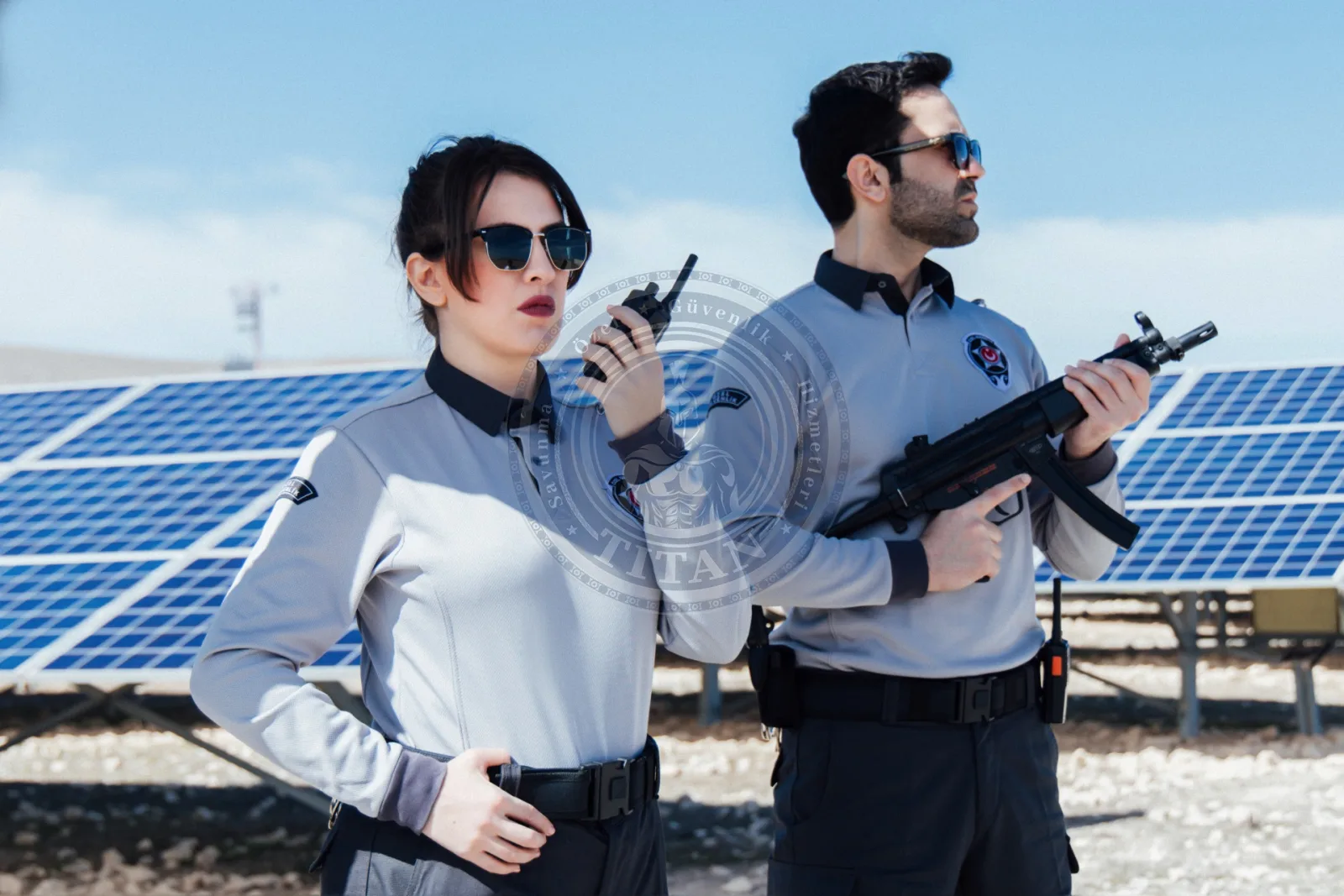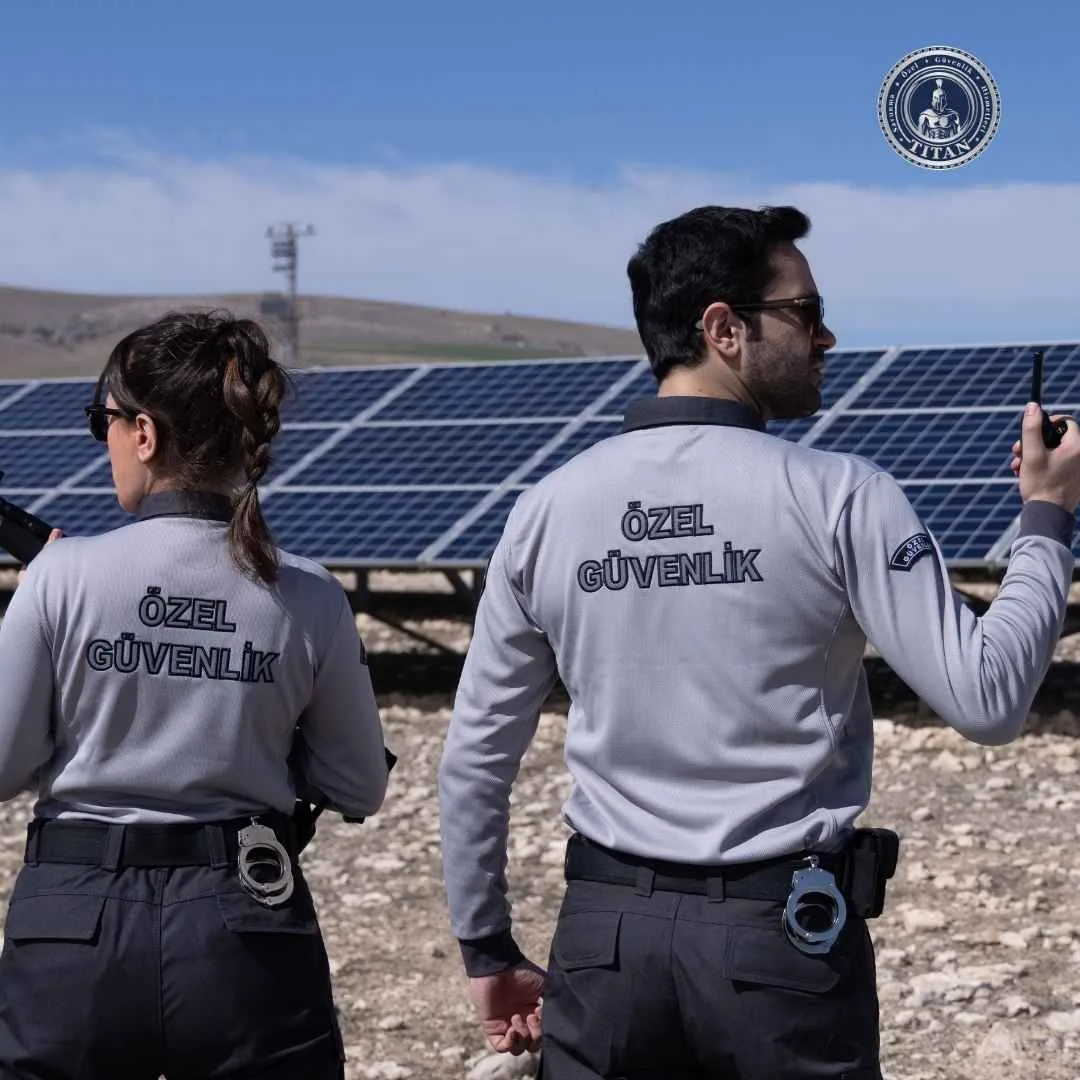
When a Turkish solar plant adds a battery energy storage system (BESS), the site changes character. A large, low-hazard field of panels gains a compact zone that can store a great deal of energy, generate flammable gases if a battery fails and require a very different emergency response. The security plan written for the solar-only plant is no longer adequate, even if the fence and the guard shifts stay the same.
In short, six parts of the plan need revision: restricted zones, information for emergency responders, the guard's role in a thermal event (evacuate and report, never fight the fire or open an enclosure), patrol and access routines, training, and the records that insurers and lenders will want. This guide covers each at planning level. The detailed routing of technical alarms between the battery system, the operator and security is a separate topic, covered in our bulletin on battery storage alarm routing.
What changes when storage is added
| Plan element | Solar-only plant | Hybrid solar + storage plant |
|---|---|---|
| Main hazards | Theft, vandalism, grass fire, electrical hazards | All of these, plus battery thermal events and flammable gas |
| Zones | Mostly uniform field, inverter and switchyard areas | A defined exclusion zone around battery enclosures |
| Emergency response | General fire and medical procedures | A battery-specific plan agreed with the integrator and shared with the fire brigade |
| Patrol | Perimeter and field checks | Defined routes and standoff around enclosures, observation duties |
| Contractors | Panel cleaning, O&M, inverter service | Battery specialists, HVAC and fire-system technicians |
On the regulatory side, storage activities in Turkey are governed by a dedicated regulation of the Energy Market Regulatory Authority (EPDK), listed on its legislation page. Its licensing and market rules are for the owner's lawyers and engineers. For security planning, the important point is practical: the technical design, the hazard assessment and the emergency procedures come from the system integrator and the owner's engineers, and the security plan must be built on them rather than written separately.
Restricted zones and information for emergency responders
Ask the integrator or the owner's engineer to define, in writing and on a map, the exclusion zone around the battery enclosures and who may enter it. Security then enforces that zone the same way it enforces switchyard boundaries: guards stay outside, entry is logged and only listed persons are let in.
Fire brigades in Turkey are reached through the single emergency number 112. Responders arriving at a remote plant at night will need information quickly. Keep a responder information pack at the gatehouse, in Turkish and English where the operating team is international:
- A site map showing battery enclosures, access routes for fire vehicles, water sources if any, and the assembly point.
- Contact details for the plant operator and for the battery system's emergency technical support, available at all hours.
- The battery-specific emergency procedure prepared by the integrator.
- Who can confirm that the system has been electrically isolated.
The guard's job is to meet the responders at the gate, hand over the pack, guide them along the agreed route and stay available. The guard is not the technical adviser and should not be presented as one.
Thermal events: what the McMicken investigation teaches
The most instructive public account of a battery failure is the investigation into the 2019 explosion at the McMicken storage facility in Arizona. The technical report prepared by DNV GL for the utility concluded that a suspected fire was in fact a cascading thermal runaway that started from an internal failure in one cell and spread through a rack. The installed clean-agent suppression system worked as designed, but such systems are not capable of stopping cascading thermal runaway. Flammable gases built up inside the container, and about three hours after the event began, the door was opened during the emergency response; the gases ignited and several firefighters were injured.
Among the five contributing factors the report lists is that the emergency response plan did not include an extinguishing, ventilation and entry procedure. It also recommends that hazard assessments and responder training take place before and during commissioning, not after an incident.
The academic literature points the same way on the technical side. A review of lithium-ion battery fire suppression by Ghiji and colleagues (2020) surveys how thermal runaway progresses and how different agents perform, and identifies water, particularly water mist, as an effective cooling and suppression option while noting remaining research gaps. Whatever the chosen method, it is an engineering design decision, built into the system and the emergency plan, not something improvised by people on site.
For the security team this translates into a short, firm rule set:
- Do not approach or open any battery enclosure showing smoke, unusual noise, smell or alarms. Never open doors to "check".
- Move people away to the assembly point, upwind where possible, and keep the access route clear.
- Report immediately to 112 and to the plant operator, with time, location and what was observed.
- Control the gate: let responders in, keep everyone else out, log arrivals.
- Stay out until the competent persons declare the area safe, even if the event looks finished.
Law No. 5188 gives private security officers powers such as protecting incident scenes and entering premises during disasters or calls for help (Article 7), but nothing in it makes them firefighters. Under Law No. 6331, the employer must plan for emergencies and evacuation in advance (Articles 11 and 12); the security provider's instructions must fit inside the plant's emergency plan, not compete with it.
Revised patrol and access plan
Patrols at a hybrid plant need a redrawn route rather than an extra loop. Points to agree with the operator:
- Standoff: the minimum distance patrols keep from enclosures, set by the engineer, and the observation points from which enclosures are checked.
- What to observe: doors closed and intact, no visible damage, no smoke or unusual smell, warning lights as described in the operator's guidance, no stored materials or vehicles parked against enclosures, vegetation kept clear.
- What not to do: touch panels, reset anything, silence alarms or enter the exclusion zone.
- Contractor access: battery, HVAC and fire-system technicians enter only on the operator's work notice; hot work near enclosures follows the operator's permit system.
- Remote monitoring: the battery management system is monitored by the operator; security is told who watches it at night and how security will be informed of a technical alarm.
Staffing and patrol frequency should be re-planned per site, based on shift patterns, operating hours and legal working-time limits, not copied from the solar-only plan.
Training updates
Article 17 of Law No. 6331 requires occupational health and safety training to be given before starting work and when the workplace, equipment or technology changes, and to be renewed as new risks appear. Adding storage is exactly such a change. For guards, a useful update covers:
- What the battery system is, where the exclusion zone lies and why doors must never be opened.
- The emergency procedure, the assembly point and the responder information pack.
- Which observations to report and to whom, including at night and on holidays.
- A walk-through of the new patrol route with the operator.
A joint drill with the O&M team and, where possible, the local fire brigade is the best test. It should happen before or during commissioning, consistent with the McMicken recommendation, and be repeated when crews or contractors change.
Insurance and records
Insurers and lenders reviewing a hybrid plant usually want evidence that the emergency plan exists, that people were trained and that patrols happened. Keep:
- Dated training and drill records, with attendees.
- Patrol logs that show the enclosure checks, not just the perimeter.
- Access logs for the exclusion zone and contractor work notices.
- Incident and observation reports written as facts, with times.
After any battery event, the site should be preserved for investigators; the McMicken report notes that the utility went to considerable lengths to preserve the site. Security's role is to secure the scene, log who enters and keep the original records unchanged.
Revision checklist
- Exclusion zone defined on a map by the engineer and adopted in guard instructions.
- Battery emergency procedure received from the integrator and aligned with the plant emergency plan.
- Responder information pack at the gatehouse, in the languages needed.
- Patrol routes and standoff redrawn and walked with the operator.
- Contractor access rules for battery and fire-system work agreed.
- Training updated and a joint drill held around commissioning.
- Records set up for insurers and lenders.
More on plant-level security at solar power plant security and critical infrastructure security.
About Titan Savunma
Titan Savunma is an Ankara-based private security company licensed by the Ministry of Interior under Law No. 5188, with ISO 9001, 14001, 45001, 22301 and 28000 certificates. We revise security plans when sites change, working in English and Turkish with one point of contact, written scope and regular reporting. See our approach to energy generation and distribution security.
Sources and Further Reading
- DNV GL for Arizona Public Service — McMicken Battery Energy Storage System Event: Technical Analysis and Recommendations (2020)
- Ghiji, M. et al. — A Review of Lithium-Ion Battery Fire Suppression, Energies 13(19) 5117 (2020)
- Law No. 6331 on Occupational Health and Safety (mevzuat.gov.tr)
- Law No. 5188 on Private Security Services (mevzuat.gov.tr)
- EPDK — Electricity market legislation list, incl. storage activities regulation (official)