This article is general information, not legal advice.
When a mine stops producing, the need for security does not disappear; it changes shape. During closure and rehabilitation, plant is dismantled, equipment and scrap are sold, the workforce shrinks, and open pits, slopes and ponds remain on site, while neighbouring communities look at the project with new concerns about jobs, the future of the land and safety. Security in this phase has three jobs: make sure valuable assets leave in a controlled and recorded way, keep people away from hazardous areas, and hand the site to its next user with a clean record.
This guide covers the last stage of the mining lifecycle in Turkey. Unlike operating-mine security, the challenge here is managing growing responsibility with shrinking resources.
Closure phases and legal obligations
The International Council on Mining and Metals' Integrated Mine Closure: Good Practice Guide (2nd edition, 2019) treats closure as a process planned across the life of the mine: progressive rehabilitation during operations, decommissioning, post-closure monitoring and maintenance, and, where possible, relinquishment of the site to a third party. It also asks operators to understand, at every stage, how a temporary or sudden closure would affect the closure plan, and to keep that understanding up to date.
In Turkey the framework is set by Mining Law No. 3213. The provisions that matter most for security planning are:
- Article 32: In abandoned areas the licence holder must take the necessary safety measures and submit technical documents showing the final state of the site to the General Directorate of Mining and Petroleum Affairs (MAPEG). These measures must be taken within one year at the latest, and the worked area made compatible with the environment in line with the operating project. If not, the governorship (valilik) is notified, and responsibility stays with the licence holder until the measures are taken.
- Article 33: When a licence ends, shafts, galleries and the support structures built to maintain them pass to the State without compensation; other installations, vehicles, tools and materials remain the licence holder's property.
- Article 36: When an operating licence ends, the holder has six months, force majeure aside, to remove produced ore, waste dumps, tailings and slag; economically valuable ore not removed in that period is sold by the governorship through tender.
- Article 13: Amendments made by Law No. 7554 of 19 July 2025 introduced a rehabilitation fee that may be used only for rehabilitation, and allow MAPEG to stop production until rehabilitation obligations are met.
Where operations are temporarily suspended for force majeure (Article 37), the other obligations arising from the licence continue. In short, stopping production does not leave the site without a responsible party, and the security plan is how that responsibility shows up on the ground. Environmental requirements and approved project documents differ from site to site, so the detailed obligations should be confirmed against the relevant licence and project files.
Asset removal and scrap controls
Decommissioning is the riskiest period for security. Conveyors, crushers, pumps, transformers, cable, rail and steel structures are removed within weeks, while demolition contractors, scrap buyers and hauliers all come onto site. Losses in this phase usually leave through the gate, with paperwork, but the wrong paperwork.
Recommended controls:
- Asset register and ownership split. Because of Article 33, underground structures that pass to the State should be listed separately from the licence holder's equipment. If guards see a structure being removed that is not on the dismantling work order, they report it.
- One exit gate, one exit document. During decommissioning, all material leaves through a single gate, matched to a work order and sales document, with the weighbridge record and photographs attached.
- Recorded collection areas. Stripped copper cable, motors and spares are moved the same day to a recorded, lit area.
- Contractor access. Working areas and hours for demolition contractors are defined; no dismantling or loading at night.
- Ore and waste stockpiles. A removal plan is made for the six-month window under Article 36, and stockpile monitoring stays in the plan throughout.
Public safety: open pits, slopes and ponds
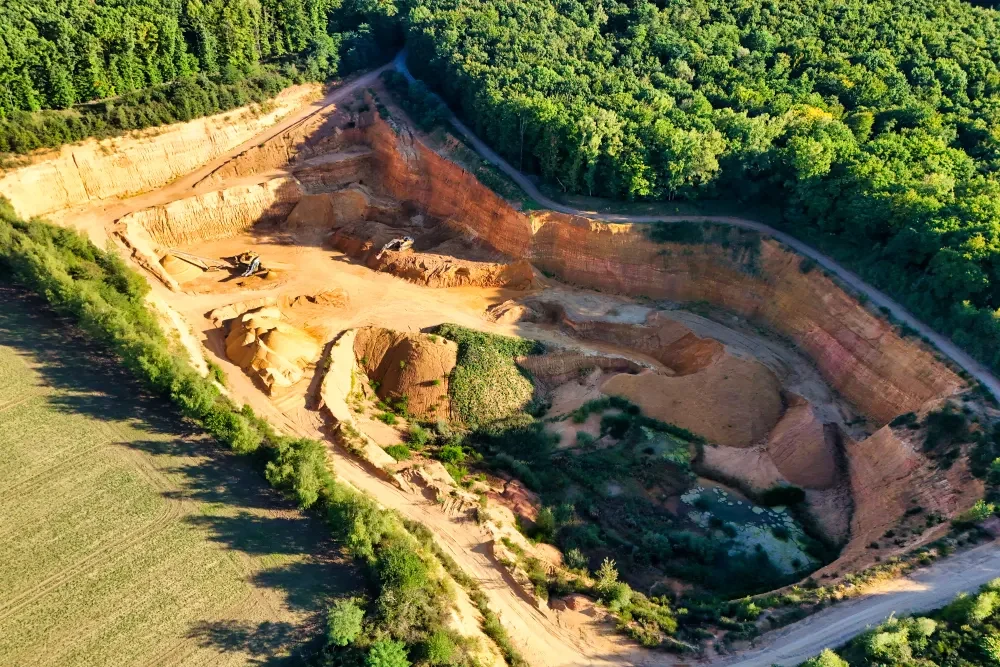
A closing mine can be both more attractive and more dangerous to local people than an operating one: once machines leave and staff numbers fall, the site looks "empty". Open pits, steep slopes, flooded workings, tailings and settling ponds, unsealed shaft collars and half-dismantled structures all carry serious accident risk.
The ICMM guide lists, among post-closure maintenance activities, repairing or replacing signage and access controls and controlling illegal access to the site. In its discussion of closure cost estimates, it also notes that planning high-risk items such as water treatment and associated security in more detail can help reduce long-term liability; in other words, post-closure security is something to budget from the start, not an afterthought. On the ground this means:
- Map the hazardous areas and set fencing, signage and patrol frequency for each one.
- Place signs that local people will understand near the approaches: schools, village roads, pastures.
- Make fence and sign checks a fixed item on the patrol list; photograph damage and track repairs.
- Reflect seasonal risks in patrol planning, such as people approaching ponds in summer or moving across slopes in hunting season.
- Define lone-working procedures, regular radio or phone check-ins and emergency contacts for the remaining staff. The duties under Law No. 6331 on Occupational Health and Safety to assess risks (Article 10) and maintain emergency plans (Article 11) continue when the headcount falls.
Community relations and grievances
For neighbouring communities, closure often means lost jobs, lower income and uncertainty. Theft, unauthorised grazing, scrap scavenging and protests at the site can all become more likely. The way to manage those risks is to manage the relationship, not simply to add guards.
The Voluntary Principles on Security and Human Rights expect security arrangements to rest on a human rights risk assessment, community consultation and preventive operational measures. IFC's Good Practice Handbook on the Use of Security Forces likewise requires proportionality and a grievance mechanism through which affected communities can raise concerns about security arrangements. During closure, that translates into:
- Announcing the closure timetable, road closures and hazardous areas in advance through village headmen (muhtar).
- Keeping the grievance channel open after production stops, with a named contact still on site.
- A written approach to local people found on site without permission: warn, explain the hazard, record and, if needed, notify law enforcement. Guards' powers are listed narrowly in Article 7 of Law No. 5188 on Private Security Services, and proportionality applies.
- Thinking separately about former employees: familiar faces walking in freely create both accident and loss risk.
Handover to land users
A rehabilitated site may be handed over for forestry, grazing, farming, recreation or another use. The ICMM guide recommends documenting maintenance and management activities and passing the site's history to the party that takes it over. From a security standpoint, the handover pack should contain:
- An up-to-date map of remaining hazardous areas and the physical measures at each (fencing, signs, barriers).
- A summary of recent trespass, theft and accident records.
- A written split of who will maintain which measure after handover.
- Contact details established with law enforcement and local authorities.
Records and common mistakes
During closure, records are evidence both of meeting legal responsibilities and of being ready to hand the site over. The technical documents under Article 32, rehabilitation reports and security records should support one another.
| Record | Why it matters |
|---|---|
| Dismantling and sales exit records | Show assets left under control and in line with ownership |
| Fence and sign inspection logs | Prove public-safety measures were maintained |
| Trespass and incident logs | Show where risk concentrates and whether measures work |
| Grievance records | Show the community relationship was managed |
| Handover minutes | Record when responsibility passed and to whom |
Common mistakes: cutting security in step with production; running decommissioning with the normal gate regime; installing fences and signs once and forgetting them; never planning for sudden closure; and leaving security information out of the handover.
For the operating phase, see mining facility security; for dismantling and civil works, see construction site security.
About Titan Savunma
Titan Savunma is an Ankara-based private security company holding an operating licence from the Ministry of Interior under Law No. 5188. It plans services for sites in different provinces with a single point of contact, a written scope and regular reporting, and works in English and Turkish. Our approach to remote, long-duration sites is described on the critical infrastructure security page.
Sources and Further Reading
- ICMM — Integrated Mine Closure: Good Practice Guide, 2nd edition (2019)
- T.C. Mevzuat — 3213 sayılı Maden Kanunu (güncel metin, 7554 sayılı Kanun değişiklikleri dahil)
- Voluntary Principles Initiative — The Voluntary Principles on Security and Human Rights
- IFC — Good Practice Handbook: Use of Security Forces: Assessing and Managing Risks and Impacts (2017)
- T.C. Mevzuat — 6331 sayılı İş Sağlığı ve Güvenliği Kanunu (güncel metin)
- T.C. Mevzuat — 5188 sayılı Özel Güvenlik Hizmetlerine Dair Kanun (güncel metin)