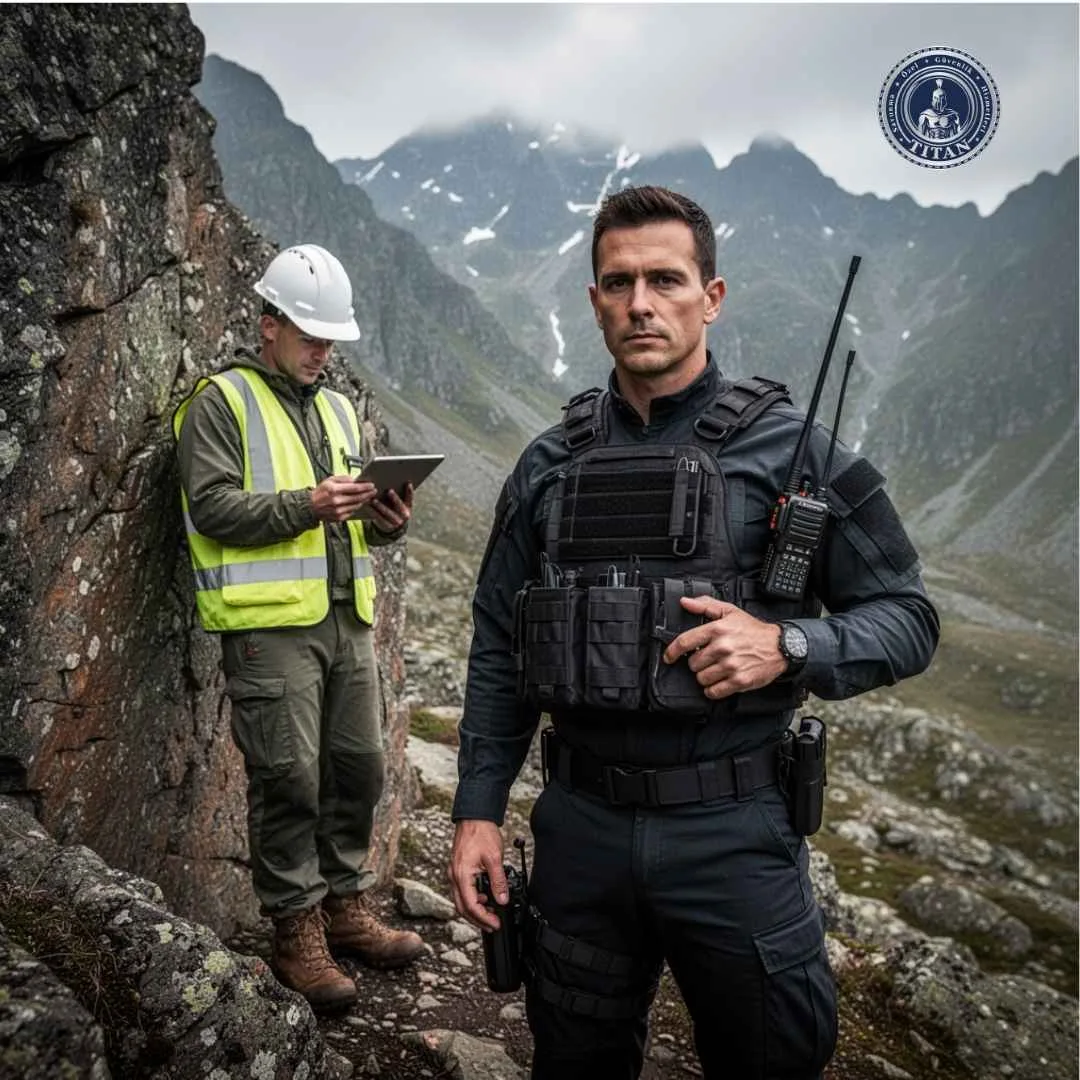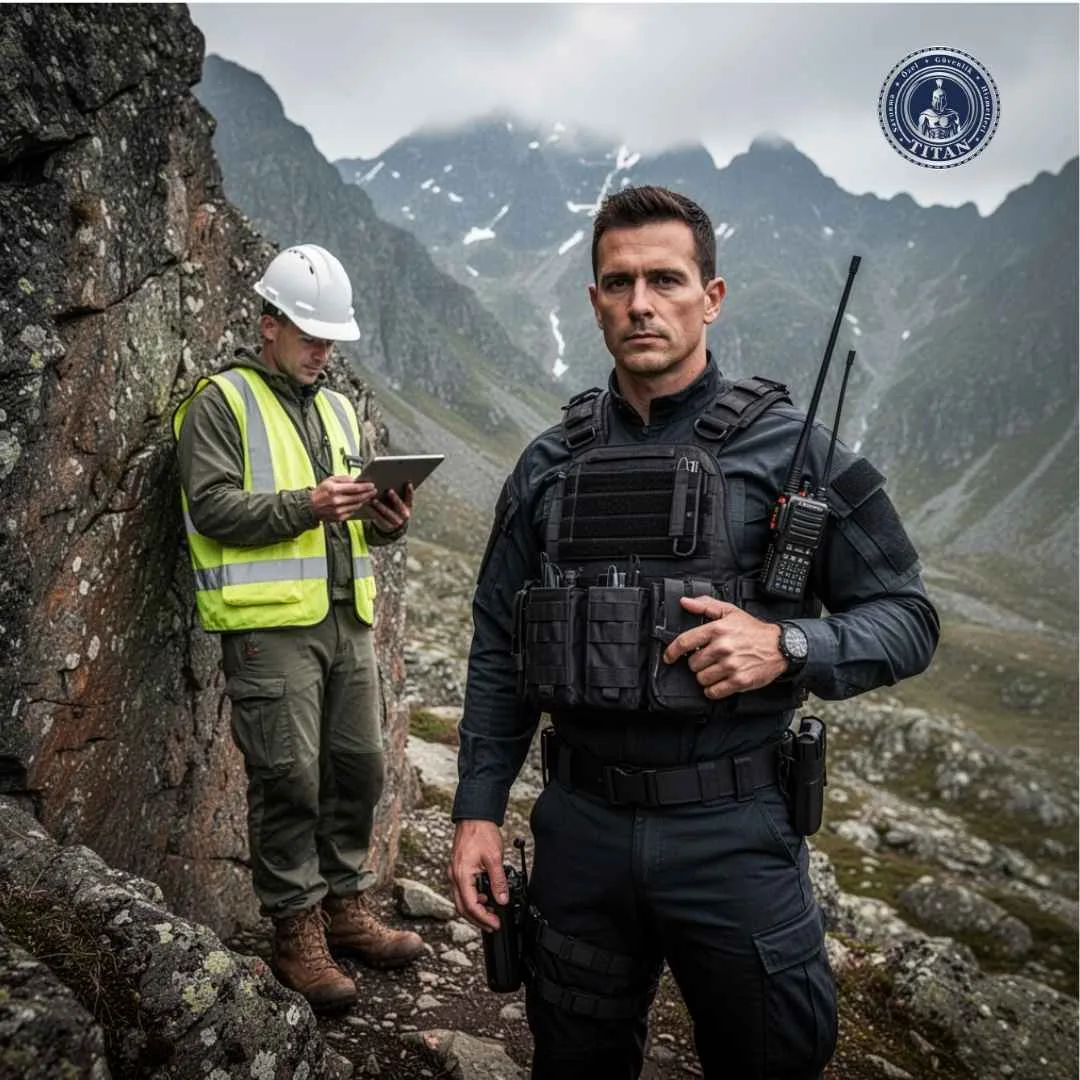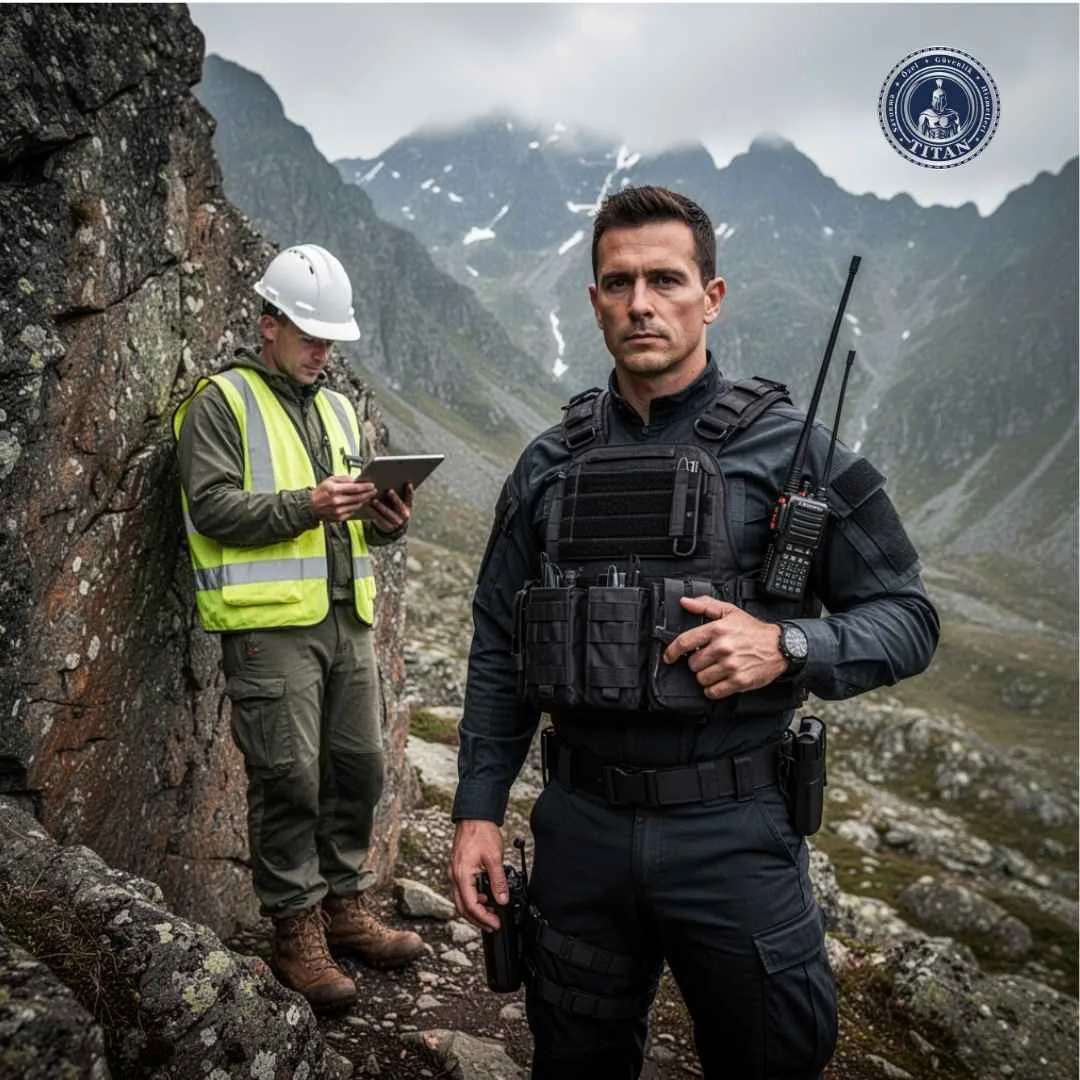
A foreign mining company investing in Turkey usually has to build its site security not only around Turkish law but also around the human rights standards its lenders and its own corporate policies require. The two main references are the Voluntary Principles on Security and Human Rights (VPSHR) and Performance Standard 4 of the International Finance Corporation (IFC).
The short answer: these frameworks do not conflict with Turkey's Law No. 5188 on Private Security Services. They complement it. Turkish law sets who may work as a private security officer, which powers they may use and how they relate to the police and gendarmerie. The VPSHR and IFC PS4 add expectations on the company: a risk assessment, proportionality, a grievance mechanism open to communities, and investigation of allegations. This article stays at management and planning level and does not go into site operations.
This article is general information, not legal advice.
The two frameworks: VPSHR and IFC Performance Standard 4
The Voluntary Principles were created in 2000 through a dialogue between the US and UK governments, extractive companies and NGOs. They are organised under three headings: risk assessment, interactions with public security, and interactions with private security (the full text is short and worth reading). The initiative's 2024 governance rules state that the Principles do not create legally binding obligations, but through company policies and lender requirements they often become contractual expectations for companies and their contractors.
IFC Performance Standard 4 (2012), "Community Health, Safety, and Security", deals with security personnel in paragraphs 12 to 14. In summary, the company:
- assesses the risks its security arrangements pose to people inside and outside the site;
- follows proportionality, good international practice and applicable law in hiring, rules of conduct, training, equipping and monitoring;
- makes reasonable inquiries that security providers were not implicated in past abuses, and trains them in the use of force and appropriate conduct;
- sanctions force only for preventive and defensive purposes, in proportion to the threat;
- provides a grievance mechanism for affected communities about security arrangements;
- considers and, where appropriate, investigates allegations of unlawful or abusive acts and reports unlawful acts to public authorities.
IFC's 2017 Good Practice Handbook on the Use of Security Forces walks through the steps from risk assessment to a security management plan, with templates.
Where Turkish law meets the standards
Article 1 of Law No. 5188 describes private security as "complementary to public security". That matches the core assumption of the VPSHR: the state holds primary responsibility for public order. The practical points of alignment are:
- Permit and scope: private security is set up with a permit from the provincial governorship (valilik), on a decision of the provincial private security commission, which also sets the maximum number of personnel and weapons (Articles 3 and 8).
- Limited powers: officers may use only the powers listed in Article 7, and only within their duty area and duty hours (Article 9).
- Use of force: Article 7(k) limits the use of force to the cases recognised in Article 981 of the Civil Code, Article 52 of the Code of Obligations and Articles 24 and 25 of the Penal Code (which include self-defence and necessity), which fits PS4's proportionality test.
- Relation to law enforcement: anyone apprehended and any seized items are handed to the general law enforcement (police or gendarmerie) (Article 9). Where the governor or district governor uses public-order powers, private security follows their orders and those of the law enforcement commander (Article 6).
- Personnel conditions: officers must meet the conditions in Article 10, and the governorship runs a security investigation and archive check (Article 11).
The PS4 "reasonable inquiries" test does not replace this official vetting; it adds to it. Within the limits of Turkey's data protection law (KVKK), the company can ask its contractor for conduct records and complaint history from officers' previous assignments.
Working with public security forces
Many mining sites in Turkey are rural, and in rural areas general law enforcement is often the gendarmerie (jandarma) rather than the police; which force covers a given site is determined locally. Both the provincial police directorate and the provincial gendarmerie command sit on the private security commission (Article 4). The company cannot direct public security forces. What the VPSHR expects is regular, structured communication:
- sharing the company's ethics and human rights policy with local law enforcement in appropriate terms;
- assessing and documenting the risks arising from public security's role at the site, as PS4 paragraph 13 requires;
- not providing equipment or logistical support to public forces without a written risk assessment and legal review;
- routing communication through named, authorised contacts during periods of community tension.
The relationship should stay neutral and institutional. The security team should never appear to take sides in any political or local dispute.
Community relations and the security team's role
A frequent failure on mining projects is that community issues such as land, compensation, water or jobs end up at the gate, in front of a security officer. The officer is not the right counterpart. Their job is to direct people to the right team and record what happened. That requires a written interface between community relations and security:
- When a villager or the village head (muhtar) comes to the gate with a request, who answers, and how quickly?
- What are the security team's rules of conduct in everyday contact around the site, such as grazing land, roads or water sources?
- How are conflicts of interest managed when locally hired officers have relationships in the community?
Designing the grievance mechanism
PS4 paragraph 12 requires a grievance mechanism through which affected communities can raise concerns about security arrangements and the acts of security personnel. A workable mechanism:
- is reachable in the local language, in person, by phone and in writing, and accepts anonymous complaints;
- logs each complaint, assigns an owner and a response time, and reports back to the complainant;
- protects complainants against retaliation and is run by a unit independent of the security team;
- stores complainants' personal data in line with KVKK, with limited access.
Where a possible crime is involved, an internal review is not enough. Under Law No. 5188, incidents involving apprehension or use of force are reported to the competent law enforcement by the fastest means (Article 9), and PS4 paragraph 14 expects unlawful acts to be reported to public authorities and recurrence to be prevented.
Contracts, training and monitoring
The VPSHR recommend writing the Principles into private security contracts, keeping the right to terminate for credible evidence of abuse, and monitoring the provider. In Turkey, officers already complete the basic and refresher training required by Article 14 of Law No. 5188. A project-specific module can sit on top of that:
- proportionality and the legal limits of force;
- respectful conduct with community members, women, children and the elderly;
- incident recording, first aid for the injured and the reporting chain;
- how the grievance mechanism works and the ban on retaliation.
A monthly incident summary, grievance statistics and an annual independent review give lenders and senior management concrete evidence.
Investor checklist
- Is there a security and human rights risk assessment for the site, updated at least annually?
- Are the permit, its scope and the commission's limits reflected in the security management plan?
- Does the security contract reference the VPSHR and PS4, with termination rights and reporting duties?
- Is the grievance mechanism independent of the security team and known to the community?
- Who owns communication with public security forces, and how is it recorded?
For site-level planning, see our pages on mining facility security and security for international companies in Turkey.
About Titan Savunma
Titan Savunma is an Ankara-based private security company operating under a Ministry of Interior licence issued under Law No. 5188. It holds ISO 9001, 14001, 45001, 22301 and 28000 certificates, works with international companies in English and Turkish, and plans services for sites in different provinces of Turkey with a single point of contact, written scope and regular reporting. Learn more on our private security in Turkey page.
Sources and Further Reading
- Law No. 5188 on Private Security Services, Mevzuat Bilgi Sistemi
- The Voluntary Principles on Security and Human Rights, Voluntary Principles Initiative
- Voluntary Principles on Security and Human Rights (full text), University of Minnesota Human Rights Library
- VPI Governance Rules adopted 16 May 2024, Voluntary Principles Initiative
- IFC Performance Standard 4: Community Health, Safety, and Security (2012), IFC
- Good Practice Handbook: Use of Security Forces (2017), IFC