A warehouse, a solar or wind site, an empty factory building, or a handful of small facilities a few kilometres apart: managers planning a security budget in Turkey keep asking the same question. Should each site have a static guard post, or should one mobile patrol visit them all? This article compares the two models on decision criteria, the limits set by Turkish law, realistic response expectations and the records you should demand.
This article is general information, not legal advice.
The short answer: static guarding is essential wherever people and vehicles must be checked continuously. Mobile patrols work well for deterrence, regular checks and alarm verification, but they do not replace continuous presence. In Turkey there is one more point foreign managers often miss: check that every site the patrol serves is covered by a private security permit. The law ties the permit to the person or organisation requesting protection (Article 3) and officers' powers to their duty area and duty hours (Article 9).
What each model is for
Static guarding means an officer present at a defined post for defined hours. Access control, visitor reception, CCTV monitoring, key and delivery control are its core tasks.
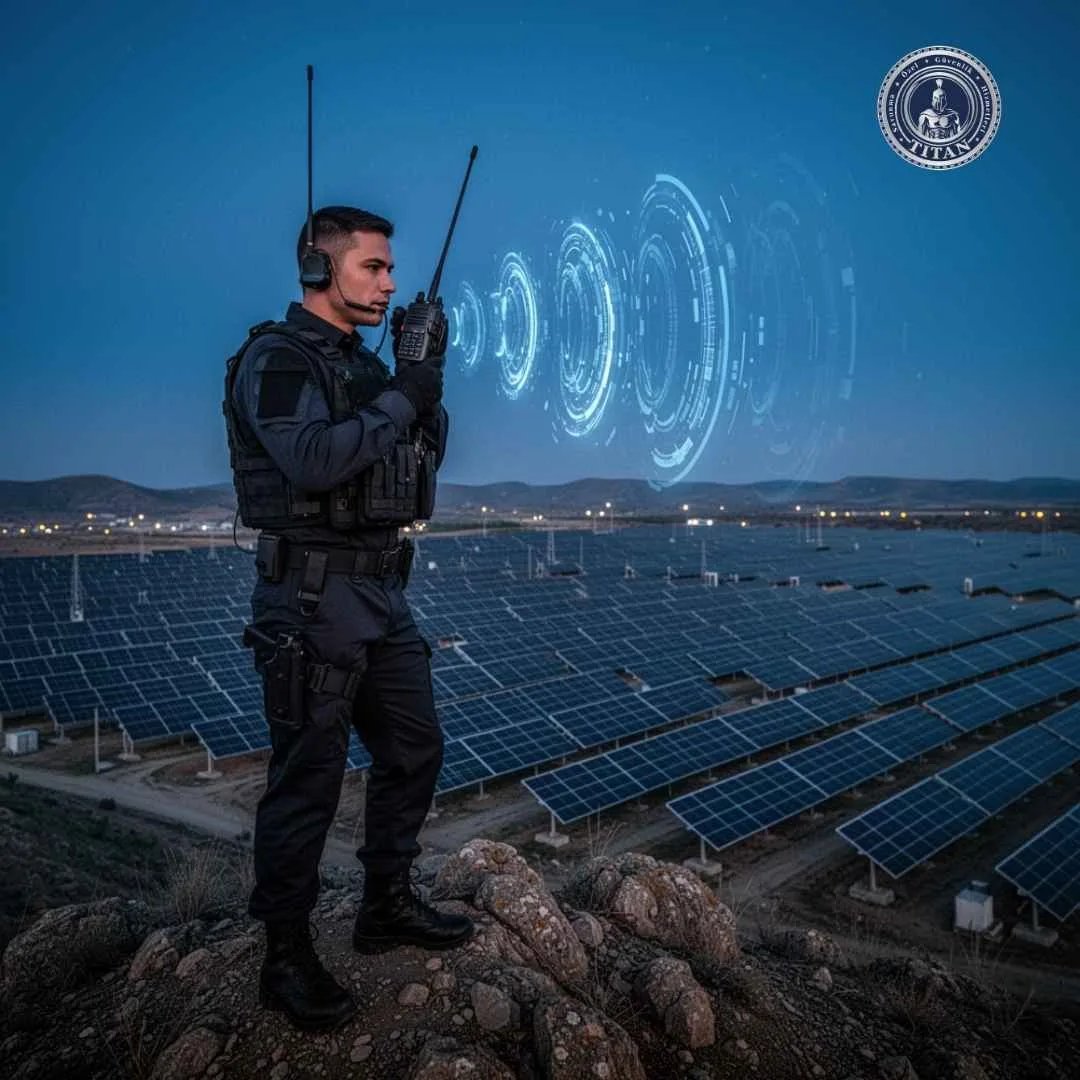
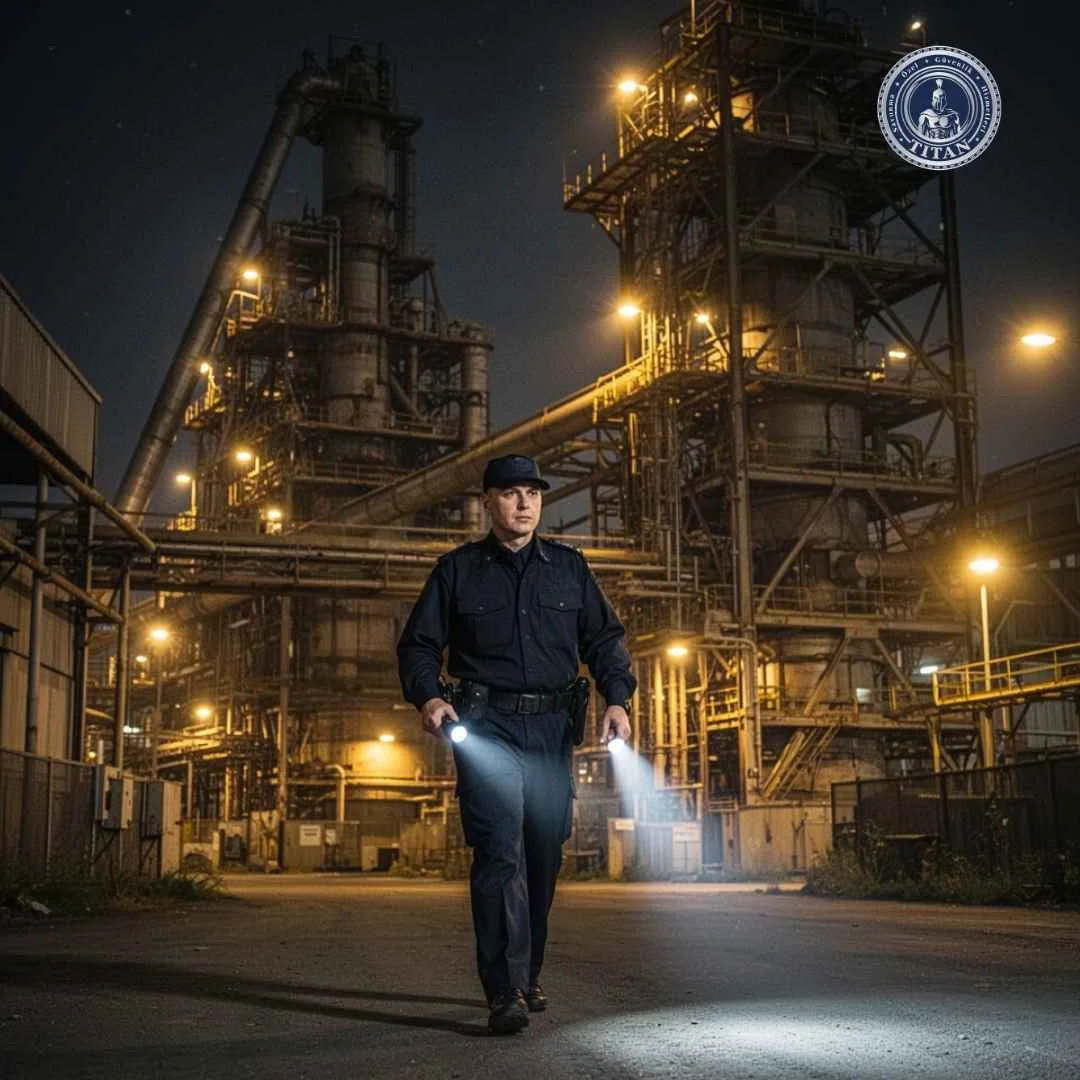
Mobile patrol means a team that visits one or more sites at planned or irregular intervals, checks gates, fences, lighting and locks, and attends when an alarm is raised. A foot patrol inside one large site and a vehicle patrol covering several sites both fall under this heading, but their legal position is not the same.
Decision criteria
| Criterion | Points to static guarding | Points to mobile patrol |
|---|---|---|
| People traffic | Frequent visitors, staff and supplier entries | Site mostly empty or closed |
| Asset value and sensitivity | High-value stock, critical equipment, server room | Low-value, dispersed or hard-to-move assets |
| Technical systems | Limited CCTV and alarms | CCTV, alarms and an alarm monitoring service in place |
| Response need | Immediate on-site intervention required | Verification within a set time is acceptable |
| Contract or insurer requirement | Continuous presence required | Periodic checks accepted |
For most sites the answer is a mix: static cover during working hours, patrols and technical monitoring at night and at weekends. Tie the decision to a risk assessment, insurance conditions and the site's operating calendar. Staffing then depends on the shift pattern, hours and legal limits, and is planned site by site.
What Turkish law says about patrols
Law No. 5188 on Private Security Services has no separate "mobile patrol" permit. Two concepts decide what a patrol may do: the private security permit (özel güvenlik izni) and the duty area (görev alanı).
- A permit for each site: under Article 3, having security provided by a company requires the governor's permission on the decision of the provincial private security commission. Check that each site the patrol covers holds this permit, and for what scope. Sites in different provinces are handled by different governorships (valilik) and commissions.
- Powers only in the duty area: Article 9 states that private security officers may use the powers listed in Article 7 only while on duty and only within their duty area.
- A narrow route exception: the same article lists situations where the route itself counts as the duty area, such as pursuing a suspect of a committed crime or a person strongly suspected of being about to commit one, measures against attacks from outside, cash and valuables transport, and funerals. Ordinary travel between client sites is not on that list. In compulsory cases the commission may extend a duty area by decision.
- Firearms stay inside: Article 9 also prohibits taking firearms outside the duty area. If any armed element is planned, assume it remains inside the permitted site and confirm the arrangement with your provider and, where needed, the governorship.
- ID card and uniform: the identity card issued by the governorship must be worn visibly in the duty area and during duty hours (Article 12), and officers wear uniform in the duty area (Article 13). Patrol teams are no exception.
In practice, while the patrol vehicle is on the public road between sites, the officers have the same position as any member of the public. If they come across an incident on the way, their role is to call Turkey's emergency number 112 or the police and observe.
Set realistic response expectations
Most disputes in patrol contracts come from the word "response". Managers imagine someone will stop an intruder; in reality the patrol's role is usually to reach the site, verify, inform the police or gendarmerie and protect the scene.
- Write arrival time as a target: distance, traffic and weather make it a target, not a guarantee. Ask for every missed target to be reported with the reason.
- Notifying the police: Article 9 requires incidents that call for the use of force or apprehension to be reported to the competent general law enforcement (police or gendarmerie) by the fastest means. Build the flow around that: notify first, then observe safely on site.
- Alarm monitoring: under Article 5, setting up and operating an alarm monitoring centre requires a certificate of competence (yeterlilik belgesi) from the governorship. Confirm that whoever monitors your alarms holds one.
- Keys and entry: decide in writing whether the patrol may enter buildings, how keys are held and who authorises entry. Article 7 allows officers to enter workplaces in their duty area in natural disasters such as fire or earthquake and when help is called for; beyond that, entry rules are yours to set.
Records: where a patrol proves its value
You can see a static officer at the gate; a patrol is proven by its records. Ask for:
- A visit log per site: arrival and departure time, points checked, findings. If an electronic guard tour system is used, reports should come from it.
- Findings with photos: open doors, damaged fences, failed lighting, and when each was passed to the responsible person.
- An alarm log: time received, time the team left and arrived, outcome.
- Incident reports in Turkish, signed and including the police notification details, with an English summary for management.
- A monthly review: missed or late visits, repeat findings, proposed changes.
Visits at fixed times are easy to record but predictable. Agree with your provider how to vary timings without breaking the record trail.
Working hours and night duty
Night patrol is often lone work that includes driving. Article 69 of Labour Law No. 4857 limits night work to seven and a half hours, but allows longer night work in certain sectors, private security among them, with the worker's written consent. Rules like this shape the provider's roster, so ask for a sample schedule at bid stage. Check-in calls for lone patrol officers and a clear procedure when contact is lost should also be part of the plan.
Checklist
- Confirm a private security permit and its scope for every site.
- Classify sites by risk and operating calendar; decide where static cover is needed and when patrol is enough.
- Define the patrol's task: perimeter check, internal round or alarm verification.
- Put the arrival target, police notification flow and key rules in the contract.
- Ask for the alarm monitoring centre's certificate of competence.
- Fix the format and language of visit, finding, alarm and incident records.
- Review the plan against the records every quarter.
For dispersed storage sites see our logistics and warehouse security page, and for static cover our manned guarding service.
About Titan Savunma
Titan Savunma is an Ankara-based private security company licensed by the Ministry of Interior under Law No. 5188, holding ISO 9001, 14001, 45001, 22301 and 28000 certificates. We plan services for sites in different provinces of Turkey with a single point of contact, a written scope and regular reporting, in English and Turkish. Learn more on our private security company in Turkey page.