This article is general information, not legal advice.
Pharmaceutical and chemical plant security differs from ordinary factory security because it has to manage two risks at once: a deliberate act turning hazardous substances into a major accident, and valuable, controlled or easily counterfeited products leaking out of the legitimate supply chain. Research based on incident records identifies personnel and vehicle gateways as key elements of physical protection and shows that insiders with site access were behind several successful attacks. A good plan therefore treats process safety and security within one management system.
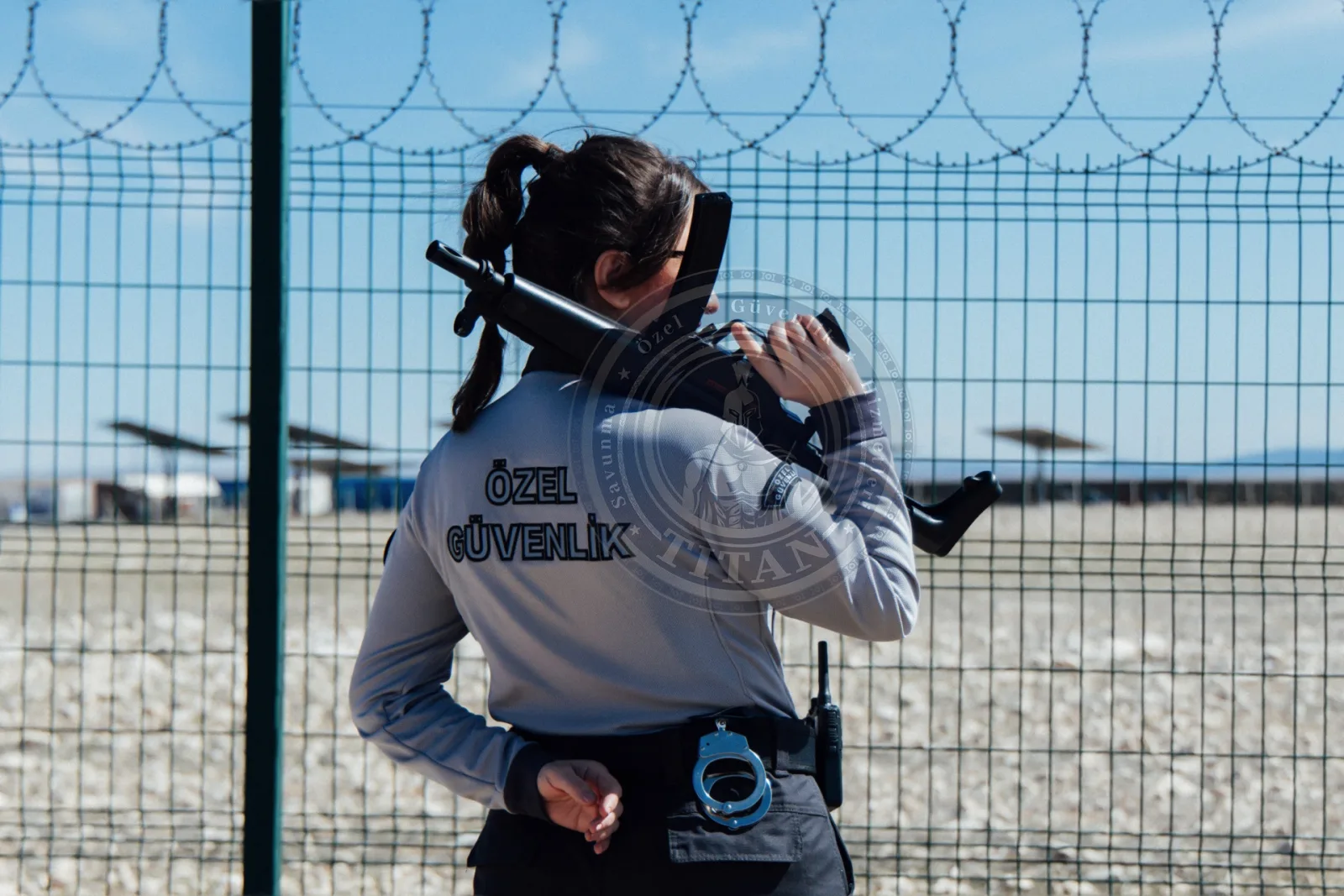
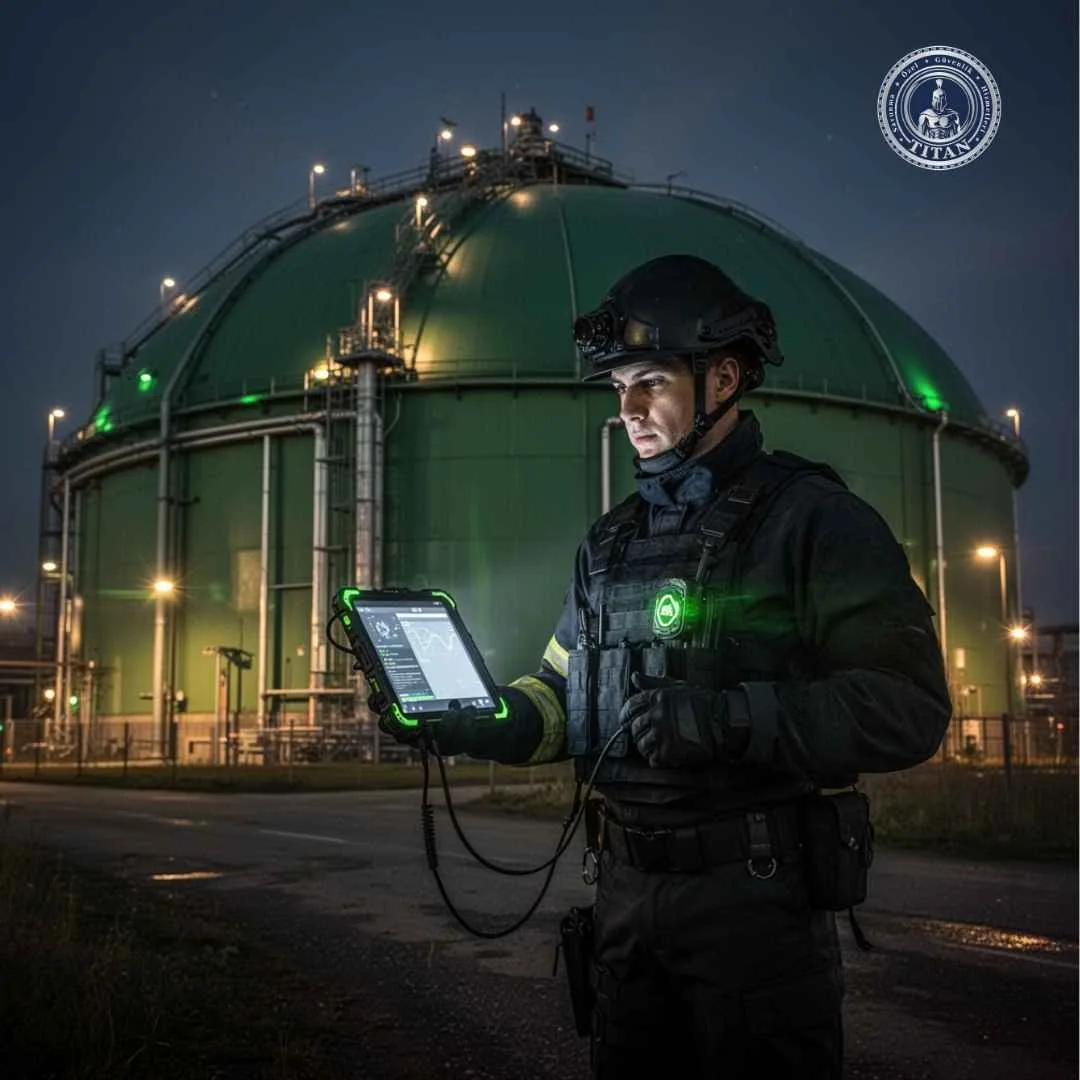
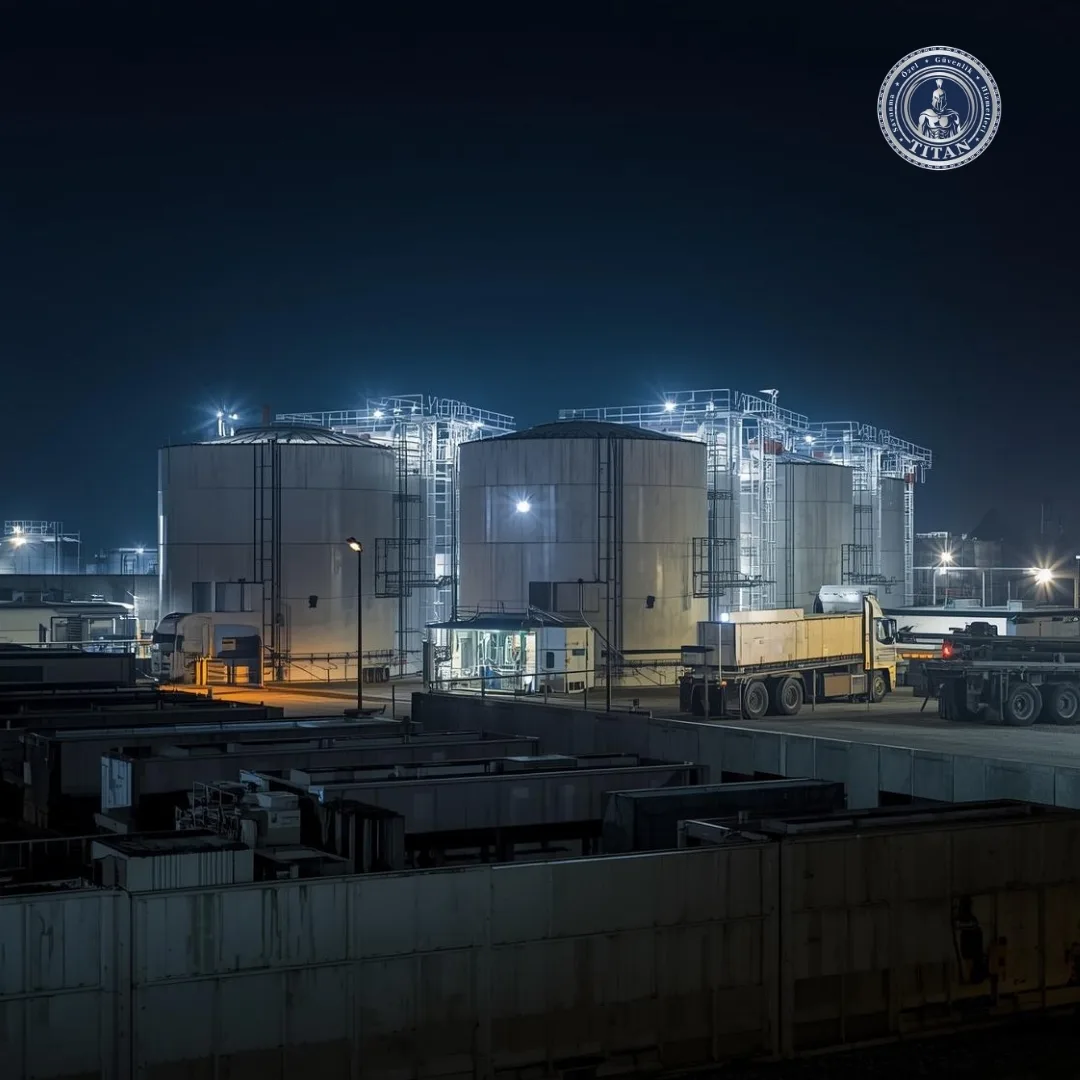
This guide covers active pharmaceutical ingredient and finished-dose manufacturing, chemical and petrochemical production sites, and establishments storing dangerous substances. It draws on peer-reviewed research, the EU Seveso III Directive, the EU Good Distribution Practice (GDP) guidelines, the US CFATS and ChemLock framework and Turkey's major-accident regulation. To see how we scope this work on site, visit our industrial facility security service.
The risk profile of pharmaceutical and chemical plants: what the research shows
Deliberate events: explosives, armed attacks, arson and cyber attacks
One substantial incident review in this field comes from researchers at the University of Bologna and TU Delft. Casson Moreno, Reniers, Salzano and Cozzani (2018, Process Safety and Environmental Protection) built a database of around 300 security-related events from European and American sources affecting chemical and process sites and related infrastructure. Explosives, both military and improvised, were by far the most frequent attack mode; armed attacks and arson were also frequent and may allow attackers to penetrate deep into a site. The authors describe cyber attacks as a growing threat and conclude that the industry needs a dedicated security management system covering both physical and cyber protection.
A follow-up by the same group, Iaiani and colleagues (2021, Reliability Engineering & System Safety), re-examined deliberate events involving the release of hazardous substances using several complementary techniques. Vandalism was associated mainly with the transport of hazardous substances and material theft with oil and gas pipelines. At chemical and petrochemical sites, cyber attacks and improvised explosive devices were the most common attack modes. Two findings matter most to site managers: personnel and vehicle gateways are key elements of physical protection design, and insiders with access to the site were behind several successful attacks. These studies rely on historical incident records, and reporting varies by country, so the patterns should not be read as precise risk estimates.
Why vulnerability assessment is a separate task
Argenti, Landucci, Reniers and Cozzani (2018) note that chemical facilities may be targets of deliberate acts of interference that can trigger major accidents, and that common vulnerability assessment methods are qualitative or semi-quantitative and not tailored to chemical plants or their physical protection systems. Their Bayesian network model represents how attack impact vectors interact with the resistance of process units, using expert elicitation to estimate protection system performance; in an industrial case study it supported both vulnerability evaluation and assessment of the physical protection system. The practical lesson: the protection level of a tank farm or reactor building should be judged by what an attack on that equipment could cause, not only by the number of fences and cameras.
An earlier field study, Reniers (2011, Security Journal), tested four security hypotheses through in-depth interviews at four chemical multinationals and offered recommendations for installing and continuously improving security measures in the sector. We could access only the abstract, so we do not rely on its detailed findings.
The pharmaceutical side: counterfeiting and diversion
The World Health Organization's fact sheet on substandard and falsified medical products states that at least 1 in 10 medicines in low- and middle-income countries is substandard or falsified and that such products can be found in all countries; falsified products deliberately misrepresent their identity, composition or source. The systematic review and meta-analysis by Ozawa and colleagues (2018, JAMA Network Open) pooled 96 studies testing at least 50 samples each (67,839 samples) and estimated the prevalence of poor-quality medicines in low- and middle-income countries at 13.6%, with 19.1% for antimalarials and 12.4% for antibiotics. These figures come from low- and middle-income countries and are not rates for Europe or Turkey, but they explain why a manufacturer's control over packaging components, rejected batches and scrapped product is a security matter.
On diversion from the legitimate chain, Yang and Mishra (2025, Manufacturing & Service Operations Management) used the enactment of the US Drug Supply Chain Security Act (DSCSA) together with cross-state differences in pre-policy seizures. States with higher prescription-opioid seizures before the Act saw larger decreases in prescription-opioid abuse treatment admissions and prescription-opioid mortality afterwards. The authors identify fraudulent pharmacy transactions as a mechanism and argue that supply chain traceability is a useful risk-mitigation strategy. The study is specific to the US prescription-opioid chain and examines the mechanism at pharmacy-transaction level, yet it underlines the value of serialisation, records and suspicious-order monitoring for manufacturers and warehouses too.
Layered security recommendations
The recommendations below draw on the research above and on Seveso III, the EU GDP guidelines and CISA's ChemLock framework. The right mix for each site comes from a site-specific assessment; our security risk assessment tool is a useful starting point.
1. Perimeter and site layout
- Zone by consequence: define tank farms, reactor buildings, unloading points and controlled-substance stores as separate security zones and grade their protection by the potential consequence, in line with the approach of Argenti and colleagues.
- Detection and delay together: a fence alone is not a barrier; design it with detection, camera verification and response time.
- Restraint in disclosure: recital 19 of the Seveso III Directive provides for confidentiality safeguards on public information because of security-related concerns. Avoid over-publishing site layouts and dangerous substance inventories.
2. Entry and access control
- Gateways first: following Iaiani and colleagues, put gates at the centre of the security investment: identity verification, vehicle and load checks, and booked acceptance of tankers and trucks.
- Authorised-only areas: the EU GDP guidelines (Chapter 3.2) require medicinal products to be kept in segregated, clearly marked areas with access restricted to authorised personnel, unauthorised access to be prevented, typically through a monitored intruder alarm system and appropriate access control, and visitors to be accompanied.
- An extra layer for controlled substances: the same guidelines note that products such as narcotics and psychotropic substances are subject to special national storage conditions; apply two-person rules, separate logs and tightly limited key or card issue in these areas.
3. Interior, warehouse and dispatch
- Segregate falsified and suspect product: GDP Chapter 6.4 requires distributors to inform the competent authority and the marketing authorisation holder immediately and to store such products in a dedicated area away from all other medicinal products.
- Rejects, returns and scrap: track batches for destruction, printed packaging and label stock with counts and signed records; these are the most valuable inputs for counterfeiters.
- A theft protocol in transport: GDP Chapter 9 makes the distributor responsible for protecting products against breakage, adulteration and theft in transit, and calls for additional control systems and a theft protocol for narcotics and psychotropic substances.
4. People and insider risk
- Insider scenarios: CISA's ChemLock guidance advises considering insider threat scenarios carefully across all areas of the security plan.
- Background checks: it lists employment history, educational history, criminal history and credentials as checks to consider, applied lawfully under local data protection rules.
- Contractors: contractor staff during maintenance shutdowns should follow the same access and escort rules as permanent employees.
5. Technology and cyber-physical integration
- One plan: ChemLock stresses that a facility security plan cannot be effective without combining cyber and physical measures, and the Casson Moreno and Iaiani studies show cyber attacks are prominent at process sites. Treat control rooms, server rooms and field control panels as critical zones for physical access.
- Alarm verification: do not commission detection systems without defining who verifies an alarm and how quickly.
6. Process, records and exercises
- Records and incident reporting: ChemLock recommends a records management programme and an incident reporting and investigation programme.
- Exercises: Seveso III requires internal emergency plans at upper-tier establishments to be reviewed and tested at intervals of no more than three years. Include security scenarios such as intrusion, suspicious packages and sabotage.
Expert view
From our experience at production and storage sites, Titan Savunma's corporate recommendations for pharmaceutical and chemical plants are:
- Sit at the same table as process safety. The team that writes your major-accident scenarios knows best which equipment would cause the worst outcome if deliberately attacked. Start the security plan from that list.
- Treat the gate as the most critical point on site. Write down the gate officer's authority, checklist and right to refuse entry; never admit tanker or chemical deliveries without a booking and matching documents.
- Protect the packaging and label store like the finished-goods store. Counterfeiting often starts with genuine packaging; reconcile printed materials every shift.
- Plan maintenance shutdowns as a distinct risk period. Prepare additional access control and escort arrangements when contractor numbers peak.
- Lock the control room physically too. Cyber security investment can be undone by easy access to the control room or field panels.
- Train guards on process hazards. Officers patrolling the site must know escape routes, assembly points, gas alarms and PPE rules.
- Turn incident logs into a learning tool. Report minor breaches (shared cards, unescorted visitors, propped doors) regularly and feed them into management review.
To list coverage points such as gates, patrols and the control room systematically, try our security coverage planner.
What to measure (KPIs)
| Indicator | What to measure | Why it matters |
|---|---|---|
| Gate compliance | Share of audited entries with complete identity, vehicle and document checks | Research identifies personnel and vehicle gateways as key elements |
| Alarm verification and response time | Time from alarm to verification and to arrival on scene | Delay only works if response arrives in time |
| Controlled-area access exceptions | Unauthorised attempts, shared cards, two-person rule breaches | Early signs of insider risk |
| Inventory and packaging reconciliation | Count discrepancies for controlled substances, printed packaging and scrap | Tracks diversion and counterfeiting risk |
| Exercises and training | Completion of planned security drills and training, and drill findings | Seveso III requires emergency plans to be tested; ChemLock expects drills and training |
| Audit finding closure | Share of open findings closed on time | Evidence of continuous improvement |
Set targets from your own baseline; there is no reliable published benchmark for the sector.
Common mistakes
- Treating the safety report as a security plan; the "güvenlik raporu" required under Turkey's major-accident regulation is a process safety document.
- Sharing dangerous substance inventories and site plans with suppliers, visitors or on the website in more detail than necessary.
- Seeing the gate as a sign-in desk and skipping vehicle and load checks.
- Running cyber and physical security on separate budgets with teams unaware of each other.
- Leaving scrap, reject and returns flows outside the security scope.
- Applying looser rules to contractors and temporary staff than to employees.
- Reading the expiry of CFATS authority in the US as permission to relax; CISA encourages facilities to maintain security measures.
Applying this in Turkey
In Turkey, the core instrument for sites holding dangerous substances is the Regulation on the Prevention of Major Industrial Accidents and Mitigation of their Effects, prepared with reference to Directive 2012/18/EU. It defines lower- and upper-tier establishments by threshold quantities, requires a major-accident prevention policy document from lower-tier sites and, in addition, a safety report from upper-tier sites, and excludes military establishments, facilities and depots. These documents focus on process safety; protection against deliberate acts needs its own plan. Under Article 3 of Law No. 5188, establishing an in-house private security unit or contracting a licensed security company requires the governor's permission on the decision of the provincial private security commission. Security staff should also be covered by the risk assessment under Occupational Health and Safety Law No. 6331 and by the site emergency plan. EU GDP and the US CFATS/ChemLock framework are not binding in Turkey but are a useful reference for what multinational pharmaceutical and chemical companies and their auditors expect.
Frequently asked questions
What is the first step in pharmaceutical and chemical plant security?
A site-specific security risk and vulnerability assessment built on the process safety team's major-accident scenarios and the list of controlled products. Set protection levels by the consequence a deliberate attack on each item of equipment could cause.
Does the Seveso III Directive require security measures?
The Directive focuses on preventing major accidents through safety reports, internal emergency plans and inspections. Its recitals provide for confidentiality of public information on security grounds. Protection against deliberate acts should be planned separately.
Is CFATS still in force?
No. According to CISA, the statutory authority for the CFATS programme expired on 28 July 2023 and CISA cannot currently enforce compliance. CISA encourages facilities to maintain security measures and offers voluntary ChemLock resources.
What is the most important physical control against counterfeiting at a pharma site?
Counted, documented control of packaging, labels, rejects and scrap; segregation of falsified or suspect product with immediate notification of the authority and the marketing authorisation holder; and extra access and record layers for controlled substances.
Titan Savunma is an Ankara-based private security company licensed by the Ministry of Interior under Law No. 5188 and certified to ISO 9001, 14001, 45001, 22301 and 28000. We work with international companies in English and Turkish. To build a security plan aligned with your process risks, see our industrial facility security service or contact us.
Sources and Further Reading
- Casson Moreno, V., Reniers, G., Salzano, E., Cozzani, V. — Analysis of physical and cyber security-related events in the chemical and process industry, Process Safety and Environmental Protection 116, 621–631 (2018)
- Iaiani, M., Casson Moreno, V., Reniers, G., Tugnoli, A., Cozzani, V. — Analysis of events involving the intentional release of hazardous substances from industrial facilities, Reliability Engineering & System Safety 212, 107593 (2021)
- Argenti, F., Landucci, G., Reniers, G., Cozzani, V. — Vulnerability assessment of chemical facilities to intentional attacks based on Bayesian Network, Reliability Engineering & System Safety 169, 515–530 (2018)
- Reniers, G. — Terrorism Security in the Chemical Industry: Results of a Qualitative Investigation, Security Journal 24(1), 69–84 (2011)
- Ozawa, S., Evans, D.R., Bessias, S., Haynie, D.G., Yemeke, T.T., Laing, S.K., Herrington, J.E. — Prevalence and Estimated Economic Burden of Substandard and Falsified Medicines in Low- and Middle-Income Countries: A Systematic Review and Meta-analysis, JAMA Network Open 1(4), e181662 (2018)
- Yang, J., Mishra, A. — Diversion in Prescription Opioid Supply Chains: Evidence from the Drug Supply Chain Security Act, Manufacturing & Service Operations Management 27(3), 679–699 (2025)
- World Health Organization — Substandard and falsified medical products (fact sheet)
- European Parliament and Council — Directive 2012/18/EU on the control of major-accident hazards involving dangerous substances (Seveso III) (2012)
- European Commission — Guidelines of 5 November 2013 on Good Distribution Practice of medicinal products for human use, 2013/C 343/01
- CISA — Chemical Facility Anti-Terrorism Standards (CFATS) programme page (statutory authority expired 28 July 2023)
- CISA — ChemLock: Policies, Plans and Procedures
- T.C. — Büyük Endüstriyel Kazaların Önlenmesi ve Etkilerinin Azaltılması Hakkında Yönetmelik (2019, güncel metin)