This article is general information, not legal advice.
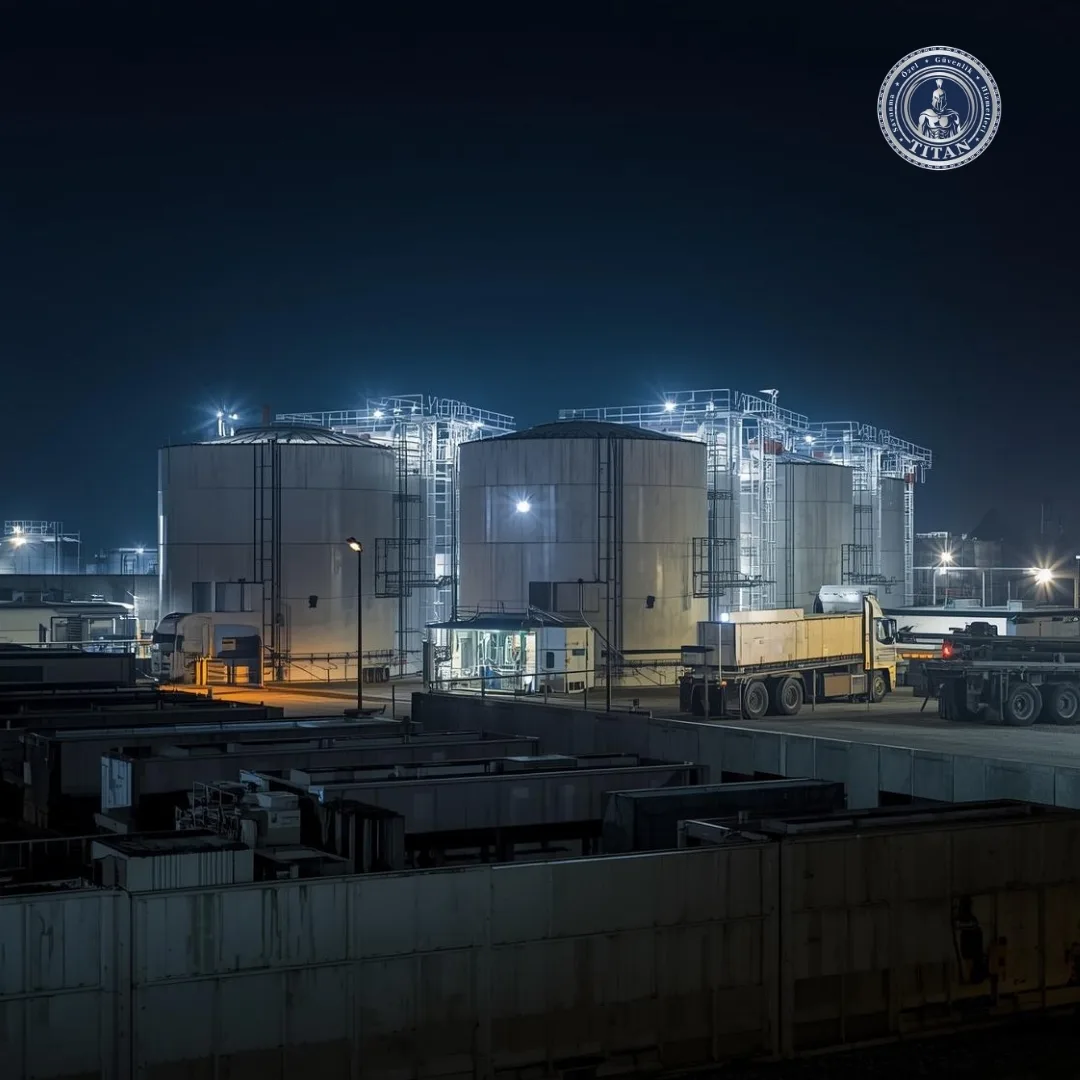
Water and telecom infrastructure security is about protecting dispersed, mostly unmanned sites (pumping stations, reservoirs, boreholes, booster stations, mobile masts and street cabinets) against theft, sabotage and tampering. Research and official guidance suggest that armed assaults on these sites are very rare; the more frequent problems are metal and equipment theft, vandalism and cyberattacks, while sabotage is less frequent but remains a serious risk. A good plan therefore does not put a guard at every site; it rests on criticality ranking, remote detection, verified alarms and fast response.
This guide is written for operators of drinking water, wastewater and telecommunications networks. It draws on peer-reviewed research, the U.S. Environmental Protection Agency's (EPA) threat guidance for water systems and the EU Directive on the resilience of critical entities (CER). To see how we approach your own sites, visit our critical infrastructure security service.
Water and telecom infrastructure security risk profile: what the research shows
How often are water systems targeted?
The most honest answer comes from the EPA's baseline guidance (2024, version 3.0), written under America's Water Infrastructure Act (AWIA) in the U.S.: no comprehensive database exists to give an authoritative estimate of the probability that a water system will suffer a malevolent act. Instead, the EPA offers rough order-of-magnitude starting points based on publicly reported incidents:
- Low (10⁻⁶ to 10⁻⁵ a year): physical assault on a utility and intentional contamination of source or finished water. The EPA notes that an armed assault on a U.S. water system has never been reported.
- Medium (1 to 10 per cent a year): physical sabotage and major theft capable of disrupting operations.
- High (1): cyberattack.
The EPA's comment on theft is telling: theft is commonplace at water systems, but most incidents cannot interfere with operations, they are not tracked nationally, and a utility's own theft history is the best basis for an estimate. These figures are U.S.-based and the EPA stresses they are not a threat level for any specific site, but they are a useful way to separate "rare but severe" from "frequent but minor".
Taking a longer view, Birkett (2017, Journal of Terrorism Research) cites the Pacific Institute's water conflict chronology as documenting 162 attacks on water infrastructure between 1980 and 2012. Because that chronology includes war and civil conflict, it should not be read as a corporate risk rate. Birkett's main warning is about dependencies: pumps, treatment processes and the SCADA communications that run remote sites all depend on electricity, and a poor understanding of these dependencies can turn an attack into a sudden, protracted cascading failure.
Theft and sabotage in telecoms
Cable theft is driven largely by metal prices. Sidebottom and colleagues (2011, Journal of Research in Crime and Delinquency) found a significant positive correlation between lagged rises in the copper price and copper cable theft on the British railway network, and no support for rival explanations such as unemployment. A 2014 follow-up by the same group confirmed the price–theft link using 76 months of police-recorded data from 2006 to 2012, while noting a recent downward trend whose cause was unclear. These studies use railway data, but it is a reasonable inference that telecom sites holding copper lines, earthing and batteries face higher risk when prices rise.
The second telecom threat is ideologically driven attack. Jolley and Paterson (2020, British Journal of Social Psychology) report that in spring 2020 telecom masts across Europe, North America and Australasia were damaged in arson attacks and engineers suffered verbal and physical abuse. In a pre-registered UK survey of 601 people, belief in 5G–COVID-19 conspiracy theories was linked, through anger, to greater justification of violence, with the strongest effects among people high in paranoia. The study is cross-sectional, cannot show cause and effect, and the authors note the effects may be small. The operational lesson still stands: a rumour can quickly turn a mast that has never been targeted into a target, and the personal safety of field engineers belongs in the plan.
Where physical and cyber risk meet
The systematic review by Tuptuk and colleagues (2021, Water) highlights that as water and wastewater systems adopt general-purpose computers, IoT sensors, wireless networks and AI, they become more exposed to attacks such as industrial espionage and sabotage. An unlocked control cabinet at a remote pumping station is as much a cyber weakness as a physical one, so physical protection of unmanned sites should never be planned apart from cyber security.
Layered security recommendations
The recommendations below draw on the EPA's deterrence factors, the resilience measures in Article 13 of the EU CER Directive and crime prevention research. Note that the CER obligations in Articles 13–15 apply to water and waste water entities designated as critical; digital infrastructure entities, including telecom operators, are carved out of that chapter by Article 8 and fall under the NIS2 Directive (EU) 2022/2555 instead. For telecom sites, read these articles as good practice.
| Layer | Recommendation | Basis |
|---|---|---|
| Criticality and inventory | List every site; rank first the single points of failure whose loss alone would interrupt service (single source, single storage tank, core network node). | EPA: a visible single point of failure may raise attack likelihood; risk = threat × vulnerability × consequence (AWWA J100). |
| Perimeter | Fencing, barriers, lighting and perimeter monitoring; remove graffiti and vandalism damage quickly. | CER Art. 13: fencing, barriers, perimeter monitoring tools; EPA: proactive response to vandalism at unmanned locations. |
| Entry and access | Locked hatches and doors, managed keys or cards, a record of who entered and when. | CER Art. 13: access controls and access rights to premises; EPA: locked hatches, locking hydrants. |
| Detection | Tamper-protected door contacts, motion and vibration sensors; actively monitored cameras. | EPA: intrusion detection secured against tampering; Piza et al. (2019): actively monitored CCTV shows larger effects. |
| People and contractors | Security vetting of contractors and suppliers before site access; check-in procedure for lone engineers. | EPA: vetting third parties before access; CER Arts. 13–14: employee security and background checks. |
| Stock and materials | Up-to-date counts of cable, batteries, fuel and spares so losses are spotted quickly. | EPA: updated inventory, investigation of every theft and closure of the gap. |
| Process and records | Incident log, root-cause review, notification to authorities and exercises. | CER Art. 15: initial notification of significant incidents within 24 hours. |
Are cameras enough on their own?
No. The 40-year meta-analysis by Piza, Welsh, Farrington and Thomas (2019, Criminology & Public Policy) found CCTV associated with a significant but modest reduction in crime, with the most consistent effects in car parks, larger effects for actively monitored schemes and for those combined with other measures, and advised against using CCTV as a stand-alone measure. These studies come from urban settings and do not transfer directly to an unmanned pumping station. The implication for remote sites is nonetheless clear: a camera that records but that nobody watches provides evidence after the event, not prevention. Without a monitoring centre to verify alarms and a response team able to reach the site, the system is incomplete.
Expert view
Our corporate recommendations, based on Titan Savunma's field experience with dispersed and unmanned sites:
- Map criticality first. Trying to protect hundreds of sites equally exhausts the budget. Identify the points whose loss would interrupt service and concentrate protection there.
- Verify every alarm. At remote sites, false alarms bury real ones. Dispatching patrols without camera or second-sensor verification wears out the team and lengthens response.
- Plan delay around distance. Physical barriers should hold an intruder long enough for the response team to arrive; assess that time site by site.
- Watch metal prices. Assume cable and battery theft risk rises with the copper price, and adjust patrol frequency and stock checks accordingly.
- Treat rumours as threat signals. If local opposition or conspiracy talk spreads about a mast or a water source, reassess that site's risk straight away.
- Do not forget the lone engineer. Use check-in and check-out, scheduled welfare calls and a panic button for staff attending night faults.
- Put physical and cyber teams at the same table. Physical access to a control cabinet is network access. Cabinet door alarms should be reviewed together with cyber event monitoring.
For a quick view of site-level risk, try our security risk assessment tool, and to think through coverage needs, our security coverage planner.
What to measure (KPIs)
- Incidents per site by type (theft, vandalism, intrusion, tampering).
- Alarm verification rate: the share of alarms that turn out to be real incidents.
- Time from alarm to arrival on site, and its spread across sites.
- Service interruption caused by security incidents, and customers or population affected.
- Inventory discrepancies in cable, batteries, fuel and equipment.
- Completeness of contractor access records and audit findings.
- Time to repair faulty fences, locks, sensors and cameras.
Set targets from your own history rather than sector averages; the EPA likewise points to a utility's own theft history as the best basis for estimating that threat.
Common mistakes
- Treating every site as equally important and failing to single out critical nodes.
- Counting unwatched cameras as adequate security.
- Accepting false alarms instead of building a verification process.
- Dismissing graffiti and minor vandalism, which the EPA treats as possible signs of vulnerability.
- Leaving contractor and subcontractor access unrecorded.
- Leaving power and communications dependencies out of the risk assessment.
- Treating physical and cyber security as separate teams' separate problems.
- Writing the plan once and never updating it for metal prices, local rumours or new incidents.
Notes on Türkiye
In Türkiye, setting up an in-house security unit or contracting security to a company requires the governor's permission on the decision of the provincial private security commission under Article 3 of Law No. 5188 on Private Security Services. For alarm monitoring of remote sites, Article 5 of the same law requires a certificate of competence from the governorship to establish and operate an alarm monitoring centre. The risk assessment duties of Occupational Health and Safety Law No. 6331 also cover security staff in the field, particularly for lone working, night duty and work near electrical equipment. The EU CER Directive and the U.S. AWIA do not apply directly in Türkiye, but they can be useful references for organisations working with international partners and lenders.
Frequently asked questions
How do you protect an unmanned pumping station or mobile mast?
By combining criticality ranking, a solid perimeter and locks, tamper-protected sensors, active monitoring and alarm verification, and a response team that can reach the site. If one layer is missing, the others weaken.
What is the most likely threat to water facilities?
According to the EPA's U.S.-based guidance, intentional contamination and armed assault are rare, sabotage and major operational theft are medium likelihood, and cyberattack is high likelihood. Your own incident history is the best guide.
Why does cable theft rise and fall?
Studies of British railway data show that rises in the copper price are associated with rises in copper cable theft. When prices climb, tighten protection and stock checks.
Does the EU CER Directive cover water and telecom operators?
Its annex lists drinking water, waste water and digital infrastructure (including providers of public electronic communications networks and services). However, the duties to take measures such as fencing and perimeter monitoring, detection equipment, access control and employee security, and to notify significant incidents within 24 hours, apply to water and waste water entities designated as critical; under Article 8, digital infrastructure entities such as telecom operators are exempt from them and are regulated under the NIS2 Directive instead.
Titan Savunma is an Ankara-based private security company licensed by the Ministry of Interior under Law No. 5188 and certified to ISO 9001, 14001, 45001, 22301 and 28000. We work with international companies in English and Turkish. To build a criticality-based protection plan for dispersed water and telecom sites, see our critical infrastructure security service or contact us.
Sources and Further Reading
- Sidebottom, A., Belur, J., Bowers, K., Tompson, L., Johnson, S. D. — Theft in Price-Volatile Markets: On the Relationship between Copper Price and Copper Theft, Journal of Research in Crime and Delinquency 48(3), 396–418 (2011)
- Sidebottom, A., Ashby, M., Johnson, S. D. — Copper Cable Theft: Revisiting the Price–Theft Hypothesis, Journal of Research in Crime and Delinquency 51(5), 684–700 (2014)
- Jolley, D., Paterson, J. L. — Pylons ablaze: Examining the role of 5G COVID-19 conspiracy beliefs and support for violence, British Journal of Social Psychology 59(3), 628–640 (2020)
- Tuptuk, N., Hazell, P., Watson, J., Hailes, S. — A Systematic Review of the State of Cyber-Security in Water Systems, Water 13(1), 81 (2021)
- Birkett, D. M. — Water Critical Infrastructure Security and Its Dependencies, Journal of Terrorism Research 8(2) (2017)
- Piza, E. L., Welsh, B. C., Farrington, D. P., Thomas, A. L. — CCTV surveillance for crime prevention: A 40-year systematic review with meta-analysis, Criminology & Public Policy 18(1), 135–159 (2019)
- U.S. EPA — Baseline Information on Malevolent Acts for Community Water Systems, Version 3.0, EPA/817/R-24/001 (May 2024)
- European Union — Directive (EU) 2022/2557 on the resilience of critical entities (CER Directive), Official Journal of the EU (2022)