This article is general information, not legal advice.
The access control system, video recorders and alarm panel at a head office in Turkey are very likely connected to the corporate network today, and some are also reachable from a manufacturer's cloud or a remote maintenance contractor. Yet in many Turkish companies these systems belong to facilities or administrative affairs, and the information security team does not even see them in its inventory. Physical and cyber security convergence is the management approach that closes that gap.
The short answer: convergence does not mean forcing two departments together. It means a shared risk register, managing security systems as IT assets, joint handling of incidents that cross domains, and a clear ownership model. This article explains the concept, organisational models, the Turkish data protection angle and a practical roadmap, at planning level.
What convergence is, and what it is not
The 2022 best-practice guide "Security Convergence: Achieving Integrated Security", published by the Interagency Security Committee and hosted by the US Cybersecurity and Infrastructure Security Agency (CISA), was written for US federal departments and agencies, but its framework transfers well to companies. It describes convergence as a collaborative effort to integrate physical security, information security, cybersecurity, information assurance and information technology to protect assets. Its central observation is that when security elements operate independently with little collaboration, the organisation's overall security is reduced.
Convergence is not:
- turning guards into cyber analysts or IT staff into gate officers;
- buying a single software platform, since tools do not replace governance;
- a rule that every company must appoint one "head of security", because the right model depends on size and culture;
- unlimited merging and monitoring of employees' physical and digital movements, which Turkish data protection law clearly restricts.
Board expectations point the same way. The G20/OECD Principles of Corporate Governance (2023) note that digital security risks are dynamic and can change rapidly, and that like other risks they should be integrated into the company's overall risk management framework. Once physical security risks sit in that same framework, the overlaps become visible.
Security systems are network assets
The CISA-hosted guide stresses that operational technology and Internet of Things devices have expanded the attack surface of facilities, and that in an interconnected cyber-physical environment a successful attack in one domain can affect the other. It cites a February 2021 case in the United States in which attackers used credentials obtained from the dark web and the plant's own remote-access software to reach a water treatment plant's controls.
For a company in Turkey, the systems to bring into scope include:
- card and biometric access control systems and their controllers;
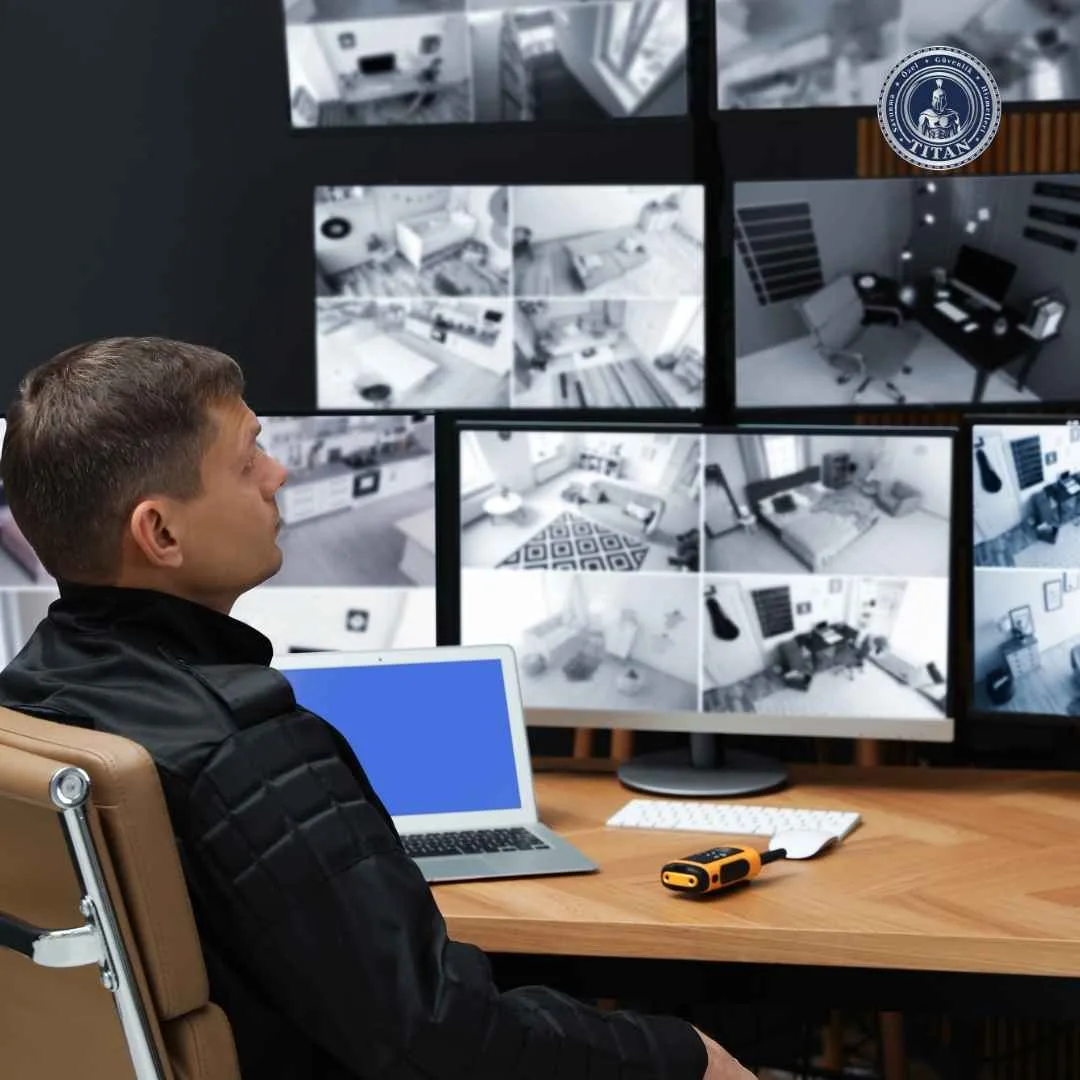
- CCTV cameras, network video recorders and monitoring software;
- intruder and fire alarm panels and their links to monitoring centres;
- visitor management software, intercoms and licence-plate recognition;
- building automation and environmental monitoring in data centres and server rooms.
Ask of each device the questions asked of any IT asset: is it in the inventory, who owns it, is its software current, have default passwords been changed, is it on a separate network segment, who has remote access and how is that access logged? Detailed technical answers belong to the information security team; management's job is to make sure the questions are asked and ownership is clear.
One Turkish specific: Law No. 5188 (Art. 5) requires a competency certificate from the governorship (valilik) to set up and operate an alarm monitoring centre. If your alarm signals go to an outside centre, assess its legal standing and the cyber security of the connection in the same procurement file.
Ownership map: who manages what
| Asset or process | Physical security | IT and information security | Shared |
|---|---|---|---|
| Access control system | Access rules, card issue and revocation | Servers, network, patching, backup | Same-day closure of cards and accounts for leavers |
| CCTV | Camera placement, monitoring instructions | Recorder hardening, remote access | Retention period and footage access rights |
| Server and comms rooms | Physical entry, visitor escort | Hardware and cabling | Periodic review of entry logs |
| Incident handling | First response on site, scene protection | Digital investigation, system isolation | One incident log and notification chain |
| Suppliers | Guarding company, alarm monitoring | Software and cloud providers | Data security clauses in contracts |
Joint handling of cross-domain incidents
Incident handling is where convergence pays off fastest, because many incidents start in one domain and grow in the other:
- a laptop stolen from a car is a physical theft, but may also be a personal data breach;
- a contractor entering a comms room unescorted is a procedural breach, but an unknown device may later appear on the network;
- a video recorder found exposed to the internet is a cyber weakness that directly reduces the site's physical protection;
- a leaver's card left active is both a physical and a digital access risk.
Write joint response cards for such scenarios: who receives the first report, whom they call, what the on-site security team protects, what IT isolates, when legal and the data protection lead step in. Turkey's Personal Data Protection Law requires the data controller, where processed personal data is obtained by others unlawfully, to notify the data subject and the Personal Data Protection Board as soon as possible (Art. 12(5)). Decide in advance who determines whether a physical theft triggers that chain.
Organisational models
The guide describes three ways to align an organisation, which can be combined: governance, organisational and procedural. Translated for Turkish companies:
- Governance model: a security committee with representatives of security, IT, information security, HR, legal and facilities. Departments stay separate; decisions and the risk register are shared. Often the right starting point for family-owned groups and mid-sized companies.
- Organisational model: a single office or team that leads and coordinates security across domains, for example physical and information security under one executive. Stronger integration, but it needs cultural change and capability planning.
- Procedural model: structures stay as they are, linked by formal agreements that define the cooperation and responsibilities of the security function and IT, service-level terms for security systems, and joint incident cards. Quick to start, but ownership can end up depending on individuals.
Whatever the model, the board should receive one security picture; physical and cyber risks should not disappear into separate presentations.
KVKK, access logs and CCTV
Access logs, visitor records and CCTV footage are personal data, and biometric access data is a special category of personal data under Law No. 6698 (KVKK), Art. 6. Points to watch in convergence projects:
- Purpose limitation and proportionality (Art. 4): combining physical access logs with network log-in records should be justified by a specific incident or investigation, not become a general employee-monitoring tool.
- Information notice (Art. 10): employees and visitors must be told the purposes of processing and to whom data may be transferred.
- Data security (Art. 12): the controller must take technical and administrative measures against unlawful access, and is jointly responsible for those measures with a guarding company, alarm monitoring firm or cloud CCTV provider that processes data on its behalf.
- Retention and destruction (Art. 7): records must be erased, destroyed or anonymised once the reason for processing ends; automatic deletion settings in the systems should reflect this.
A six-step roadmap
- Inventory: add every physical security system to the IT asset inventory, with owner, location, connectivity and supplier.
- Shared risk register: assess physical and cyber risks in one register with one scoring method. The guide's defence-in-depth approach is a useful frame: no single weakness should defeat all protection.
- Ownership and authority: complete the ownership map above for your organisation and have management approve it.
- Procurement rules: require information security sign-off on any new security technology purchase.
- Joint cards and exercises: run at least one cross-domain tabletop scenario a year.
- Reporting: give the board a single security view; for operators of critical infrastructure, link it to continuity plans.
Where Titan Savunma fits
Titan Savunma is an Ankara-based private security company licensed by the Ministry of Interior under Law No. 5188. In convergence projects we define the on-site security team's tasks, reporting and incident notification chain in a written scope, and act as a single point of contact for sites in different provinces, in English and Turkish. Our general service model is outlined on the private security in Turkey page.
Sources and Further Reading
- Interagency Security Committee / CISA — Security Convergence: Achieving Integrated Security, An ISC Best Practice (2022 Edition)
- OECD — G20/OECD Principles of Corporate Governance 2023 (2023)
- Mevzuat Bilgi Sistemi — 6698 sayılı Kişisel Verilerin Korunması Kanunu (2016, current text)
- Mevzuat Bilgi Sistemi — 5188 sayılı Özel Güvenlik Hizmetlerine Dair Kanun (2004, current text)