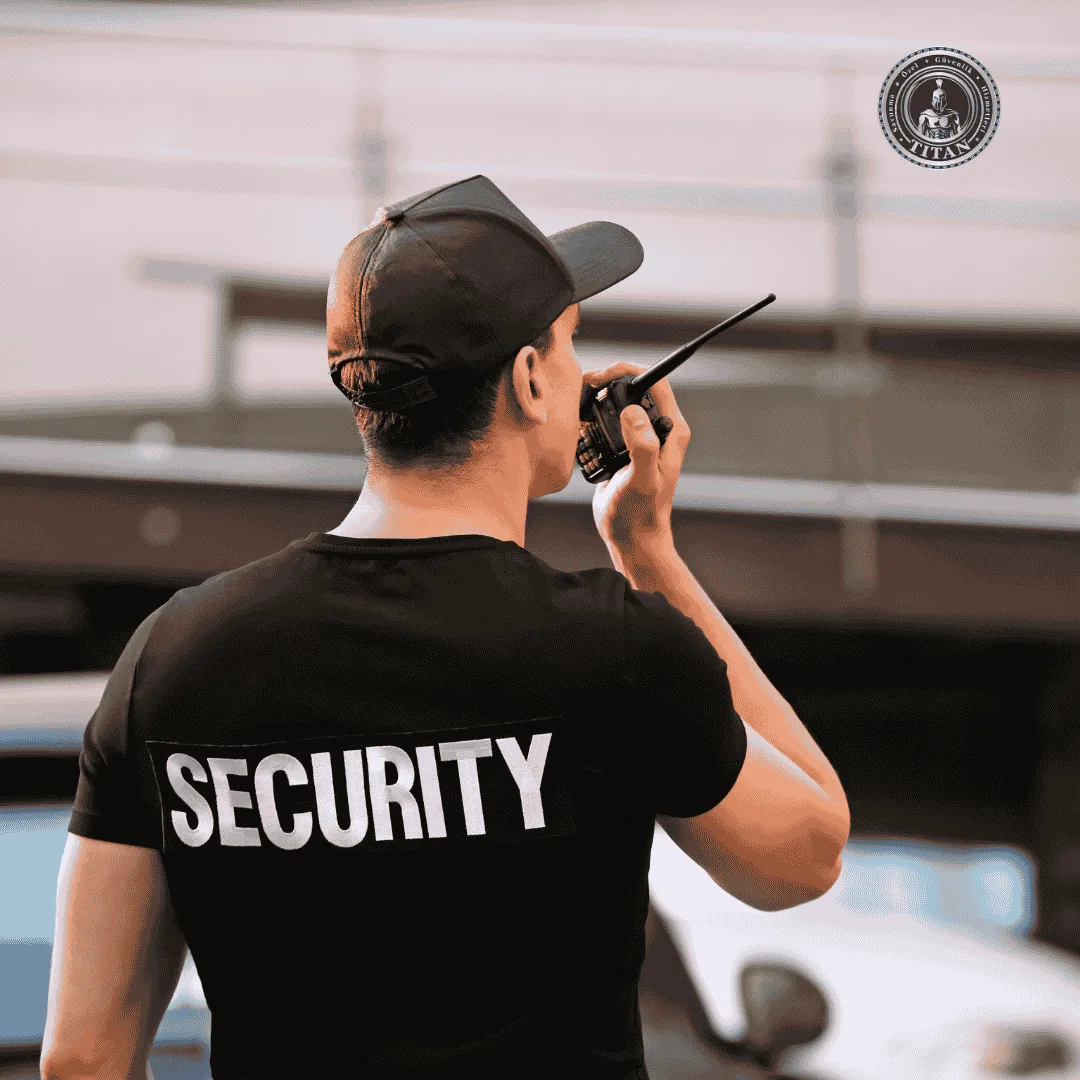
Every private security officer working in Turkey needs a private security ID card (özel güvenlik kimlik kartı) issued by the governorship (valilik). The card follows basic training, a national exam, a security background check and a health assessment, and it must be renewed every five years. Under Article 12 of Law No. 5188, an officer who is not carrying the card may not use any of the powers the law grants. For a client site, an expired or missing card is therefore a direct operational and legal risk, not a paperwork detail.
This guide explains, for foreign employers and organisations buying guarding services in Turkey, how the card is obtained, how training and exams work, when the card is renewed, and how you can check whether the officer at your gate holds a valid card.
This article is general information, not legal advice.
Who can become a private security officer?
Article 10 of the Law sets the conditions, which the Private Security Supervision Department of the General Directorate of Security (EGM) also publishes:
- Turkish citizenship. Foreign nationals cannot be employed as private security officers. A security specialist seconded from your head office can take an advisory or management role, but cannot exercise an officer's legal powers.
- Education: at least eight years of basic schooling for unarmed duty, and at least high school for armed duty.
- Age: at least 18.
- Criminal record: no prison sentence of one year or more for an intentional offence; no conviction, and no deferred announcement of a verdict, for listed offences such as theft, fraud, bribery or drug offences; and no ongoing prosecution for certain serious offences.
- Health: no physical or mental condition that would prevent the duty.
- Completed basic private security training.
- A positive security investigation.
The article has been amended several times, most recently by Law No. 7533 in 2024, so a borderline case should be checked against the current text. Under Article 14, retired police, gendarmerie and intelligence (MİT) personnel, and those who left voluntarily after at least five years of service, are exempt from basic training and the education requirement. Graduates of security-related university programmes are exempt from basic training except the firearms module.
Basic training and the exam
Article 14 of the Law defines basic training as theoretical, practical and firearms training of no less than 120 lesson hours. Under Article 33 of the Implementation Regulation, twenty hours are weapons and shooting training, which officers who will not carry firearms do not have to take; their basic training must still be at least 100 hours. Training is delivered by private training institutions licensed by the Ministry of Interior. The basic training programme published by EGM covers private security law and personal rights, security measures, first aid, fire safety, communication, crowd management and relations with the police, among others.
An exam follows (Regulation Articles 36 to 39, as amended in 2025):
- A Central Exam Commission prepares the written questions; exams are held in the provinces.
- The basic written exam has an 80-question general part and a 20-question weapons knowledge part.
- Candidates for armed duty need at least 60 points separately in each written part and in the practical shooting exam.
- Candidates for unarmed duty answer only the general part and pass with at least 60 points.
- A candidate who fails may sit up to five further consecutive exams within a year without repeating the course.
Attendance rules were rewritten in 2025: a candidate who misses more than 25 percent of any course is treated as not having completed it, and anyone who does not complete the programme within a year is removed from the course (Article 35). Successful candidates receive a Private Security Training Certificate approved by the governorship; basic and refresher certificates are valid for five years (Article 41).
Applying for the card and what it shows
Under Article 11 of the Law, the governorship carries out a security investigation and archive check, which must be completed within one month; a candidate with a positive result who has finished basic training receives a work permit. Health requirements are set by a separate 2021 regulation on the health conditions of private security officers (Regulation Article 18).
According to EGM's e-Government application guide, first-time and renewal card applications can be filed through the "Private Security ID Card Applications" service on e-Devlet, Turkey's e-Government portal. Lost, stolen or worn cards, court and health cases, changes to identity details and certain exempt first applications must go directly to the governorship's private security unit. At the end of the online process, the applicant receives a message stating the card's validity date.
The card shows the officer's name and whether the officer is armed or unarmed (Law Article 12, Regulation Article 21). It must be worn on the collar, visible to everyone, throughout the duty period and within the duty area. If a card is lost, the employer must report it immediately. An officer who lets someone else use the card faces an administrative fine and cancellation of the card, and may never work in private security again (Law Article 20).
Validity and renewal every five years
Cards are reissued every five years. Under Article 21 of the Regulation, renewal requires two things: a positive result from the security investigation and archive check, which are repeated every five years, and a refresher training certificate. The five-year period runs from the date of the basic training certificate, or from the application date for those exempt from basic training.
Refresher training is at least 60 lesson hours (Law Article 14, Regulation Article 34), and the exam at the end is a level assessment. The officer's employment contract continues during refresher training and pay and benefits cannot be withheld. Organisations with their own in-house security unit that meet the Regulation's conditions may host refresher training on site, but organisations that buy guarding from a security company cannot (Article 34).
For planning, this means refresher training and exams for officers whose cards are nearing expiry should be built into the roster well in advance. An officer with an expired card cannot exercise any powers.
Is the officer's card valid? A practical checklist
The Law gives the client a documentary right: security companies must provide the client with copies of their officers' work permit documents within one month (Law Article 5). We could not confirm a public online lookup that a client can use independently, so we recommend checking through documents:
- Ask for a list of every officer deployed at your site, with a copy of each card and its validity date.
- Compare the name on the card with the person on duty and with the shift roster.
- At an armed post, check that the card says "armed" (silahlı) and that a weapon carry/possession document exists.
- Observe on site that cards are worn visibly on the collar during duty.
- Ask for a written renewal plan for any officer whose card expires in the coming months.
- When an officer is replaced, ask for the new officer's documents before the first shift. The employer must notify the governorship within fifteen days when an officer starts or leaves (Law Articles 11 and 12).
- If a document looks doubtful, consult the private security unit of the provincial police directorate or provincial gendarmerie command.
These documents contain personal data under Turkey's data protection law (KVKK), so request only what you need and store it securely. The EGM inspection page lists ID card validity among the items inspectors check.
Common employer mistakes
- Accepting a training certificate in place of an ID card. The certificate is one step towards the card, not the card itself.
- Posting an officer with an unarmed card at an armed post.
- Positioning foreign security staff as if they were licensed officers.
- Not tracking expiry dates, and losing coverage during renewal periods.
- Giving officers non-security tasks, which Article 16 of the Law prohibits.
See how we plan scope and staffing on our manned guarding page, and how we work with foreign organisations on security partner for international companies.
About Titan Savunma
Titan Savunma is an Ankara-based private security company holding an operating licence from the Ministry of Interior under Law No. 5188. It holds ISO 9001, 14001, 45001, 22301 and 28000 certificates, works with international companies in English and Turkish, and plans services for sites in different provinces of Turkey with a single point of contact, written scope and regular reporting. Learn more on our private security company in Turkey page.
Sources and Further Reading
- 5188 sayılı Özel Güvenlik Hizmetlerine Dair Kanun, mevzuat.gov.tr
- Özel Güvenlik Hizmetlerine Dair Kanunun Uygulanmasına İlişkin Yönetmelik, mevzuat.gov.tr
- Özel Güvenlik Görevlilerinde Aranacak Şartlar, EGM Özel Güvenlik Denetleme Başkanlığı
- Temel Eğitim Programı, EGM Özel Güvenlik Denetleme Başkanlığı
- Özel Güvenlik Kimlik Kartı e-Devlet Başvuru Kılavuzu, EGM
- Denetleme Faaliyetleri, EGM Özel Güvenlik Denetleme Başkanlığı