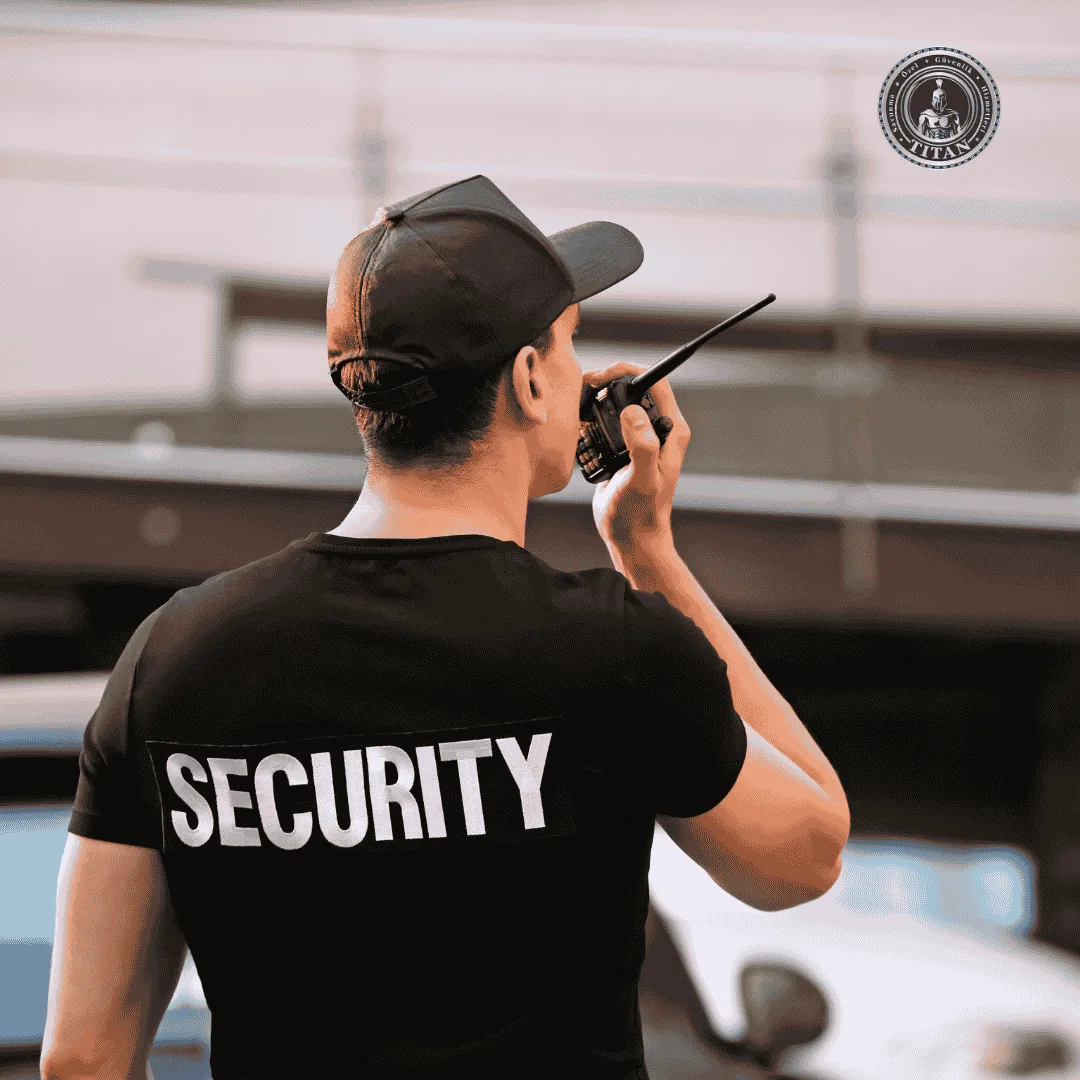
Before a site in Turkey can deploy private security officers, it needs a private security permit (özel güvenlik izni). The body that shapes that permit is the provincial private security commission (il özel güvenlik komisyonu). Under Article 3 of Law No. 5188, setting up an in-house security unit or outsourcing guarding to a licensed company depends on the commission's decision and the governor's permission. The commission decides whether to grant the permit, the maximum number of officers, weapons and equipment, and the duty area. As a rule, applications must be concluded within ten working days.
This guide explains, for foreign investors, embassies and international companies, who sits on the commission, what it decides, how an application is assessed, which deadlines the regulation sets, and which changes require going back to the commission.
This article is general information, not legal advice.
Who sits on the commission and how it works
Under Article 4 of the Law and Article 5 of the Implementation Regulation, every province has a commission. It is chaired by a deputy governor appointed by the governor (vali), who is the central government's chief representative in the province. The members are:
- a representative of the provincial police directorate,
- a representative of the provincial gendarmerie command,
- a representative of the chamber of commerce,
- a representative of the chamber of industry, or of the combined chamber of commerce and industry where there is no separate chamber of industry.
One rule surprises many foreign applicants. The representative of the person or organisation applying for the permit, or for its termination, attends that meeting as a member. The commission meets with an absolute majority of its full membership and decides by majority vote. In a tie, the side of the chair prevails, and abstention is not allowed. Decisions are signed by the chair and members.
The practical lesson is simple. Send an authorised representative who can explain the site's needs concretely and in Turkish, or with a reliable interpreter.
What the commission decides
Article 6 of the Regulation lists its duties. The main ones are:
- deciding, at the request of a person or organisation, that security will be provided by an in-house unit or by buying services from a licensed company,
- setting the maximum number of personnel and the quantity and type of weapons and equipment, and where necessary physical and technical security measures,
- defining the area where the service will be delivered and, where necessary, extending the duty area,
- taking restrictive decisions to protect public freedoms where services are delivered in public places,
- deciding requests to terminate private security arrangements,
- deciding measures following inspections, at the governor's request.
The Law and Regulation give the commission other matters too. These include permission for officers to work in civilian clothes (Law Article 13) and approval of uniforms and equipment for organisations with in-house units (Regulation Article 22). Long-barrelled weapons need a commission decision and the governor's approval (Article 26).
How an application is assessed
Under Article 8 of the Regulation, the person or organisation to be protected applies to the governorship (valilik), the governor's office. The application states:
- the subject of the security service,
- how it will be delivered, whether by an in-house unit or by a security company,
- the maximum number of personnel,
- the quantity and type of weapons and equipment needed.
The governorship reviews the request. The commission then decides on the permit, the method, the maximum headcount and the maximum number of weapons. The permit is refused, with reasons, where protection by the general police is possible or where private security would be problematic for public freedoms. The decision goes to the governor for approval, and a Private Security Permit Certificate is issued to successful applicants.
e-Devlet, Turkey's e-Government portal, lists a Private Security Permit Application service under the General Directorate of Security. The EGM private security permit page publishes a request form and a filling guide. Confirm the filing channel with the relevant governorship.
The strongest applications justify the need. They describe the site's location, activity, operating hours, access points and the physical measures already in place. Article 24 of the Regulation states that physical measures and security devices take priority when weapons are considered.
Deadlines in the regulation
| Step | Time limit | Legal basis |
|---|---|---|
| Conclusion of a permit application | Within ten working days at the latest | Regulation Art. 8 |
| Temporary permit, for example for an event | Apply at least 48 hours before; concluded at least 24 hours before | Regulation Art. 9 |
| Security company files the service contract with the governorship | By close of business on the day service starts | Law Art. 5, Regulation Art. 10 |
| Personnel list and liability insurance policies submitted | Within fifteen days of officers starting | Regulation Arts. 8 and 10 |
| Officer start and leave notifications | Within fifteen days | Law Arts. 11 and 12, Regulation Art. 20 |
| Protection and security plan | Prepared within thirty days of service start and kept ready for inspection | Regulation Art. 12 |
| Request to terminate the arrangement | At least one month in advance | Law Art. 3, Regulation Art. 10 |
For temporary or urgent cases such as meetings, concerts or cash transport, the governorship grants the permit without a commission decision, and the security company delivering the service applies (Law Article 3, Regulation Article 9). In emergencies, the governor may waive these time limits.
Which changes go back to the commission?
The Regulation does not define a separate "amendment" procedure. However, the maximum headcount, the number and type of weapons and the duty area are all set by the commission decision. Going beyond them therefore requires a new decision. In practice, apply to the governorship in these cases:
- More officers: if you will exceed the approved maximum. On request, a permitted organisation may also be allowed additional staff of up to 10 percent of its province-wide approved headcount, to cover leave, sickness and temporary needs (Article 8).
- Moving from unarmed to armed, or adding weapons: weapon quantity and type depend on the commission decision.
- A larger duty area: under Article 9 of the Law, the commission may extend the duty area where necessary. A new building, car park or adjoining plot should be assessed this way.
- A new address: the commission assesses each site on its own application, so a separate site needs its own permit file.
- Civilian clothing: requires commission permission (Law Article 13).
If you change security provider, the new company must file its own service contract with the governorship on the day it starts, and personnel changes must be notified within fifteen days.
Consequences of operating without a permit
Under Article 19/a of the Law, people or organisation managers who employ private security officers without a security permit face three months to one year of imprisonment or a judicial fine. Administrative fines apply to companies that do not file service contracts on time and to employers who miss start or leave notifications (Article 20). Under Article 6, district and provincial governors may inspect measures at permitted sites and order additional measures if they find them insufficient. Under Article 45 of the Regulation, deficiencies found in an inspection must be given at least seven days to be remedied.
Checklist for foreign investors
- Build the permit application and the follow-up notifications into the site opening schedule.
- Prepare the justification, a summary of your risk assessment and the physical measures in Turkish.
- Appoint an authorised, well-briefed representative for the commission meeting.
- Carry the limits of the decision into the service contract and the post instructions in writing.
- Assess expansion plans early: a new building, extra shifts or an armed post may affect the decision.
- Ask your provider for proof of contract filing, personnel lists and insurance policies.
See how we manage permits for sites across different provinces on our private security company in Turkey page. For solar plants specifically, read our guide to the solar plant private security permit in Turkey.
About Titan Savunma
Titan Savunma is an Ankara-based private security company holding an operating licence from the Ministry of Interior under Law No. 5188. It holds ISO 9001, 14001, 45001, 22301 and 28000 certificates, works with international companies in English and Turkish, and plans services for sites in different provinces of Turkey with a single point of contact, written scope and regular reporting. For a needs analysis before your permit application, contact us.
Sources and Further Reading
- 5188 sayılı Özel Güvenlik Hizmetlerine Dair Kanun, mevzuat.gov.tr
- Özel Güvenlik Hizmetlerine Dair Kanunun Uygulanmasına İlişkin Yönetmelik, mevzuat.gov.tr
- Özel Güvenlik İzni, EGM Özel Güvenlik Denetleme Başkanlığı
- Özel Güvenlik İzni Başvurusu, e-Devlet Kapısı
- Denetleme Faaliyetleri, EGM Özel Güvenlik Denetleme Başkanlığı