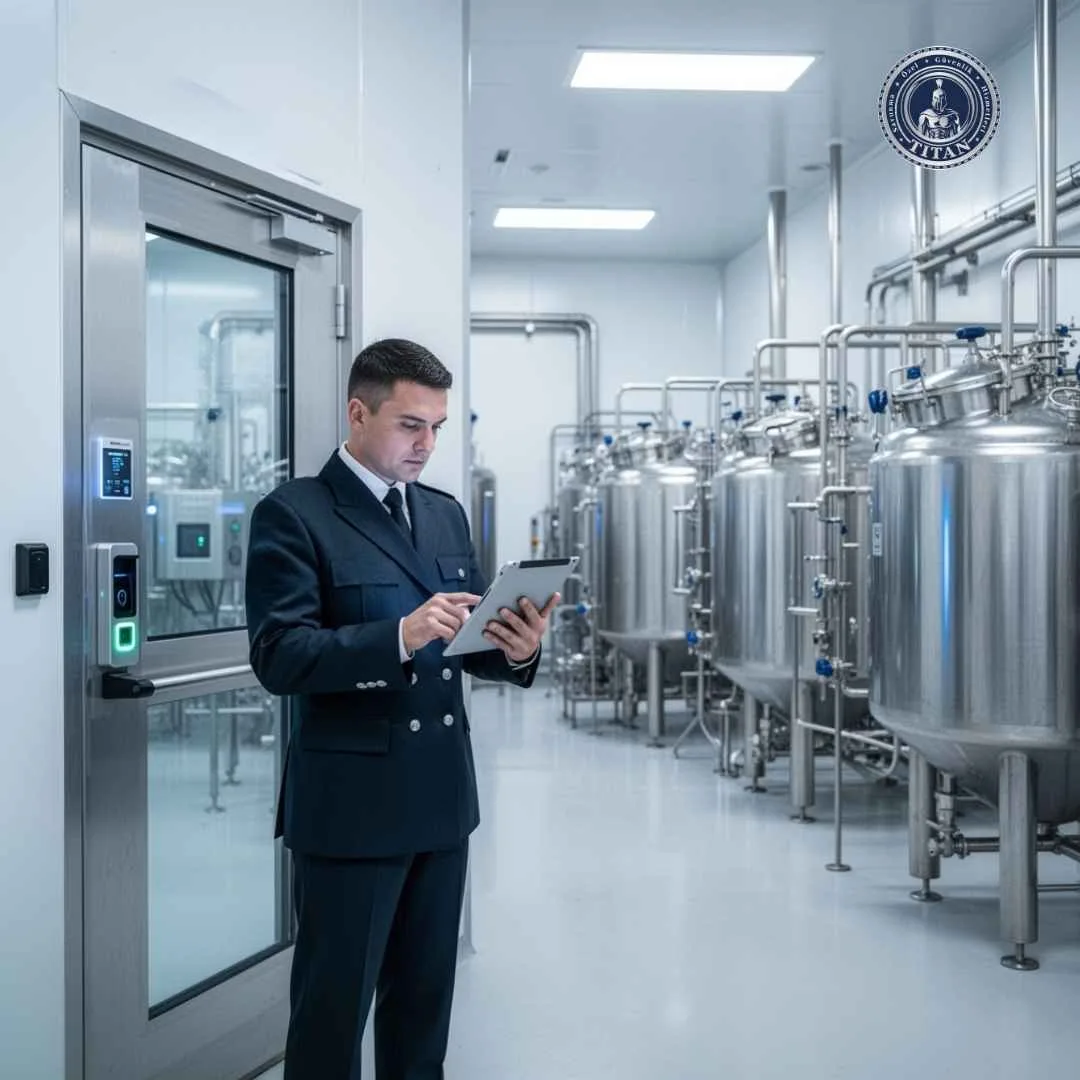
If you supply parts, tooling or testing services to German carmakers (OEMs) from Bursa, Kocaeli, Sakarya or İzmir, your customer has probably asked for a TISAX label. When that label is "Proto parts" or "Proto vehicles", the auditor will look beyond your information security documents: at your gate, fence, prototype room keys and visitor log. This article explains what the guarding contractor contributes to the physical side of prototype protection, and which records should be ready on audit day.
This article is general information, not legal advice. TISAX is not a legal requirement in Turkey. It is an industry assessment demanded by contract, so what binds you are your customer's written requirements and the current ENX and VDA documents.
TISAX and the prototype protection objectives in brief
TISAX is an assessment and result-sharing mechanism operated by the ENX Association and based on the VDA ISA (Information Security Assessment) catalogue. ENX's TISAX Participant Handbook (version 2.8) explains that the ISA contains three criteria catalogues: information security, prototype protection and data protection. Prototype protection has four assessment objectives:
- Proto parts: for companies that manufacture, store or use customer-provided parts and components classified as requiring protection at their own locations. Physical security, security of the surrounding area, organisational requirements and prototype handling rules are assessed. Assessment level: AL 3.
- Proto vehicles: the same for vehicles, including protected garages and workshop areas. AL 3; a successful assessment also brings the parts label automatically.
- Test vehicles: for test drives on public roads or test tracks. According to the handbook, AL 2 since 1 January 2025.
- Proto events: for prototypes used at events, presentations and film or photo shoots; also AL 2 since 1 January 2025.
The difference matters on site. At AL 3 the auditor thoroughly verifies evidence, interviews people in person and carries out an on-site inspection. At AL 2 evidence is checked for plausibility and on-site inspection happens only on request. Results are valid for three years, after which the process is repeated.
Who decides the protection need?
The supplier does not classify the prototype. Under the VDA's minimum requirements for prototype protection, the OEM's contracting department is responsible for classification, and the minimum requirements for the "high" and "very high" protection classes are applied through the VDA ISA. In practice, the contract annex or project kick-off letter should state which parts are protected, for how long and under which rules. Your security plan should be derived from that written classification. Treating "everything as secret" exhausts operations and cannot be evidenced at audit.
Physical topics the auditor looks at
The prototype protection module of ISA 6 is detailed control by control, and its full text is obtained through ENX and the VDA. Public guidance and the handbook's objective descriptions highlight these physical themes:
- Perimeter and building shell: a fence or wall that makes unauthorised entry difficult; doors and windows that cannot be opened with common tools.
- View protection: film, screens and separate halls so prototypes cannot be seen from outside, neighbouring buildings or shared areas.
- Access control: a risk-based mix of security zones, card access, personal checks and key management, with regular reviews of authorisations.
- Intrusion detection and alarm: out-of-hours monitoring of prototype areas and a clear route for who receives the alarm.
- Visitor management: registration, a confidentiality declaration and escort. Regular suppliers and service technicians skipping these steps is a common weakness in practice.
- Photography and recording devices: rules for phones and cameras in security zones, and for storing and deleting approved images.
What the guarding contractor contributes, and what it does not
Prototype protection is an information security and project management topic; a guard force cannot earn the label on its own. But the security team is usually the one that applies physical controls the same way every day and records them. Typical contributions:
- Zone-based access: separate authorisation lists for the site, production and the prototype room, plus a record of who admitted anyone not on the list, and on whose approval.
- Visitors and escort: identity check, confirming the confidentiality declaration was signed, the escort's name in the log, and badge return at the end of the visit.
- Camera and phone rule: for example, lens stickers applied at entry and checked for tampering at exit. The exact method follows the customer's requirement and is set in written post orders.
- Keys and cards: prototype area keys issued against signature; lost cards reported the same day.
- Out-of-hours alarm response: who is called, who may enter the area, and how the incident report is written.
- Deliveries and dispatch: admitting vehicles carrying prototypes according to customer rules, and noting if covers or camouflage arrive damaged.
In Turkey, the powers of private security officers are limited by Article 7 of Law No. 5188 on Private Security Services: for instance, passing people entering a protected area through a walk-through detector, searching them with a hand detector, and screening their belongings by X-ray or similar systems. TISAX post orders should not ask for more than that. Rules such as leaving phones or accepting lens stickers should be framed as conditions of entry, communicated to visitors in advance. Visitor logs and CCTV footage are personal data under Turkey's data protection law (KVKK), so privacy notices and retention periods belong in the plan too.
Records to have ready for the audit
At AL 3 the auditor wants to see that procedures are lived. On the security side, useful evidence includes:
- A site plan showing security zones, and an authorisation list per zone with its last review date.
- Visitor records, signed confidentiality declarations and escort details.
- Key and card issue and return logs, and lost card reports.
- Alarm event logs, response reports and records of periodic alarm tests.
- Attendance lists for prototype protection training given to the security team. Public guidance stresses training at project start and at least annually, with documented attendance; missing attendance records are a frequent finding.
- Incident and deviation reports: attempted photography, unescorted visitors, doors left open.
The move to ISA2027: what to put in the calendar
In its announcement of 1 July 2026, ENX confirmed that VDA ISA2027 has been published and will apply to all TISAX assessments ordered from 1 January 2027; existing labels remain valid for their full validity period. According to that announcement and TÜV NORD's summary, the five control groups of the prototype protection module are consolidated into two domains: organisational requirements, and physical and environmental security. New controls cover traceability of protected vehicles, components and parts across their lifecycle, and their disposal, recycling or return according to customer requirements. For security teams, that may mean tighter documentation of gate records, store movements and the chain of custody for scrapped prototype parts. Confirm the new label structure and levels from ENX's current documents.
Common mistakes
- Protecting the prototype room with card access only, while cleaning and maintenance crews hold open-ended cards.
- Escort and confidentiality fields left blank in the visitor log.
- No written phone rule, so each shift applies it differently.
- Night alarms ringing at the gatehouse with no defined call list or entry authority.
- A new guarding contractor's team starting work before receiving prototype protection training.
For photography during foreign delegation visits, see our factory visit and photography bulletin; for disposal of prototype parts, our disposal custody bulletin. Our factory security page covers the wider picture.
About Titan Savunma
Titan Savunma is an Ankara-based private security company licensed by the Ministry of Interior under Law No. 5188. It holds ISO 9001, 14001, 45001, 22301 and 28000 certificates, works with international companies in English and Turkish, and plans services for sites in different provinces of Turkey with a single point of contact, a written scope and regular reporting. See our private security services in Turkey page for more.
Sources and Further Reading
- TISAX Participant Handbook 2.8, ENX Association
- 10 Years of TISAX - VDA ISA2027 Released, ENX Association
- Minimum requirements for prototype protection in the German automotive industry, VDA
- TISAX and VDA ISA2027: what has changed, TÜV NORD
- TISAX Prototypenschutz: Ein Leitfaden für Lieferanten, Dr. Datenschutz
- 5188 sayılı Özel Güvenlik Hizmetlerine Dair Kanun, mevzuat.gov.tr