For Diyarbakır’s Workshops, Granaries and Campuses · Turkey

Private Security Company in Diyarbakır

Titan Savunma serves a wide range of sites in Diyarbakır, from garment factories and grain stores to housing developments, hospitals and university grounds; it is an Ankara-based private security company holding an operating licence from the Ministry of the Interior under Law No. 5188. When comparing security companies in Diyarbakır, the most useful question is who will look after your site every day once the contract is signed. Our answer is the Diyarbakır City Manager, who comes to the survey, selects and directs the officers, and takes responsibility for checking the posts and for keeping in touch with you. The City Manager does not carry that load alone: our regional directorate for Southeastern Anatolia, which sits in Gaziantep, and, at the top of the structure, the Ankara General Directorate contribute to the plans, inspect sites unannounced and define the training content and the shape of our reports. The arrangement we build for Diyarbakır starts from the province’s own figures: a workforce whose insured headcount has grown by more than sixty per cent in nine years, garment manufacturing two and a half times as concentrated as the national average, fields producing over a quarter of Turkey’s red lentils, a strong public-sector presence in employment, and summers in which the average July high goes above 38 degrees.

Private Security Company in Diyarbakır

Service Scope

Four Kinds of Site We Plan Security for in Diyarbakır

According to the 2025 yearbook of the Social Security Institution (SGK), 208,020 compulsorily insured employees work at 21,734 workplaces in Diyarbakır. The largest single sector is building construction, with 28,724 insured staff, followed by retail trade (17,037) and garment manufacturing (15,622). Manufacturing accounts for 18.0% of employment, below the 23.8% recorded for Turkey, so reading the province’s security needs through its factories alone would leave much out. Building sites, the stores where farm produce is gathered, and the large public health and education facilities matter just as much. We organise our service around these four groups.

Factory and Industrial Zone Security in Diyarbakır

At garment and textile plants we keep shift changeovers orderly when hundreds of workers pass through the gates within a short window, watch over fabric and boxed stock outside working hours, and match vehicle, carton and delivery-note details in a single record at the dispatch gate.

Construction Site Security in Diyarbakır

On housing and public building projects we bring the materials yard, plant left overnight, fuel tanks and subcontractor access under a logged routine, and reposition posts as the structure rises and the site spreads.

Grain, Cotton and Farm Store Security in Diyarbakır

During the harvest months we handle lengthening queues at the weighbridge, granary and silo doors, fire watch over cotton bale stocks and night access to livestock fattening units, with a team whose size moves with the season’s workload.

Hospital and Campus Security in Diyarbakır

At hospitals and on large grounds such as Dicle University we work with unarmed officers, as the Law provides, who know how to settle things by talking; the emergency entrance, visiting hours, car parks and pedestrian flow are each planned as separate posts.

A Planned Start

How the Service Is Planned

Before drawing up a proposal for a site in Diyarbakır, we ask you for three things: in which months of the year your workload and vehicle traffic rise; which gates, stores and areas stand empty once the working day ends; and how often, and to whom, you want inspection results delivered.

  1. Two Surveys: at the Busiest Hour and After Dark

    Our Diyarbakır City Manager walks the site twice. The first round is timed for the busiest hour at the gates: the shift change at a factory, the harvest-time weighbridge queue at a store, visiting time at a hospital. The second comes after dark, when the fence line, lighting, blind corners and loading ramps are noted.

  2. The File for the Governorship of Diyarbakır

    The permit is requested from the Governorship of Diyarbakır in the name of the organisation buying the service and is put to the provincial private security commission for a decision. Which documents are needed is worked out with you by our City Manager, and nothing is submitted until the file has been checked as complete.

  3. Choosing the Officers and Writing Post Orders

    Our City Manager chooses who joins the team and sets down, for every post, what is to be done and who is to be told. The rota follows the seasons: duty spells shorten in the midday heat of summer, and an extra post opens at the store gate during harvest. If the site calls for fifteen officers or more, we also agree at this point who will serve as the security supervisor the Law calls for.

  4. Layered Inspection and a Monthly Report

    Day-to-day checking of the posts sits with our City Manager. That checking is itself tested by inspectors from our Regional Directorate in Gaziantep and our Ankara General Directorate, and some of their visits are unannounced. At the end of the month you receive a report showing on one page the gaps found, those closed and those still being tracked.

Your Sector’s Priorities

Large Employers Beside Small Businesses: Hands-On Management in Diyarbakır

Diyarbakır’s workplaces form a picture with two ends. According to SGK data for 2025, about 83% of workplaces (18,045 of them) employ nine people or fewer, yet the 712 workplaces with 50 or more staff employ 48.1% of compulsorily insured workers. The 10 workplaces with a thousand or more staff alone account for 13,405 insured employees. In the same province, then, both large organisations with many gates and wide grounds and small sites with a single entrance are looking for security. Rather than forcing one template on both, sizing each site on its own terms calls for a manager who knows the premises one by one. In Diyarbakır that manager is our City Manager. Our Southeastern Anatolia Regional Directorate in Gaziantep and our Ankara General Directorate review those plans together, and tie local management to institutional assurance through unannounced inspection, shared training content and a uniform report format.

Law Enforcement Background

The professional experience and security training of retired law enforcement personnel within our team contribute to our approach.

  • A Team Sized to the Harvest Calendar

    When grain and cotton harvests bring more traffic to the weighbridge and store gate, extra posts open in advance; once the season closes, the team returns to its usual size.

  • Outdoor Posts Protected from the Heat

    In a province where the average July high is 38.5 °C, outdoor posts get shade and drinking water, and duty spells are shortened around midday.

  • Notices to the Governorship of Diyarbakır on Time

    Our City Manager tracks that the contract copy and every joiner and leaver in the team reach the Governorship of Diyarbakır before the legal deadline.

For International Companies

For international brands in Turkey, we offer a single point of contact, a written scope and regular reporting. Work with us as your security partner

Expert View and Recommendations

What to weigh when choosing a security firm in Diyarbakır: industry, farming and the public sector

An organisation looking for security in Diyarbakır meets a province with very different needs. How do you keep a shift gate flowing in a garment industry with more than fifteen thousand insured workers? How does the area to be protected move about on a building site as the structure rises? How are granaries and weighbridges managed when the harvest is packed into a few weeks? What should hospital and campus security pay attention to in a province where public employment runs above the national average? And what does an open-air post need in a province whose records run from 46 degrees in summer to below minus 24 in winter? Below, six sections work through these questions one at a time, using figures from SGK, the meteorological service, the Ministry of Agriculture and Forestry and a dated ministerial statement, staying inside what Law No. 5188 permits.

Research we draw on (5)
  1. 5188 sayılı Özel Güvenlik Hizmetlerine Dair Kanun — Mevzuat Bilgi Sistemi
  2. Özel Güvenlik Hizmetlerine Dair Kanunun Uygulanmasına İlişkin Yönetmelik (Mevzuat Bilgi Sistemi, güncel metin)
  3. SGK İstatistik Yıllığı 2025
  4. Meteoroloji Genel Müdürlüğü — Diyarbakır il istatistikleri
  5. Tarım ve Orman Bakanlığı — Diyarbakır Tarımsal Yatırım Rehberi 2025

Garment manufacturing and organised industrial zones: shift gates and dispatch

According to SGK data for 2025, 15,622 insured employees work at 301 workplaces in garment manufacturing in Diyarbakır. The sector’s weight in local employment is about 2.5 times the national average, putting the province sixth in the country for jobs in this sector; on our calculation, about 42% of the province’s manufacturing employment is in this sector. According to the reply given by the Minister of Industry and Technology to a parliamentary question, as reported by Ekonomi Gazetesi in September 2026, 633 of the 1,045 industrial plots in the province’s 4 organised industrial zones had been allocated, overall occupancy had passed 60%, and employment in the zones had risen from about 7,000 to 29,000. Among them is a dedicated Textile Specialised and Mixed Industrial Zone.

In an industrial area filling up this quickly, the security plan covers these headings:

  • Shift gate: Staff, visitors and contractors entering through separate lanes when shuttle buses empty within the same few minutes, and the entry list regularly checked against the business’s HR records
  • Women officers: In a province where 28.2% of compulsorily insured employees are women, a woman officer on shift at workshops with many women employees
  • Fabric and finished goods: Out-of-hours store doors tied to a log of seals and key handovers
  • Dispatch: Carton count, vehicle plate and delivery-note number written on one line, with samples and seconds leaving on a separate document
  • New plots: Frequent checks of fencing and lighting along edges facing neighbouring plots still under construction

Which people are checked, and in which situations, is for the business to set; the officer enforces those rules only within the powers in Article 7 of the Law, and reports breaches.

Building sites: more than a fifth of employment at temporary workplaces

In the 2025 SGK yearbook, Diyarbakır’s 1,837 temporary workplaces account for 46,309 insured employees, or 22.3% of compulsorily insured staff in the province. Building construction, with 1,331 workplaces and 28,724 insured employees, is the province’s largest sector, and a further 5,911 people work at 233 workplaces in civil engineering. At this scale, construction site security makes up a significant share of local demand for security services.

The building blocks of the routine we set up on sites:

  • One gate: Vehicle access gathered at a single point, with materials such as steel, cable and joinery logged against delivery notes on arrival
  • Night routine: When work stops, plant is parked together in an agreed spot, and fuel tanks and generators are included on the patrol route
  • Value moving upwards: As the structure rises, material stores on enclosed floors tied to a lock and key log
  • Subcontractors: An entry list updated every morning, and a check at close of work that nobody remains on site
  • Perimeter: A weekly round of the panel fencing and lighting

Occupational health and safety measures, scaffold inspection and materials counts are the contractor’s responsibility; the security team watches, records and reports.

Lentils, cotton and wheat: granaries, weighbridges and fattening units at harvest

According to the Ministry of Agriculture and Forestry’s Diyarbakır Agricultural Investment Guide 2025 (TÜİK 2024 data), the province supplies 27.2% of Turkey’s red lentil output (110,252 tonnes) and 17.3% of its seed cotton (388,470 tonnes). Wheat production stands at 1,145,006 tonnes, and barley and grain maize each exceed 230,000 tonnes. The same guide gives the Diyarbakır livestock fattening zone (Besi OTB) a capacity of 15,000 cattle and employment of about 1,800 people.

At sites where farm produce is gathered, risk follows the calendar:

  • Harvest weeks: Vehicles waiting at the weighbridge queued without spilling onto the road, and each one logged by plate and time
  • Granary and silo: Doors kept sealed out of hours, and key handovers written in the log
  • Cotton bales: Watching for cigarettes and sources of sparks in open stock areas, and keeping the way to fire cabinets clear
  • Fattening units: Night vehicle and visitor access logged, and door checks on feed and medicine stores
  • End of season: Team numbers brought back to the usual level

Receiving produce, weighing, sampling and animal care are the business’s work and are not handed to the security team.

A public-sector-heavy workforce: hospitals, the university and public buildings

According to SGK data for 2025, 18.0% of Diyarbakır’s compulsorily insured employees under scheme 4/1-a work at public workplaces, against 12.5% in Turkey. Adding civil servants to the count, we estimate that about 40.8% of the province’s dependent employees work in the public sector (Turkey: 28.1%). There are 12,831 insured employees in human health services and 13,578 in education, and the weight of public administration in local employment is about 1.7 times the national average.

This means hospitals, Dicle University and public buildings stand out among those buying security. The points that matter most at these sites:

  • Unarmed teams: Only unarmed officers at education and health facilities, as Article 8 of Law No. 5188 requires
  • Emergency departments: A separate post that speaks calmly with waiting relatives, with nothing ever left blocking the ambulance route
  • Campus: Vehicle and pedestrian entrances kept apart, with temporary extra posts at enrolment and exam times
  • Public buildings: Reception, directing visitors and the after-hours closing round set down in written orders
  • Matching the specification: Posts, duty hours and report content aligned item by item with the tender specification

At public bodies the specification defines the scope of the service; during the survey we report in writing any gaps between what it says and what we see on the ground.

A climate of two extremes and emergency readiness: open-air duty and evacuation steps

The Turkish State Meteorological Service’s readings for Diyarbakır, covering 1929 to 2025, describe a climate that is harsh at both ends. The July mean temperature is 31.0 °C and the average July high 38.5 °C, while the highest value on record, 46.2 °C, was measured in July. The January mean is 1.8 °C, the lowest recorded temperature falls to −24.2 °C, and the records include snow depths of up to 65 centimetres.

Points we add to the orders for outdoor posts:

  • July and August: A booth that blocks the sun and lets air through, cool water, more frequent relief during the hottest hours, and foot patrols shifted to morning and evening
  • Heatstroke: The person who takes over the post and the first aid steps decided in advance, should symptoms appear
  • Winter: Heating in the booth, and each incoming shift checking paths for ice and barrier arms for freezing
  • Dry grass: Enforcing the ban on smoking and fires in open yards in late summer

The officers’ duties in an emergency such as a fire, a flood or a long power cut are also agreed on paper before they are ever needed. The core steps once the alarm is raised are propping powered gates and barriers open, walking staff out to the muster area, helping whoever does the headcount, and keeping the access road clear for emergency vehicles. The business owns the plan; we set out each officer’s role post by post and rehearse it in the business’s drills.

Permits and notices with the Governorship of Diyarbakır; local management and institutional oversight

An organisation in Diyarbakır that wants to hand its security to an outside company applies for the permit itself, to the Governorship of Diyarbakır; under Article 3 of Law No. 5188 the request comes from the person or organisation that will receive the service. The request is assessed by the provincial private security commission and finalised on the governor’s approval. As the governorship’s list of required documents can change over time, we suggest confirming the latest version before you start.

From the moment the service begins, we track the deadlines owed to the governorship:

  • Contract: A signed copy goes to the governorship on the first day of service, before working hours end (Art. 5 of the Law and Art. 10 of the Regulation)
  • Team changes: Each joiner, leaver or transfer to another site is reported within fifteen days (Law, Arts. 11–12; Regulation, Art. 8)
  • Security supervisor: Once fifteen or more officers serve on one site, a security supervisor holding at least an associate degree must be appointed (Art. 5)

These deadlines, and the site itself, are in the hands of our Diyarbakır City Manager. When something goes wrong nobody has to wait for a decision from elsewhere, since the survey, the choice of team and the daily checks all rest with that same person. Two higher tiers stand behind this local management: the regional directorate in Gaziantep that covers Southeastern Anatolia, and above it the Ankara General Directorate. Together they examine the City Manager’s plans, send inspectors unannounced, and decide how training and reporting should be done.

Where we can, we recruit people who live in Diyarbakır. In SGK’s 2025 figures, investigation and security activities (NACE 80) account for 206 workplaces and 4,360 insured employees in Diyarbakır, or 2.10% of compulsorily insured staff in the province, well above the 1.51% share for Turkey. The province ranks tenth nationally in this sector. Neither in-house security teams nor employees of companies registered outside Diyarbakır appear in this count. Our proposal states how often routine checks and unannounced visits will happen, and the findings reach you in a monthly report.

Before We Speak

Frequently Asked Questions

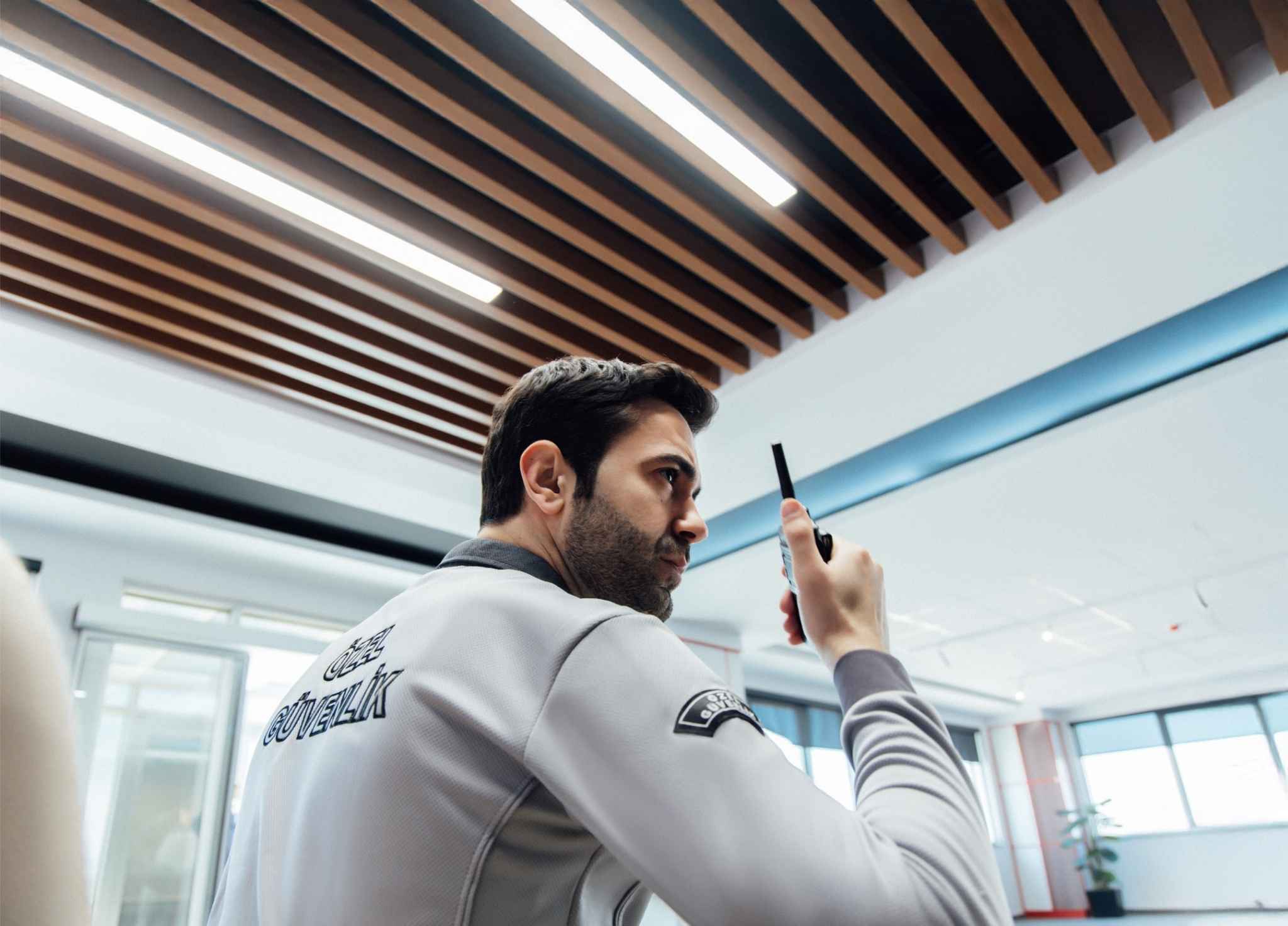
A Titan Savunma officer in a private security uniform communicating by radio inside a building.
How do you choose between security firms in Diyarbakır?

First confirm that the firm holds an operating licence from the Ministry of the Interior under Law No. 5188. Then make sure bids can be compared on paper: each should include a list of posts, a weekly rota, who stands in for an absent officer and how, who carries out inspections, and a sample report page. In Diyarbakır, add two more questions: how does the bid deal with seasonal swings such as harvest or summer heat, and who with the authority to decide comes to the site when something goes wrong? Our proposal answers each of these headings for your particular premises.

Who do we contact when something goes wrong at our site in Diyarbakır?

Our Diyarbakır City Manager. Having surveyed your site, put the team together and visited the posts daily, the City Manager knows your premises first-hand, so a change of officer, a request for an extra post or the follow-up to an incident goes straight there. Above the City Manager sit two tiers, the regional directorate in Gaziantep and the Ankara General Directorate, which go over the plan, audit the site separately and decide how training and reports are measured.

What does getting a private security permit in Diyarbakır involve?

The permit is requested not by the security company but by the organisation or business receiving the service, in its own name (Law 5188, Art. 3). The application goes before Diyarbakır’s provincial private security commission, and the decision takes effect on the governor’s approval; the Regulation gives the commission ten working days for this. A public body and a private factory follow the same procedure, though on the public side the tender specification also applies. Our City Manager prepares the required documents with you.

How can I apply to work as a private security officer in Diyarbakır?

We receive applications through our Careers page. Teams in Diyarbakır are put together by our City Manager, who assesses candidates against the working hours and needs of the site they would serve. Under Article 10 of the Law a candidate must, among other conditions, hold Turkish citizenship, be at least eighteen and have passed basic training in private security. Before starting, a work permit and a private security ID card must have been issued by the Governorship of Diyarbakır (Arts. 11–12).

Do we need extra officers at our grain or cotton store during harvest?

Usually yes, though the survey settles the number. According to the Ministry of Agriculture and Forestry’s 2025 investment guide (TÜİK 2024 data), Diyarbakır supplies 27.2% of Turkey’s red lentil output and 17.3% of its seed cotton, and produces 1,145,006 tonnes of wheat. That volume is squeezed into a few weeks at harvest. For that period we recommend: marshalling the vehicle queue at the weighbridge, logging every vehicle in and out by plate and time, watching for smoking and naked flames around cotton bales and sacked stock, and night patrols past the granary doors. Weighing, sampling and stocktaking belong to the business; Article 16 of the Law does not allow officers to be given work other than protection.

How is a security plan put together for our building site?

The 2025 SGK yearbook shows 46,309 insured employees at 1,837 temporary workplaces in Diyarbakır, or 22.3% of compulsorily insured staff in the province. Building construction is also the largest sector, with 28,724 insured workers. On a building site the fixed backbone of the plan is a single vehicle gate, delivery-note records for every material received and a current list of subcontractor staff allowed on site. What changes is the site itself: as the structure rises, valuable materials move to upper floors and closed stores, plant left overnight is parked in new places, and the perimeter facing neighbouring plots shifts. We reposition posts every month to match. Occupational health and safety supervision is a separate duty and stays with the contractor.

How do you protect officers on outdoor posts in the summer heat?

In the Turkish State Meteorological Service’s Diyarbakır readings for 1929–2025, the July mean is 31.0 °C and the average July high 38.5 °C, with a record high of 46.2 °C. In these conditions, protecting the officer at an outdoor post matters as much as protecting the site. We write into the orders a shaded, ventilated booth, enough cold water, shorter duty spells between midday and late afternoon, and patrols moved to early morning and evening. Who takes over the post if signs of heatstroke appear is also settled in advance. Winters in the same province are harsh too, with a recorded low of −24.2 °C, so the winter orders add checks for icy walkways and frozen gate mechanisms.

Is it possible to have armed guards on a hospital site or at the university?

No. Under Article 8 of Law No. 5188, guards at schools, universities and health facilities carry no weapons, which is why every team we place at a Diyarbakır hospital, school or campus such as Dicle University is unarmed. SGK data for 2025 show 12,831 insured employees in human health services and 13,578 in education in the province. Effective security at these sites runs through a well-designed flow: a separate post at the emergency department that calms tension, the ambulance entrance kept clear at all times, an orderly waiting area at visiting hours, and vehicles and pedestrians separated at campus entrances. Patient admission and student discipline fall outside the security role, and we set that distinction down in the orders together with the institution.

Ask for a Site Visit and a Written Quote in Diyarbakır

Tell us through the form what kind of premises you have, which district they are in, how many gates there are, your working hours and your busiest months. Our Diyarbakır City Manager will ring you to fix a date for the visit; after it, you receive in writing a duty plan and a price drawn up for your premises.

Request a Security Proposal

Contact

Request a Security Proposal for Your Organisation

Tell us your facility type, location and general requirements. Together, we can define a service scope that suits your organisation.

Tell Us What You Need

Fields marked * are required.

What Happens Next

  1. Initial DiscussionWe respond within 15 minutes and clarify your requirements and facility details together.
  2. Service ScopeWe assess staffing needs and the working arrangements.
  3. ProposalWe prepare our proposal for the agreed service scope.

General Directorates

Ankara · Çankaya
İstanbul · Levent

Nine regional directorates · 81 provinces

Looking for a role? Visit our careers page