For Siirt’s Public Campuses, Pistachio Stores and Project Sites · Turkey

Private Security Company in Siirt

In Siirt, Titan Savunma works as a private security company under the Interior Ministry permit that Law No. 5188 makes compulsory for the trade. Our clients here include government buildings, pistachio stores and processing plants, building and energy project sites, hospitals and the university. For an organisation choosing among security companies in Siirt, we suggest getting one answer before looking at the price: who will turn the post list in the tender specification into an actual team on the ground, and who makes the call on the day an officer fails to turn up or the store is filled to the doors after harvest? With us, that person is our Siirt City Manager. The City Manager walks your premises, picks and leads the team, and keeps up the daily checks and the working contact with your staff. The City Manager is backed by our Southeast Anatolia Regional Directorate, based in Gaziantep, which in turn answers to the Ankara General Directorate. These two layers help shape each plan, carry out surprise inspections, and fix the syllabus officers train on and the format every report follows. Every plan we write for Siirt grows out of the province’s own picture: public workplaces employing more than a third of compulsorily insured staff, pistachio orchards whose area has more than doubled since 2015, building sites fed by energy and mining investment, a dry summer in which the average July high passes 37 °C, and a winter whose rain falls mostly between November and April.

Private Security Company in Siirt

Service Scope

Where Our Teams Work in Siirt

The 2025 social security yearbook sketches Siirt’s economy in a few strong lines. Public workplaces employ 35.7% of compulsorily insured staff, against 12.5% across Turkey, and by our calculation from the yearbook that puts Siirt eighth of the 81 provinces. Public administration on its own accounts for 15.1% of insured jobs. Some 23.8% of insured staff are registered at temporary workplaces, which in practice means building sites. Metal ore mining employs 803 insured people, a concentration 12.4 times the national level; mines and dams, however, run under their own operators and public rules, and guarding those installations is outside the service described here. Turning to agriculture, the TEPGE report built on TÜİK data ranks Siirt third in Turkey for pistachio orchard area. Our duty plans are organised under four headings to match.

Public Building and Campus Security in Siirt

In public service buildings, campuses and Siirt University’s faculty buildings we work to a duty list that answers every post named in the tender specification, with after-hours door and window rounds and, as the Law requires on educational premises, unarmed officers.

Pistachio Store and Processing Plant Security in Siirt

Where pistachio stock, in shell or processed, builds up quickly after harvest, we match each incoming lorry to its weighing record, keep the packing area and dispatch ramp as separate posts and check store doors overnight on logged rounds.

Construction and Contractor Yard Security in Siirt

At the sites, material stores and vehicle parks of contractors working on housing, road and energy projects we guard steel, cable and fuel, and keep separate entry records for subcontractors and suppliers.

Hospital and Healthcare Security in Siirt

At healthcare sites we manage the emergency entrance, the ambulance route and visitor flow with unarmed officers chosen for calm communication, on a rota shaped around outpatient peaks.

A Planned Start

How the Service Is Planned

Before we put a price on a public campus, pistachio store or building site in Siirt, we pin down three things with you: exactly what your specification or list of needs asks for, at which hours the site is most exposed, and which record will prove to you that each check was carried out.

  1. Reading the Specification, Then Walking the Site

    Our Siirt City Manager first goes through your specification or list of needs with you line by line, then walks the site twice, once at the busiest hour and once at night, noting on the spot the number of gates, the lighting, camera coverage, vehicle and pedestrian routes and gaps along the perimeter.

  2. Preparing the File for the Governorship of Siirt

    The permit request goes to the Governorship of Siirt in the name of the organisation or business receiving the service. Our City Manager checks the required documents with you, and the file is lodged only once nothing is missing.

  3. Building the Team and Its Duty Sheets

    Our City Manager chooses who takes the gate, store and patrol duties, who leads each shift and who covers absences. The orders are drafted around your opening hours, harvest calendar or works programme, and the team’s routine stays under the same manager’s direction. On larger sites, the responsible supervisor the Law calls for once headcount reaches fifteen is appointed while the team is being assembled.

  4. Unannounced Audits and a Monthly Report

    The City Manager looks in on the site every day. Our regional tier in Gaziantep and the general directorate tier in Ankara make sure those visits are more than paperwork, sometimes by sending inspectors who arrive with no warning at all. As each month closes, one document shows you what was found, what was resolved and what is still being worked on.

Your Sector’s Priorities

Hands-On Management in Siirt, with Regional and General Directorates Behind It

According to the 2025 social security yearbook, 34,244 compulsorily insured employees work at 2,939 workplaces in Siirt. Insured employment rose 10.4% between 2024 and 2025 alone and is 72% higher than in 2016. The shape of that employment stands out as well: 81.6% of workplaces have fewer than ten staff, yet the 103 with 50 or more hold 54.4% of insured jobs, and the 17 with 250 or more hold 25.1%. Demand for security therefore gathers at a small number of large employers, most of them public bodies and major projects. In a market like this, what makes the difference is a manager who sees the site daily and can spot and close a problem on the spot; in Siirt that responsibility sits with our City Manager, who does not carry it alone. Our regional directorate in Gaziantep refines the plan alongside the City Manager, while the Ankara General Directorate keeps the training syllabus and the report template identical across every province. Inspectors from both tiers turn up at Siirt sites on days that even the City Manager has not been told about.

Law Enforcement Background

The professional experience and security training of retired law enforcement personnel within our team contribute to our approach.

  • Shade, Water and Rotation Through the Dry Summer

    In a province that sees almost no rain from June to September, open gates and site posts get their own summer duty pattern.

  • Shift Handover and Road Updates in the Wet Winter

    Through the wet months from November to April, handovers allow extra time and the client is told promptly when snow or ice affects the access roads.

  • Timely Notices to the Governorship of Siirt

    A copy of the contract and every change to the team are passed to the Governorship of Siirt within the period the rules allow.

For International Companies

For international brands in Turkey, we offer a single point of contact, a written scope and regular reporting. Work with us as your security partner

Expert View and Recommendations

Choosing a security firm in Siirt: what public employment, the pistachio economy and project sites change

An organisation looking for security in Siirt runs into questions that come from the province’s own conditions. How should a specification-based service be set up where more than half of all dependent employees work in the public sector? Who keeps watch at night over a pistachio store filled after harvest? How is a contractor’s compound protected on sites driven by energy and mining investment? And how is an officer working outdoors looked after through a parched summer and a rainy winter? The six sections below draw on data from the social security institution, TEPGE, the environment ministry, the Court of Accounts and the meteorological service, and every recommendation stays within private security law.

Research we draw on (7)
  1. 5188 sayılı Özel Güvenlik Hizmetlerine Dair Kanun — Mevzuat Bilgi Sistemi
  2. Özel Güvenlik Hizmetlerine Dair Kanunun Uygulanmasına İlişkin Yönetmelik (Mevzuat Bilgi Sistemi, güncel metin)
  3. SGK İstatistik Yıllığı 2025
  4. TEPGE — Sert Kabuklu Meyveler Ürün Raporu 2025 (TÜİK verileri)
  5. Çevre, Şehircilik ve İklim Değişikliği Bakanlığı — Siirt İli 2024 Çevre Durum Raporu
  6. Sayıştay — Siirt Üniversitesi 2023 Yılı Düzenlilik Denetim Raporu
  7. Meteoroloji Genel Müdürlüğü — Siirt il istatistikleri

Public bodies: the employer behind more than a third of insured jobs

In the 2025 social security yearbook, 281 public workplaces in Siirt employ 12,242 compulsorily insured staff, or 35.7% of the province’s total, against 12.5% across Turkey. Counting civil servants as well, 58.9% of dependent employees in the province work in the public sector, against 28.1% nationally. Public administration employs 5,172 insured people, 8.3 times its national share. Administrative and support services, and building services, are also above average, a sign that much of the support work at public buildings is bought in through tenders.

At public bodies the scope of security work is usually set by the specification, so we begin by matching it against the site:

  • Post list: A separate order sheet, working hours and named officer for every post in the specification
  • Visitor flow: Reception kept apart from security work, with an extra officer at peak times to guide visitors
  • After hours: Time-stamped checks of doors, windows and plant rooms in buildings that have emptied
  • Reporting: A monthly report timed to the payment cycle and laid out under the same headings as the specification

Filing, reception duties and carrying documents are not security work, and we write that boundary plainly into the orders.

Pistachio orchards and stores: a growing area that has more than doubled since 2015

The 2025 nut crops report of TEPGE, the agriculture ministry’s policy research institute, based on TÜİK data, puts Siirt’s pistachio orchard area at 409,352 decares in 2024, third in Turkey; in 2015 the figure was 190,663. Output in 2024 reached 27,252 tonnes, about 7% of the national total and fourth among provinces; in 2023 Siirt was third with 32,519 tonnes. The environment ministry’s 2024 state of the environment report for Siirt also lists pistachios among the province’s best-known products, alongside Zivzik pomegranates, Tayfi grapes and Pervari honey.

Food manufacturing and farm employment look small in the social security data, because much of the crop is grown by family holdings. After harvest, however, the produce gathers in stores and in drying and processing areas and changes hands quickly. The headings we stress for that period:

  • Intake: Each delivery recorded with plate, time and weighing record
  • Stores and drying areas: Entry by authorised list, with seal and lock checks through the night
  • Dispatch: An officer fixed at the ramp during loading, and each departing vehicle matched to its delivery note
  • Seasonal staffing: Extra posts as stock rises, a smaller team as it falls

The officer’s job is to protect the stock; counting sacks, sizing the nuts or operating the weighbridge falls to the plant’s employees, and the orders spell that division out.

Building sites and contractor compounds around energy and mining investment

Social security data for 2025 show 8,159 insured staff at 406 temporary workplaces in Siirt, 23.8% of the province’s compulsorily insured workforce. Building construction employs 4,489 and civil engineering 1,911, the latter at three times its national weight; electricity, gas and steam supply also carries three times the national share. The environment ministry’s report lists five dams and weirs with hydroelectric plants in operation on the Botan, Zarova and Kezer streams, with a combined installed capacity of about 793 MW. The same report records a copper mine and concentrator in Şirvan, and in the social security data metal ore mining employs 803 people, 12.4 times the national level.

Those installations themselves are a matter for their operators and the relevant public rules. What we plan for are the contractors’ own compounds that serve these investments and building work in the towns:

  • Materials: Steel, cable, pipe and spares in a closed, locked compound, with a signed inspection round once the working day ends
  • Machinery park: Excavators, lorries and the fuel bowser that stay overnight pulled into one floodlit area and ticked off a list every evening
  • Entry: Separate records for subcontractor crews, supplier vehicles and visitors, with the day’s workforce list held at the gate
  • Phase changes: Orders renewed as the works programme moves the entry points

On jobs spread over several plots we suggest a post per plot and one report for the whole project, and the handover is recorded when the site is released.

Siirt University and healthcare sites: unarmed teams and rotas built around peaks

The Court of Accounts’ 2023 audit report records 10 faculties, 3 schools, 4 graduate institutes, 6 vocational schools and 20 research centres at Siirt University. Social security figures for 2025 put 2,687 insured people in education, 1.9 times its national share, and human health services employ 2,101.

At schools, universities and hospitals, officers carry no weapons under Article 8 of the Law, so the teams we form for these places are planned without arms from the outset and picked for their communication skills. Our priorities:

  • Campus: Walkers and cars kept on different lanes at the principal entrances, patrols on varying routes between faculties, and extra posts at enrolment and exam times
  • Evenings and weekends: Logged checks of doors, windows and laboratory entrances in empty buildings
  • Hospital: A fixed officer at the emergency entrance, a calm manner that lowers tension, and an ambulance route kept clear at all times
  • Visiting hours: Guidance in line with the institution’s rules and order in waiting areas

An officer does not register patients, issue documents to students or staff the enquiry counter; we lay the job description next to the institution’s specification and list those limits item by item.

Dry summers, wet winters and emergencies: outdoor posts and continuity

Readings taken in Siirt city since 1939 by the state meteorological service show two quite different seasonal loads. July averages 30.7 °C with a mean daily high of 37.2 °C, and the highest reading on record is 46.0 °C. Going by the monthly averages, June to September together bring only about 20 mm of rain. From November to April, by contrast, each month brings 80–112 mm; January averages 2.8 °C, the lowest reading is −19.3 °C and the deepest recorded snow is 96 cm.

Those two extremes split the orders for outdoor posts in two:

  • June to September: A guard hut out of direct sun with air moving through it, water kept at the post, duty broken up during the hottest hours, and regular radio or phone contact with anyone posted alone
  • Dry-season fire risk: Additional rounds on windy days wherever dry grass, packaging or fuel lie nearby
  • November to April: A heated box, waterproofs and winter kit, time allowed for morning handovers, and early warning to the client when snow or ice affects the approach road

One more heading belongs here: out-of-the-ordinary events such as fire, flooding or a prolonged power cut, which we approach from the angle of emergency readiness and keeping work going. What the client expects of the security team at such moments is written into the client’s own plan; usually it means opening power-operated entrances by hand, taking people to the muster point, leaving room for emergency vehicles, supporting the roll call and keeping everyone out of risky areas. We name the officer responsible for each step and put it into practice in drills.

The Governorship of Siirt process, with the City Manager and the regional and Ankara General Directorates

In Siirt the permit file belongs not to the security company but to the organisation receiving the service. The request is filed with the Governorship of Siirt, and Article 3 of the Law makes the permit subject to a decision of the provincial private security commission and the governor’s approval. The provincial private security commission takes up the file and puts its view to the governor; once the governor approves, the organisation is entitled to keep private security. The Regulation (Art. 8) sets a limit of no more than ten working days for that decision. As the list of documents is revised from time to time, we suggest starting by asking the governorship for its latest version.

Correspondence with the governorship carries on after the permit. These items sit permanently in our City Manager’s calendar:

  • First day of service: One copy of the signed contract is delivered to the governorship (Law, Art. 5; Regulation, Art. 10).
  • Whenever staffing changes: Each officer who starts, leaves or is moved to another post is notified before a fifteen-day period runs out (Law, Arts. 11–12; Regulation, Art. 8).
  • As the team grows: When officers on a single site number fifteen, Article 5 of the Law calls for a security supervisor educated to associate-degree level or above.

Our Siirt City Manager handles these duties and the site itself. Since the person who surveys, selects officers, checks the site daily and talks to you is one and the same, nothing is lost in handover between whoever notices a problem and whoever solves it. Corporate backing is provided by our regional directorate for Southeast Anatolia, which sits in Gaziantep, and over it by the Ankara General Directorate: help with planning, unannounced site visits and a single nationwide standard for training and reporting are their part of the job.

The first place we look for officers is Siirt’s own workforce. The 2025 social security yearbook counts 13 workplaces and 393 insured employees in investigation and security activities in the province; in-house guards at institutions and staff of firms registered elsewhere do not appear in that number. Because the pool is small, we screen candidates with care; how often the site is checked and how many surprise visits it gets are both stated in our written offer, and what they turn up is shared every month.

Before We Speak

Frequently Asked Questions

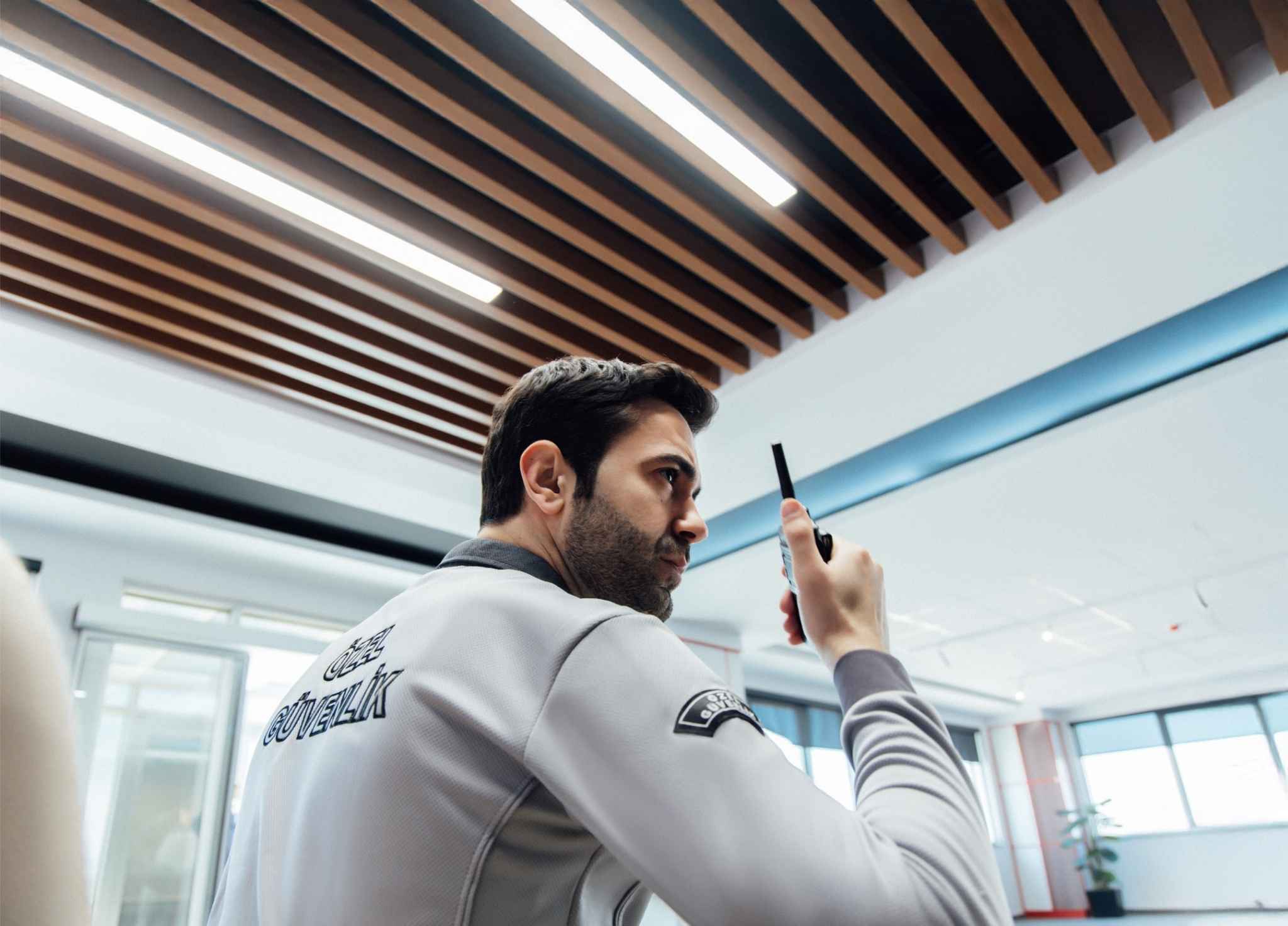
A Titan Savunma officer in a private security uniform communicating by radio inside a building.
Which questions should we put to security firms in Siirt before choosing one?

The first cut is easy: a firm that cannot show its Interior Ministry operating licence under Law No. 5188 does not make the list. From those that remain, and especially if you are preparing a public tender, ask for a table showing which officer covers each post in your specification and at what hours. Then put four points to them: who leads the team in Siirt, what evidence proves a patrol took place, within how many hours a missing officer is replaced, and who runs the firm’s own internal inspections. With those answers and the price side by side, the decision becomes clear; our own proposal is laid out that way from the start.

Once service starts, whom do we deal with about our premises in Siirt?

Our Siirt City Manager. The person who walks your site before the contract is the person you deal with after it: choosing the officers, setting the shifts and doing the daily check. To add a post, ask for a different officer or find out how an incident was closed, you go straight to the City Manager. If you ever feel a matter cannot be settled locally, a corporate line runs up to our Southeast Anatolia Regional Directorate in Gaziantep and on to the Ankara General Directorate, both of which also keep an eye on your site through their own inspectors.

In Siirt, who applies for a private security permit and how is it decided?

The permit is requested by the party that will be protected, not by us: your institution or company files with the Governorship of Siirt. A provincial commission on private security reviews the request, and the governor’s sign-off turns its view into a decision, which the Regulation expects inside a ten-working-day window. A ministry building, a contractor yard out in a district and a shop in the centre all go through the same route, with our City Manager helping you put the documents together.

I want to work as a private security officer in Siirt: where do I send my application?

Fill in the form on our Careers page; applications for Siirt are reviewed by our Siirt City Manager. At interview we talk frankly from the start about whether the role is at a public building, a pistachio store or a building site, and about night shifts and outdoor posts in the summer heat. Article 10 of Law No. 5188 sets out who may serve as an officer, including Turkish citizenship, being at least 18 and having completed the basic private security training. Before your first shift you must also hold the work permit and card issued through the governorship (Arts. 11–12).

How is security planned for a pistachio store or processing plant after the harvest?

With pistachios, risk follows the calendar: stock climbs quickly after harvest, and the crop is valuable both in shell and once processed. For that period we recommend logging each lorry at the gate with its plate, time and weighing record, limiting the unloading, drying and packing areas to an authorised list, keeping an officer fixed at the ramp during dispatch, and checking door seals overnight on logged rounds. Extra posts open as stock rises and the team is scaled back as it runs down. Counting, quality control and weighing stay with the plant’s employees, since Article 16 of Law No. 5188 does not allow duties outside protection to be given to an officer.

Can a contractor working on an energy or mining project get security for its own site and yard?

One distinction comes first: the dams, hydroelectric plants and mines in the province fall under their own operators and the relevant public rules, and the service described here does not include guarding those installations. The site compounds, stores and vehicle parks of contractors who supply such projects with materials, equipment or labour are a separate matter. There, the plan rests on three supports: expensive tools and spare parts kept behind lock with signed inspection rounds, every night-time vehicle movement written down with its registration and the hour, and patrol paths that change from night to night across the open yard. In every case the permit is sought from the Governorship of Siirt in the name of the business receiving the service.

How do a dry summer and a wet winter change the plan for outdoor posts in Siirt?

Siirt’s city weather station, run by the state meteorological service, gives a July mean of 30.7 °C and an average July high of 37.2 °C, with a recorded maximum of 46.0 °C. Going by the monthly averages, June to September together bring only about 20 mm of rain, while every month from November to April brings between 80 and 112 mm. January averages 2.8 °C, the lowest reading is −19.3 °C and the deepest snow on record is 96 cm. We therefore plan a shaded, ventilated hut, enough water and shorter stints around midday for summer, and a heated hut, suitable clothing and extra time for handovers on wet days in winter.

How are the security team’s duties written for emergencies such as fire, flooding or a long power cut?

The emergency plan belongs to the organisation or business, and the security team carries out the steps assigned to it there. They differ from site to site but usually cover opening electric gates and barriers by hand when needed, walking staff and visitors to the muster point, helping with the head count, keeping the way clear for fire and medical vehicles, and keeping people out of hazardous areas. Because cameras and card access may drop out during a long power cut, the plan also adds extra rounds and a handwritten entry log for that period. We set down in writing the step each officer will take and practise it together in the client’s drills.

Let’s Fix a Survey Date for Your Siirt Premises

In the form, simply tell us your district, the type of premises, how many entrances there are, your working hours and, where relevant, whether a tender specification applies or stock rises with the harvest. Our Siirt City Manager will contact you to arrange the survey, and our written proposal then follows, setting out the posts, officer numbers and price.

Request a Security Proposal

Contact

Request a Security Proposal for Your Organisation

Tell us your facility type, location and general requirements. Together, we can define a service scope that suits your organisation.

Tell Us What You Need

Fields marked * are required.

What Happens Next

  1. Initial DiscussionWe respond within 15 minutes and clarify your requirements and facility details together.
  2. Service ScopeWe assess staffing needs and the working arrangements.
  3. ProposalWe prepare our proposal for the agreed service scope.

General Directorates

Ankara · Çankaya
İstanbul · Levent

Nine regional directorates · 81 provinces

Looking for a role? Visit our careers page