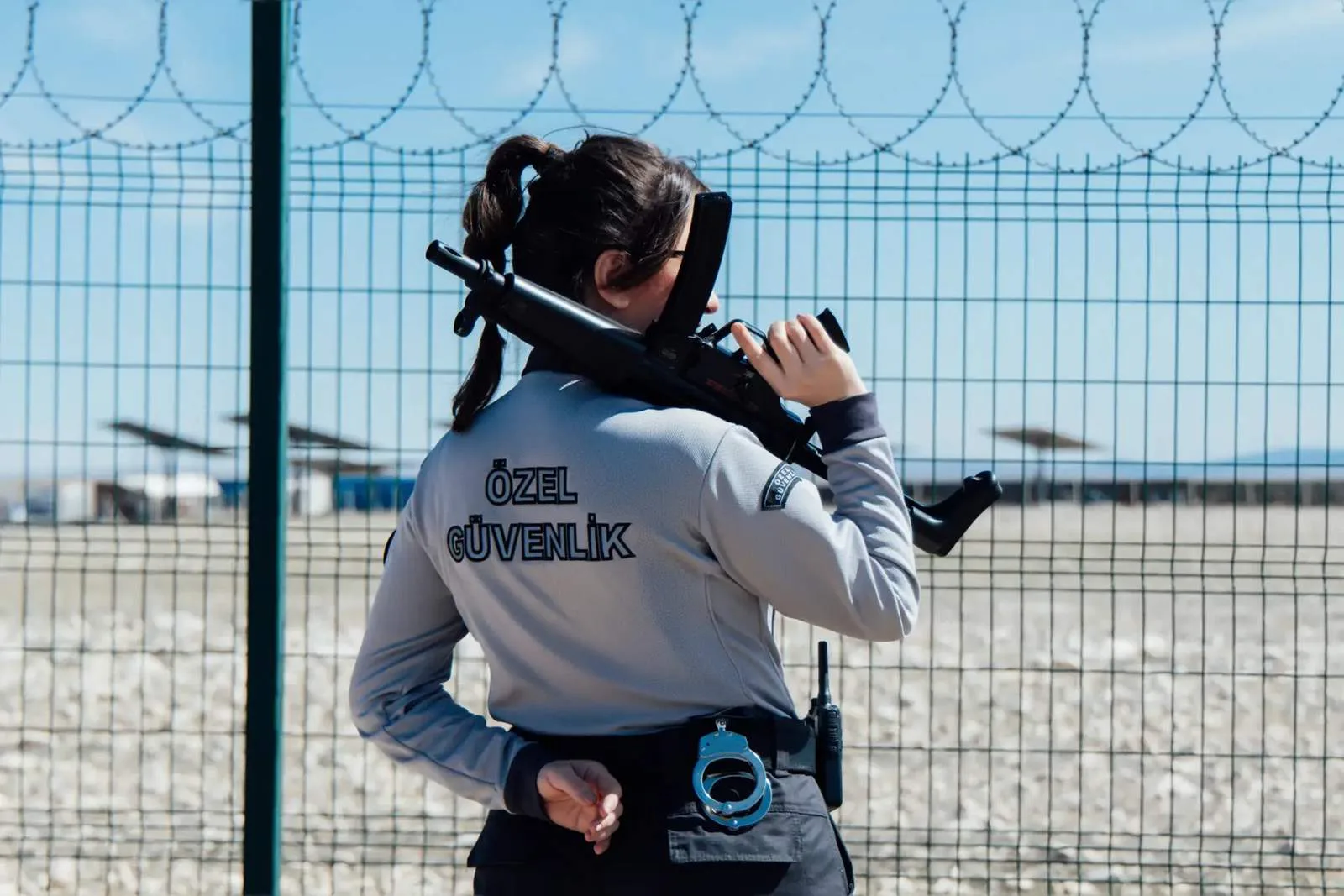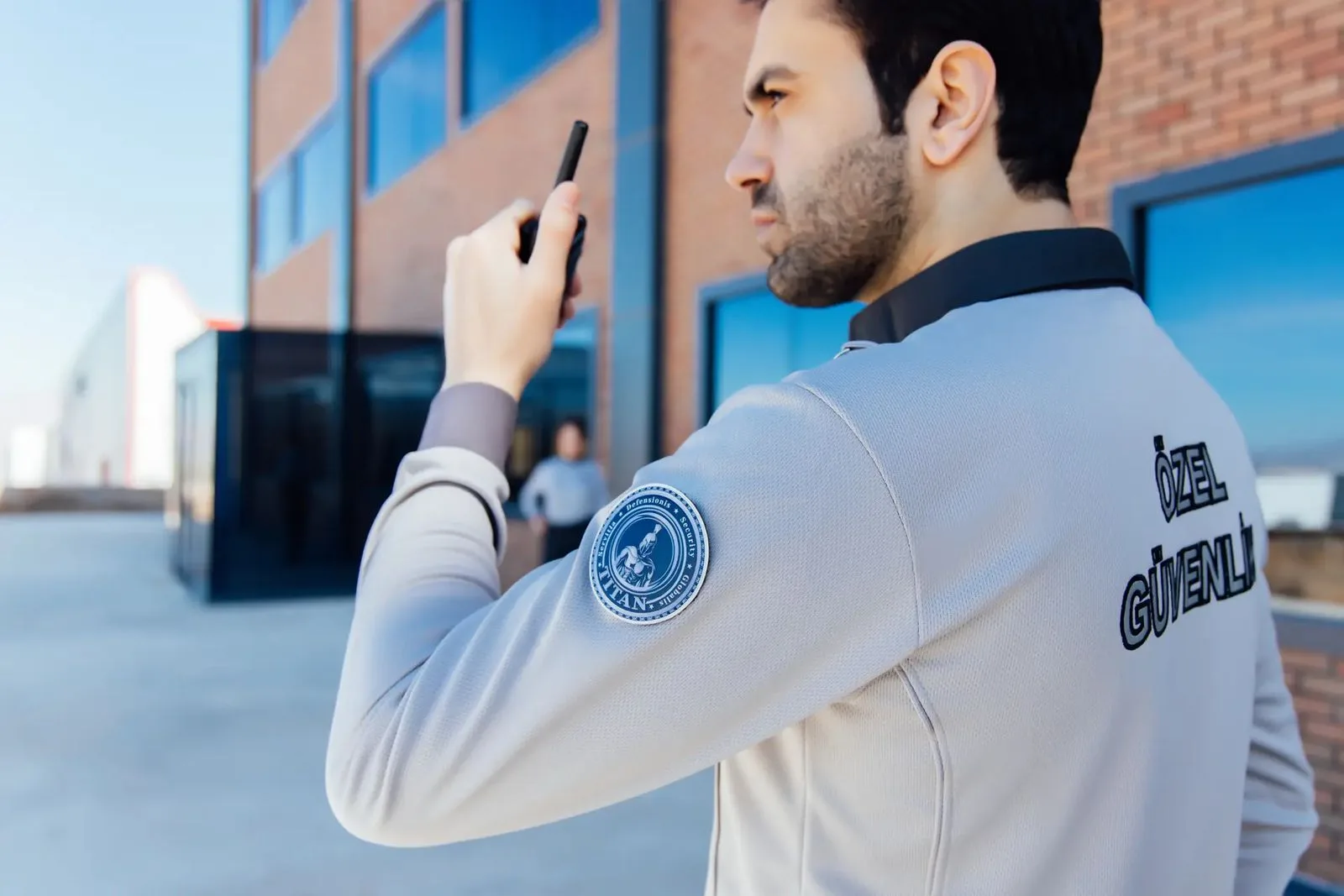
Short answer: In Adana, most of a hospital's night-time security is set up outside the building: a well-lit car park watched by cameras, a traffic routine that keeps the ambulance route clear at every hour, a reduced number of night entrances where staff know who is inside, and, in summer, outdoor posts redesigned around sun and heat. Armed private security officers may not be employed at health facilities in Türkiye (Law No. 5188, Article 8), so the strength of the arrangement comes from layout, light, records and a well-designed chain for raising the alarm, not from weapons.
This article is general information, not legal advice.
Why night-time hospital security needs its own plan in Adana
According to the Social Security Institution (SGK) Statistical Yearbook 2025, Adana's human health sector employs 23,276 people insured under category 4/1-a at 1,380 workplaces, which puts the province seventh in Türkiye. A simple ratio we worked out puts health's weight in Adana's workforce at roughly 1.24 times the national level, before counting tenured civil servants, who are not in these figures. In short, Adana is also a city of large health campuses that never really empty at night.
The second dimension is climate. Data from the Turkish State Meteorological Service for 1929–2025 show an average August maximum of 34.8 °C in Adana, monthly means above 28 °C in July and August, and a highest recorded temperature of 46.7 °C. By day, this climate places a heavy heat load on officers standing in the car park, under the entrance canopy or along the ambulance route. Snow barely features in the records: in Adana, the main enemy of an outdoor post plan is heat, not cold.
What does the research say?
1. Lighting is the first layer of night-time security
A Campbell systematic review of improved lighting and crime pooled 13 studies that measured crime before and after in both experimental and comparison areas. Improved lighting significantly reduced crime, with a stronger effect in the United Kingdom than in the United States. Notably, night-time crimes did not fall more than daytime crimes; the authors read this as a sign that lighting works partly by signalling that an area is cared for, not only by improving visibility (Welsh and Farrington, Campbell Systematic Reviews, 2008). The studies concern public spaces rather than hospital car parks, but they suggest that a well-kept, well-lit car park does more than provide better camera images.
2. Cameras showed their most consistent effect in car parks
An updated systematic review and meta-analysis covering forty years of evaluations found that CCTV is associated with a significant but modest decrease in crime. The largest and most consistent effects were seen in car parks. Where someone watched the screens in real time, results were stronger than with record-only set-ups, and projects pairing cameras with other measures outperformed camera-only projects (Piza et al., Criminology & Public Policy, 2019). The authors stress that CCTV should target vehicle and property crime and should not be a stand-alone measure. For a hospital car park, the message is clear: cameras earn their keep when they work together with lighting, patrols and records.
3. Visitor flow is a staff safety issue
A qualitative study of open-text answers given by 168 nurses in a 2019 Canadian national survey found that violence from patients' families and other visitors was described as the most impactful potentially traumatic event the respondents had experienced at work. The paper's background notes that earlier research identifies visitors as the second largest group of perpetrators of violence against nurses. Among the priorities the authors suggest for managers are stronger visitor management protocols and better security escalation pathways (Ritchie et al., Journal of Nursing Management, 2026). The findings are Canadian and self-reported, but they make plain why it matters to know who is on a ward at night, through which door they came, and why.
4. Car park layout directly affects ambulance access
A narrative review of parking management and ambulance access in urban hospitals argues that inadequate parking causes delays for patients, visitors and emergency responders, and that congestion affects ambulance response times; it discusses smart parking and ambulance routing technologies as options (Tendolkar et al., Annals of African Medicine, 2026). This is a review article, not a field trial. The simple lesson we take from it comes before any technology: the ambulance route should be marked and watched so that nobody can park there "just for two minutes".
5. Outdoor posts in the heat: a health and an alertness problem
A systematic review and meta-analysis pooling 111 studies from 30 countries found that people working a single shift under heat stress had 4.01 times higher odds of experiencing heat strain than those working in thermoneutral conditions; around 35% of workers under heat stress experienced heat strain during or at the end of a shift, and 30% reported productivity losses. The review defines heat stress as a wet-bulb globe temperature (WBGT) above 22.0 or 24.8 °C depending on work intensity, and notes large differences between studies (Flouris et al., The Lancet Planetary Health, 2018).
There are also data on security officers specifically. In a cross-sectional study of 678 security officers at a tertiary hospital in South India during the hottest months of March to May 2020, half of them (324) had definite heat stress on an 18-item heat strain questionnaire; 52% of participants worked outdoors for a median of 6 hours a day. Heat stress was higher among those working outdoors and those with longer service, while kidney function appeared unaffected by heat stress scores (John et al., Indian Journal of Nephrology, 2025). Climate and work patterns differ from Adana's, but the study shows that the heat load on an officer standing for hours at a hospital entrance is a measurable problem.
Night-time flow: three doors, three different jobs
When planning the night routine, it helps to think of the hospital not as a single "entrance" but as three flows with different purposes:
- Main entrance and visitor flow: which door stays open after visiting hours, how a companion's pass is checked, and from which point access to the wards is watched should all be written down in advance. The officer applies the visiting rules the hospital sets; exceptions are granted by clinical staff and recorded.
- Emergency entrance: at night, most patients and relatives come in this way. The officer's job is not to block the door but to guide relatives to the waiting area, prevent crowding in front of triage and respond quickly when the emergency team calls.
- Car park and ambulance route: a car park that looks empty at night is where staff leaving a shift walk to their cars, relatives wait in vehicles and ambulances pass. A failed light, a camera that is not working and a car left on the ambulance route are the three classic weak points.
Each of these flows needs its own post orders, but all three should share one log and one chain for raising the alarm. Making sure that night-shift staff can walk to the car park or the bus stop along a lit route, and can ask an officer to accompany them, is a tangible and easily applied part of staff safety.
How to run an outdoor post in the heat
The heat stress recommendations of the US National Institute for Occupational Safety and Health translate easily to the site: cool drinking water close to the work area and frequent drinking, about one cup every 15–20 minutes for moderate work; for new workers, no more than 20% of the usual time in the heat on day one and no more than a 20% increase on each following day; shorter work periods and longer breaks as heat, humidity and sunshine rise; a buddy system in which workers watch each other for signs of heat illness; and training before the hot season starts. Applied to Adana, this means:
- A shaded, ideally air-conditioned, rest point for the car park entrance, ambulance route and outdoor patrol posts; any guard hut has its ventilation checked before summer begins.
- Around midday, short rotating stints instead of a fixed post in full sun; patrol routes kept to shaded paths wherever possible.
- An acclimatisation period for officers starting in early summer or returning from leave, with shorter outdoor time in the first days.
- On days with heat warnings, the shift supervisor calls outdoor posts more often, and there is a clear rule that officers report dizziness, nausea or confusion.
- Light-coloured, breathable summer uniforms and hats, with reflective vests for night-time.
Checklist: car park, night-time and visitor routine
| Area | What to do | Why |
|---|---|---|
| Car park lighting | A walking check of the lights at the start of the night; a failed light is reported to maintenance the same night. | Improved lighting has been linked to a significant fall in crime. |
| Cameras | Car park and pedestrian routes monitored live; blind spots marked on a site map. | CCTV's most consistent effect is in car parks, its largest with active monitoring. |
| Ambulance route | Route marked and kept clear at all times; a written procedure for directing and reporting vehicles left there. | Poor parking order can delay emergency access. |
| Night entrances | Fewer doors open after visiting hours; those that stay open are covered by cameras. | Scattered entrances cannot be watched by a small night team. |
| Companions and visitors | The hospital's own pass or log procedure; exceptions decided by clinical staff. | Visitor management is among the first staff safety recommendations. |
| Staff leaving | A lit route and an optional escort when the night shift ends. | A staff member walking alone in the car park at night is the most exposed person on site. |
| Heat at outdoor posts | Shaded rest point, water, rotating posts, buddy system. | Heat stress harms both health and alertness. |
| Emergency plan | The car park's role as an assembly and ambulance area in evacuations such as for a fire; the officer's place in drills. | In an emergency, the car park is the hospital's most important open space. |
| Records | Every incident and fault noted briefly; reviewed monthly with hospital management. | Only records show which measures actually work. |
Common mistakes
- Leaving the car park out of night patrols because it is "empty anyway".
- Installing cameras that feed a recorder nobody watches; leaving light and camera faults until morning.
- Tolerating short stops on the ambulance route.
- Keeping every door open after visiting hours; granting companion exceptions without a record.
- Keeping the same officer at a fixed post in full sun for hours in midsummer, and leaving water and shade to the officer to sort out.
- Asking officers for medical information or letting them stand in for clinical decisions.
- Setting up cameras and recordings without regard to Türkiye's Personal Data Protection Law No. 6698 and patient privacy.
A note on practice in Türkiye
Law No. 5188 does not allow armed private security officers to be employed at health facilities (Article 8), and its Article 9 requires that any incident calling for force or an arrest be reported by the fastest available means to the competent general law enforcement (police or gendarmerie). Within this framework, the hospital officer's role in the car park and at the doors is to observe, guide, record and, when needed, bring in the hospital's own employee safety team or the gendarmerie or police. Heat risk at outdoor posts is a natural part of the risk assessment required under Occupational Health and Safety Law No. 6331, and the summer routine should be written into that assessment. In public hospitals, the scope of the service is usually set by the technical specification, so post orders are ideally written alongside that specification, the hospital's emergency plan and its staff safety arrangements. Seeing the car park once around midnight and once at a summer midday, before anything is written, tells you more than any diagram on paper.
The duties we cover in clinical settings are listed under healthcare security, and the way we work with Adana's industrial, agri-food and hospital sites is described under private security company in Adana; both make a useful starting list when you draw up night and summer routines.
Titan Savunma is an Ankara-based private security company licensed by the Ministry of Interior under Law No. 5188 and certified to ISO 9001, 14001, 45001, 22301 and 28000. We work with international companies in English and Turkish, and our Adana City Manager, together with our Çukurova Regional Directorate, which is also based in Adana, and our Ankara General Directorate, walks your car park, night entrances and summer outdoor posts before agreeing with you an unarmed routine written to your specification. To arrange that walk-through, write to us via our contact page.
Sources and Further Reading
- Welsh, B. C. & Farrington, D. P. — Effects of Improved Street Lighting on Crime, Campbell Systematic Reviews 4(1) (2008)
- Piza, E. L., Welsh, B. C., Farrington, D. P. & Thomas, A. L. — CCTV surveillance for crime prevention: A 40-year systematic review with meta-analysis, Criminology & Public Policy 18(1):135–159 (2019)
- Ritchie, K., Ricciardelli, R., Johnston, M. S. ve ark. — Understanding Violence Toward Canadian Nurses From Patients' Family and Visitors as a Potentially Psychologically Traumatic Event, Journal of Nursing Management (2026)
- Tendolkar, K. B., Kalia, R. & Charan, G. S. — Smart Hospital Infrastructure: Enhancing Parking Management and Ambulance Accessibility in Urban Healthcare Systems, Annals of African Medicine 25(4):764–769 (2026)
- Flouris, A. D., Dinas, P. C., Ioannou, L. G., Nybo, L., Havenith, G., Kenny, G. P. & Kjellstrom, T. — Workers' health and productivity under occupational heat strain: a systematic review and meta-analysis, The Lancet Planetary Health 2(12):e521–e531 (2018)
- John, E. E., Valson, A. T., George, R. ve ark. — Impact of Noncommunicable Diseases and Heat Stress on Estimated Glomerular Filtration Rate in Security Officers at a Tertiary Care Hospital in South India, Indian Journal of Nephrology 35(2):243–252 (2025)
- NIOSH (ABD Ulusal İş Sağlığı ve Güvenliği Enstitüsü) — Heat Stress: Workplace Recommendations (NIOSH 2016-106 kriter belgesine dayanır)
- 5188 sayılı Özel Güvenlik Hizmetlerine Dair Kanun (md. 8, 9), Mevzuat Bilgi Sistemi
- SGK — İstatistik Yıllığı 2025 (Sigortalı ve İşyeri İstatistikleri, Tablo 1.11)
- Meteoroloji Genel Müdürlüğü — Resmî İstatistikler: Adana (1929–2025)