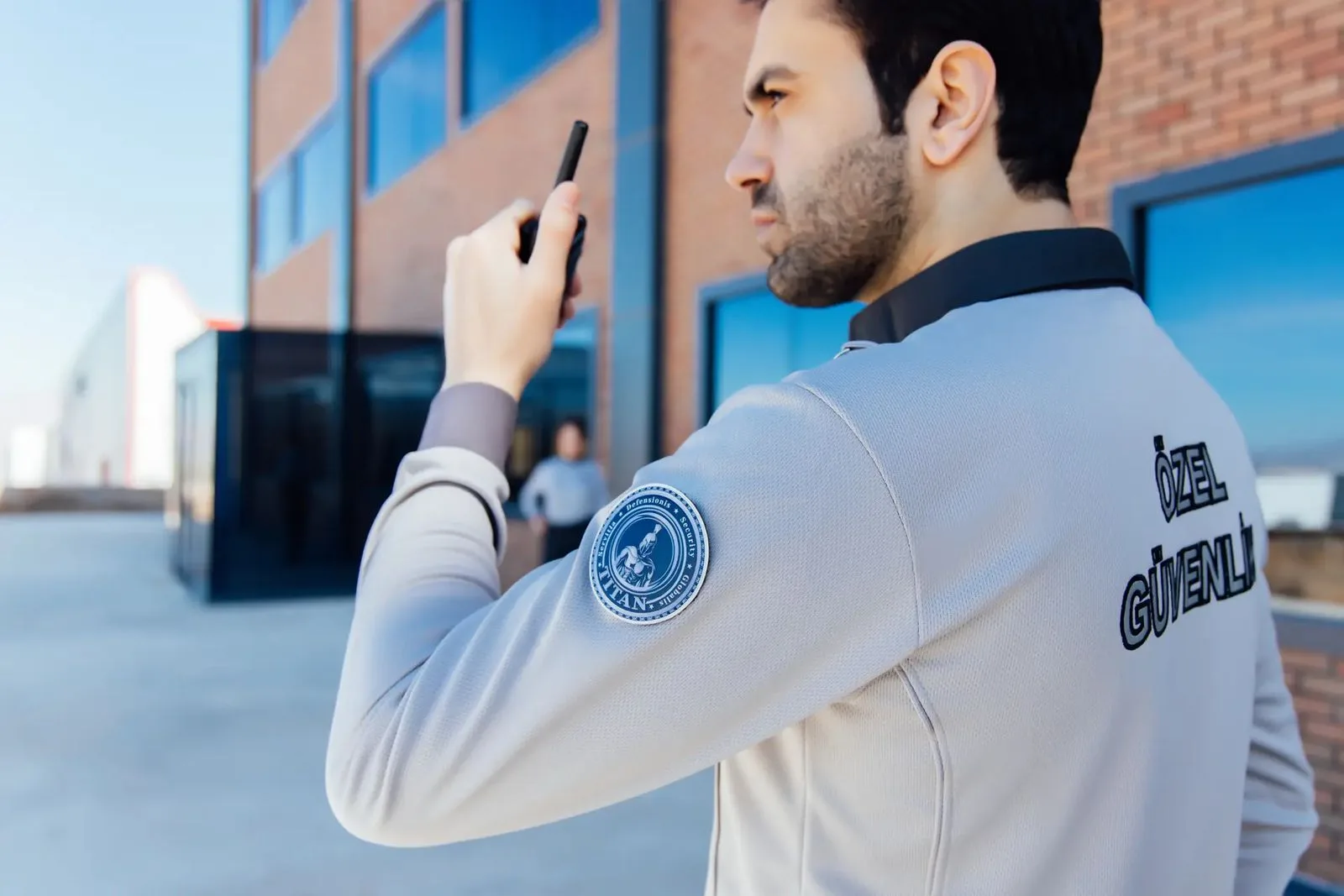
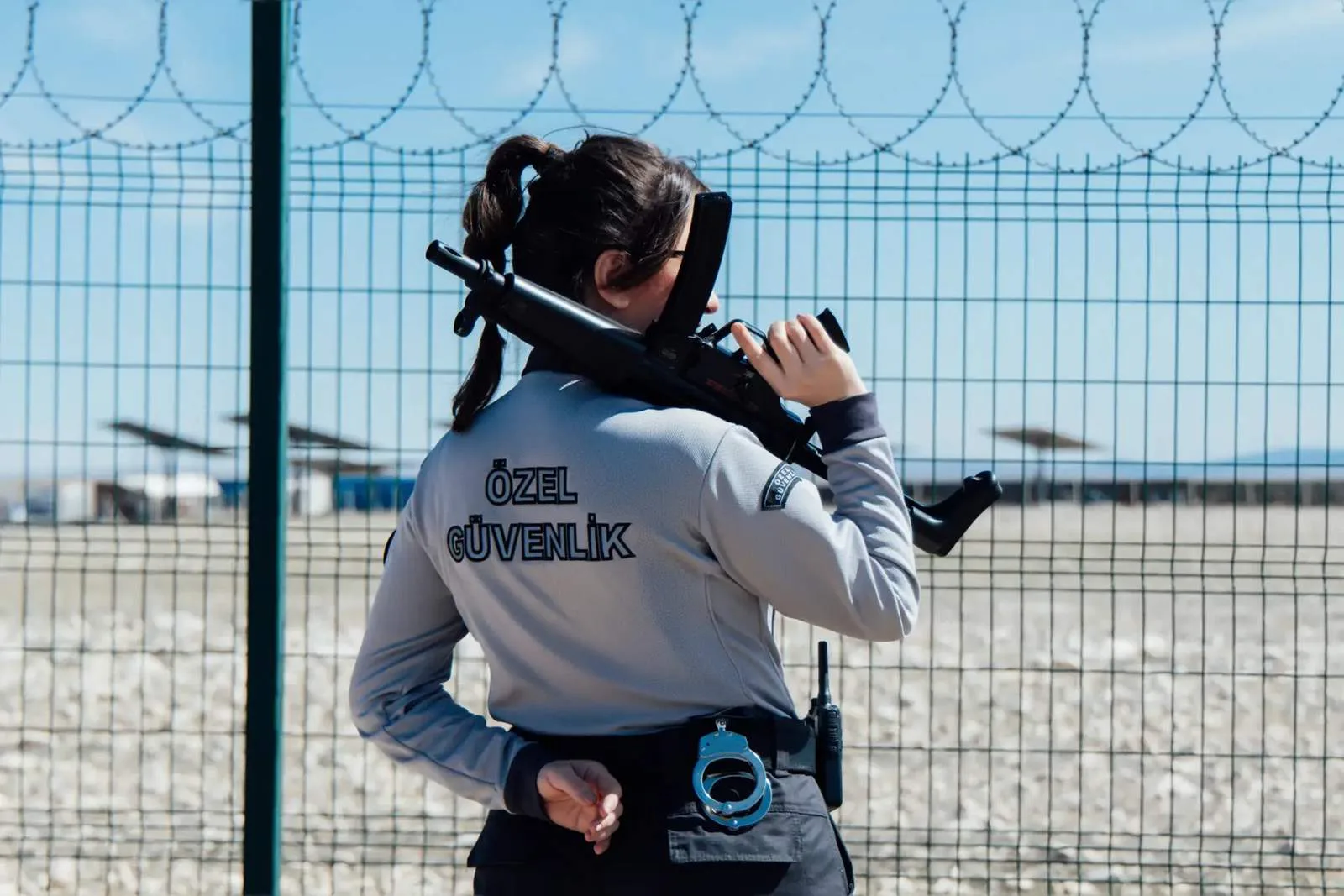
Short answer: In a small Turkish province such as Bayburt, the job of hospital security is not to show force at the door but to catch tension before it grows. The backbone is simple: regular updates for people waiting in the emergency department, calm and respectful conversation, visiting hours applied the same way to everyone, a single well-lit emergency entrance on winter nights, and a short record after every incident. Turkish Law No. 5188, in its Article 8, rules out armed private security officers in health facilities, so the officer's main tool is communication.
This article is general information, not legal advice.
Why hospital security in Bayburt is its own topic
In a large city, a patient or relative frustrated by a long wait may think about going to another hospital. In smaller provinces there is less choice: emergency care is usually concentrated in one or a few institutions, and most people who arrive at midnight come through the same door and sit in the same waiting room. That can turn the emergency department, especially at night, into an emotionally charged waiting area.
According to the Turkish Social Security Institution (SGK) Statistical Yearbook 2025, 896 people insured under article 4/1-a work in human health activities in Bayburt. By our calculation the sector's share of employment in the province is about 1.8 times the national average, and that figure does not include tenured civil servants (4/1-c). Health care is among the central activities of the province, both for the people it serves and for the people it employs.
The climate changes the picture too. Turkish State Meteorological Service statistics for 1959–2025 give Bayburt a January mean of −6.1 °C and a mean January minimum of −10.3 °C; the lowest temperature recorded is −31.3 °C and the greatest snow depth 110 cm. Patients and relatives arriving on a winter night should not be kept waiting outside, and ice and darkness at the door, the ramp and the car park are security issues in their own right.
How common is the problem?
A national study in Turkey interviewed 12,944 health workers selected by multistage stratified random cluster sampling. 44.7% reported experiencing workplace violence in the previous 12 months; verbal violence was the most common type (43.2%), while physical violence stood at 6.8%. Type of institution, working hours and shift work were among the independent risk factors (Pinar et al., Journal of Interpersonal Violence, 2017). The study is cross-sectional and its data were collected before 2015, but it makes one point clearly: most of the reported violence is verbal. That makes spotting verbal tension early and handling it calmly a priority for any security routine.
What does the research say?
1. Evidence for organisational measures is still weak
A Cochrane systematic review of organisational programmes to reduce aggression from patients and their companions towards health workers found only seven studies: four in nursing homes, two in psychiatric wards and one in a hospital emergency department. The emergency department's multicomponent programme (policy and procedure changes, changes to the physical environment, education and training) showed no reduction in aggression, although the data were insufficient to test this properly. The authors rate the certainty of evidence as low or very low and call for more randomised trials, especially in emergency care (Spelten et al., Cochrane Database of Systematic Reviews, 2020). Our takeaway: buying an off-the-shelf package is not enough; the routine has to fit the hospital and its results have to be tracked on the ground.
2. Training in emergency departments is mostly positive, but short sessions may fall short
A systematic review of 15 studies on violence prevention in emergency departments, published between 2010 and 2021, found that 11 evaluated training in de-escalation, managing violent persons or self-defence, and 4 added organisational or environmental measures. Most reported fewer incidents or better staff preparedness, but the authors describe the evidence as sparse and the methodological quality as generally limited, and they conclude that longer training sessions may be needed to improve staff confidence. The review's introduction lists night shifts and long waiting times for patients among the factors that raise the risk of violence in emergency departments, and the authors recommend involving security personnel (Wirth et al., IJERPH, 2021). Security personnel were not measured as a separate intervention in the review; this is a recommendation, not a finding.
3. De-escalation is a skill set, not a single technique
A concept analysis of de-escalation in healthcare settings, covering 79 studies, proposes that the term is a collective label for a range of interwoven, staff-delivered components: communication, self-regulation, assessment, actions and safety maintenance. Most of the literature comes from mental health settings and nursing, and none of the five proposed theories has empirical support (Hallett and Dickens, International Journal of Nursing Studies, 2017). For us this means that telling an officer to "stay calm" is not enough: they need to learn to manage their own reactions, read the room, and know when to step back and when to call for help.
4. US guidance points to waiting and visitor routines
The US Occupational Safety and Health Administration (OSHA) guidelines on preventing workplace violence for healthcare and social service workers recommend, for hospital entry procedures, giving responsive and timely information to those waiting, adopting measures to reduce waiting times, sign-in procedures with visitor passes, and enforcing visiting hours. They also call for bright, effective lighting indoors and outdoors, in car parks and on walkways, for burnt-out lights to be replaced immediately, and for lighting that does not cause undue glare (OSHA 3148, 2016). The guidance is American and not binding, but given Bayburt's long winter nights the lighting point matters here in particular.
The framework in Turkey: law and ministry rules
Article 8 of Law No. 5188 is clear: armed private security officers may not be employed in education institutions or health facilities. The officer's powers are listed in Article 7; use of force is possible only within the legal framework set out in paragraph (k), and under Article 9 incidents requiring force or apprehension must be reported to the police by the fastest means. In a hospital this clarifies the officer's role: calm the situation, protect staff and other patients, and call the police when needed.
The Ministry of Health's Circular No. 2012/23 of 14 May 2012 on ensuring staff safety is another cornerstone. According to the published text, it announced a "White Code" unit within the Ministry and a 24-hour 113 line to track violence against health workers; it requires managers to report incidents to 113 immediately, health institutions to redo their violence risk assessments and to review service processes in high-risk departments, sufficient security staff in emergency, intensive care and operating-theatre waiting areas, and camera monitoring with due regard for patient privacy. The circular dates from 2012, so confirm current practice with your hospital's staff safety unit.
Checklist for the emergency department and visiting routine
| Area | What to do | Why |
|---|---|---|
| Waiting information | A plain sign in the waiting room explaining triage; short updates for those waiting at intervals set by clinical staff. | Uncertainty fuels "why were they seen first" arguments. |
| Visible but calm presence | The officer stands where the waiting room and triage desk are in view, without blocking the door. | Spotting tension early is easier than intervening later. |
| Visiting hours | Hours posted at the entrance; exceptions (critically ill patients, companions) decided by clinical staff and recorded. | In a small town, rules bent for some people are noticed quickly and cause friction. |
| Visitor passes | A pass or sign-in routine for intensive care and ward floors, under the hospital's own rules. | Knowing who is inside makes the night routine easier. |
| Night entrance | One well-lit, camera-monitored emergency entrance at night; other doors controlled. | Scattered entrances are hard to watch on a winter night. |
| Snow and ice | Ice checks on the ambulance ramp, access road and pedestrian entrance; failed lights reported in the same shift. | Slips and darkness are a risk for patients and officers alike. |
| Warm waiting | A waiting point indoors rather than an argument at the door; relatives are not left out in the cold. | A cold, anxious crowd becomes tense more easily. |
| Calling for help | The order for calling the supervisor, the hospital's staff safety unit and the police is written into the post orders. | Working this out during an incident wastes time. |
| Records | Every tense incident gets a short note; the supervisor and hospital management review them regularly. | Only records show whether training is working. |
If tension rises: step by step
- Calm yourself first: lower your voice, keep your arms uncrossed, leave space between you and the person.
- Listen first. Name the worry: "I can see you are worried about your father."
- Say what you can do and never promise what you cannot; leave medical information to clinical staff.
- Move the person away from the crowd; if possible, talk in a quieter corner.
- Step between the health worker and the person by guiding, not by force, and keep the worker's exit route clear.
- If there is a threat or an assault, call for help, follow the hospital's reporting procedure and notify the police by the fastest means.
- Afterwards, write a short record and pass it on at shift handover.
Common mistakes
- Treating the officer as a door guard only, and not expecting them to watch the waiting room and triage area.
- Stretching visiting hours for acquaintances, and making exceptions without a record or an explanation.
- Leaving several doors open at night in winter, and leaving a lighting fault until the next day.
- Delivering de-escalation training once and never checking it on the ground.
- Letting the officer answer medical questions, or make promises that cannot be kept.
- Forgetting patient privacy: setting up cameras and records without regard to Turkey's data protection law (Law No. 6698).
- Skipping the post-incident record and waiting for the same tension to come back.
A note for Turkey
In public hospitals the scope of the security service is usually set by the institution's technical specification. Writing the post orders together with that specification, the hospital's staff safety arrangements and the ministry's reporting procedure makes it clear in advance what the officer reports, when and to whom. A few nights spent watching the emergency department on site, plus some time there during visiting hours, reveal more than a paper plan ever will, so this should come before the routine is written.
How we serve organisations across Bayburt is set out on our private security in Bayburt page, while the wider framework we use for hospitals and health facilities is on our healthcare security page.
Titan Savunma is an Ankara-based private security company licensed by the Ministry of Interior under Law No. 5188 and certified to ISO 9001, 14001, 45001, 22301 and 28000. We work with international companies in English and Turkish, and our Bayburt City Manager, supported by our Black Sea Regional Directorate and Ankara General Directorate, reviews your hospital's emergency entrance, waiting and visiting routine on site and then, working to your specification, sets up with you an unarmed security routine that relies on communication. Site survey requests can be sent through our contact page.
Sources and Further Reading
- Pinar, T., Acikel, C., Pinar, G., Karabulut, E., Saygun, M., Bariskin, E. ve ark. — Workplace Violence in the Health Sector in Turkey: A National Study, Journal of Interpersonal Violence 32(15):2345–2365 (2017)
- Spelten, E., Thomas, B., O'Meara, P. F., Maguire, B. J., FitzGerald, D. & Begg, S. J. — Organisational interventions for preventing and minimising aggression directed towards healthcare workers by patients and patient advocates, Cochrane Database of Systematic Reviews, CD012662 (2020)
- Wirth, T., Peters, C., Nienhaus, A. & Schablon, A. — Interventions for Workplace Violence Prevention in Emergency Departments: A Systematic Review, International Journal of Environmental Research and Public Health 18(16):8459 (2021)
- Hallett, N. & Dickens, G. L. — De-escalation of aggressive behaviour in healthcare settings: Concept analysis, International Journal of Nursing Studies 75:10–20 (2017)
- U.S. Department of Labor, OSHA — Guidelines for Preventing Workplace Violence for Healthcare and Social Service Workers, OSHA 3148-06R (2016)
- Sağlık Bakanlığı — "Çalışan Güvenliğinin Sağlanması" konulu 14.05.2012 tarihli ve 2012/23 sayılı Genelge (metnin memurlar.net'teki tam yayını)
- 5188 sayılı Özel Güvenlik Hizmetlerine Dair Kanun (md. 7, 8, 9), Mevzuat Bilgi Sistemi
- SGK — İstatistik Yıllığı 2025 (Sigortalı ve İşyeri İstatistikleri, Tablo 1.11)
- Meteoroloji Genel Müdürlüğü — Resmî İstatistikler: Bayburt (1959–2025)