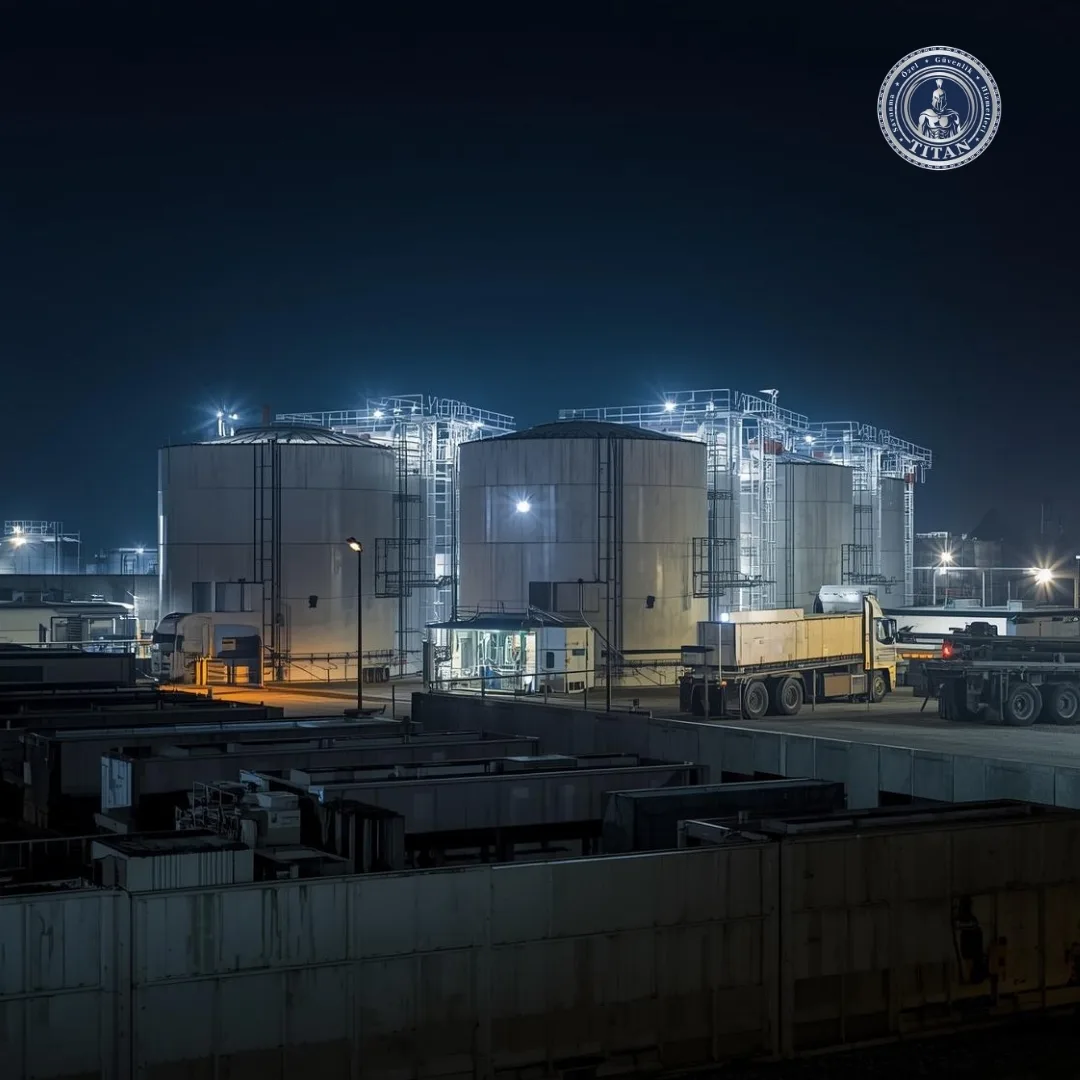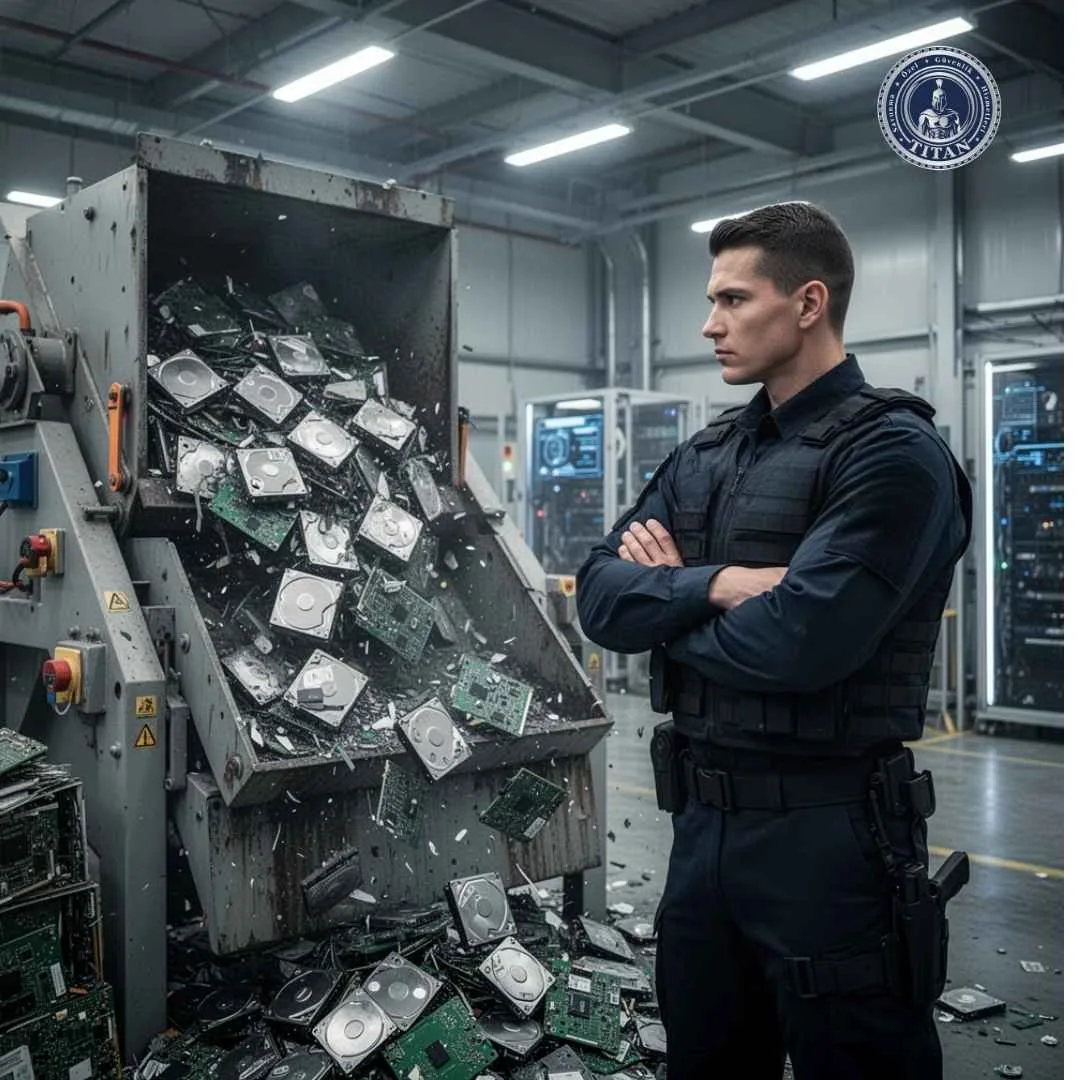
Scrap metal, swarf, cable, pallets, packaging waste and by-products leaving a production plant are often seen as "worthless", and they become the least controlled outbound flow. Yet scrap and recyclables have real value, and finished goods, spare parts or tooling components can also leave the site hidden inside that flow. This article sets out a control framework covering scrap yards, waste contractors' trucks, seals, sampling, segregation of duties and reporting, and shows how Turkey's waste regulations already support those controls.
This article is general information, not legal advice. Confirm the obligations for your waste types with your environmental consultant and the provincial directorate of the Ministry of Environment, Urbanisation and Climate Change.
Why scrap and waste flows are targeted
- Value is uncertain: scrap quality and quantity are often estimated, so small differences go unnoticed.
- Traffic is routine: contractors' trucks come often and are treated as "familiar" at the gate.
- Mixing is easy: good material, new product or spare parts can be placed under scrap in a container.
- Responsibility is split: production segregates waste, purchasing or the environment team manages the contract, finance invoices the sale, and nobody looks at the whole flow.
Which records Turkish law already requires
The Waste Management Regulation (Atık Yönetimi Yönetmeliği, Official Gazette of 2 April 2015, No. 29314) places record-keeping duties on waste producers that can double as controls. Under Article 9, the producer must collect waste separately and store it temporarily, keep records in line with the Ministry's rules, package and label it properly, send it only to permitted or licensed treatment facilities, and complete an annual online waste declaration between January and the end of March, keeping a copy for five years. Training employees who handle waste is also among these duties.
Article 13 governs temporary storage on site: stored waste must be marked as hazardous or non-hazardous, with the waste code, quantity and storage date. Apart from medical waste, hazardous waste may be stored temporarily for at most six months and non-hazardous waste for at most one year. These labels and limits give you a ready framework for tracking the age and quantity of stock in the scrap yard.
For hazardous waste transport, the Ministry uses the Mobile Waste Tracking System (MoTAT). According to a notice from the Ankara provincial directorate, MoTAT became the mandatory method for hazardous waste transport from January 2018: at loading, the producer and carrier confirm on a mobile device that the correct waste was loaded in the declared quantity; at delivery, the treatment facility and carrier close the trip with a discharge number; every step is recorded with location and time. The Ministry states that devices in licensed vehicles report position and time during loading, transit and unloading. Article 10 of the regulation also requires the treatment facility to check at entry that incoming waste matches the description on the transport form.
The upshot: hazardous waste already has a legal traceability chain. Loss risk sits mainly in non-hazardous scrap, metals and by-product sales, where record-keeping is left to the company's own procedures.
By-products: not waste, but still a control topic
Article 19 of the regulation allows certain materials arising from production, though not its main purpose, to be treated as by-products rather than waste if conditions are met: they are an integral part of the process and listed in the capacity report, there is continuing demand, they can be used directly, their conformity with the standards of the material they replace is documented, and their use does not harm the environment or human health. Conformity is obtained by applying to the Ministry.
The security point: once a material has by-product status, it may fall outside the waste transport and declaration chain and be sold like any commercial product. By-product shipments should therefore be managed with the same discipline as finished goods: order, weighing, delivery note, seal and exit record linked together, and monthly quantities compared with production data.
Physical controls for the scrap yard
- One entrance, locked area: separate the scrap yard or container area from production and log key issue.
- Segregation by type: valuable metals (copper, aluminium, stainless steel) in separate, closed containers, labelled consistently with Article 13.
- Visibility: containers and the loading point visible to cameras; loading times set in advance.
- Serviceable material: good parts, tooling or customer property marked for scrap should pass through a separate, written scrapping decision.
- Stock counts: regular weighing or counting of valuable scrap, compared against production yield and reject rates.
Contractor trucks, seals and sampling
- Booking and identity: vehicle, driver and company should match the contract list; vehicles not on it should not be admitted without approval.
- Empty-in check: record that the truck body was empty at entry and that a tare weight was taken.
- Supervised loading: for valuable scrap, loading should be supervised by plant staff, while security records loading time and the truck's movements on site.
- Seals: numbered seals on closed containers or tarpaulins, with the number written on the weigh ticket and dispatch document.
- Sampling: where price depends on quality, joint sampling with both parties present, and sealed retention of the sample, reduces disputes.
- Exit: no exit until weigh ticket, dispatch document and seal number match.
The powers of private security officers are limited by Article 7 of Law No. 5188; the scope of load checks should be set in written post orders, with suspected offences reported to the police or gendarmerie.
Segregation of duties
| Step | Who does it | Who checks it |
|---|---|---|
| Scrapping decision | Production / quality | Department manager approval |
| Yard and container supervision | Security | Environment or logistics lead |
| Weighing and dispatch document | Logistics | Security exit check |
| Sale price and invoice | Purchasing / finance | Internal audit reconciliation |
| Waste declaration and MoTAT records | Environment officer | Management review |
A common design flaw is one person both deciding what becomes scrap and managing its sale.
Reporting: what to look at
- Monthly scrap volume compared with production volume and yield.
- Unexpected drops in valuable metal scrap.
- Repeated long site times for the same contractor truck.
- Seal discrepancies, voided weigh tickets, unbooked vehicle entries.
- Differences between waste declarations, MoTAT records and sales invoices.
A security report should not just say "no incidents". It should give a monthly summary with numbers: how many trucks entered, how many seals were used, how many exceptions were approved.
Common mistakes
- A scrap container in the middle of production, open to everyone.
- Contractor drivers walking around the plant unescorted.
- Scrapped customer property or prototype parts sold as ordinary scrap.
- Weigh tickets going only to finance and never matched against security exit records.
For disposal of prototype and confidential parts, see our disposal custody and verification bulletin. For the wider picture, our industrial facility security and loss prevention security pages may help.
About Titan Savunma
Titan Savunma is an Ankara-based private security company licensed by the Ministry of Interior under Law No. 5188. It holds ISO 9001, 14001, 45001, 22301 and 28000 certificates, works with international companies in English and Turkish, and plans services for sites in different provinces of Turkey with a single point of contact, a written scope and regular reporting. See our private security services in Turkey page for more.
Sources and Further Reading
- Atık Yönetimi Yönetmeliği (consolidated), mevzuat.gov.tr
- Mobil Atık Takip Sistemi üzerinden yapılan atık taşıma işlemleri ile ilgili önemli duyuru, Ankara Çevre, Şehircilik ve İklim Değişikliği İl Müdürlüğü
- Bakanlık MoTAT projesi ile tehlikeli atıkların nakliyesini anlık takip ediyor, Çevre, Şehircilik ve İklim Değişikliği Bakanlığı
- 5188 sayılı Özel Güvenlik Hizmetlerine Dair Kanun, mevzuat.gov.tr